
In April, the pickup trucks on Molokai’s one main road wave at each other with two fingers off the steering wheel, and the red dirt of the central plain glows against green pastures after the winter rains. Kiawe trees shade the roadside stands, the air smells of salt and warm earth, and nobody seems to be hurrying anywhere. It is a month for traveling to the quietest of the main Hawaiian islands, for empty beaches, small-town stops and long, unscheduled afternoons.
What is the weather like in Molokai in April?
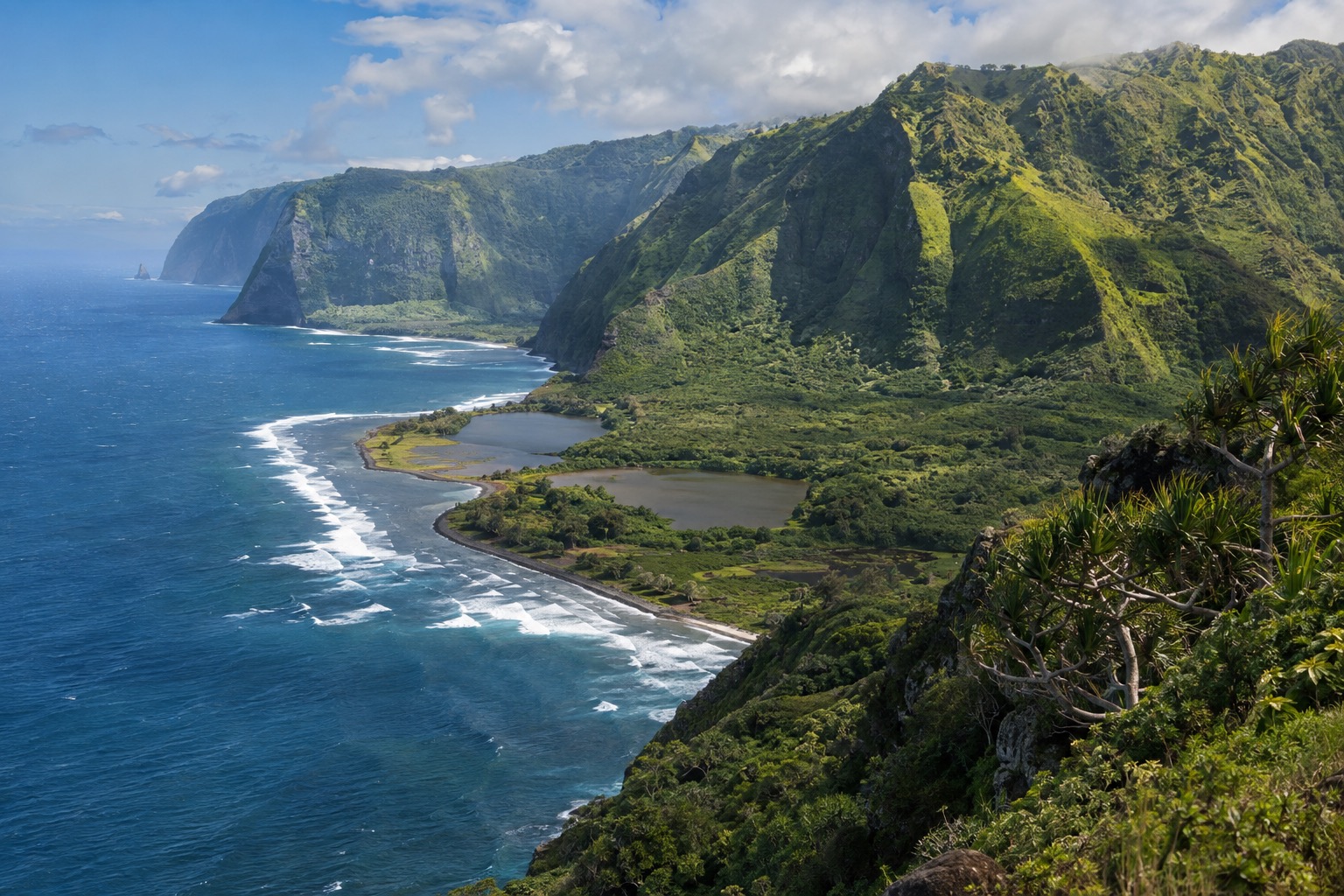
April on Molokai is warm, bright and mostly dry, with a little rain left over from winter that tends to arrive as passing showers rather than gray, all-day weather.
| Month | Average high (°F) | Average low (°F) | Rain days | Sea (°F) |
|---|---|---|---|---|
| March | 79.2 | 65.8 | 5.2 | 76.2 |
| April | 81.0 | 67.1 | 3.4 | 76.9 |
| May | 82.8 | 68.6 | 2.1 | 77.8 |
Mornings are soft and comfortable, ideal for a walk or a drive before the sun climbs. By early afternoon the central plain around the airport feels properly warm, though the trade winds keep it from ever feeling heavy. Molokai sits on the leeward side of the main mountains, so it is far drier than the wet windward coasts of other islands. On the Big Island, Hilo takes in several times the rain Molokai gets each year.
When showers do come, they usually sweep in from the northeast for a short spell and move on, and they favor the green eastern end and the high ground more than the dry west. The east end toward Halawa Valley tends to be lusher and wetter than the plain. Evenings are mild enough for a short-sleeved shirt on a porch, with a light layer for the breeze after dark.
The light is long and clear, with daylight stretching past twelve hours, so there is plenty of time for a late beach stop and a sunset drive. Pack a rain shell for the east end and sunscreen for everywhere.
Can you swim in Molokai in April?
Yes, the sea is comfortably warm in April, pleasant for a long swim once you are in, though not bathwater.
Winter swells fade by April, but the north shore can still carry sizable surf, and Molokai’s north coast is mostly cliffs with no easy beach access. The better swimming usually lies on the south and west sides, where the reef and the shore often keep the water gentler. At the west end, Papohaku Beach ranks among the state’s longest stretches of white sand, broad and frequently deserted, yet strong waves and currents can develop there, so unless the water looks calm, plan on walking and wading rather than swimming.
On Molokai, a lot of beaches lack lifeguards, so check whatever signs are posted, study the water for a few minutes before you go in, and skip the swim when the surf looks rough. Snorkelers should look for protected-looking inlets on the south shore on calm days and bring their own gear, since rental options are limited. Keep a respectful distance from monk seals and sea turtles resting on the sand.
What to do in Molokai in April
April is the heart of Molokai’s green, breezy spring, and the island’s pleasures are quiet ones: driving a two-lane road with the windows down, buying warm bread from a back-door bakery, walking a beach where you may be the only footprints. Molokai has no stoplights and no high-rises, and the pace is the whole point.
Spring on the island also brings the long run-up to Lei Day on May 1, when schools and community groups across Hawaii weave and display flower lei. Look for plumeria and other blossoms being strung in yards and at small shops as the date nears. Molokai takes its hula seriously, as the birthplace of the dance in island tradition, and a local celebration may be going on if your visit overlaps one.
Kaunakakai and the island’s main street
The island’s one true town, Kaunakakai, is a brief row of wooden shops that points toward the old wharf. Spend a morning here with a plate lunch, fresh produce from a stand and a wander past the general stores. It is the place to stock up on snacks and picnic supplies for the beaches.
The wharf itself is a pleasant sunset stop, with fishermen, kids jumping off the pier and views across the channel toward Maui. Go late in the afternoon, when the light turns gold and the town slows down further. It suits everyone, and it costs nothing but time.
The west end: Papohaku and Kepuhi
Drive west across the dry plain and the landscape opens up into red earth, kiawe and long empty horizons. Papohaku Beach stretches for a great distance beside a county park with picnic tables and shade, and in April the sunsets from here can be wonderful, with Oahu’s outline on the horizon on clear evenings.
This is a place for a long beach walk, a picnic and shell-hunting rather than for swimming in rough surf. Bring water and snacks, because the west end has few services. Plan to leave before dark, since the roads are quiet and unlit.
The east end: Halawa and the green coast
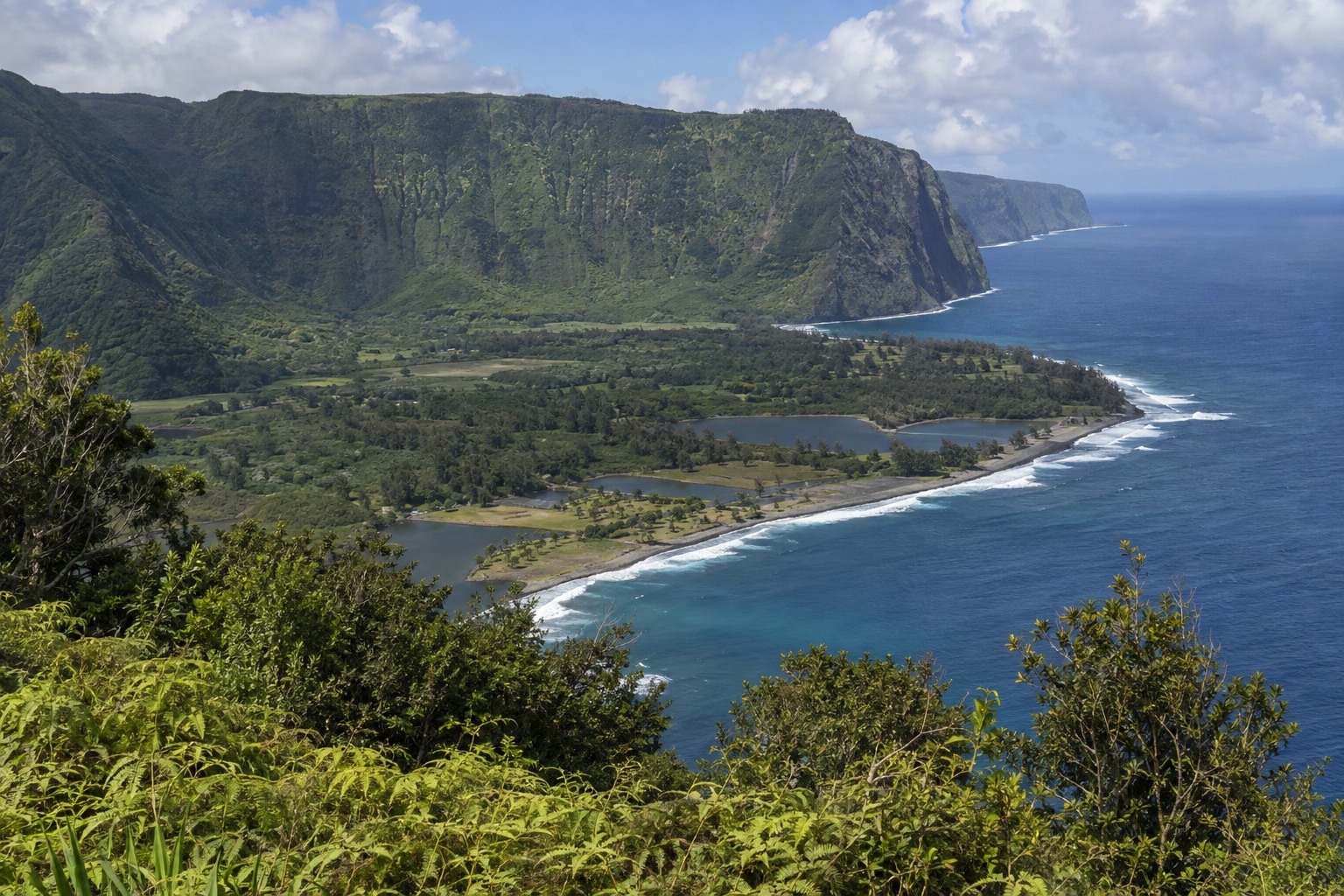
The road east follows the south shore past old fishponds, a long reef and small churches, then climbs into greener country toward Halawa Valley. This is the lush side of Molokai and the one most likely to catch an April shower, so keep a light rain jacket handy.
The valley is culturally significant and access is arranged through local families, so approach it with respect and follow whatever guidance residents and signs give. Even if you go no further than the overlook at the end of the road, the drive is among the loveliest on the island. Allow a relaxed half day.
Food on Molokai is small-scale and local: hot bread from a bakery, plate lunches, poke, fresh fish and fruit stands along the road. Hours are short and many places close early, so eat when you see something good. Evenings are quiet, and a sunset on the porch is the usual plan.
A two-day itinerary for Molokai in April
Day 1 starts in Kaunakakai with an early breakfast of fresh bread and coffee while the town is still quiet. Browse the shops and the wharf in the morning light, then pick up a plate lunch and drive west across the plain. Reach Papohaku for a picnic and a long beach walk in the warm early afternoon, shaded by the trees at the park.
Give the late afternoon to wandering the broad shore on the west end, then linger for sunset, when orange frequently spreads across the sky above the water. Drive back before full dark and have a simple dinner in town. If rain turns up, a slow loop through Kaunakakai’s stores and cafés makes a fine fallback.
Day 2 heads east. Leave after breakfast along the south shore, stopping at the roadside fishponds and small churches, and watch for the road turning greener as you go. The morning is the best time for the drive, before clouds build over the higher ground.
Reach the end of the road near Halawa for the overlook and a quiet walk, then head back for a late lunch. Use the afternoon for a swim or snorkel at a south-shore spot if conditions look gentle, following local signs.
End with a last look at the sunset from the wharf. If showers set in on the east end, shift to a museum-style stroll of town, a craft shop or a long coffee.
Is Molokai busy in April?
No, Molokai stays quiet in April, as it does most of the year, with only a modest rise in visitors when spring break and the Easter period bring families from the mainland.
With so few hotels, condos and restaurants on the island, the best rooms and rental cars can fill up even when only a modest number of visitors arrive. Book early for the weeks around Easter and school breaks, and a little later for the calmer weeks at the end of the month. Cars in particular are limited, so reserve one as soon as your flights are set.
Restaurants are small, many close early, and some are closed on certain days, so plan dinner rather than hoping to wander in late. Beaches stay uncrowded, and you can often have a long stretch of sand to yourself. There are no big cruise-ship days or large conferences to compete with.
The relaxed pace is the draw, so bring patience for slower service and shorter hours. That is part of what the island offers, and it is rarely a problem if you plan meals and gas fill-ups ahead.
What to pack for Molokai in April
Pack light, warm-weather clothes with a layer for breezy evenings and one for a passing shower.
- A light rain jacket, for showers on the green east end
- Bring mineral sunscreen plus a hat, because open beaches get intense sun.
- Sturdy sandals or shoes, for rough roadside paths and fishpond walks
- Snorkel gear, since rentals on the island are limited
- A refillable water bottle and snacks, for the long, quiet drives
- A light sweater, for breezy evenings
Good to know before you go
April falls outside the official hurricane season, which runs from June 1 to November 30. On Molokai, where services are few, top off your gas tank whenever you see a station, bring along water and snacks, and book your rental car well ahead. Accommodations carry state and county taxes on top of the room rate.
| Fee | Amount | Who pays |
|---|---|---|
| State Transient Accommodations Tax | 11.00% | Guests, on gross rental proceeds |
| Maui County surcharge on the General Excise Tax | 0.5% | Applied through Maui County, which includes Molokai |
Molokai in April vs March and May
Moving the trip to March means a bit more rain and slightly cooler days, with the last of the winter swell still reaching the north shore. The island is a little greener, and the sea is a touch cooler, but the pace is the same.
Going in May brings warmer, drier days, a slightly warmer sea and the buildup to Lei Day on May 1, when flower lei are everywhere. The weather is a little more settled, and swimming tends to feel easier as the season turns toward summer.
Choose March if you like a greener landscape and do not mind the odd shower. Choose May for the driest, warmest days. April sits between, with enough sun for the beach and enough green left to look lovely.
Is April a good time to visit Molokai?
Yes, April suits travelers who want warm days, a mostly dry island and a very quiet pace, especially those who like driving, beach walks and small-town stops over resort life.
It is less right for anyone who wants nightlife, big tours or a long list of restaurants. If you want guaranteed beach swimming with lifeguards and facilities, another island will serve better. On arrival, pick up your rental car and groceries first, then take a slow drive to Kaunakakai to get your bearings. What is special about April here is the balance: green hills left from the winter rains, long golden evenings and an island that simply carries on at its own pace.
Sources
- NOAA NCEI, monthly normals 1991-2020, station USW00022534, checked September 8, 2026
- Open-Meteo Marine API, average 2015-2024, checked September 8, 2026
- sunrise-sunset.org, sunrise and sunset calculated for the 15th of the month, checked September 8, 2026
- Hawaii Department of Taxation, Tax Announcement No. 2025-03 (Transient Accommodations Tax Law Changes from 2025 Legislative Session), files.hawaii.gov/tax/news/announce/ann25-03.pdf, checked September 24, 2026
- Hawaii Department of Taxation, County Surcharge on General Excise and Use Tax page, tax.hawaii.gov/geninfo/countysurcharge/, checked September 25, 2026
- NOAA NCEI, monthly normals 1991-2020, station USW00021504
- NWS Honolulu / Central Pacific Hurricane Center, « 2026 Central Pacific Hurricane Season Outlook », weather.gov/hfo/hurricaneOutlook2026, checked September 24, 2026