
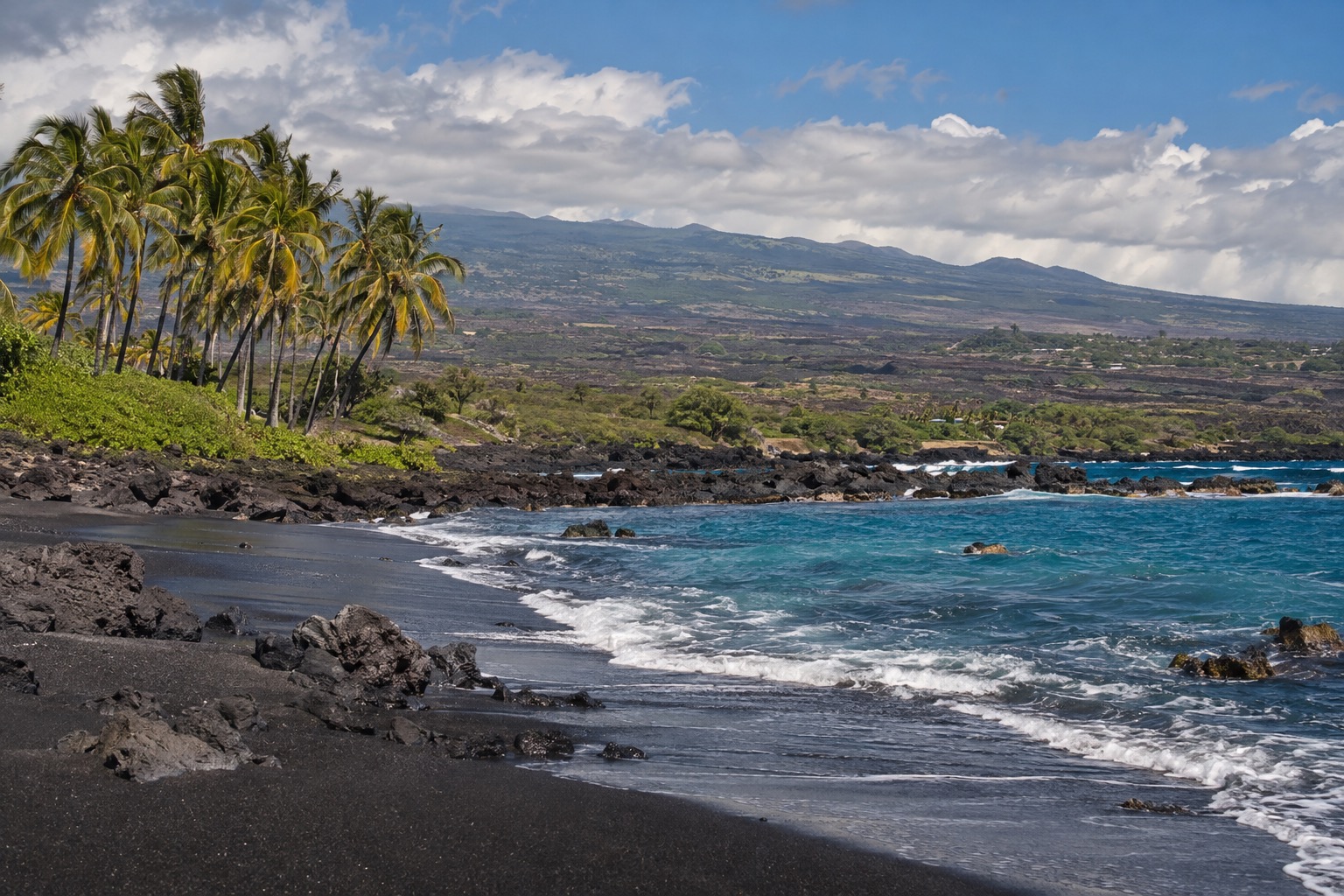
On an August morning at Punaluu, the black sand is already warm underfoot and the trade winds rustle the coconut palms behind the beach. Green sea turtles drift in the shallows or haul out on the dark sand to rest, and the only sounds are the surf and the occasional car pulling into the lot.
This is the quiet Ka’u coast of the Big Island, a place for slow mornings, turtle watching and long drives. August is a good month to enjoy it.
What is the weather like in Punaluu in August?
August in Punaluu is warm, mostly sunny and only lightly rainy, with mid-80s afternoons and mild nights that rarely need more than a thin layer.
| Month | Average high (°F) | Average low (°F) | Rain days | Sea (°F) |
|---|---|---|---|---|
| July | 84.0 | 69.9 | 3.0 | 78.5 |
| August | 84.5 | 70.6 | 2.6 | 79.1 |
| September | 84.0 | 70.3 | 3.6 | 79.8 |
Mornings are the best hours here. The light is clear and soft, the air has not yet heated up, and the beach is at its calmest. By midday the sun is strong, and the shade of the palms and the pavilions near the beach becomes the place to be. In the afternoon, clouds sometimes roll down off the slopes of Mauna Loa, and that usually brings a cooldown with no actual rain.
On the island’s southeast side, Punaluu receives more rain than dry Kona but much less than windward Hilo. In August, rain comes as short passing showers, usually a few days in the whole month, and they tend to blow through quickly. Kona, on the dry west side, is even sunnier, while Hilo is soggier, so this stretch of coast sits comfortably in the middle.
You can eat dinner outdoors in a T-shirt most evenings, but after sunset the ocean air may turn a bit chilly. Daylight lasts almost thirteen hours in mid-August, which leaves a lot of room for beach time, drives and stargazing afterward. Wear light cotton, a hat and a rash guard for the sun, and keep a thin jacket for the higher elevations you will pass on the way.
Can you swim in Punaluu in August?
You can take a comfortable dip because the water is warm, and the sea stays near the high 70s, yet at Punaluu swimming means wading and watching more than long laps.
On the Ka’u coast, Punaluu Black Sand Beach faces the open ocean, and the sea is often rough, with incoming waves and currents capable of dragging you along the shore. Summer tends to be gentler than winter on many south-facing shores, but conditions change from day to day.
Follow the beach signs and any lifeguard or ranger guidance, and stay out when the surf looks rough. Small children are happiest in the sheltered, shallow spots near the edge rather than farther out.
Snorkelers sometimes drift near the rocky edges on calm mornings, and you may see turtles grazing close to shore. Give them room, because they are protected, and never touch them or climb on them. By noon the sand turns dark and hot, so pack water shoes or sandals, a mask if snorkeling appeals to you, and a towel you will not mind getting gritty with black sand.
What to do in Punaluu in August
August has no single big festival here. What it offers is the Ka’u coast at a slow summer pace, with turtles on the beach, long drives through lava country and the quiet that comes with small-town Hawaii. The days suit unhurried exploring, so build them around early starts and long, lazy afternoons.
Punaluu Black Sand Beach and the turtles
The beach is the reason most people come. The sand is black because it comes from lava that shattered into tiny grains when it met the sea, and against the green palms and blue water it makes a striking photograph. The best hours are early morning and late afternoon, when the light is softer and the sand is cooler on bare feet.
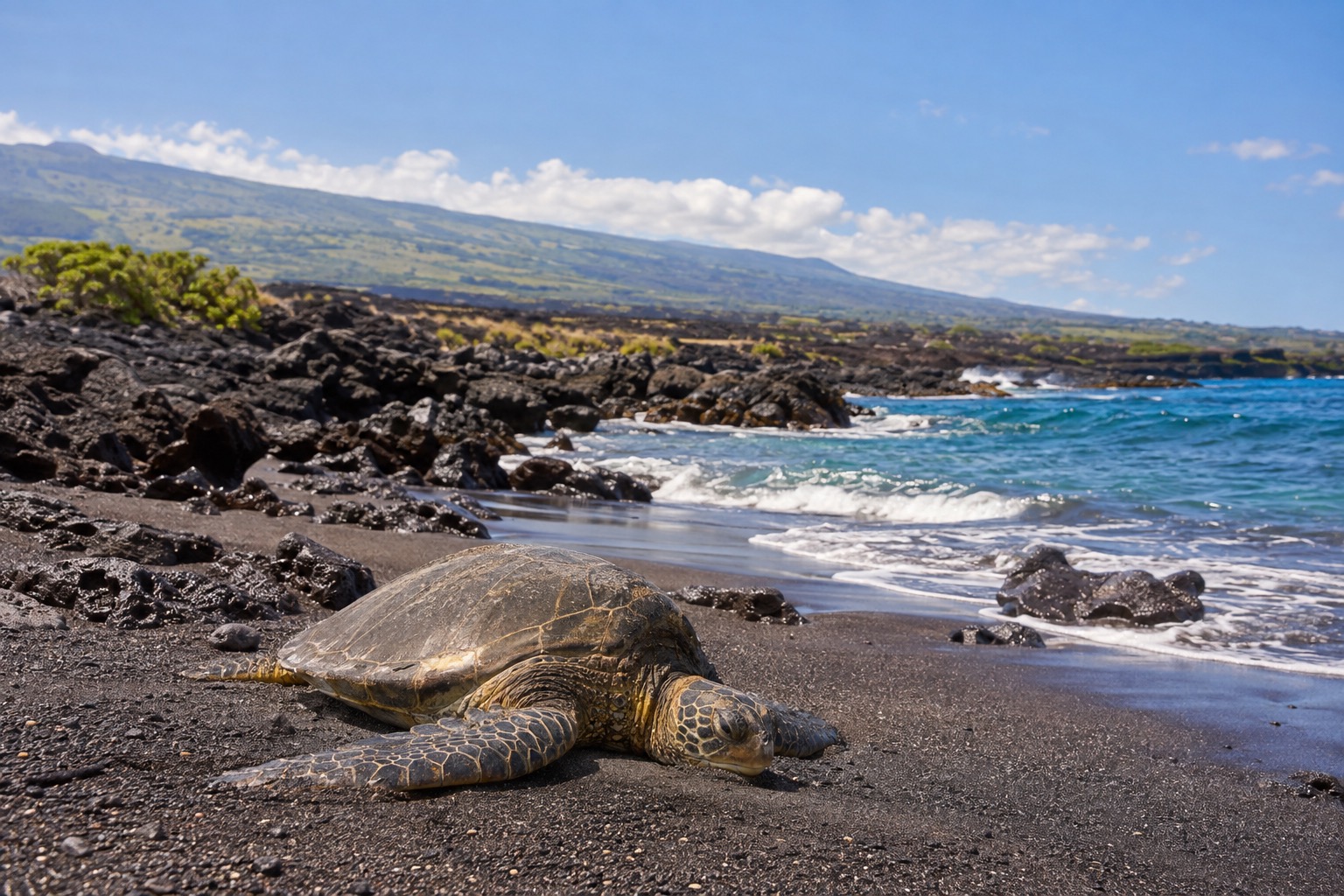
Green sea turtles, called honu, frequently nap on the sand or graze on algae near the rocks. You may see several in a single visit, though nothing is guaranteed. They are protected, so watch from a respectful distance, never touch them, and keep dogs and children from crowding them. A pair of binoculars or a zoom lens lets you enjoy them without getting close.
There is a picnic area with shade, a small park, and room to walk along the shore toward the old rock walls and the freshwater springs that bubble near the edge. It suits families, photographers and anyone who likes a place where doing very little feels like enough. Bring your own water and snacks, since services are limited.
Driving the Ka’u coast
The roads around Punaluu lead through open ranchland, lava fields and small communities, and the drive itself is part of the pleasure. Pahala, a former sugar town up the hill, has the feel of old plantation Hawaii with its wooden buildings and quiet streets. Naalehu, farther along, calls itself the southernmost town in the United States, and stopping for a snack or a roadside bakery is a pleasant break.
South Point, the southernmost tip of the island, is a windswept stretch of cliffs and open sea that rewards the longer drive. Green Sand Beach, nearby, is reached by a hike across the coastal plain, and August mornings are kinder for that walk than the midday heat. Wear sturdy shoes, take plenty of water and respect local signs about access and parking.
Volcanoes National Park and the high country
Hawaii Volcanoes National Park lies not far up the road toward Hilo, and it makes an easy day trip from Punaluu. The crater rim is cool and often damp, so the change from the warm beach is dramatic. You can walk through steam vents, look into the great caldera and follow short trails across old lava flows.
Bring a rain jacket even when the coast is sunny, because the high elevation makes its own weather. Whether or not there is a glow at night depends entirely on what the volcano is doing, so treat any lava view as a bonus rather than a plan. The park posts current conditions at its visitor centers, and those notices should guide where you go.
Along the way, the Ka’u coast has small farms and roadside stands selling coffee, macadamia nuts and tropical fruit. A cup of Ka’u coffee at a local cafe is a good way to start a morning before the beach, and a plate of fish or a loco moco in a small-town diner is a hearty lunch after a long drive.
A two-day itinerary for Punaluu in August
Day 1 belongs to the beach and the coast. Get to Punaluu early, as the sun is rising, when the sand feels cool and the honu tend to be easiest to spot. Walk the shoreline, watch the honu from a respectful distance and have a quiet breakfast from the supplies you brought or from a local bakery up the road.
By midday the sun is strong, so move to the shade for a picnic lunch and a slow stretch of reading or resting. In the afternoon, drive to Naalehu and Pahala for a wander through the small streets, a coffee stop and a look at the old plantation buildings. Return to the beach as the light softens for an evening walk, then eat dinner in town and watch the stars come out over a dark sky.
Day 2 heads out to the wider coast. Leave early for South Point and the cliffs, which are best before the wind and heat build, and consider the walk toward Green Sand Beach if you are comfortable with a long, exposed hike. Take water, a hat and sturdy shoes, and turn back if the sun feels too hard.
Spend the afternoon on the road toward Volcanoes National Park, where the cooler air and the crater views are a welcome change. If rain sets in, the visitor center exhibits and the short walks under cover make a good rainy-day plan. Finish with an early dinner in the nearby village and a slow drive back, with the sunset arriving a little after the day starts to fade.
Is Punaluu busy in August?
Punaluu is a quiet place even in summer, though August brings more visitors than the shoulder seasons because families travel while school is out.
The beach itself can get busy around midday when tour groups stop to see the turtles and the black sand, so mornings and late afternoons feel calmer. Lodging near Punaluu is limited, which means rooms and vacation rentals can fill, and it pays to book early if you are traveling in a holiday week. For quieter weeks later in the month, booking a little closer to the date is usually enough.
Rental cars matter here because the coast has little public transportation, and in the busy summer weeks it is wise to reserve ahead. Restaurants are few and small, so a table at dinner can take planning, and many places close earlier than you might expect. Nearby parks and attractions may also need reservations, so check the park websites before you go and rely on their notices rather than assumptions.
What to pack for Punaluu in August
Pack for sun, sand and a quick change of weather as you climb toward the volcano.
- Mineral sunscreen and a hat, because the sun is strong and there is little shade on the sand.
- Water shoes or sturdy sandals, since black sand gets very hot by midday.
- A light rain jacket for the crater rim, where it is cool and often wet.
- A refillable water bottle and snacks, as services near the beach are limited.
- Binoculars or a zoom lens to watch the turtles from a respectful distance.
- A thin sweater for evenings when the breeze picks up.
Good to know before you go
August falls inside the Central Pacific hurricane season, which runs from June 1 to November 30, so keep an eye on forecasts as your trip approaches. Along the Ka’u coast, services sit far apart, so before you head to Punaluu, fill the gas tank and pick up groceries. Lodging taxes add to the price of a room, so expect to pay a little more for your stay.
| Fee | Amount | Who pays |
|---|---|---|
| State Transient Accommodations Tax | 11.00% | Guests staying in hotels and rentals |
| County of Hawaii Transient Accommodations Tax | 3% | Guests staying in hotels and rentals |
| General Excise Tax pass-on (county) | Up to 4.7120% | Customers of businesses that pass it on |
Punaluu in August vs July and September
Moving the trip to July changes little in the weather. The air is almost the same, the sea is a shade cooler and the rain is about as light, and the main difference is the crowd, since July brings the peak of summer family travel. If you want the quieter beach, August is a gentle step toward calmer days.
September keeps the warm air and gives the sea a touch more warmth, but showers become a little more frequent. Schools are back in session on the mainland, so rooms and flights are easier to find and the beach feels more relaxed. It is still inside the hurricane season, so forecasts matter just as much.
Families tied to school calendars will find August the natural choice, while travelers with flexible schedules may prefer September for the lighter crowds. Those who want the very driest feel should look at the start of summer. For turtle watching and black sand walks, any of the three months works well.
Is August a good time to visit Punaluu?
Yes, August is a good time to visit Punaluu, especially for travelers who like warm days, light rain and a slow coastal pace.
It suits families on summer break, photographers chasing the black sand and anyone who wants to combine a quiet beach with a trip into the volcano country. Those hoping for nightlife, large resorts, or a beach where you can swim every day will find it a poor match, since the town is small and the surf is frequently rough. If you are coming for a lively scene, a resort coast is a better fit.
On arrival, head to the beach first, ideally in the morning, and watch the honu before the day heats up. Then plan your drives for the cooler hours and keep the volcano for a day when the clouds look kind. The memory you carry home from Punaluu in August is a turtle sprawled on sun heated black sand as the Pacific swells and breaks behind it.
Sources
- NOAA NCEI, monthly normals 1991-2020, station USC00518600, checked September 8, 2026
- Open-Meteo Marine API, average 2015-2024, checked September 8, 2026
- sunrise-sunset.org, sunrise and sunset calculated for the 15th of the month, checked September 8, 2026
- Hawaii Department of Taxation, Tax Announcement No. 2025-03 (Transient Accommodations Tax Law Changes from 2025 Legislative Session), files.hawaii.gov/tax/news/announce/ann25-03.pdf, checked September 24, 2026
- County of Hawaii, Department of Finance, Transient Accommodations Tax (TAT) page, hawaiicounty.gov/departments/finance/transient-accommodations-tax-tat (live returned HTTP 403 on request, read via Internet Archive Wayback Machine snapshot dated August 14, 2026, same official content), checked September 25, 2026
- Hawaii Department of Taxation, County Surcharge on General Excise and Use Tax page, tax.hawaii.gov/geninfo/countysurcharge/, checked September 25, 2026
- NOAA NCEI, monthly normals 1991-2020, station USW00021510
- NOAA NCEI, monthly normals 1991-2020, station USW00021504
- NWS Honolulu / Central Pacific Hurricane Center, « 2026 Central Pacific Hurricane Season Outlook », weather.gov/hfo/hurricaneOutlook2026, checked September 24, 2026