
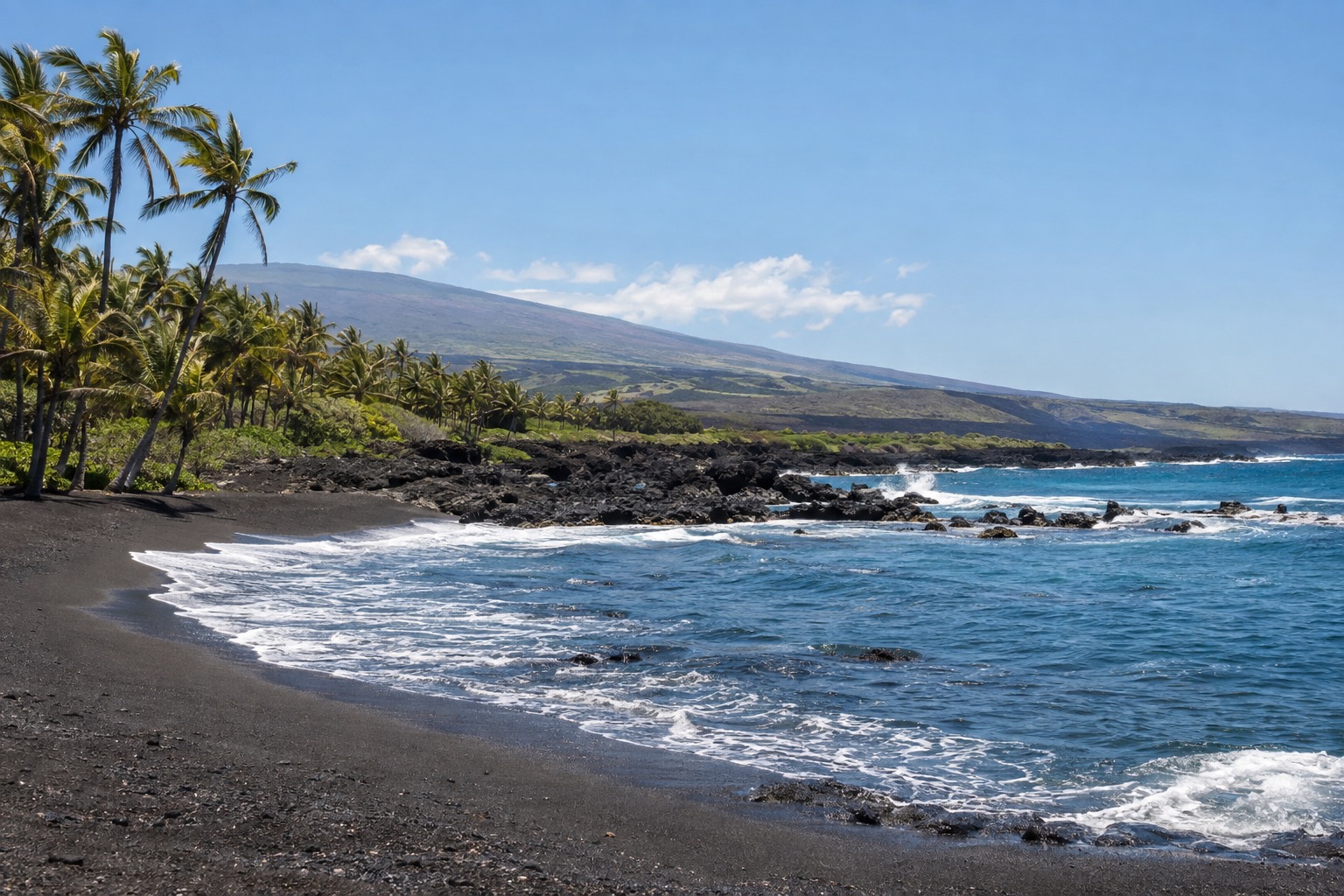
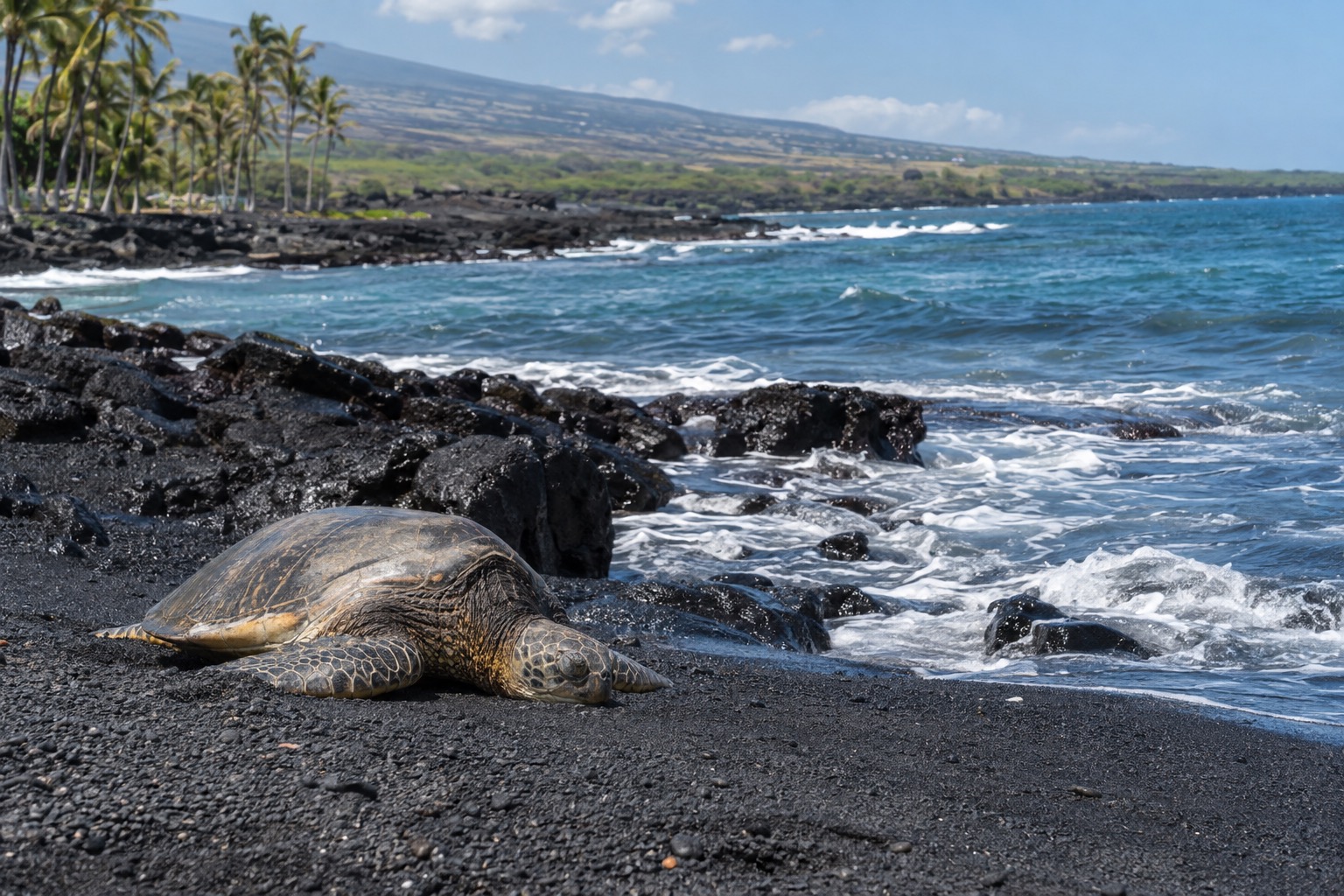
A February morning at Punaluu finds the black sand still cool beneath your feet, while the surf pounds the lava rocks along the bay’s edge. Honu, the Hawaiian green sea turtles, haul themselves onto the dark beach to doze in the early light, and the coconut palms rustle in the trade wind. This peaceful piece of the Big Island’s southeast shoreline is made for February, when the days invite you to slow down with beach walks, drives and leisurely lunches.
What is the weather like in Punaluu in February?
February is warm, breezy and a little showery, with comfortable afternoons and mild nights that never ask for more than a light layer.
| Month | Average high (°F) | Average low (°F) | Rain days | Sea (°F) |
|---|---|---|---|---|
| January | 79.4 | 65.0 | 4.3 | 77.4 |
| February | 79.9 | 64.9 | 4.2 | 76.4 |
| March | 79.6 | 65.8 | 4.6 | 75.9 |
Punaluu sits on the windward, southeast side of the Big Island, so showers can drift in off the ocean at any hour. They are usually brief, a passing squall that darkens the sky, soaks the lawn and moves on, and a rainbow over the bay often follows. The rare case is a long, soaking rain that lasts the whole day, and just roughly one day each month delivers an inch or more.
Mornings tend to be the clearest and most pleasant time for the beach, with soft, low light on the black sand. In the afternoon, you can comfortably wear shorts and a T-shirt, and clouds frequently gather above the coastal slopes of Mauna Loa. Evenings cool off gently, so a thin sweater or a light rain jacket is plenty for dinner outside.
Days are a little longer than in midwinter, with sunlight for roughly eleven and a half hours in the middle of the month. That leaves room for a full day of sightseeing before dusk, though the coast does not have the dry, sun-baked feel of the Kona side. Anyone chasing guaranteed sunshine will find it farther west, while Punaluu rewards people who like green hills and a little weather.
Can you swim in Punaluu in February?
The sea is mild enough for a dip, since the water off Punaluu sits in the mid-70s, but this is a coast known more for its scenery than for easy swimming.
Punaluu Black Sand Beach faces open ocean with no reef to break the swells, and the shoreline drops off quickly into rocks and surf. In winter the waves are often lively, and currents can run along the shore.
Many visitors wade, sit at the water’s edge and watch the sea rather than swim, and that is a sensible way to enjoy it. Always read the beach signs and follow any lifeguard’s guidance before getting in.
Snorkeling is not the draw here, and surfers will find better breaks elsewhere on the island. Families with small children do best on the sand and in the shallow, sheltered spots, keeping a close eye on the waves. Bring a towel, sandals for the hot black sand in the afternoon, and a hat. The turtles that rest on the beach are protected, so give them room and simply watch.
What to do in Punaluu in February
February on the Big Island is the heart of winter for humpback whales, which pass through Hawaiian waters in the cooler months. On a calm, clear day, you might see a spout or a tail breach from the coast, and binoculars come in handy. The same season brings big surf to some north and west shores of the islands, while the Ka’u coast stays a place for watching the ocean rather than playing in it.
It is also a gentle month for walking. Cooler air makes a long stroll along the shore comfortable, and the green pastures and macadamia and coffee farms in the hills above are at their freshest after winter rains. Roadside stands and small shops in the area sell local fruit, baked goods and coffee, and a picnic on the grass above the bay makes an easy lunch.
Punaluu Black Sand Beach and its turtles
Most visitors pull over for the beach itself, and what pulls them in is black sand ground from volcanic rock into fine grains, framed by blue water and green palms. Honu often come ashore to rest, and you can watch them from a respectful distance as they bask. Early morning is the best time, with softer light, fewer people and a better chance of seeing turtles on the sand.
Walk the length of the shore and look at the lava rock formations, the small ponds behind the beach and the weathered remains of an old landing. Do not touch or chase the turtles, and do not take sand home. The place is sacred to many Native Hawaiians, so a quiet, careful pace suits it. Bring water and a hat, since there is little shade on the open sand.
Driving the Ka’u coast
Punaluu sits along the highway between Hilo and Kona, and with a car it makes a natural stop on a loop around the island. Many visitors pair it with the volcano area to the northeast, going up to the cooler, misty rim of the crater in the same day. The drive passes lava fields, cattle ranches and open ocean views that change with the light.
Plan for slower travel than the map suggests, since the road is winding in places and you will want to stop for photographs. Fill the tank before leaving the larger towns, pack snacks and water, and bring a jacket for the higher elevations. Showers can come and go as you climb, so it helps to keep a raincoat within reach.
Food in the area is simple and local: plate lunches, fresh fish, poke and baked sweets from small shops and roadside stands. Sit down for a meal in a nearby town, or pick up fruit and snacks for a picnic. Evenings are quiet, so dinner is best planned early.
A two-day itinerary for Punaluu in February
By late morning, drive up into the hills for farm stands and a coffee, then have a plate lunch in a nearby town.
In the afternoon, head to the cooler uplands toward the volcano area, where a rim walk or a visit to a lookout fits the cloudy February weather well. Return along the coast as the light turns golden, with sunset a little after six, and have an early dinner at a casual local spot. If rain settles in, a small museum or cultural center in a nearby town makes a good indoor stop.
Day 2 begins with a slow breakfast and a coastal drive in the opposite direction, stopping at roadside lookouts to scan for whale spouts. Aim for the morning, when the sea is often smoother for spotting. Visit a macadamia or coffee farm for a tasting and a look at how the crop is grown and processed.
Spend the afternoon at a quiet local park or a short coastal trail, with a picnic if the sky is clear. Come back for sunset on the bay, when the dark sand glows and the palms stand out against the sky. If showers move in, browse a small gallery or market, then settle in for a relaxed supper.
Is Punaluu busy in February?
Punaluu is moderately busy in February, with steady day-trip traffic but none of the crowding that comes to the island’s big resort areas.
Winter is high season across Hawaii, and February draws mainland visitors escaping the cold, with the Presidents Day weekend a popular getaway. Most of that activity centers on the resort coasts and bigger towns. Punaluu itself is a stopping point on the road, so the beach sees tour vans and sightseers through the middle of the day, then quiets down in the early morning and late afternoon.
Rooms and rental cars across the Big Island tend to be in demand around holiday weekends, so book those early. Outside those dates you will find more flexibility, and restaurant tables in small towns rarely need much notice, though popular spots fill at dinner. If your plans include a national park visit or a boat trip for whales, arrange them ahead of time rather than on arrival.
For the most peaceful experience, visit the beach at first light or late in the day. Midday brings the most visitors, and weekdays are calmer than weekends.
What to pack for Punaluu in February
Pack for warm days, a few showers and cooler evenings, with layers that dry quickly.
- A light rain jacket, because showers pass through at any hour.
- Bring sturdy sandals or walking shoes, since paths are wet and the ground is lava rock.
- A sun hat and sunscreen, since the black sand beach has little shade.
- A light sweater for cool evenings and the higher elevations.
- Binoculars for spotting whales from the shore.
- A refillable water bottle for long drives and walks.
Good to know before you go
February falls outside the official hurricane season, which runs from June 1 to November 30. Getting around the Ka’u coast practically requires a car, and because services are spread out, fill the tank and carry water between towns. Winter surf can be strong on exposed beaches, so watch the waves before you step in.
| Fee | Amount | Who pays |
|---|---|---|
| State Transient Accommodations Tax | 11.00% | Guests on lodging stays |
| County of Hawaii Transient Accommodations Tax | 3% | Guests on lodging stays |
Punaluu in February vs January and March
Moving the trip to January brings a slightly warmer sea and similar rainfall, with the same winter whale season in full swing. The holiday crowds ease after the new year, though the month still draws plenty of visitors. The coast feels much the same, so the choice is mostly about dates and availability.
March keeps the mild air but the water cools a little further, and rain is a touch more frequent. Whale sightings begin to taper off as the season advances, and spring break brings families to the islands. Rooms and cars can tighten again, especially toward the end of the month.
Choose February if you want whales, relaxed beach walks and a middle path between the January rush and the March break. Shift earlier if you want the warmest sea, or later if you prefer a longer stay in spring light and do not mind a little more rain.
Is February a good time to visit Punaluu?
Yes, February is a good time to visit Punaluu for travelers who like quiet coastlines, wildlife and mild, changeable weather over guaranteed sun.
It will suit nature lovers, photographers, road trippers and anyone building a loop around the Big Island. It is less ideal for those who want a swim-and-lounge beach vacation with calm, clear water and constant sunshine. Travelers like that will do better over on the dry Kona side, keeping Punaluu as a stop for the day.
On arrival, head to the beach early, before the crowds, and let the turtles set the pace. Then fit in the drive up to the volcano area while the cooler weather makes it comfortable. What makes February here special is the combination of whale season offshore, resting honu on the dark sand and green hills freshened by winter rain, all within a few miles of each other.
Sources
- NOAA NCEI, monthly normals 1991-2020, station USC00518600, checked September 8, 2026
- Open-Meteo Marine API, average 2015-2024, checked September 8, 2026
- sunrise-sunset.org, sunrise and sunset calculated for the 15th of the month, checked September 8, 2026
- Hawaii Department of Taxation, Tax Announcement No. 2025-03 (Transient Accommodations Tax Law Changes from 2025 Legislative Session), files.hawaii.gov/tax/news/announce/ann25-03.pdf, checked September 24, 2026
- County of Hawaii, Department of Finance, Transient Accommodations Tax (TAT) page, hawaiicounty.gov/departments/finance/transient-accommodations-tax-tat (live returned HTTP 403 on request, read via Internet Archive Wayback Machine snapshot dated August 14, 2026, same official content), checked September 25, 2026
- Hawaii Department of Taxation, County Surcharge on General Excise and Use Tax page, tax.hawaii.gov/geninfo/countysurcharge/, checked September 25, 2026
- NOAA NCEI, monthly normals 1991-2020, station USW00021510
- NOAA NCEI, monthly normals 1991-2020, station USW00021504
- NWS Honolulu / Central Pacific Hurricane Center, « 2026 Central Pacific Hurricane Season Outlook », weather.gov/hfo/hurricaneOutlook2026, checked September 24, 2026