
On Molokai the year turns slowly. Winter mornings smell of wet red earth and plumeria, the humpbacks work the channel offshore, and the north cliffs take a pounding from big swells.
By summer the plain is dry and golden, the water is warm, and life moves at the pace of the island’s one main street in Kaunakakai. This is a place with no crowds to beat and no resorts to organize a stay around, so the season you choose shapes the mood more than the logistics.
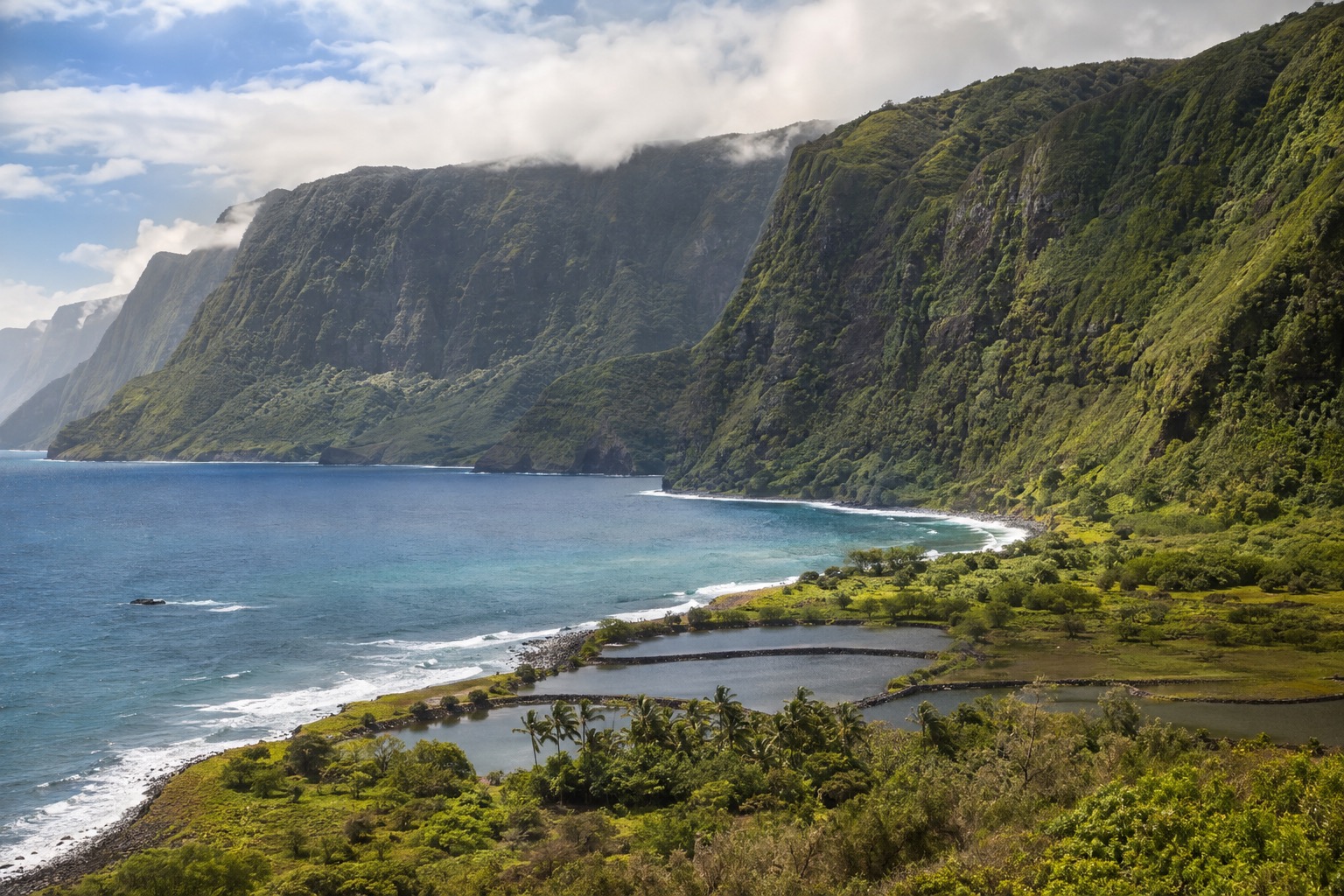
When is the best time to visit Molokai?
May through October is the best stretch for most travelers, with April and November as easy shoulder months when the island is green, warm and quiet. The sun is dependable, the days are long, and the sea is at its warmest.
For beaches and the water, summer and early fall are the easiest. The south shore is sheltered from the winter swells, the days run past thirteen hours of light in June, and the sea feels like a warm bath by September. Winter brings more showers and rougher water on the north and west sides, so read the posted warnings and the day’s surf and currents before you go in, and swim near a lifeguard only where one is on duty.
For sightseeing, the drier months make the drive east along the coast and up to the Palaau overlook pleasant, with clear views over the Kalaupapa Peninsula. Winter has its own reward: waterfalls run, the hills turn emerald, and humpback whales are around. Budget travelers and anyone who wants true quiet will do well in spring after the holiday rush or in the autumn months.
Families should know that March is spring break season across the mainland, and even on a quiet island it means fuller flights and fewer rental options. Summer is the other family stretch, with school out and the warmest water for children who like to splash near shore.
Molokai weather by month
Molokai Airport sits on the dry central plain, so these numbers read as sunny leeward weather, while the green east end and the mountains get a good deal more rain.
| Month | Average high (°F) | Average low (°F) | Rain (in) | Rain days | Sea (°F) |
|---|---|---|---|---|---|
| January | 78.8 | 64.3 | 3.56 | 5.0 | 77.5 |
| February | 78.8 | 64.6 | 2.31 | 4.6 | 76.4 |
| March | 79.2 | 65.8 | 3.02 | 5.2 | 76.2 |
| April | 81.0 | 67.1 | 1.54 | 3.4 | 76.9 |
| May | 82.8 | 68.6 | 1.15 | 2.1 | 77.8 |
| June | 84.7 | 71.5 | 0.61 | 1.1 | 79.0 |
| July | 85.5 | 72.7 | 0.62 | 1.7 | 79.8 |
| August | 86.5 | 73.4 | 0.84 | 1.7 | 80.1 |
| September | 86.7 | 72.8 | 0.99 | 1.9 | 80.9 |
| October | 85.5 | 71.4 | 1.54 | 2.7 | 80.7 |
| November | 82.8 | 69.6 | 2.67 | 4.3 | 79.2 |
| December | 80.2 | 66.9 | 2.87 | 5.1 | 78.3 |
The year has two moods. From May to October it is hot, dry and bright, with showers rare and brief. From November to April the air cools a little and rain comes more often, usually as passing showers that blow over by the afternoon, with the occasional gray day when a winter front pushes through. Even the wettest month leaves most days dry, and the mornings are often clear.
When is Molokai cheapest and least crowded?
Molokai is quiet nearly all year, and the least crowded stretches are late April through early June and again from September to mid-November. Rooms and rental cars are easy to find then, and the beaches are often empty.
The busy weeks are the ones that fill every island: spring break in March, the week around Easter, the summer family weeks from June through July, and the stretch between Christmas and New Year. Molokai has very few places to stay, so even a modest rush can leave little choice, and booking early matters more here than on the bigger islands.
Off the peak weeks, the island feels almost private. You can have a stretch of sand to yourself, find a table at the local lunch counters, and talk with people at the farm stands who are not in a hurry.
Which months should you avoid in Molokai?
No month is a bad one on Molokai, but a few carry trade-offs. The Central Pacific hurricane season runs from June 1 to November 30, and while Hawaii is rarely hit, those months are the ones when a tropical system can disrupt flights and plans.
Winter, especially December through February, is the wettest and most changeable time, with rain on about five days a month and big surf on the north shore that keeps swimmers away from many beaches. The windward east end and the high valleys are wetter still than the airport plain. Late summer is the hottest, with highs in the mid-80s and little shade on the open plain, so midday outings call for early starts.
When can you swim in Molokai?
You can swim in the sea year round, and the warmest water comes from June through November.
The sea stays in the upper 70s even in the coolest months and reaches about 80 from late summer into October, comfortable without a wetsuit. The south shore, protected by the reef, is usually the gentlest side in summer, while winter swells can reach it and turn the water choppy. North shore beaches and the cliffs are rough much of the year and often unfit for swimming, particularly in winter.
Conditions change by the day and by the beach, so the posted signs and local advice decide where you get in. Stay off the reef, which is alive and easily damaged, and keep your distance from any monk seal or turtle resting on the sand.
Festivals and events in Molokai through the year
Winter: whales and holiday gatherings
Humpback whales spend the winter in the warm channel waters, and from the shore or on a boat tour you can sometimes spot spouts and breaches. The south coast and the road along it make good lookouts on a clear morning, and early hours tend to be calmest on the water.
Christmas and New Year are family times, with gatherings, potlucks and church services in small communities. Visitors will find an island that is closer to home life than to a holiday show, so the pleasure is in the warmth of ordinary celebration rather than big spectacles.
Spring and summer: Lei Day and Kamehameha Day
May 1 is Lei Day, celebrated across Hawaii with flower leis, hula and music. Molokai is known as the birthplace of hula, and local halau keep that tradition close, so a spring visit is a good moment to hear chant and see dancing in its home setting.
Kamehameha Day on June 11 brings parades and lei draping in many communities. Summer weekends also bring local fundraisers, canoe paddling and fishing gatherings, and the invitation is usually open to anyone who asks politely and shows up with respect.
Kalaupapa and the quiet seasons
Kalaupapa National Historical Park has resumed public tours on Thursdays and Saturdays, and visits are by permit, usually with a guided tour from a private operator, reached by trail, mule ride or small plane. The peninsula holds the story of the people sent there under the leprosy isolation policy, and the experience is solemn rather than festive.
If you cannot join a tour, the overlook at Palaau State Park gives a wide view of the peninsula and the sea cliffs behind it. Clear mornings in the drier months tend to give the best light, and the quiet in the woods around the overlook suits the mood of the place.
Sources
- NOAA NCEI, monthly normals 1991-2020, station USW00022534, checked September 8, 2026
- Open-Meteo Marine API, average 2015-2024, checked September 8, 2026
- sunrise-sunset.org, sunrise and sunset calculated for the 15th of the month, checked September 8, 2026
- Hawaii Department of Taxation, Tax Announcement No. 2025-03 (Transient Accommodations Tax Law Changes from 2025 Legislative Session), files.hawaii.gov/tax/news/announce/ann25-03.pdf, checked September 24, 2026
- Hawaii Department of Taxation, County Surcharge on General Excise and Use Tax page, tax.hawaii.gov/geninfo/countysurcharge/, checked September 25, 2026
- Federal Aviation Administration, CY2024 Commercial Service Enplanements (xlsx), faa.gov/airports/planning_capacity/passenger_allcargo_stats/passenger/arp-cy2024-commercial-service-enplanements.xlsx, checked September 24, 2026
- National Park Service, "Kalaupapa National Historical Park to Offer Public Tours", nps.gov/kala/learn/news/kalaupapa-national-historical-park-to-offer-public-tours.htm, read September 25, 2026
- National Park Service, "The History of Hansen's Disease in Hawaii", nps.gov/kala/learn/historyculture/hansensdisease.htm, read September 25, 2026
- National Park Service, "Alerts & Conditions", nps.gov/kala/planyourvisit/conditions.htm, read September 25, 2026
- DLNR Division of State Parks, "Palaau State Park", dlnr.hawaii.gov/dsp/parks/molokai/palaau-state-park/, read September 25, 2026
- State of Hawaii Data Book 2024, Table 5.10 "Land Area, By Island: 2010" (source: U.S. Census Bureau 2010 Census Redistricting Data), files.hawaii.gov/dbedt/economic/databook/2024-individual/05/051024.pdf, read September 25, 2026
- NOAA NCEI, monthly normals 1991-2020, station USW00021504
- NWS Honolulu / Central Pacific Hurricane Center, « 2026 Central Pacific Hurricane Season Outlook », weather.gov/hfo/hurricaneOutlook2026, checked September 24, 2026