
PORTUGAL · WHERE TO STAY · THE MAINLAND, BASE BY BASE
Mainland Portugal looks small on the map and moves slowly inside it. The run from Lisbon to a Douro quinta or an Alentejo hill town eats a morning, and every hotel change costs a check-out, a transfer and the afternoon that follows. So the question this page answers is not which property to book. It is how many times you change hotel over a week or ten days, and which cities and regions deserve a bed rather than a day trip.
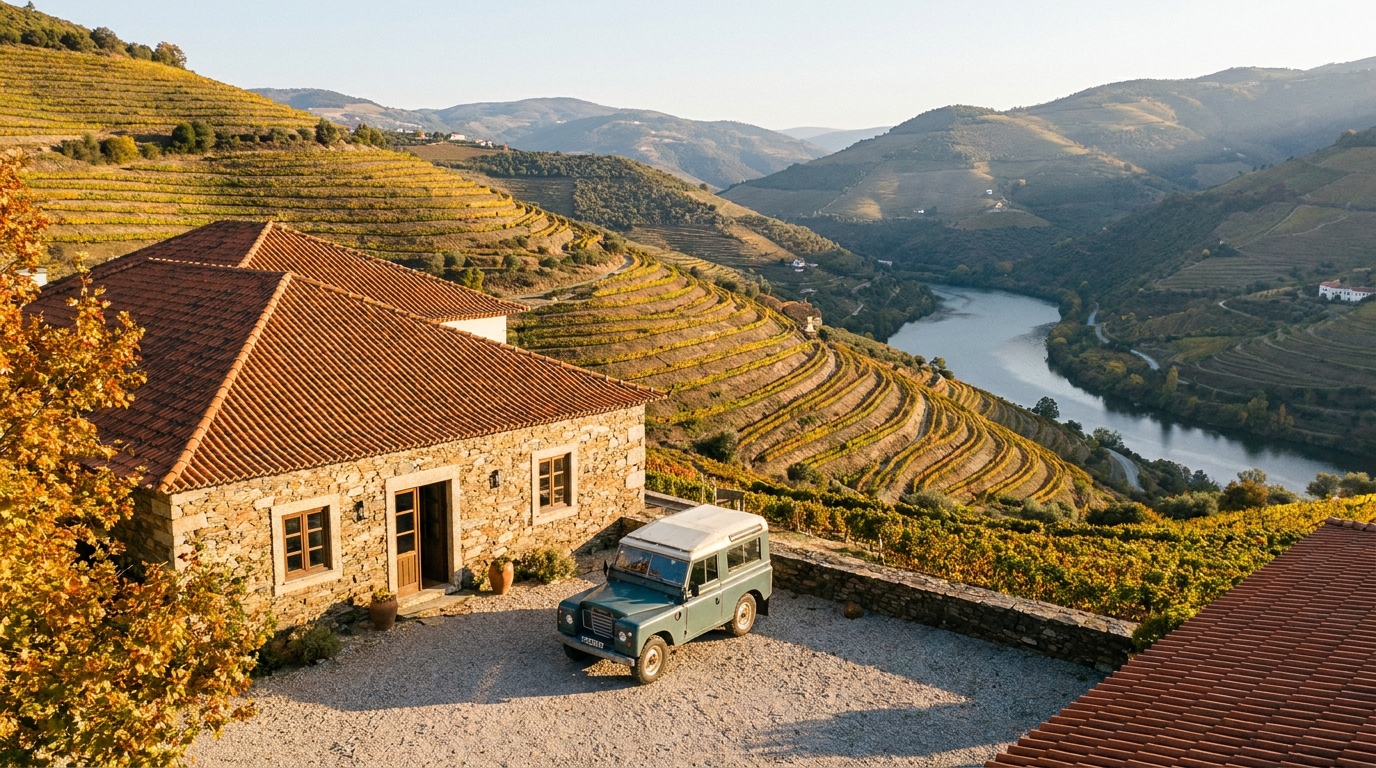
THE DECISION AT A GLANCE · WHERE TO STAY IN PORTUGAL
Two bases for a week, three for ten days (est.), each one chosen so that a second and third region sit within about two hours of the front door.
MAINLAND PORTUGAL · TWO OR THREE ADDRESSES · MADEIRA AND THE AZORES ARE SEPARATE TRIPS
Go for: one city base you can walk out of without keys, plus one rural or coastal base where a car earns its parking space.
Think twice before: booking a new hotel every night. The distances are short, the back roads and the mountain stretches are not fast.
Nights and car calls are editorial estimates · rates live in the cost guide · full sources at the end
On this page
- Which cities and regions do I sleep in?Lisbon, Porto, Douro, Algarve, Alentejo, Sintra or Cascais
- Country quinta or city hotel?The questions to ask before booking either
- One table with nights and carThe base matrix
- Stairs, night noise, August ratesThree checks before you pay
Where to stay in Portugal: best regions and towns
Lisbon needs no car and opens the most: Sintra’s palaces, the Cascais and Estoril beach line and the Arrábida coast beyond Setúbal all sit within about an hour, and the metro runs from the airport. The cost is volume and price. Rates in greater Lisbon often run above the national average, and historic-center streets carry bar noise and suitcase wheels late. Porto is the compact alternative and the door to the north, with Gaia’s lodges across the bridge, rail to Braga and Guimarães, and the Douro line leaving from the same platforms. The head-to-head settles the tie.
The Douro only counts as a base if you sleep in it: one or two nights at a quinta, reached by car or by the riverside train to Pinhão, with terraces outside the window and, in September and October, the working harvest. The Algarve is several coasts under one name. Tavira and the Ria Formosa lagoons in the east, the cliff coves around Lagos, the surf beaches of the southwest and Faro’s walled center behave nothing alike, and a regional rail line links Lagos, Faro and Vila Real de Santo António. August fills all of them at once.
The Alentejo splits by lodging type rather than by town.
Évora is served by train and by coach and works as a car-free stay inside the walls. A herdade among the cork oaks, or Monsaraz above the Alqueva lake, needs a car to reach the gate and to leave it again. As an alternative to sleeping in the capital, Sintra and Cascais are two different offers: the palace town puts you on the hill before the first day-trip trains unload, with the traffic and the gradients that come with it. Cascais gives Atlantic evenings and a commuter line straight into Lisbon.
Quintas vs hotels in Portugal
The Portuguese fork is rural against urban. A quinta, a herdade or a casa de campo usually sits outside a village, at the end of a track, surrounded by vines, cork oaks or nothing at all. A city hotel in Lisbon, Porto, Évora or Faro puts dinner, a bakery and a train station within a few hundred yards of the lobby. That single difference decides your evenings, your car and how much of the day you spend behind a windshield.
Rural stays vary property by property, so treat the brochure as a starting point and confirm four things in writing: whether dinner is served on site and on which nights, how late reception is staffed for a delayed arrival, how far the nearest open restaurant is by road, and what the rate actually includes (breakfast, tastings, transfers to the station). Ask the same about the final approach. Some tracks are gravel, gated and unlit after dark.
City hotels swap those questions for parking. Lisbon’s downtown runs a low-emission zone and offers almost nowhere to leave a car, which is the practical argument for collecting the rental on the way out of town rather than on arrival. The car guide covers the paperwork and the electronic tolls, and Getting Around Portugal shows which legs the train does better anyway.
Where to stay in Portugal
| Base | What it opens within ~2 hours | Best for | Car | Nights (est.) | The catch |
|---|---|---|---|---|---|
| Lisbon | Sintra, Cascais, Setúbal and Arrábida | First-timers, city walkers, food | No | 3–5 | Rates often above the national average, night noise in the old center |
| Porto | Douro Valley, Braga, Guimarães, Gaia lodges | Repeat visitors, wine, compact city days | No | 2–3 | Wetter and hillier than the south |
| Douro Valley (quinta) | Pinhão, the terraces, harvest season | Couples, wine trips, slow days | Helpful | 1–2 | Dinner and late arrival depend on the property |
| Algarve (east, central or west) | Ria Formosa, Lagos coves, Costa Vicentina, Faro | Beach chapters, families, surfers | Helpful | 3–5 | August saturation and peak-season pricing |
| Alentejo (Évora or a herdade) | Hill towns, Alqueva, cork-oak plains | Road trips, wine and dark skies | Needed beyond town | 2–3 | Car-free works in Évora only, not on a rural circuit |
| Sintra | Palaces, the Colares side, Lisbon by train | Palace mornings before the crowd | No | 1–2 | Hills, gradients and day-trip traffic |
| Cascais | Atlantic beaches, Lisbon by commuter rail | A coastal evening base near the capital | No | 1–3 | Seaside seasonality, verify rates against Lisbon |
Hotels in Portugal: what rooms are like and the best time to book
1. The last hundred yards. Old Lisbon, Porto’s Ribeira and Sintra are built on gradients and stairs, so ask how close a car or taxi gets with the bags. 2. Night noise. Historic centers host the bars and the rolling suitcases, and a courtyard-facing room is worth requesting by name.
3. Southern calendar. Algarve rates move with the season, and the money side belongs to the cost guide, not to a guess made at booking.
The last word
The test that sorts Portuguese bases is what stands within two hours of the front door. Lisbon answers with Sintra, Cascais and the Arrábida cliffs. Porto answers with the Douro terraces and the granite streets of Guimarães. A herdade in the Alentejo answers with cork oaks, a hill town and a sky dark enough to count satellites, which is exactly why it also answers with a rental car. Pick the answers you want, and the hotel list shrinks to something you can read in one sitting.
Set the route first in the 7-day plan, the 10-day route or the two-week sweep, then price the beds in the cost guide and read the table manners in know before you go. Madeira and the Azores stay out on purpose: each needs its own flight and its own week, and the country guide explains why.
Sources & data for this guide
- Base personalities, night counts and car calls · editorial estimates from our reporting, not quoted figures · checked Sep 14, 2026
- Algarve regional rail (Lagos, Faro, Vila Real de Santo António) and rail plus coach service to Évora · confirm current timetables with the operator before booking · checked Sep 14, 2026
- Room rates and seasonal pricing · delegated to Portugal Trip Cost · checked Sep 14, 2026
- Lisbon low-emission zone and parking, tolls and rental rules · Renting a Car in Portugal · checked Sep 14, 2026
- Editorial note: we name no properties and quote no rates here. Dinner service, reception hours and included extras change by property and by season, so confirm them with the owner directly.