
PORT ANTONIO · FEBRUARY · 18.18° N
Port Antonio in February is the driest of the three months from January to March at the grid cell our climate figures come from: 2.63 inches of rain on average, against 3.75 in January and 3.81 in March. You have already chosen the town, with its peninsula, its lighthouse and the Blue and John Crow Mountains rising behind it. The open question is the date, and February brings the fewest wet days of the three, about 7.7, with a sea that averages 81.4°F at its daily peak.
You give up a little by choosing February. The water runs 1.0°F cooler than in January, afternoons sit 0.7°F below March, and the sun sets at 6:07 p.m. on the 15th. For a vacation built on a morning walk through the old town, an afternoon swim and one long day inland, those margins are thin. Plan the trip around that inland day and keep it movable.
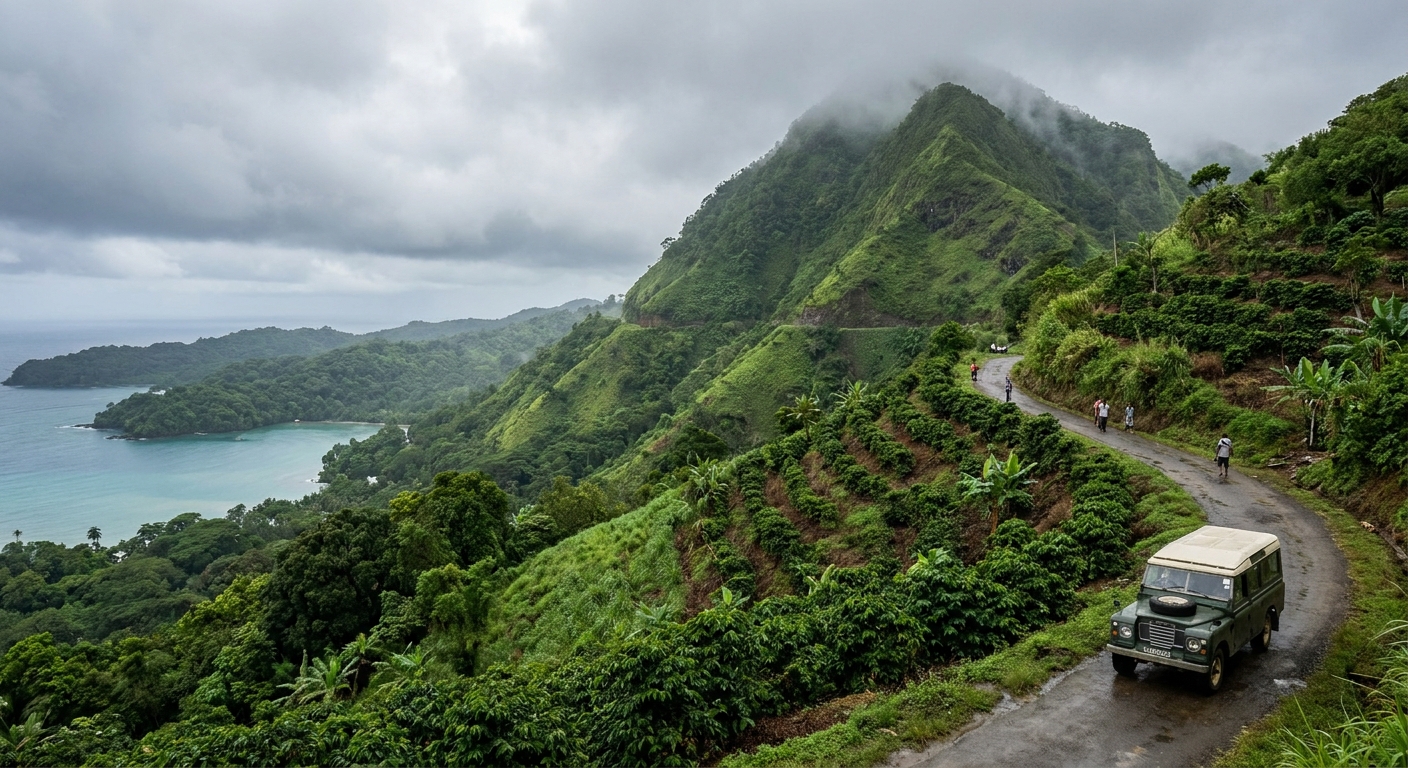
THE MONTH AT A GLANCE · PORT ANTONIO IN FEBRUARY
February is the driest month from January to March in Port Antonio at 2.63 inches, with the sea at 81.4°F: come for warm swims and one long mountain day, and keep that day movable.
DRIEST OF JAN TO MAR · SEA 81.4°F DAILY MAX · SUNSET 6:07 P.M.
Go for: warm-water swims, a heritage walk on the Titchfield Peninsula and the best odds of a dry day in the Blue and John Crow Mountains between January and March.
Think twice before: counting on unbroken sun. The town sits in Jamaica’s rainiest corner, and 7.7 days of an average February see measurable rain.
Climate: Open-Meteo ERA5 reanalysis · Sea: Open-Meteo Marine API · Sites: Jamaica National Heritage Trust, UNESCO · full sources at the end
On this page
- Port Antonio weather in FebruaryHighs of 79.7°F, lows of 72.0°F, 7.7 wet days
- Can you swim in Port Antonio in February?Sea at 81.4°F as a daily maximum
- How busy is Port Antonio in February?Booking, lodging tax and where to spend more
- Things to do in Port Antonio in FebruaryTitchfield Peninsula, Folly Point, Moore Town
- Two days in Port AntonioA day on the peninsula, a day in the mountains
- February vs January or MarchRain, highs and sea in all three months
- Is February a good time to visit?Who February suits and who should pick another month
Every figure here comes from a single model grid cell centered at 18.18° N, 76.45° W, over Port Antonio at the wet northeastern end of Jamaica. That corner is the rainiest on the island, and the normals below carry it. Treat them as Port Antonio figures only, and turn to our Jamaica best-time guide for the island-wide calendar.
Port Antonio weather in February: average highs, lows and rain days
| February normal | Value | Source |
|---|---|---|
| Average high | 79.7°F | ERA5 reanalysis, 1991-2020 |
| Average low | 72.0°F | ERA5 reanalysis, 1991-2020 |
| Precipitation | 2.63 in | ERA5 reanalysis, 1991-2020 |
| Days with 0.10 in or more | 7.7 | ERA5 reanalysis, 1991-2020 |
| Days with 1 in or more | 0.2 | ERA5 reanalysis, 1991-2020 |
| Daylight on Feb 15 | 11 h 36 min | sunrise-sunset.org |
| Sunrise · sunset, Feb 15 | 6:32 a.m. · 6:07 p.m. | sunrise-sunset.org, local time |
Open-Meteo’s ERA5 reanalysis gives Port Antonio a February average high of 79.7°F and a low of 72.0°F, with 2.63 inches of precipitation, as 1991-2020 normals. ERA5 is a weather model rerun over past decades and averaged across a grid cell, so these are modeled values, and they can drift from what an airport thermometer records, most often on the overnight low.
At least 0.10 inch falls on 7.7 days of an average February, a little more than one day in four. A day with an inch or more comes around 0.2 times per February, which works out to one such soaking about every five years. Most wet days, in other words, bring showers well short of an inch. Keep one indoor option ready for each day and hold the long outing loose.
Afternoons peak near 79.7°F and nights settle at 72.0°F, a gap of 7.7°F. Shorts and short sleeves work around the clock in town. Pack one long-sleeved layer for evenings by the water and a light rain shell for the showers. For the Blue and John Crow Mountains, rising to 7,402 feet, add a warmer layer: we have no normals for the ridges, and the town figures stop at the coast. Our Jamaica packing list covers the rest of the bag.
On February 15 Port Antonio gets about 11 hours 36 minutes of daylight. The sun rises at 6:32 a.m. and sets at 6:07 p.m. local time, with Jamaica on UTC minus 5 all year. Plan outdoor sightseeing between 7 a.m. and 5:30 p.m., save the lighthouse or the waterfront for the last hour, and book dinner for after dark.
Can you swim in Port Antonio in February? Sea temperature and what it feels like
The Open-Meteo Marine API puts the sea surface off Port Antonio at 81.4°F in February, averaged over 2015-2024. That figure is the mean of each day’s maximum, so it runs a shade warmer than a 24-hour average would, and tables built on full-day means will print a lower number for the same water. We serve the daily maximum because it matches the hours most people swim.
In practice the water sits about 1.7°F above the average afternoon high of 79.7°F and 9.4°F above the 72.0°F low. Wading in at midday takes no bracing for most swimmers, and an early dip feels warm against the cooler dawn air. Bring a cover-up for leaving the water after 5 p.m., as the air drifts toward its low.
We could not verify wind or swell data for Port Antonio in February, so we give no wave height and no promise of a calm sea. Check the local marine forecast each morning, ask at your hotel or at the beach before swimming, and read our Jamaica safety guide for the water-safety basics.
How busy is Port Antonio in February? Crowds and prices
We found no occupancy series and no monthly room-rate data for Port Antonio, so we rank February neither expensive nor cheap against the rest of the year. The calendar does settle one point: February falls outside the Atlantic hurricane season, whose dates and monthly risk sit in our Jamaica hurricane guide. For the island’s seasons side by side, see the best time to visit Jamaica.
Without a rate series we cannot tell you how many weeks ahead February fills in Port Antonio, so we set no deadline. Book the room once your flight is fixed, and favor a refundable rate while dates may still move. Routes from US gateways are in our flights guide, and the ride from the airport to the northeast coast is in Jamaica airport transfers.
We could not verify a guest accommodation tax or lodging levy for Port Antonio, so we give no amount and no percentage. Before you pay, ask the property whether its quoted nightly rate includes taxes and service charges, and get the total in writing. Our Jamaica trip-cost guide covers the wider budget.
Hire a driver by the day for the mountain outing: of every extra you could pay for in February, it is the one that changes the trip. A day rate, instead of a fixed-date tour, lets you move the Blue and John Crow Mountains to the clearest morning of your stay, and with 7.7 wet days in an average February that freedom counts. Our getting-around guide covers moving around the island, and our guide to Jamaica after Hurricane Melissa is the read to do before you book.
Things to do in Port Antonio in February
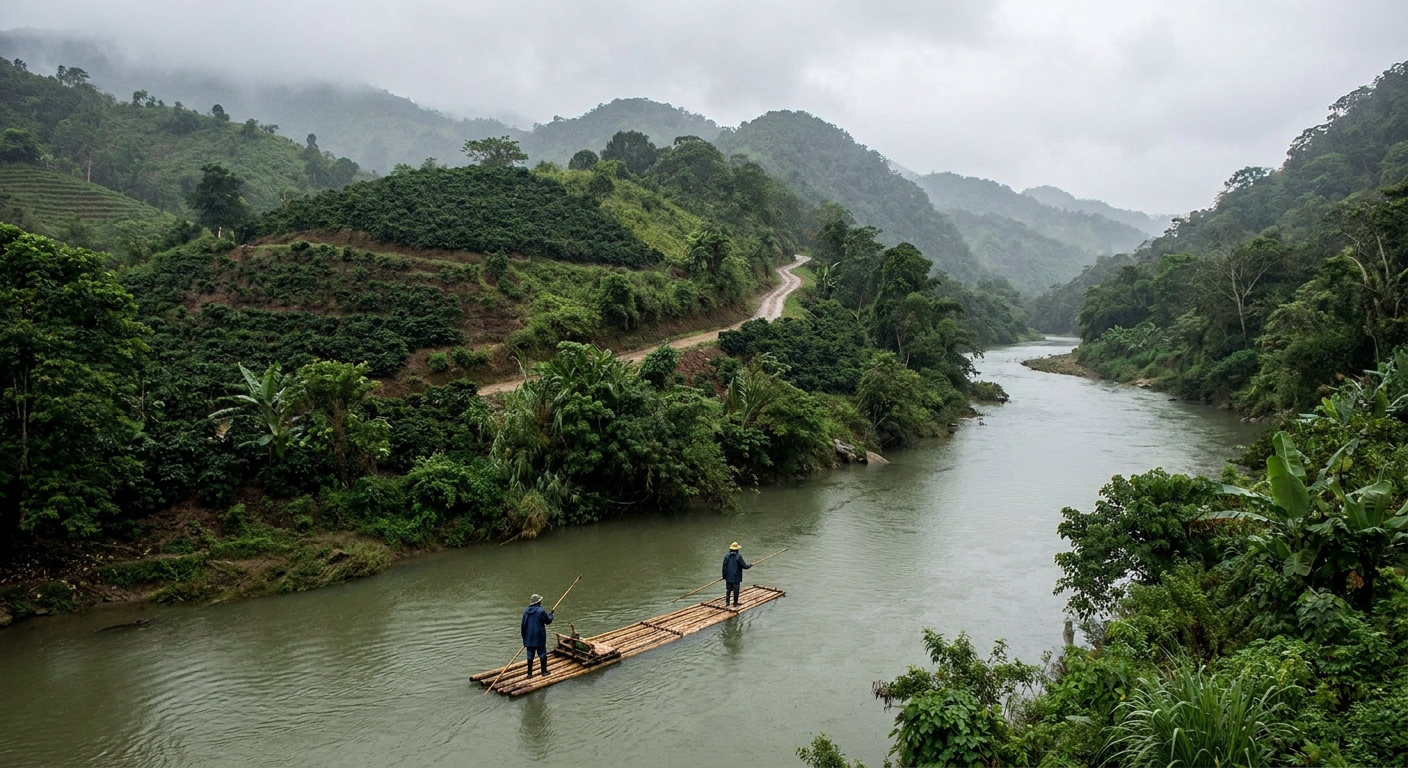
February brings the fewest wet days of any month from January to March at the Port Antonio grid cell, 7.7 against 9.9 and 8.6, along with the least rain at 2.63 inches. Of the three, it gives the best odds for a full day in the Blue and John Crow Mountains, where a washed-out morning costs you the most. Afternoons near 79.7°F also suit the steep walk around the old town.
On the Titchfield Peninsula, the first place in the area settled by the English and the oldest settlement of Port Antonio, stand Fort George and DeMontevin Lodge, an eclectic mix of Victorian styles. The Court House went up in 1895, and Christ Church stands on land indentured on September 3, 1836. Folly Point Lighthouse dates from 1888, its masonry tower built fireproof. Inland, the Blue and John Crow Mountains became Jamaica’s first UNESCO World Heritage site in 2015: about 64,870 acres (26,251.6 hectares) from 2,789 to 7,402 feet. The Jamaica National Heritage Trust publishes no visiting hours or prices, and we found none for any site, nor a raft rate on the Rio Grande.
The buildings and the Maroon villages stay the same all year, but the air shifts. February rain at the grid cell falls to 2.63 inches, 1.12 inches below January, so a morning on the open peninsula or a drive inland to Moore Town is less likely to meet a downpour. Moore Town is governed today by a Colonel, an honorary title earned by his ancestors, and UNESCO inscribed its Maroon heritage on the Intangible Cultural Heritage list in 2008. Higher up, the coastal normals stop applying: the mountains reach 7,402 feet, and cooler air comes with the altitude.
We could not verify free admission at any Port Antonio site. The exteriors cost nothing to see from public streets, including the 1895 Court House, Christ Church and the Victorian front of DeMontevin Lodge. West of town, Orange Bay Railway Station shows Jamaica Georgian features. Seaman’s Valley holds the ruins of a great house and the first European cemetery in the area, and Charles Town, near Buff Bay, emerged around 1754.
Port Antonio in February: a two-day itinerary
Day one stays in town and follows the light. At 7 a.m., half an hour after the 6:32 sunrise, walk the Titchfield Peninsula past Fort George and DeMontevin Lodge while the air sits near its 72.0°F low. By 9 a.m. move on to the Court House and Christ Church. Take lunch and the midday heat slowly, then swim around 3 p.m., when the sea runs close to its 81.4°F daily peak. Head for Folly Point Lighthouse at 5:15 p.m., leaving time for the last light before sunset at 6:07.
Day two goes inland. Leave by 7 a.m. with your driver for Moore Town and the edge of the Blue and John Crow Mountains, carrying a warm layer and a rain shell, and aim to be back on the coast before dark. If the morning opens wet, swap the two days and take the mountains later. Two nights fit the plan, and a third gives the mountain day a spare. A shorter fallback runs west to Orange Bay Railway Station. Our Blue Mountains guide goes deeper on the range, and the 7-day Jamaica itinerary fits Port Antonio into a longer trip.
Port Antonio in February vs January and March
| Port Antonio normal | January | February | March |
|---|---|---|---|
| Average high | 79.5°F | 79.7°F | 80.4°F |
| Average low | 72.2°F | 72.0°F | 72.2°F |
| Precipitation | 3.75 in | 2.63 in | 3.81 in |
| Days with 0.10 in or more | 9.9 | 7.7 | 8.6 |
| Sea surface (mean of daily maxima, 2015-2024) | 82.4°F | 81.4°F | 81.8°F |
On the ERA5 normals, February is the driest of the three: 2.63 inches against 3.75 in January and 3.81 in March, and 7.7 wet days against 9.9 and 8.6. Afternoon highs barely move, from 79.5°F to 79.7°F to 80.4°F, and February’s 72.0°F low sits just 0.2°F under both neighbors. The sea, from the Open-Meteo Marine API over 2015-2024, runs 82.4°F in January, 81.4°F in February and 81.8°F in March, so February has the coolest water of the three by 1.0°F at most.
Moving four weeks earlier to January gets you 1.0°F warmer water and adds 1.12 inches of rain and 2.2 wet days. Moving to March adds 0.7°F to the afternoon high and 0.4°F to the sea, along with 1.18 more inches of rain and 0.9 more wet days. Each month has its own guide: Port Antonio in January and Port Antonio in March.
Is February a good time to visit Port Antonio?
Yes, for travelers who want warm water and the best odds of a dry mountain day among January, February and March: the sea averages 81.4°F at its daily peak and wet days fall to 7.7. Couples, walkers and anyone planning a slow vacation with one big outing will find it a good fit. Travelers who need guaranteed sun should weigh it harder, because the town remains the rainiest corner of Jamaica and rain touches a little more than one February day in four.
If the answer is no, choose by what you would miss. January has the warmest sea of the three at 82.4°F, for swimmers who count every degree. March has the warmest afternoons at 80.4°F. Both are wetter than February by more than an inch. If staying dry comes first, look at a base outside the island’s rainiest corner, such as Negril or the south coast.
Among January, February and March, only February combines the lowest rainfall, 2.63 inches, with the fewest wet days, 7.7, while the sea still averages above 81°F.
The last word
Book the room, then leave the mountain day loose: that one choice decides whether February’s dry odds land on your trip. Walk the Titchfield Peninsula at dawn and swim in the afternoon. When the driver heads inland, ask about Nanny Town, one of the three Maroon settlements behind Port Antonio, named after Nanny, who led the Maroons in the first Maroon war.
Sources & data for this guide
- Air normals, rain days and the January and March comparison · Open-Meteo / ECMWF ERA5 reanalysis, 1991-2020, grid cell 18.1789° N, 76.4522° W · model reanalysis, not a station reading · checked Sep 24, 2026
- Sea surface temperature, mean of daily maxima · Open-Meteo Marine API, 2015-2024 average · checked Sep 24, 2026
- Daylight, sunrise and sunset on February 15 · sunrise-sunset.org, converted from UTC to Jamaica time (UTC minus 5) · checked Sep 24, 2026
- Titchfield Peninsula, Fort George, Court House, Folly Point Lighthouse, DeMontevin Lodge, Christ Church, Maroon settlements, Orange Bay Railway Station, Seaman’s Valley · Jamaica National Heritage Trust, Portland Heritage Sites · checked Sep 24, 2026
- Blue and John Crow Mountains and Moore Town Maroon heritage · UNESCO World Heritage Centre, property 1356 · checked Sep 24, 2026
- Acre and foot figures are our conversions of UNESCO’s hectares and meters.
- What we could not verify: opening hours and admission fees for any Port Antonio site, a Rio Grande raft rate, wind and swell data, occupancy or room rates, and a lodging tax. We give none of them rather than guess · checked Sep 24, 2026