
Rhodes is the Greek island for people who get restless on a sun lounger. It has a lived-in medieval walled town, the hillside village of Lindos beneath its imposing acropolis, a mountainous interior dotted with villages, and beaches along its coast. Plan on the better part of a week, and come in the shoulder months.
Where should you stay in Rhodes?
Rhodes is long, roughly 50 miles (80 km) from end to end, and you can't see it from one base without driving. Where you sleep shapes the whole trip.
Rhodes Old Town
For a first visit, this is the pick. Small boutique hotels fill restored medieval houses, almost everything is walkable, and once the day trippers leave in the evening, the lanes empty and the town transforms.
The tradeoffs are real. The bar streets can be noisy, and you can't drive to your door, so you'll haul luggage over cobbles. Allow extra time for airport transfers if your hotel is on a pedestrian lane. Boutique hotels in the Old Town tend to fill up many months ahead for the summer season, so book early and look for a flexible cancellation policy, because ferry schedules around the Dodecanese can change with the weather.
Rhodes New Town and Mandraki
This is the practical choice. It sits close to the Old Town, with more mainstream hotels and easier parking. You give up the atmosphere of sleeping inside the walls, but it suits travelers who want a car and a short walk to the sights.
Lindos
Lindos is lovely to wake up in. Its white houses spill down a hillside toward a turquoise bay. The village is also car-free, steep and expensive, so you'll get everywhere on foot. The season runs roughly from mid-April to mid-October, and not much is open or rentable outside those dates.
Faliraki
Faliraki is the resort and nightlife strip. It's good if that's what you're after and easy to skip if it isn't.
Kiotari, Lardos and the southeast
This is where to go for peaceful beach resorts with room to spread out, often at lower prices than the north. If beaches matter more than museums, base yourself here.
What are the best things to do in Rhodes?
Rhodes Old Town
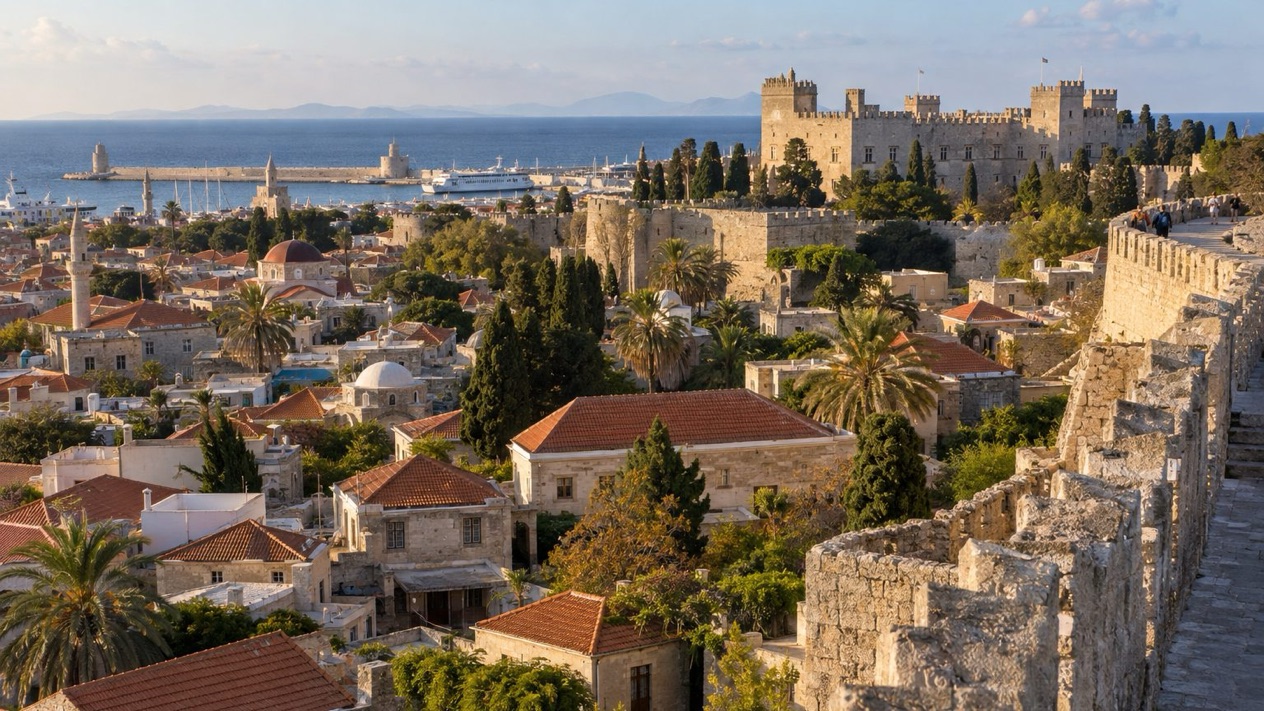
The Old Town is the reason people come. The medieval town is a UNESCO World Heritage Site, and it is still a living neighborhood where locals go about daily life behind walls the knights built in the Middle Ages. Byzantines, Knights of St John, Ottomans and Italians all passed through and left a strong mark, and you can see the layers of each.
The Street of the Knights is a steep cobbled lane lined with the old inns of the Order's national groups. It's free to walk and much quieter early in the morning or after dark. The Palace of the Grand Master is a highlight of the Old Town, with a major restoration dating to the Italian era, and today it houses a museum. Arrive at opening to get ahead of the cruise groups. Full admission is €20 (2026), and so is a special ticket package covering the palace, the Archaeological Museum, the Decorative Arts Collection, Our Lady of the Castle and the Medieval Town. Since it costs the same as the palace alone, the package is the obvious buy. The palace is closed on New Year's Day, March 25, May 1, Easter Sunday and both Christmas days.
The Archaeological Museum sits in the old Knights' hospital and is worth an hour for the building alone. Full admission on its own is €10 (2026). The palace and the museum are both free on a few set days in spring and on the last weekend of September, and the palace is also free on National Holidays.
Then walk the walls and the moat. The old dry moat has become a leafy green park, and strolling beside it gives you a real sense of how massive the fortifications are.
Mandraki Harbour is traditionally associated with the spot where the Colossus of Rhodes stood, though its exact location is uncertain. Today a pair of bronze deer mark the harbor entrance, and old windmills line the mole. Think of it as a pleasant evening stroll.
The Old Town does get touristy, with generic souvenir shops and servers hustling you into restaurants. The fix is to turn down a narrow side street and see where it leads. Some of the loveliest corners are tucked away from the busiest streets.
Lindos and its acropolis
Lindos is the postcard, and in July and August it is swarmed. Timing is the answer: get there before 9 a.m. or after 5 p.m. The acropolis sits high above the village, and the climb is steep and largely unshaded, so the stone steps can be risky in the midday heat. Go at opening and you may have the temple of Athena Lindia nearly to yourself. Lindos is known for its car-free old town, so plan to park outside the village and walk in.
From the village, you reach the acropolis on foot or by mule. Skip the mules. The animals haul visitors up stone stairs in punishing heat, and their welfare has been criticized for years. Walk up, or come back when it's cooler. There's no access to the acropolis for disabled visitors.
Full admission is €20 (2026). The site keeps long hours in summer, closes progressively earlier through the fall, and runs shorter winter hours from November to March, when it also shuts one day a week, so check before you go. Lindos closes on the same holidays as the palace and shares its free days, National Holidays included.
The interior
A rental car opens up the island's interior. Embona lies on the slopes of Mount Attavyros, at 3,990 feet (1,216 m) the island's highest point. Embona is the center of Rhodian wine, and the Emery winery offers tastings, while village tavernas grill meat over charcoal at prices well below those on the coast.
Ancient Kamiros is an excavated Doric city on a hillside overlooking the sea. It's a quiet spot, far less crowded than the big mainland sites, and many visitors find they have it nearly to themselves. After the Old Town, it's the best archaeology on the island.
The Valley of the Butterflies (Petaloudes) is a nature reserve in a shaded gorge, with leafy trees, quiet pools and little waterfalls. It's one of the island's busiest attractions, because from July through September the Jersey tiger moths gather on the trees, and plenty of visitors come with cameras to see them. Don't clap to make the moths fly. People do, and it exhausts them. If you'd rather have peace, go out of season and enjoy the green dell without moths or crowds.
The Seven Springs is a pretty gorge with a lake, reached through a long, narrow tunnel with spring water running along its floor. You can swim in the cool water and spot peacocks along the way.
A day trip to Symi
Symi is a small, relatively untouched island a little over an hour from Rhodes by ferry, and a welcome contrast to the bustle of the Old Town. Take in the harbor views, hike up to the village of Chorio, visit the monastery at Panormitis and sit down to traditional food. Book an organized boat day or take the ferry on your own.
What are the best beaches in Rhodes?
Head east for calm water. The west coast tends to be windier and more pebbly because of the meltemi wind.
Tsambika
Tsambika has a long stretch of soft sand and shallow turquoise water, which makes it a great choice for families. A monastery crowns the headland above, reached by a long, steep staircase that pays off with a big view. A KTEL bus stops here.
Anthony Quinn Bay
This small, rocky cove near Faliraki has strikingly clear water ringed by red rock. Anthony Quinn Bay takes its name from the actor who came here in 1961 to film The Guns of Navarone. The bottom is stone, not sand, so bring water shoes, and arrive early because the cove is tiny. A beach bar and restaurant sit above, and you can rent sunbeds.
St Paul's Bay
Just around the headland from Lindos, below the acropolis, this sheltered bay has calm, turquoise water. Swimming is free but sun loungers are pricey, so many people simply pop down for a dip after the climb.
Prasonisi
At the island's southern tip, a narrow sandbar links Rhodes to a small rocky islet, with choppier Aegean water on one side and gentler Mediterranean water on the other. The wind makes it one of the top kitesurfing and windsurfing spots in Greece. It's a long drive, about 90 minutes each way from Rhodes Town, so set aside a full day. A KTEL bus also stops here.
Agathi and Stegna
These quiet sandy coves on the east coast near Haraki are far less developed than the Faliraki strip. Stegna also has a KTEL stop.
What should you eat in Rhodes?
Greek food here is simple, fresh and made to share, so fill the table with mezze: dips, grilled aubergine, feta rolls, meat koftas, tzatziki, courgette fritters and chickpea patties. Souvlaki and gyros are the street food to grab on the go.
For seafood, skip the crowded big beaches and head to Stegna, a tiny village with a handful of seafood restaurants along the beachfront. One of the best is Stegna Kozas, right on the water, with nautical decorations hanging from the ceiling, a fish counter where you pick your own, charred octopus and enormous prawns in ouzo sauce.
In Lindos, Mavrikos, the arched restaurant on the main square, has a reputation for the best food in town, including grilled octopus, though you put up with whining scooters and maneuvering tour buses. The village also has several rooftop restaurants with sweeping views. In the Old Town, look for cool courtyards tucked down back lanes.
How many days do you need in Rhodes?
Four days feels rushed. Six lets you cover both the history and the beaches, because a drive south and back can swallow most of a day.
Day 1: Old Town, slowly
Arrive and drop your bags. Walk the moat park in the late afternoon, when it's shaded and quiet. After dark, stroll the old knights' lane as it empties, then settle into a courtyard restaurant for mezze.
Day 2: Palace and museum
Reach the palace at opening, then give the Archaeological Museum an hour, using the package ticket for both. Wander the side streets for lunch, and in the evening walk Mandraki Harbour past the deer and the windmills.
Day 3: Symi
Take a boat or ferry from Rhodes Town. Wander the harbor, climb to Chorio and linger over a long lunch before sailing back.
Day 4: Lindos
Pick up your rental car and head south. Reach Lindos before 9 a.m. and climb the acropolis while it's cool, spend the late morning in the village, then swim at St Paul's Bay. Settle into your southeast base in the evening.
Day 5: The interior
Drive to Ancient Kamiros in the morning, continue to Monolithos Castle for the view, then lunch at a charcoal taverna in Embona. From July through September, add the Butterfly Valley. Plan on a full day, since distances add up.
Day 6: Beach day
Spend the day at a quiet east-coast cove such as Agathi or Stegna, and finish with seafood at Stegna. If you've got the energy, give the day to Prasonisi instead.
When is the best time to visit Rhodes?
May, June, September and early October are a lovely window, with warm sea, manageable crowds and weather that suits a full day of sightseeing. Peak summer brings temperatures around 86°F (30°C), and the heat feels stronger than that in the sun, especially with no breeze.
In winter the island is very quiet and much of the beach scene shuts down, but the Old Town stays lively because people live there all year.
The Carnival of Rhodes usually takes place in March. The three-day Medieval Festival comes in September. Embonas celebrates its Wine Festival at the end of August.
How do you get to Rhodes and get around the island?
Fly if you can. Rhodes International Airport (Diagoras) takes flights from many European cities, with frequent connections from Athens. A public bus runs from a stop between the old and new terminals to Rhodes Town in about 40 minutes, arriving at the west-side terminal on Averof Street. It doesn't serve the east-coast resorts, so change in town.
Ferries from Piraeus take from 15 hours and 40 minutes, and many sailings run 15 to 18 hours, a long night at sea that makes the flight the easier choice. Short hops make more sense: Symi, Kos, Chalki and Tilos are easy day trips or onward legs, and ferries also link Rhodes with Marmaris, Fethiye and Bodrum in Turkey. Rhodes Town's harbors sit close to the Old Town.
KTEL Rhodes runs frequent bus lines seven days a week, with east-coast routes leaving from Rhodes Town and stops at Lindos, Kolymbia and Tsambika Beach. Municipal west-coast buses reach the Butterfly Valley a few times a day. If you rely on the bus, check timetables carefully, because the last buses back from Lindos can leave in the early evening in summer.
For Monolithos, Embona and the quiet beaches, rent a car. Roads are wide and well surfaced by island standards. Reserve before you arrive, since walk-up rates in high season can be nearly double what you'd pay booking from home.
What should Americans know before going to Rhodes?
U.S. citizens may enter Greece without a visa for up to 90 days for tourism. Your passport should have at least three months of validity beyond your planned departure date, and you may be asked for proof of sufficient funds and a return ticket. Carry your passport or another photo ID at all times.
Greece is generally safe, but petty crime is common in tourist spots, and thieves are known to break into rental cars to steal passports, valuables and luggage, so take your belongings with you. Greek law requires a valid U.S. driver's license, and insurance companies may require an international driver’s permit. Motorcyclists must wear helmets, and talking or texting while driving is illegal. Drive carefully: Greece has one of the highest traffic fatality rates in the European Union.
Transportation strikes can interrupt ferries, airports and taxis, and forest fires are common in the dry summer months, occasionally closing roads. Many care providers in Greece expect payment in cash, and private hospitals usually want proof of adequate insurance or cash before admitting a patient, so travel with some cash and your insurance documents.
Sources
- wanderlustchloe.com (https://www.wanderlustchloe.com/rhodes-things-to-do/), checked October 18, 2026
- lonelyplanet.com (https://www.lonelyplanet.com/destinations/greece/rhodes), checked October 18, 2026
- facetedtravel.com (https://facetedtravel.com/rhodes-greece-travel-guide/), checked October 18, 2026
- cntraveller.com (https://www.cntraveller.com/article/travel-guide-rhodes), checked October 18, 2026
- hhotels.gr (https://hhotels.gr/blog/a-slow-travel-guide-for-rhodes-island), checked October 18, 2026
- U.S. Department of State (https://travel.state.gov/content/travel/en/international-travel/International-Travel-Country-Information-Pages/Greece.html), checked October 15, 2026
- Hellenic Ministry of Culture, Odysseus (http://odysseus.culture.gr/h/1/eh155.jsp?obj_id=3312), checked October 15, 2026
- ktelrodou.gr (https://www.ktelrodou.gr/), checked October 15, 2026
- Hellenic Ministry of Culture, Odysseus (http://odysseus.culture.gr/h/2/eh255.jsp?obj_id=5028), checked October 15, 2026
- Hellenic Ministry of Culture, Odysseus (http://odysseus.culture.gr/h/1/eh155.jsp?obj_id=6301), checked October 15, 2026
- Hellenic Ministry of Culture, Odysseus (http://odysseus.culture.gr/h/3/eh355.jsp?obj_id=2383), checked October 15, 2026
- anek.gr (https://www.anek.gr/en-gb/destinations/rhodes), checked October 15, 2026