
Late in the afternoon, a long table gets pulled out under a pergola, someone brings bread, olives and a plate of sliced tomatoes from the market, and the group that rented the house together finally sits down. That scene is why people look at villas on Crete rather than hotel rooms. A villa on the island is a house of your own, set in a prefecture you choose, and the map of Crete decides most of how the stay will feel.
Can you rent a villa in Crete?
Yes, villas are part of the way people stay on Crete, and the island is large enough to hold very different kinds of houses. It is the largest of the Greek islands and the fifth largest in the Mediterranean Sea, so a villa here can mean a stone farmhouse among olive trees, a modern house with a terrace over the water, or a family compound at the edge of a village.
The practical question is less whether a villa exists than where you want it to sit. Crete is about 160 miles long and 37 miles wide, and its population is around 650,000, spread between a few cities and many villages. Choosing a villa means choosing a corner of that long island and accepting that the rest will be a drive or a bus ride away.
What a villa stay looks like
A villa stay runs on its own rhythm. Breakfast is on your own terrace, lunch might be grilled fish or a plate of dakos (barley rusk topped with chopped tomato and soft cheese) at a taverna down the road, and dinner is whatever you bring home from a village shop or a market. Cooking at the house is part of the pleasure for travelers, with Cretan olive oil, wild greens, graviera cheese and local honey within reach.
Houses come in many shapes, so read each listing for what it actually offers: the number of bedrooms, whether there is a pool, how far the nearest village sits, and how the access road looks. Those details shape the week more than the photographs do. A house in the countryside gives you quiet and a view, while one near a town gives you cafés and a bakery within reach.
Because Crete is one island with four prefectures, you can also split a trip between two villas, one on each side of the island. That keeps each drive manageable and lets you see two very different landscapes, from the western mountains to the eastern coast.
Getting to your villa by air, sea and bus
Heraklion has the island’s main international airport as well as a cruise and ferry port. Chania, the second-largest city, also has an airport and a cruise and ferry port. These two cities are the gateways most villa stays begin from, whether you land by plane or arrive by sea.
Once on the island, most bus services along the north coast and toward the south coast are run by KTEL, the network of intercity buses. A villa near a town on one of those routes can be reached without a car, though a house in the hills is another matter.
Driving and the car question
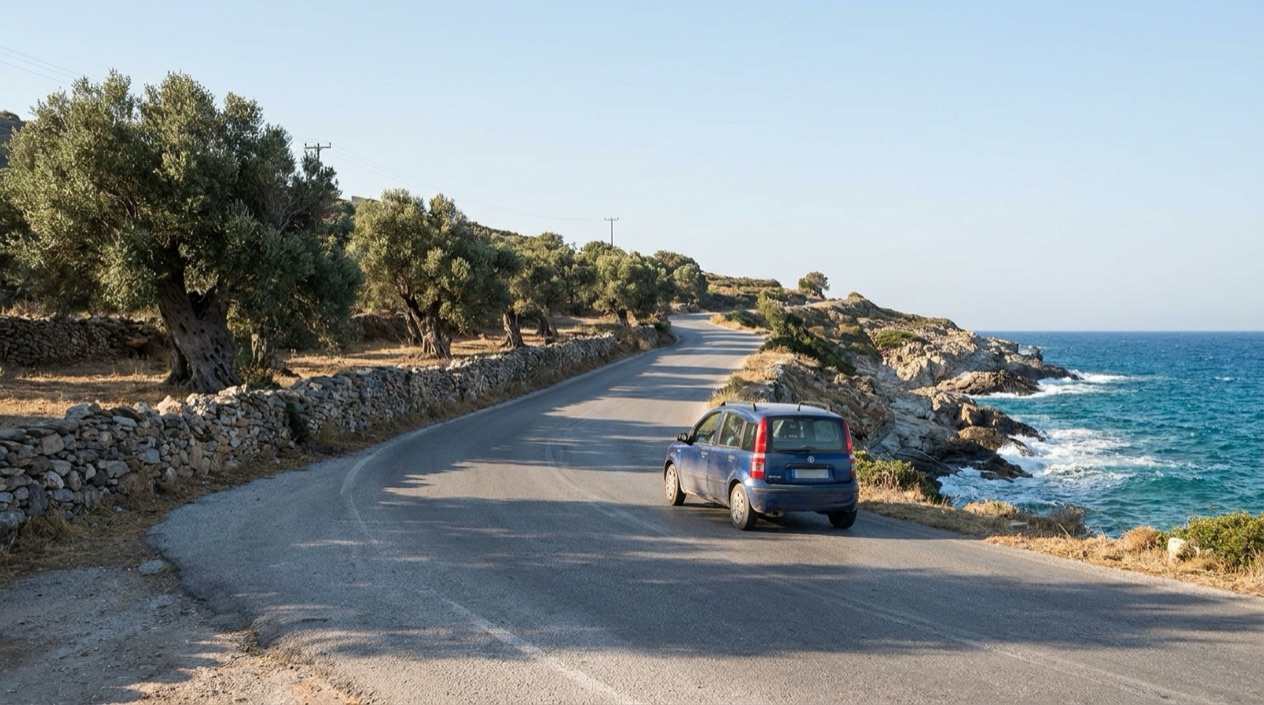
Many villas sit down country lanes, so travelers staying in one often think about a rental car. The driving age in Greece is 18 for passenger cars and 16 for mopeds, but car hire companies may set higher limits for younger drivers.
If the house is well outside a village, the car becomes part of the plan, since the shop, the beach and the taverna are each a separate trip. If the villa is in or beside a town, you may find the bus network and your own feet cover most of what you want. Think about this before you pick a house, because it changes which areas make sense.
Which areas have the most?
The island has four prefectures, from west to east Chania, Rethymnon, Heraklion and Lasithi, and a villa search usually starts with Chania and Heraklion, the two that hold the airports and the cruise and ferry ports.
| Prefecture | City | Gateway |
|---|---|---|
| Chania | Chania | Airport, cruise/ferry port |
| Heraklion | Heraklion | Main international airport, cruise/ferry port |
Chania Prefecture
Chania is the capital of its prefecture and has a largely intact Old Town, where narrow lanes lead past old houses, small shops and tavernas. A villa within reach of the city lets you wander the Old Town in the evening and return to a garden and a pool afterward. The city is a pleasant base for people who like to alternate a lazy day at the house with a night out.
The prefecture is also home to Samaria National Park, which is open for a 5- to 7-hour moderately strenuous hike from 1 May until mid-October. Travelers who plan a villa stay around the hike should keep that season in mind, since the park closes for the rest of the year.
Heraklion Prefecture
Heraklion is the largest city and capital of Crete, and the prefecture around it holds the Minoan Palace of Knossos, an archeological site, along with an important archeological museum in the city. For travelers drawn to the ancient world, a villa here puts the palace and the museum within reach of the house.
The main international airport and the cruise and ferry port both sit here too, so arrival is straightforward on paper: you land or dock, collect your keys and drive to the house. Heraklion itself is a working city with markets, bakeries and cafés, and a villa outside it trades that bustle for olive groves and the sound of cicadas.
Rethymnon and Lasithi
Rethymnon sits between Chania and Heraklion, which makes it a base from which both neighbors can be reached by road or by the KTEL buses that serve the north coast. Lasithi lies at the eastern end of the island, the farthest prefecture from Chania, so a villa there suits a trip where you want to settle in one corner and see it slowly.
Ask yourself how much driving you want on a typical day, and let the answer point you to the prefecture that fits.
Good to know before you go
Because the island is long, plan the drive between your villa and the airport or port before you book, and remember that a bus or ferry connection covers the gateways while the last stretch to a countryside house may be on your own.
Sources
- Wikivoyage, Crete (https://en.wikivoyage.org/wiki/Crete), checked October 12, 2026