
For a first visit, split 10 nights this way: 2 in Athens, 3 in Mykonos, 2 in Paros and 3 in Santorini, with ferries linking the islands. You get one full day among the ancient sights of Athens, then a week of whitewashed towns, beaches and sunsets in the Cyclades. If ruins and road trips appeal to you more than beaches, a mainland version through the Peloponnese follows below.
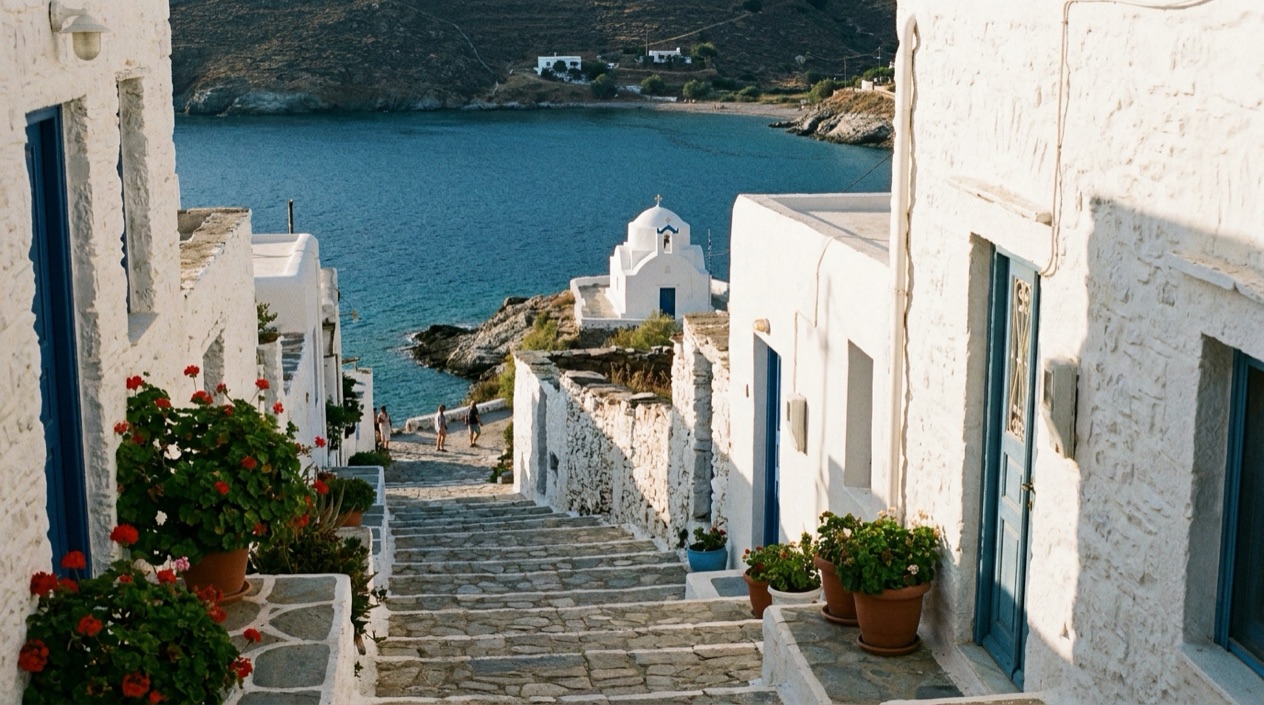
What does a 10-day Greece itinerary look like?
The route covers one city, three islands and three ferry rides, and each stop gets at least two nights so you are not repacking every morning. Athens comes first for two practical reasons. Flights from the U.S. tend to land in the afternoon or evening, and fares into Athens are often much cheaper than direct flights to the islands. Two nights give you a full day in the city before the boats take over. At the end, you can fly home from Santorini to avoid backtracking, or fly or ferry back to Athens.
When is the best time to do this Greece itinerary?
Aim for the shoulder months, from early May through June or in September and October. Crowds in Oia and Mykonos Town stay manageable, and the party scene on Mykonos hasn't reached full volume. July and August are peak season. Cruise ships arrive, beach clubs and nightlife are in full swing, the heat can be brutal, and the crowds can make it hard to enjoy the sights.
How should you spend days 1 to 2 in Athens?
Day 1: Arrive and settle in
Drop your bags and go for a wander. The cobbled streets of Plaka climb toward the Acropolis, lined with traditional tavernas, colorful shops and plenty of places to stop for a coffee. The neighborhood is touristy, and it is also full of charm and atmosphere. End the day with dinner somewhere with a view of the Acropolis.
Day 2: The Acropolis, the Agora and Plaka
Start at the Acropolis in the morning with a guided tour. Hearing the stories behind the ruins makes the stones mean far more. Some tours bundle skip-the-line entry with stops at the Ancient Agora, Plaka and Monastiraki Square. If yours doesn't, walk down to the Agora on your own, then head back into Plaka for lunch. If you still have energy, visit the Acropolis Museum nearby.
It is a full day, and many first-timers find it plenty. Next to the islands, Athens feels busy, noisy and a little gritty. History buffs who want more museums and archaeological sites should add a third night.
How do you get from Athens to Mykonos, and what do you do there?
Take a ferry from Piraeus, then give Mykonos three nights. That covers the old town, the beaches and Delos without taking days from Paros and Santorini. In July and August, consider trimming Mykonos to 2 nights and adding the extra night to Paros. If you aren't there for the parties, stay outside Mykonos Town so your evenings are quieter. If nightlife is not your thing, Naxos makes a lovely alternative to Mykonos.
Day 3: Ferry to Mykonos
Ferries leave from Piraeus Port, about 30 minutes by car from central Athens. Arrive at least an hour before departure, especially in summer. Some of these boats are as big as a cruise ship, so boarding can take a little while. High-speed ferries take about 2.5 to 3 hours. Slower ones can take 5 hours or more. Unless your budget is tight, the high-speed boat is worth the extra money. Watching the islands rise on the horizon from the deck is a memorable way to arrive.
You'll land at the New Port (Tourlos) or, less often, the Old Port, depending on the sailing. To reach Mykonos Town, also called Chora, arrange a hotel transfer or take the local bus. From the Old Port, the Sea Bus also makes the short hop into town. Don't count on a taxi. There are few on the island, and long waits are common in peak season.
Spend the afternoon in Chora. Its narrow lanes wind between white stucco buildings with brightly painted shutters, and fuchsia bougainvillea climbs the doorways. Browse the designer stores, jewelry and souvenir shops along Matogianni Street, then find the white Church of Panagia Paraportiani in the Kastro district. At sunset, head to Little Venice, where waves break right up to the tables. Sunset tables at Negrita need a reservation, book up quickly and carry a minimum spend per person. For a quick drink, walk in at an off-peak time.
Day 4: Beaches, windmills and a sunset bar
Go early to the Kato Mili windmills, which sit on a hill above Little Venice.
Then head for the south coast, home to most of the beach clubs and the best beaches. The south is more crowded than the north, but the wind is much stronger in the north and blows from north to south, so the southern beaches are calmer. Prices on Mykonos run high. To save money, spread a towel on the free beach right next to HippieFish instead of renting a lounger.
For sunset, choose Boni's Windmill on its hilltop or the 180° Sunset Bar, which serves tapas and has a live Greek singer. The bar is pricey, and the sunset view is a highlight of the evening.
Driving on Mykonos is nerve-wracking, and a day behind the wheel isn't worth the time it takes from the next two islands.
Day 5: Delos and a swim
Walk from Mykonos Town to the Old Port, a lovely stretch with sea views the whole way, and board a tour boat to Delos. This sacred island, the legendary birthplace of Apollo, is a UNESCO World Heritage Site. Plan on about two hours among the ruins. See the Terrace of the Lions, lined with marble lions (the ones outside are replicas, and the originals are in the island's museum), along with the ancient theater and the House of Dionysus, with its mosaic of the god riding a tiger. The ancient stairs up Mount Cynthus take about 20 minutes. The wind at the top is fierce, and the view sweeps over Mykonos, Rhenia and the Aegean.
Some tours add a swim stop at nearby Rhenia and a barbecue lunch on board. These tours return by late afternoon, which leaves time for a final evening in Chora.
Why add Paros, and how do you get there?
Paros slows the pace after Mykonos. It is popular without feeling as touristy as Mykonos or Santorini. It is also easy to reach, since ferries run between Mykonos and Paros.
Day 6: Ferry to Paros
Plan to be at the Mykonos port at least 45 minutes before departure, which leaves time to board and stow your luggage. Most ferries dock at Parikia, the main port on Paros. Naoussa, the best base on the island, is about a 10-minute drive or a 20-minute bus ride away. Your hotel can usually arrange a transfer, or you can take the public bus. As on Mykonos, taxis are scarce, especially in summer.
Naoussa feels like a smaller, calmer Mykonos Town. It has the same whitewashed buildings, pretty lanes and waterfront restaurants, with fewer crowds and lower prices. It is a place that rewards wandering without a plan. Pop into the boutiques, linger over dinner and end the day around the harbor.
Day 7: Beaches and quiet corners
Rent a car for the day. Of the three islands, Paros is the easiest place to rent and drive, and a car gets you to the beaches and quieter villages at your own pace. If you plan to stay around Naoussa and Parikia, you can get by without one. A short trip to Parikia fits nicely before you head back to Naoussa for sunset.
If your budget allows, take a small-group sailing trip or a catamaran cruise around Paros and Antiparos instead. These trips stop at sea caves and secluded beaches.
What do you see in Santorini?
Santorini lives up to the hype. The caldera, the whitewashed villages and the cliffside hotels look just as they do in photos. Three nights leave time for a handful of the island's best experiences without rushing.
Day 8: Ferry to Santorini
The high-speed ferry from Paros takes about 2 hours. Parikia's port is small, so arriving 30 to 45 minutes early is plenty.
Your ferry pulls in at Athinios Port, a port that also goes by Thira Port or New Port. Public buses run from the port to Fira, and the ride takes about 20 minutes. Oia is Santorini's most expensive town, and hotels outside it offer good value without giving up the views. Spend the evening wandering Oia after the day crowds thin, then let dinner run long.
Days 9 and 10: Pick your Santorini days
Choose a few of these:
- A sunset catamaran cruise on the caldera
- The hike from Fira to Oia
- Akrotiri, a Bronze Age Minoan settlement buried under volcanic ash and often compared to Pompeii
- Wine tasting at a local winery
- The medieval village of Pyrgos
- Lunch by the water at Ammoudi Bay
- A half-day cruise to Nea Kameni and Palea Kameni, the small volcanic islands inside the caldera, with a swim in hot springs of mineral-rich green and yellow water
Skip the rental car here. Driving on Santorini is best avoided.
Day 11: Fly home
Take the short flight from Santorini to Athens, then connect home. Leave a generous cushion between the two flights.
Is there a mainland variant for history lovers?
Yes. A 10-day mainland trip can cover Athens, Delphi, Nafplio, Epidavros and Mycenae. With two weeks, add Olympia, Monemvasia (a town beside a giant rock) and Kardamyli on the Mani Peninsula, a laid-back seaside village with none of the island crowds. Outside Athens, rent a car. Bus connections can be limited and tricky, especially on the Peloponnese, so a bus trip covers less ground in the same time. This version trades beach days for driving and ruins.
What should Americans know before going to Greece?
U.S. citizens can visit Greece without a visa for up to 90 days of tourism. Your passport should have at least three months of validity beyond your planned departure date, and a passport you have reported lost or stolen will not get you in. Be ready to show proof of funds and a return ticket if asked. Once there, carry your passport or another photo ID at all times.
The U.S. State Department rates Greece a generally safe destination, but petty crime is common in tourist areas. Pickpockets and purse-snatchers work popular sites such as the Acropolis and public transportation, especially the Athens metro, so keep your valuables at your side. Thieves also break into rental cars, so try not to leave passports, valuables or luggage inside. On buses and the metro, buy the right ticket and validate it, because fines can reach 60 times the basic fare.
Strikes and demonstrations are common, can happen with little notice and can halt ferries, airports, taxis and public transportation. Build some slack into your schedule, especially around travel days.
If you drive, Greek law requires a valid U.S. driver's license, and insurance companies may require an international driver’s permit. Greece has one of the highest traffic fatality rates in the European Union. Talking or texting on a phone while driving is illegal. So is driving under the influence of alcohol or drugs, and police run random alcohol tests. Motorcyclists must wear a helmet.
What practical points should you sort out before the trip?
Direct Ferries is a handy way to compare ferry schedules because it lists a wide range of companies in one place. You can book through that site or go straight to the operator, and Blue Star Ferries and SeaJets are two names you will run into often.
Greece uses the euro. Withdraw cash from ATMs on arrival, which gives a better exchange rate than airport exchange desks, and keep some on hand for small purchases. Plugs are Type C and F at 230 volts, so leave curling irons and other U.S. hair tools at home and use the hotel dryer.
On the islands, use bottled water for drinking and brushing your teeth, and stock up at any grocery or convenience store. Throughout Greece, put toilet paper in the bin beside the toilet, because the pipes clog easily.
Most care providers in Greece accept only cash, and private hospitals usually want proof of adequate insurance or cash before admitting a patient. Keep your travel insurance documents with you.
Sources
- ricksteves.com (https://www.ricksteves.com/europe/greece/itinerary), checked October 18, 2026
- theptopal.com (https://www.theptopal.com/blog/10-days-in-greece-itinerary), checked October 18, 2026
- abroadwithash.com (https://www.abroadwithash.com/greece-10-day-itinerary-athens-mykonos-paros-santorini/), checked October 18, 2026
- europeexpress.com (https://www.europeexpress.com/itinerary/greece_sample_itinerary/), checked October 18, 2026
- kimkim.com (https://www.kimkim.com/sc/greece-10-day-tours), checked October 18, 2026
- U.S. Department of State (https://travel.state.gov/content/travel/en/international-travel/International-Travel-Country-Information-Pages/Greece.html), checked October 15, 2026
- U.S. Department of State (https://travel.state.gov/content/tsg_aem/us/en/home/international-travel/travel-advisories/destination.grc.html), checked October 15, 2026
To plan your stay
- Best Time to Visit Greece: September and Late May to Early June
- Arachova: Parnassus Mountain Town, Formaela Cheese, Ski Season and Saint George's Day
- American Airlines Flights to Greece: U.S. Cities, Athens Arrivals and Onward Island Flights
- Greece on a Budget: Cash Machines, Cards, Beaches and Ferries