
Near the gates by Harajuku Station, the sound reaches you before the trees do: a drum line, a distant electric guitar, the clatter of someone practicing a juggling routine. Under the tall trees, groups spread out on the grass and every corner seems to have its own small show. Yoyogi Park is Tokyo’s open-air stage for hobbies, picnics and people-watching, and it makes an easy-going break between the city’s shopping streets and its shrines.
Is visiting Yoyogi Park worth it?
Yes, especially if you like parks where the people are the attraction, and it suits couples, friends, families with a picnic and anyone who wants a break from museums and shops. A visit here is about the mood on the lawns more than any single monument, so it rewards a slow wander with no fixed plan.
What sets it apart from other green spaces nearby is its role as a gathering place. On Sundays Japanese rock music fans, jugglers, comedians, martial arts clubs, cosplayers and other subculture and hobby groups turn the park into a loose festival, with no ticket and no program.
The park also carries a surprising amount of history. It was the site of the first powered flight in Japan, a housing area for U.S. officers after the war, and the heart of the 1964 Summer Olympics. You can walk the lawns without knowing any of that, but it gives the grass a story once you do.
What to see at Yoyogi Park
The Sunday scene
Sundays are when the park shows its character. Rock music fans set up near the entrance by Harajuku, jugglers toss clubs and rings in open patches of lawn, comedians try out routines on small audiences, and martial arts clubs practice in groups. Cosplayers pose for photos, and hobby groups of every stripe claim their own corner.
Stop for a song, watch a juggling routine to the end, then drift on. It is free entertainment with the feel of a neighborhood festival, and you can join the picnickers on the grass between acts.
Lawns, paths and picnic areas
The park covers 134 acres, so there is room to leave the crowds behind. Picnic areas sit among the trees, bike paths wind through the grounds, and you can rent a cycle for a loop. Public sport courts and a dog run give local residents their everyday reasons to be here, which keeps the park feeling lived in rather than staged.
Bring something to eat and settle on a patch of grass, as people do. It is the simplest way to understand why Tokyoites treat this place as a shared backyard.
Cherry blossom season
In spring, thousands of people come for hanami, the custom of gathering under cherry trees to eat, drink tea and admire the flowers. The park fills with blankets, snacks and conversation, and the mood is festive and relaxed. If you come in blossom season, expect the lawns to be busy with people doing exactly that.
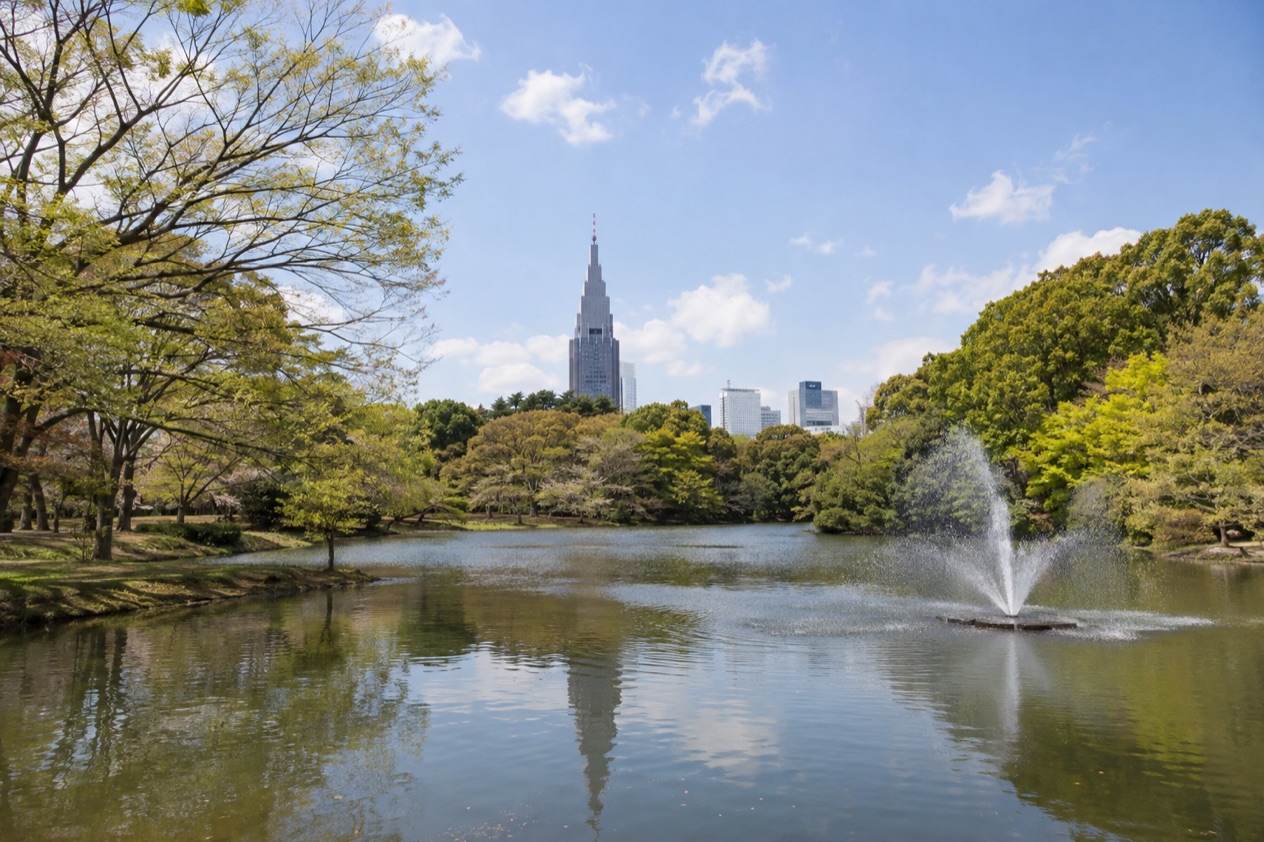
Even outside the blossom weeks, the trees give the park a shaded, leafy feel that is a pleasant counterweight to the surrounding streets. In autumn the same lawns are good for a slow walk when the air cools.
Layers of history: first flight, Washington Heights and the Olympics
On December 19, 1910, Captain Yoshitoshi Tokugawa made the first successful powered aircraft flight in Japan at this site. From September 1945 the land became a housing area for U.S. officers, known as Washington Heights, during the Allied occupation of Japan.
Later the area housed the main Olympic Village for the 1964 Summer Olympics. The Yoyogi National Gymnasium, designed by Kenzo Tange, hosted swimming and diving events, with an annex for basketball. Its sweeping architecture is worth looking up at as you pass, a reminder of the Olympic years in the middle of a park day.
How to get to Yoyogi Park
Yoyogi Park is reached by train, with three stations giving access: Harajuku Station, Yoyogi-Koen Station and Meiji-jingumae Station. Each one drops you at a different side of the grounds, so your choice depends on what you want to see first.
Harajuku Station sits right beside the park and Meiji Shrine, which makes it the stop to pick if you plan to pair the two. Yoyogi-Koen Station and Meiji-jingumae Station open onto other edges of the park, handy if you are coming from a different part of the city or want to enter near the sports facilities and open lawns.
If you are arriving in Tokyo from abroad, the nearest airports to the city are Haneda Airport, officially Tokyo International Airport, and Narita Airport, Japan’s largest international airport. From either, you continue into the city and make your way to one of the three stations above.
Shibuya is the district the park belongs to, so staying around there puts you close. From Shibuya Station, other districts such as Roppongi and Akasaka are about 10 minutes by train, which makes it simple to build a day that links the park with other parts of Tokyo.
When to visit Yoyogi Park
Sunday is the day for atmosphere, when the park fills with music, jugglers, martial arts clubs, cosplayers and hobby groups. If you prefer open lawns and a calmer feel, another day of the week suits a quiet stroll or a cycle ride better.
Spring brings the cherry blossom and hanami, when thousands of people visit to picnic under the flowering trees. The mood is cheerful and the park is at its busiest in that period, so come with a relaxed attitude.
Autumn is another good time to be outdoors. In October, highs average in the low 70s and nights are cool, comfortable for a long walk, though the month is among the wetter ones, with showers on about a third of the days and gray stretches between sunny ones.
April is mild, with highs in the mid-60s, and rain on roughly one day in three. In January the air is cold and dry, with highs near 50 and occasional light snow, so the lawns are quieter and the trees bare.
| Month | Average high (°F) | Average low (°F) | Rain days | Precipitation (in) |
|---|---|---|---|---|
| January | 49.6 | 34.2 | 4.5 | 2.35 |
| April | 66.9 | 49.6 | 9.5 | 5.26 |
| July | 85.8 | 72.3 | 10.5 | 6.15 |
| October | 71.6 | 58.6 | 10.5 | 9.24 |
Tips for your visit
Pack for a picnic and a long walk. A blanket or small mat, something to drink and comfortable shoes go a long way in a park of this size, and a light rain jacket helps in the wetter months. In summer, bring sun protection and plan to rest in the shade of the trees.
Pair the park with its neighbors. Meiji Shrine lies next door, and Harajuku Station puts you at the edge of the district of the same name. A natural plan is a shrine walk first, then lunch, then an unhurried afternoon on the lawns watching whatever the day has put on.
The park has bike paths and cycle rentals, a good way to cover the grounds if you would rather ride than walk. Public sport courts and a dog run are there too, so you may see locals playing and exercising alongside the visitors.
Families will find open grass and picnic areas, plenty of room for children to run, and entertainers on Sundays that can hold a young audience. If anyone in your group has trouble walking far, pick a spot near the entrance and let the scene come to you, since the Sunday performers gather close to the Harajuku side.
Allow time to wander without a schedule. The best moments here tend to be unplanned: a band you stop to hear, a group practicing a routine, a family under the trees sharing lunch.
Good to know before you go
The park is a place for easy spending: bring a little for snacks and drinks, though plenty of people simply picnic. Keep the usual city habits, such as watching your bag in a crowd and taking your trash with you. In rainy months, a compact umbrella is useful, since October and July both bring frequent wet days.
Sources
- Wikipedia, Yoyogi Park (https://en.wikipedia.org/wiki/Yoyogi_Park), checked October 11, 2026
- Japan National Tourism Organization, Tokyo (https://www.japan.travel/en/destinations/kanto/tokyo/), checked October 11, 2026
- Japan Meteorological Agency (JMA), Normal values 1991-2020, monthly (https://www.data.jma.go.jp/stats/etrn/view/nml_sfc_ym.php?prec_no=44&block_no=47662), station Tokyo, elevation 25 m, checked October 11, 2026
To plan your stay
- Best Time to Visit Japan: Cherry Blossoms, Autumn Colors, Weather and Festivals
- Where to Stay in Japan: Ryokan, Temple Stays, Capsule Hotels and the Best Cities to Base In
- Sending Luggage from the Airport in Japan: Hands-Free Travel, Hotel Delivery and Coin Lockers
- Know Before You Go to Japan: Entry, Money, Etiquette and Getting Around