
A figure in a white jacket and a sedge hat stops at a temple gate, bows, and walks in tapping a wooden staff on the stones. Incense drifts from the main hall, a bell rings somewhere behind the trees, and a small book is held out to be stamped. This is the Shikoku Pilgrimage, a circuit of temples around the smallest of Japan’s four main islands, and it can be walked, ridden or driven in whatever way suits the traveler.
Is visiting the Shikoku Pilgrimage worth it?
Yes, for travelers who like a trip built around a journey rather than a single sight, and who are happy to take in a whole island at their own pace. It suits walkers, cyclists, road-trippers and anyone curious about a living tradition, since you do not have to be religious to follow the route or to meet the people who are on it.
What sets it apart from the temple circuits around Kyoto or Nara is that it is not a place but a loop, strung across four former provinces: Awa, Tosa, Iyo and Sanuki. Today those are the prefectures of Tokushima, Kochi, Ehime and Kagawa, and each has its own landscape and its own food.
Kagawa is known for its udon noodles, and the coast along the Seto Inland Sea offers sea views between temples. A day that starts at a hillside hall can end over a bowl of noodles by the water.
The pilgrimage is also flexible. The standard walking course runs about 750 miles and can take anywhere from 30 to 60 days.
Few visitors on a vacation have that much time, and they do not need it: modern pilgrims travel by car, taxi, bus, bicycle or motorcycle, and often add public transportation. You can take a few temples on a long weekend or build a week around a region and still be doing the same pilgrimage as the walkers.
There is also the human side. Residents of Shikoku often give pilgrims small gifts of food, drink or money, known as osettai, a custom that has shaped how the island greets travelers in white. Pilgrims are easy to spot by their white clothing, sedge hats and walking sticks, and even a visitor in ordinary clothes will find that the temples feel like places in use rather than museums.
What to see at the Shikoku Pilgrimage
The 88 temples and the bekkaku
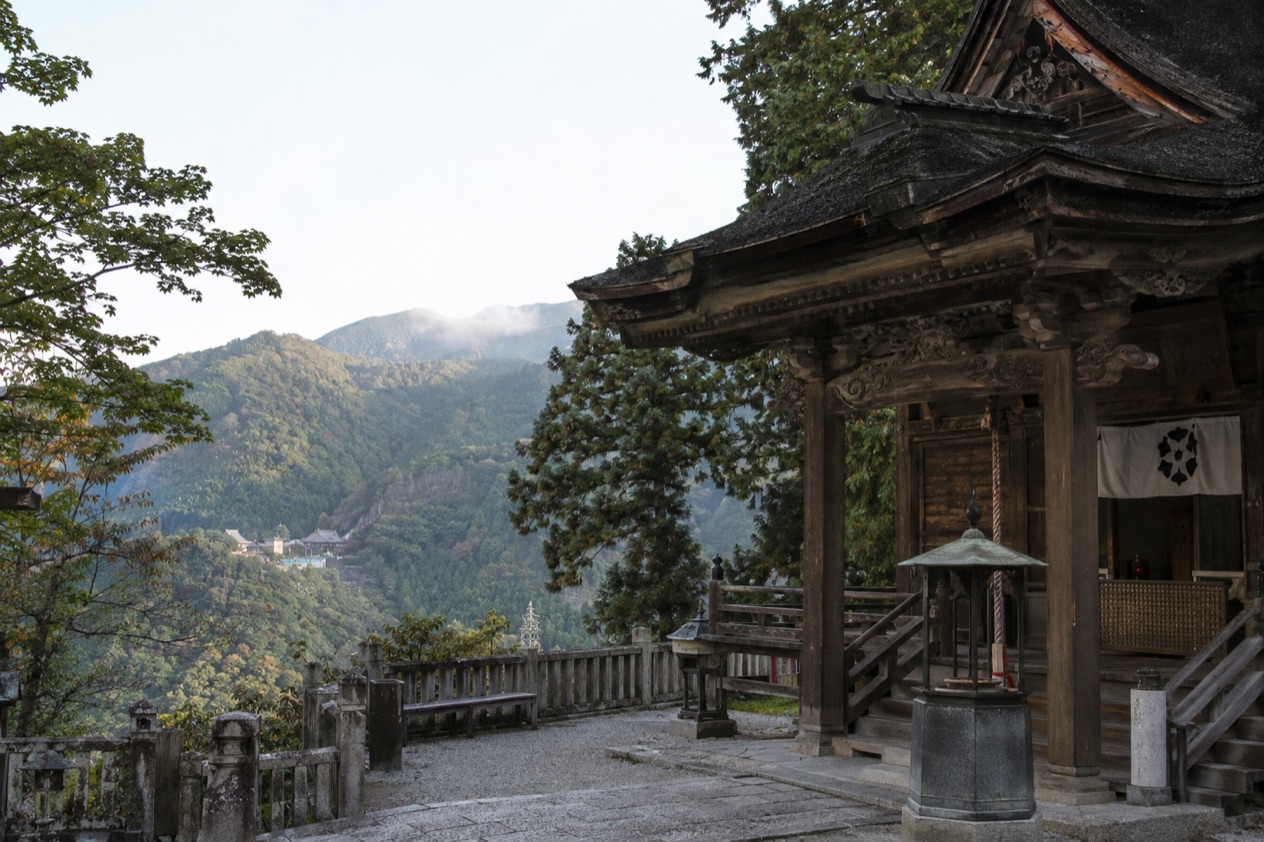
The core of the pilgrimage is the set of 88 official temples, numbered and spread around the island. Each is a small world of its own: a gate, a bell, a main hall and a hall for the founder of the tradition, with incense and candles burning in front. Pilgrims stop at each to offer a prayer, and many collect a stamp in a book as proof of the visit.
Beyond the 88 there are 20 bekkaku temples that are officially associated with the pilgrimage. They suit travelers who have already seen the main sites or who want to leave the numbered route for a few stops. Look at how each temple sits in its setting, since some are tucked into forest and others stand close to towns.
Henro, the pilgrims themselves
The pilgrims are called henro, and they are as much a part of the scene as the buildings. White clothing, a sedge hat and a walking stick, called a kongo-zue, mark them out on the road and in the temple grounds. The stick is treated with respect, and the white clothes have long carried a meaning of pilgrimage.
Watch how they move through a temple: a bow at the gate, a pause at the hall, a book handed over for its stamp. Along the roads you may also see residents offering osettai, and the exchange of thanks that follows is one of the most human moments of the route.
Temple 88 and the certificates
The circuit ends at Temple 88, Okubo-ji, where pilgrims can buy a completion certificate called a kechi-gan-sho, meaning fulfillment of one’s wishes. It is a quiet finish rather than a grand one, and it marks the point where the loop closes for those who went in order.
Earlier on the route, walking and bicycle pilgrims can receive a Shikoku 88 Temple Pilgrimage Henro Ambassador certificate from the Maeyama Ohenro Koryu Salon. The order of the temples is not fixed. Some pilgrims go in reverse, a practice called gyaku-uchi, so the pilgrimage can be started from wherever it suits you.
The island between the temples
The temples sit in a landscape worth seeing in itself. The coast along the Seto Inland Sea gives views over the water, and each of the four prefectures adds its own character to the day. In Kagawa, udon is the meal that pilgrims and drivers alike work into their stops. The pilgrimage is a Provisional Candidate for UNESCO World Heritage status, recognized by Japan’s Agency for Cultural Affairs, after prefectural governments, NPO members and local leaders have worked toward it since 2010.
When to visit the Shikoku Pilgrimage
The pilgrimage has no fixed season, and the temples are part of daily life on the island, so the right month depends on how you plan to travel. A traveler who wants to walk several stages should think about weather and daylight, while one who is driving between temples has more room to choose.
Walking is the slowest way and rewards a longer window. The full course takes 30 to 60 days, so walkers plan around a stretch of weeks rather than a single weekend. Those who go by car, bus, bicycle or motorcycle can cover a section in far less time, and mixing in public transportation makes it possible to fit a few temples into any trip to the island.
Time of day matters in a more human way. A visit that starts with the first temple of the morning and ends over noodles at midday gives the day a rhythm that matches what the pilgrims do. Pilgrims move from temple to temple through the day, so you will meet them at every hour and in every season.
Because the route is a loop and temples need not be visited in order, you can match a section to the season. Coastal stretches along the Seto Inland Sea suit a day when you want views, and a return visit can pick up another part of the circuit. Weather, daylight and the rainy or typhoon season vary from place to place, so plan each stretch with the conditions of that part of the island in mind.
Tips for your visit
Decide first how you will travel, because that sets everything else. Walking takes the longest and puts you closest to the pilgrim tradition. Cars, taxis, buses, bicycles and motorcycles are all used by modern pilgrims, and people combine them with public transportation.
If you are coming by bus, the Shikoku Highway Bus Free Pass allows unlimited rides on express buses within Shikoku. It can be bought as a 2-day, 3-day or 5-day pass, and boarding dates can be set to any days within the validity period, with no limit on the number of rides.
Getting to the island is straightforward on the map. Shikoku lies southwest of Honshu across the Seto Inland Sea, and the Seto Ohashi Bridge connects Okayama Prefecture to Kagawa Prefecture for those arriving by train. Shikoku is 60 minutes from Hiroshima and 100 minutes from Osaka, which makes it a natural add-on to a trip through western Japan.
Bring a notebook or a stamp book if you want a record of your stops, and dress for temples, where visitors often move through quietly. Take your time at each site rather than racing through, since the pilgrimage is about the pause at each hall. If you are traveling with others, remember that pilgrims at the temples are praying, and give them room.
Pair a few temples with a meal of Kagawa udon, a stretch of the Seto Inland Sea coast, or a stop in one of the four prefectures that you have not yet seen.
Good to know before you go
The pilgrimage is a practice of devotion as well as a route, so the temples are best met with quiet manners: a bow at the gate, a low voice in the grounds, and room for those who are praying. Gifts from residents are part of the tradition, and a word of thanks goes a long way. Weather and the rainy or typhoon season vary along the loop, so keep an eye on conditions for the stretch you are covering.
Sources
- Wikipedia, Shikoku Pilgrimage (https://en.wikipedia.org/wiki/Shikoku_Pilgrimage), checked October 11, 2026
- Japan National Tourism Organization, Shikoku (https://www.japan.travel/en/destinations/shikoku/), checked October 11, 2026
- Tourism Shikoku (https://shikoku-tourism.com/en/), checked October 11, 2026