
A pilgrim in a white jacket and a sedge hat pauses at a temple gate, rings the bell, bows, and walks on down a lane lined with mandarin trees. Across the island a bowl of udon steams on a counter, and a ferry slides out onto the Seto Inland Sea. Shikoku is the smallest of Japan’s four main islands, and it rewards travelers who like temples, hot springs, noodles and mountain valleys over checklists of famous sights.
What are the best things to do in Shikoku?
The best things to do in Shikoku are the ones that tie to the island’s own character: its pilgrimage, its noodles, its hot springs, its gardens and castles, and its deep green valleys. You can sample several of them in a single trip, since the island is divided into four prefectures, each with a different flavor.
- Follow a stretch of the pilgrimage that links 88 Buddhist temples, even if you only visit a few, to see why people have walked this island for centuries.
- Eat udon in Kagawa Prefecture, where the noodles are the reason many travelers come.
- Soak at Dogo Onsen in Matsuyama, the thermal waters said to have inspired Studio Ghibli.
- Stroll Ritsurin Garden in Takamatsu, a Special Place of Scenic Beauty with a color for every season.
- Climb up to Kochi Castle and then eat your way through Kochi’s food scene.
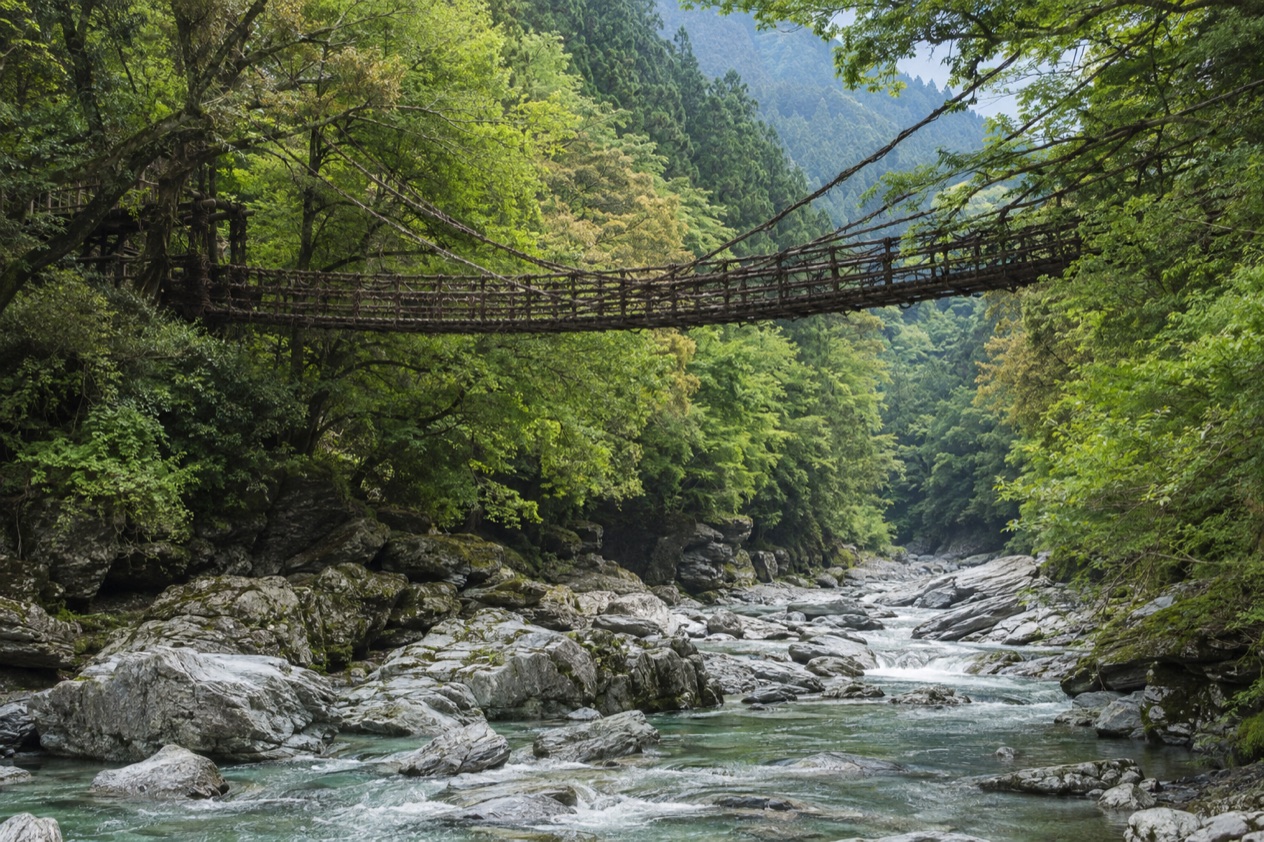
- Cross into the Iya Valley, with its thatched farmhouses and old vine bridges.
- Take a ferry to Naoshima, an island of contemporary art in the Seto Inland Sea.
- Walk the Uzu-no-Michi Walkway in Tokushima, one of the island’s seasonal attractions.
Shikoku is not on the Shinkansen network, so the pace here is slower than on the main island. Trains and buses connect the four prefectures, and the Shikoku Highway Bus Free Pass covers unlimited rides on express buses within the island as a two-day, three-day or five-day pass. Boarding dates can fall on any days within the validity period.
A good trip leaves room for the unplanned. The pilgrimage route threads through villages where you may stop for tea, the coast keeps appearing between hills, and every city has a covered shopping arcade worth wandering after dark. Pick one or two prefectures for a short stay, or link all four if you have longer.
Sights and landmarks in Shikoku
Shikoku’s landmarks are scattered among its four prefectures, so the sights gather around the main cities: Matsuyama and its castle and bathhouse, Takamatsu and its garden, Kochi and its castle. Between them lie temples of the pilgrimage that you will pass again and again, each with its own gate, hall and incense smoke.
Dogo Onsen and Matsuyama
Matsuyama is the capital of Ehime Prefecture and the largest city on Shikoku, and its great draw is Dogo Onsen. The thermal waters here are said to have inspired Studio Ghibli, and the old wooden bathhouse, with its tiers of roofs and lanterns, does look like something drawn for a film. Fans of anime often come just to see the building from the street.
Matsuyama can be reached by air, since a flight from Haneda Airport in Tokyo to Matsuyama Airport takes about 1 hour 30 minutes. By rail, the limited express Shiokaze runs back and forth between Okayama and Matsuyama roughly every hour during the day. Around Dogo, the shopping street leading to the bathhouse is lined with shops selling towels, sweets and souvenirs, and walking it in a yukata, the light cotton robe, is a local habit.
Matsuyama also has a castle on a hill above the city, a good place to get your bearings before heading down to the baths. Pair the two for a day that mixes history with a soak.
Kochi Castle and the city below it
Kochi Castle is one of the seasonal attractions the island’s tourism board points to, and it sits at the center of Kochi, a city on the Pacific Ocean. Kochi is the capital of its prefecture, and the castle’s wooden keep and stone walls give the downtown a sense of old Japan that is easy to feel as you climb the steps.
To reach Kochi from the main island, take the Tokaido-Sanyo Shinkansen to Okayama Station, then board the JR Shikoku bus from the west side of the station. Once in the city, you can combine the castle with a stroll to the markets and the covered arcades, and finish with a meal of the local specialties.
Temples of the pilgrimage
The Shikoku 88 Temple Pilgrimage is a route of roughly 746 miles visiting Buddhist temples associated with Kobo Daishi, and it circles the entire island. Walking it can take anywhere from 30 to 60 days, which is far beyond most vacations. Even so, you can visit a single temple, watch a pilgrim chant at the main hall, and see the stamp book being signed at the temple office.
Besides the official temples, there are 20 bekkaku temples officially associated with the pilgrimage, which offer extra stops for those with time. If you only have a day or two, choose a cluster within one prefecture and treat it as a taste of the whole.
Smaller landmarks and the island’s shape
JR Shimonada Station in Ehime is another of the seasonal attractions the tourism board names, a small seaside stop that draws photographers. Along the Seto Inland Sea coast, the views come in glimpses through train windows and from the headlands. The island is about 140 miles long, so a drive or rail ride between the cities shows how the hills run down to the sea.
These are places to slow down rather than tick off, and they make the transfers between the big sights feel like part of the trip.
Outdoor things to do in Shikoku
Outdoors in Shikoku means gardens in town, coastal views, and deep mountain valleys. The island’s seasons color the landscape in turn, with cherry blossoms in spring, fresh green in summer and vivid leaves in autumn.
Ritsurin Garden, Takamatsu
Ritsurin Garden in Takamatsu is a Japanese garden designated as a Special Place of Scenic Beauty by the Japanese government. It is spectacular in spring during cherry blossom season and in autumn with its vivid colors. Paths wind past ponds, arched bridges and carefully shaped pines, and the tea houses by the water add a place to rest.
Takamatsu is the capital of Kagawa Prefecture, in northern Shikoku. It is a natural base for the garden and for the udon shops around town. Spend a slow morning here and let the garden’s views unfold at each turn of the path.
The Iya Valley
The Iya Valley in Tokushima Prefecture is a scenic area known for its mountain valleys, thatched-roof farmhouses and historic vine bridges. The western part, Nishi-Iya, has good road access and tourist accommodations, while the eastern part, Higashi-Iya or Oku-Iya, has lesser access routes. Visitors who come for a day or a night base themselves in the west.
The vine bridges sway over the river gorge, and the steep slopes are dotted with small farms and villages. It is a landscape for walking, photographing and listening to running water, and a night in a local inn adds a rural counterpoint to the island’s cities.
Uzu-no-Michi Walkway and the coast
The Uzu-no-Michi Walkway in Tokushima is among the island’s seasonal attractions. It is a walkway for looking at the water of the strait from above, and the name refers to the whirlpools that form in the channel. The sea and the tides are the main event here, and the walkway gives you a viewing platform for them.
Elsewhere, Shikoku offers scenic coastline views of the Seto Inland Sea, and the Pacific side near Kochi has its own wider horizon. Wherever you walk along the shore, expect fishing boats, small harbors and hills close behind the water.
Day trips from Shikoku
The outings that make the most sense from Shikoku’s cities are a valley in the mountains, an art island in the sea and a channel where the tides churn.
Naoshima, the art island
Naoshima is an island in Japan’s Seto Inland Sea, part of Kagawa Prefecture, and it is best known for its many contemporary art installations and museums. Naoshima suits a day devoted to its contemporary art installations and museums.
The Setouchi archipelago is a chain of thousands of islands of various sizes dotting the Seto Inland Sea, with a mild climate, clean beaches and sparkling blue waters. The islands are described as ideal for short getaways from Okayama, Takamatsu, Hiroshima and Kobe. If one island appeals, you can often add a second by ferry.
The Iya Valley from the city
A trip into the Iya Valley takes you away from the coast and into forested mountains. The road access in the western part makes it the sensible target for an outing, and the vine bridges and thatched houses repay the trip. It suits travelers who like rural scenery and are happy to spend part of the day getting there.
If you want more than a single stop, plan a night in the valley. Evenings bring the sounds of the river, and the next morning you can walk another stretch before heading back.
Whirlpools and the Tokushima coast
Tokushima Prefecture is home to the Uzu-no-Michi Walkway, and the nearby channel is where the whirlpools form. Tokushima city, on the island’s eastern side, is also where the summer dance festival Awa Odori fills the streets in August.
Combine the walkway with a meal in town and a look at a temple on the pilgrimage route, which starts in Tokushima.
What to eat in Shikoku
Eating in Shikoku starts with udon in Kagawa Prefecture, which is famous for its legendary noodles. The bowls are simple: thick, chewy noodles in a light broth, topped with scallions, a raw egg or crunchy tempura. Many shops are no-frills places where you pick up your tray and add toppings yourself.
Beyond udon, each prefecture brings its own tastes. Kochi, on the Pacific, is known for katsuo no tataki, bonito seared over straw fire and served in thick slices with garlic and ponzu. Ehime is known for its citrus, so you will see mikan juice, jellies and sweets in every station shop.
Udon in Kagawa
A trip to Takamatsu and the area around it is a chance to eat udon in several styles. Cold noodles with a splash of soy and lemon, hot noodles in broth, and noodles dipped in a bowl of raw egg are common variations. The pleasure is in the texture, and travelers fit more than one bowl into a day.
Pair a bowl with a skewer of tempura or a piece of fried chicken, and finish with a walk through the nearby streets. Udon here is breakfast, lunch or a late snack, and eating it is a way to see how the island lives.
Seafood and markets in Kochi
Kochi’s food culture is built on its position on the Pacific. Seared bonito is the signature dish, and a market hall in the city lets you assemble a meal from several stalls and eat at shared tables. Grilled fish, sashimi and pickles round out the table.
With a glass of local sake, a seat at a counter and a plate of tataki, the city shows its easy-going side. It is a meal that suits an evening, and the same spirit carries over into the izakaya, the Japanese pubs, around town.
Sweets, citrus and teahouse snacks
Around Matsuyama and Dogo Onsen, shops sell sweets filled with citrus and bean paste, and cafes serve mikan in drinks and desserts. A bath is often followed by a cold drink or a small cake. Along the pilgrimage route, small stands offer tea and rice balls to walkers.
Look for regional snacks in station shops and temple towns, which make easy gifts to bring home. Each prefecture takes pride in a local sweet, and tasting them is a pleasant way to compare the four.
Things to do in Shikoku at night
Evenings in Shikoku are about soaking, eating and strolling. This is not an island of big nightclubs. Instead, the night belongs to hot springs, izakaya, covered arcades and the occasional summer festival.
A bath at Dogo Onsen
Dogo Onsen in Matsuyama is a place to end a day. The thermal waters inspired Studio Ghibli, and the wooden bathhouse glows with lanterns after dark. Walking the approach street in a yukata, with the sound of wooden sandals, is a ritual for many guests.
Following a soak, a cold drink and a plate of local snacks complete the evening. Staying at an inn nearby lets you extend the stay and step back out for a second walk before bed.
Izakaya and city streets
In Takamatsu, Matsuyama, Kochi and Tokushima, the evening scene gathers around izakaya, where plates of grilled skewers, sashimi and fried foods arrive in a steady flow. Kochi is known for convivial drinking and seared bonito, and the shared tables of its market hall suit groups.
The covered shopping arcades that run through the center of each city make a pleasant route for an after-dinner walk. Ramen counters and small bars keep the streets lively, and a late bowl of noodles is a local custom.
Summer nights and quieter options
In August, Tokushima’s Awa Odori turns the streets into a stage for dancers in matching costumes, with drums, flutes and shamisen setting the beat. It is a summer evening spectacle, and if your trip falls then, it is a reason to be in the city.
For a quieter evening, a stay at a traditional ryokan can pair dinner with a night on a futon over tatami. In the Iya Valley, a night among the mountains brings the sound of the river and a dark sky. Both options show a slower side of the island.
Things to do in Shikoku with kids
Children in Shikoku have plenty to look at: castles, outdoor sculptures, gardens and noodle shops. The island has a number of outings that turn sightseeing into activity.
Castles, gardens and bridges
Kochi Castle and the castle in Matsuyama give children a sense of the samurai era, with wooden floors, steep stairs and views over the city. In Takamatsu, Ritsurin Garden has ponds, bridges and carp to watch.
The vine bridges of the Iya Valley turn a hike into an adventure, as they sway and creak over the river.
Art, ferries and the sea
A ferry ride to Naoshima is an outing in itself, and the island’s outdoor sculptures, including a large yellow pumpkin, give children something to climb around and photograph. The Seto Inland Sea islands have a mild climate and clean beaches, so a day on the shore fits in as well.
Moving between islands means ferries and long walks, so pack snacks and comfortable shoes. Plan a slow pace, and let the children choose a few stops of their own.
Noodles, sweets and bath time
Udon is a natural for children, with its soft, chewy noodles and mild broth. Some places in Kagawa offer the chance to see noodles being cut and boiled, which makes lunch a show. Mikan sweets and juice from Ehime give another easy snack for the road.
At Dogo Onsen, a visit to the old bathhouse and a stroll along its shopping street can fill an afternoon. Distances on the island are long, so spread your stops across a few days rather than rushing between prefectures.
Good to know before you go
Shikoku lies across the Seto Inland Sea from Honshu, and trains cross the Seto Ohashi Bridge from Okayama Prefecture to Kagawa. Frequent connections run from Okayama to Takamatsu and on through the island, and the Shikoku Highway Bus Free Pass covers express buses for two, three or five days.
Matsuyama also has flights from Tokyo. Typhoon season in Japan runs through late summer and autumn, so keep an eye on forecasts when you plan ferries and mountain days.
Sources
- Japan National Tourism Organization, Shikoku (https://www.japan.travel/en/destinations/shikoku/), checked October 11, 2026
- Tourism Shikoku (https://shikoku-tourism.com/en/), checked October 11, 2026
- Wikipedia, Regions of Japan (https://en.wikipedia.org/wiki/Regions_of_Japan), checked October 11, 2026
- Wikipedia, Shikoku (https://en.wikipedia.org/wiki/Shikoku), checked October 11, 2026
- Wikivoyage, Shikoku (https://en.wikivoyage.org/wiki/Shikoku), checked October 11, 2026
- Wikipedia, Iya Valley (https://en.wikipedia.org/wiki/Iya_Valley), checked October 11, 2026
- Japan National Tourism Organization, Matsuyama (https://www.japan.travel/en/destinations/shikoku/ehime/matsuyama-and-around/), checked October 11, 2026
- Wikipedia, Matsuyama, Ehime (https://en.wikipedia.org/wiki/Matsuyama,_Ehime), checked October 11, 2026
- Japan National Tourism Organization, Takamatsu (https://www.japan.travel/en/destinations/shikoku/kagawa/takamatsu-area/), checked October 11, 2026
- Wikipedia, Takamatsu, Kagawa (https://en.wikipedia.org/wiki/Takamatsu,_Kagawa), checked October 11, 2026
- Japan National Tourism Organization, Kochi (https://www.japan.travel/en/destinations/shikoku/kochi/kochi-and-around/), checked October 11, 2026
- Wikipedia, Kōchi, Kōchi (https://en.wikipedia.org/wiki/K%C5%8Dchi,_K%C5%8Dchi), checked October 11, 2026
- Japan National Tourism Organization, Naoshima (https://www.japan.travel/en/destinations/shikoku/kagawa/setouchi-islands/), checked October 11, 2026
- Wikipedia, Naoshima (https://en.wikipedia.org/wiki/Naoshima), checked October 11, 2026