
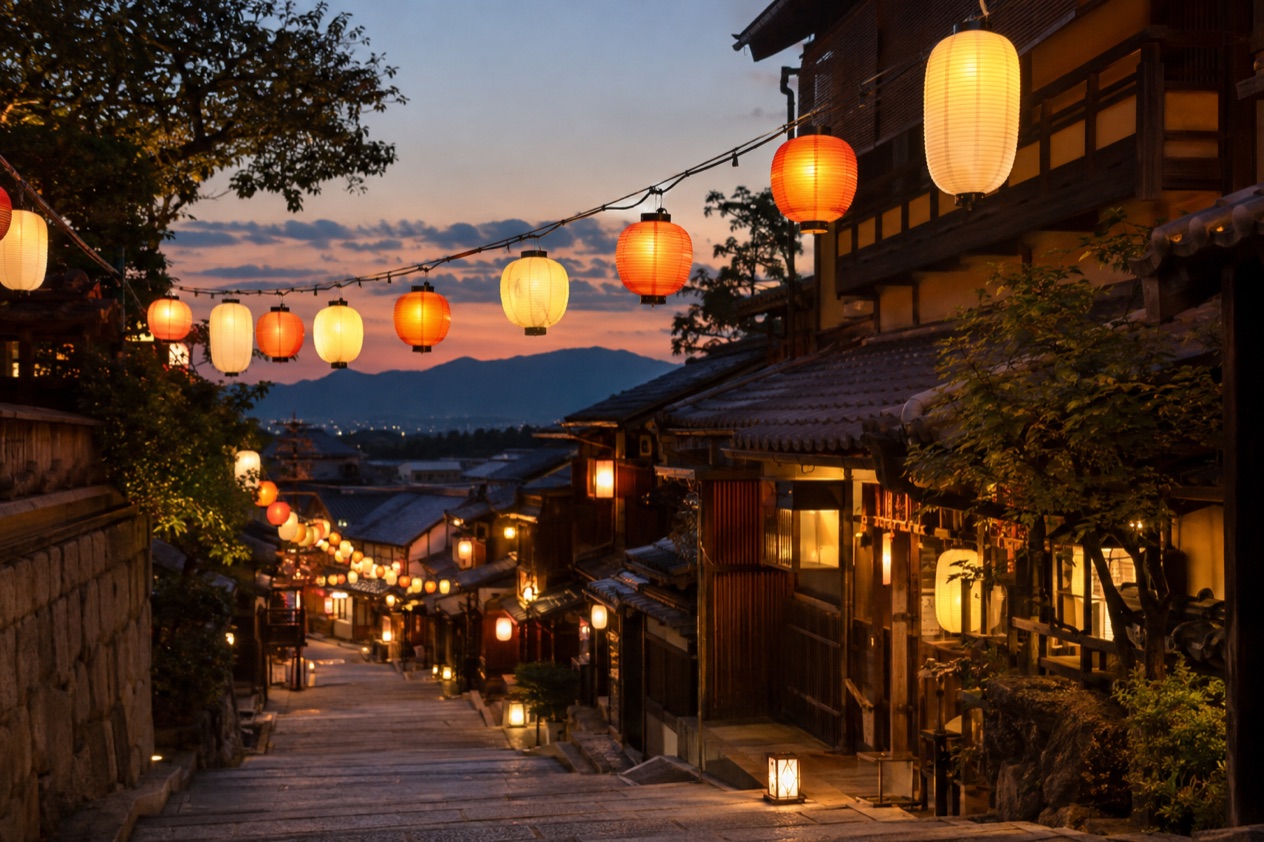
Along a covered shopping arcade in Sendai, huge paper streamers sway overhead like the branches of a weeping willow, and people stop under them to read the wishes tied to bamboo. A paper crane turns slowly in the air, a child’s handwriting asks for a faster run in the next race. That is Tanabata, the Star Festival, and it is celebrated in different towns on different dates, from early July to mid August.
What is Tanabata?
Tanabata, also called the Star Festival, is a summer celebration of a love story told among the stars: the meeting of the deities Orihime and Hikoboshi on the seventh day of the seventh lunar month. Across Japan it turns into a festival of paper, bamboo and handwritten wishes, with streets, shrines and shopping arcades dressed in color.
The tale is one of separated lovers. Orihime is the weaver, Hikoboshi the herdsman, and the Milky Way lies between them. The story goes that on this one night they are allowed to cross and meet. Japanese families tell it to children as a bedtime story, and it explains why the festival is tied to the night sky and to the hope that a wish might be heard.
Wishes on paper strips
The heart of Tanabata is a small, personal gesture. You write a wish on a narrow strip of colored paper, called a tanzaku, and hang it on a bamboo branch. Children ask for things like a new bicycle or good marks at school. Adults often write about health, work or a family member. Traditionally the wishes also include a hope to improve handwriting and other crafts, a reminder that Orihime was a weaver.
Bamboo stands are set up in schools, kindergartens, department stores and shrine grounds, and visitors often find a table with paper and pens beside them. The bamboo, heavy with strips, bends and rustles in the wind. It is a pleasant thing to take part in rather than only watch, and a good souvenir of the evening is the photograph of your own strip among the others.
The decorations of Sendai
At the Sendai Tanabata Festival, people traditionally use seven different kinds of decorations. Two are named for their meaning: paper strips for handwritten wishes and paper cranes for long life. Others in the traditional set are shaped from paper as well, such as small kimono and woven nets, each carrying its own hope, and they hang from the great streamers in tiers of color.
What you notice walking beneath them is the craftsmanship. The streamers are made of thin paper that moves with the slightest breeze, and the long tassels brush against your shoulders in the busiest arcades. Shops and neighborhood groups compete quietly to make the most striking ones, so every block has a slightly different look.
Hanyu’s streamers at Zuihoden
One display speaks to a modern audience. Since 2018, streamers inspired by the costumes of figure skater Yuzuru Hanyu have been on display at Zuihoden in Sendai during the Tanabata festival. Zuihoden is a mausoleum site, so the visit combines a historic setting with a contemporary tribute.
The streamers translate skating outfits into paper and color, and fans of the sport may enjoy spotting the costumes they remember. For other visitors, it is a good example of how an old festival adapts: the form of the decoration stays traditional, while the subject reflects what people in the city admire today.
When is it?
Tanabata has no single date across Japan, because the old rule of the seventh day of the seventh lunar month is applied differently from town to town. Some celebrate around the start of July, others hold the festival a month later, and so the Star Festival can be found somewhere in the country over a stretch of the summer.
| Festival | Place | When |
|---|---|---|
| Hiratsuka Tanabata Festival | Kanagawa | Around July 7 |
| Sendai Tanabata Festival | Sendai | August 6 to 8 |
| Sendai fireworks show | Sendai | August 5 |
| Asagaya Tanabata Festival | Tokyo | Immediately before the start of Obon in mid August |
Early July: Hiratsuka
The Hiratsuka Tanabata Festival in Kanagawa is the one that follows the calendar date most closely. It is held around the traditional day in early summer, which makes it the festival to choose if your trip falls in July. Streets fill with bamboo and paper ornaments, and the mood is that of a neighborhood party that grew into a city event.
If you are building a summer itinerary, this timing lets you see Tanabata before the heart of the summer vacation season. Because the festival is held around that date rather than on a fixed set of days, it is wise to look up the schedule of the year you travel before locking in your plans.
Early August: Sendai
The Sendai Tanabata Festival, the most famous in Japan, keeps the old month-later timing and runs in early August. The evening before it opens, a fireworks show lights the sky on August 5, so the days around the festival feel like a small season of their own for the city.
If you can choose, a visit that includes the fireworks night and the festival days lets you see the city in two moods: the burst of light over the evening crowds, then the quieter spectacle of paper streamers in daylight. The festival being held in a different month from Hiratsuka means you could, in theory, see two Tanabata celebrations in one summer by planning around both.
Mid August: Asagaya in Tokyo
In Tokyo, the Asagaya Tanabata Festival is held immediately prior to the start of the Obon holiday in mid August. Obon is the season when families remember their ancestors, and many people travel to their home towns, so the festival sits at the edge of one of the year’s major holiday periods.
That placement is useful for travelers whose plans land in Tokyo in the second half of summer, since it offers a Tanabata celebration without leaving the capital region. Because Obon moves around travel plans for many people in Japan, it is a good idea to keep the festival timing in mind when choosing your dates.
Where can you see it?
You can see Tanabata in Sendai, Hiratsuka and the Asagaya district of Tokyo, and the three offer quite different experiences. Sendai is the one known across Japan, Hiratsuka brings the festival to Kanagawa, and Asagaya places it inside the city of Tokyo.
Sendai: the festival at its grandest
The Sendai Tanabata Festival is described as the most famous in Japan, and the city is dressed for it. The streamers are the main attraction, hanging over streets and shopping arcades in tiers of color, and walking beneath them is the experience most visitors remember. The decorations carry the seven traditional kinds, so it rewards a slow look rather than a quick pass.
Beyond the arcades, the festival has a cultural side at Zuihoden, where the Hanyu streamers have been on display since 2018. Combine the two and you have a day with both the broad spectacle of the streets and a more specific, story-driven corner of the festival. Fireworks the night before the festival add another reason to arrive early in the week.
Hiratsuka and Asagaya
The Hiratsuka Tanabata Festival in Kanagawa gives you the festival in a regional city, around the seventh of July. The setting is a city of ordinary shopping streets that are turned over to paper decorations, which makes it a good place to see how locals decorate for the occasion and to write a wish of your own.
The Asagaya Tanabata Festival in Tokyo brings the same tradition to a neighborhood known for its local streets, and it falls just before Obon. For anyone staying in Tokyo, it is a way to share in a seasonal custom without a long journey, and to enjoy handmade ornaments and the atmosphere of a community festival.
What to look for on the street
- Bamboo branches hung with colored tanzaku, where you can read the wishes of strangers and add your own.
- Paper cranes strung together, a symbol of long life.
- Large streamers with long tassels, hung in rows over the street.
- Shops and neighborhood groups showing their handmade decorations.
Good to know before you go
Tanabata is mostly an outdoor festival, so plan for a day on your feet among streets and arcades, and bring a small notebook if you like to remember the wishes you read. The decorations are made of paper, which gives the festival its soft look and also means the display is a seasonal one. Dates differ by town, so match your itinerary to the festival you want to see, whether early July, early August or mid August.
Sources
- Japan National Tourism Organization, festivals and events (https://www.japan.travel/en/see-and-do/festivals-and-events/), checked October 11, 2026
- Wikipedia, Tanabata (https://en.wikipedia.org/wiki/Tanabata), checked October 11, 2026
To plan your stay
- Japan Rainy Season (Tsuyu): Dates, Regions and How to Plan Your Trip
- Seasons in Japan: Blossoms, Fall Color, Snow Festivals and Summer Matsuri
- Typhoon Season in Japan: When It Hits, Which Regions Take the Brunt and How the Warning Alerts Work
- Autumn Leaves Dates by City: Usual Maple Dates, 2025 Results and How Much They Shift