
Turn a corner in a Japanese town on the right evening and you meet a wall of drums, shouted chants and people carrying a gilded shrine on their shoulders. Nobody planned the street around you, and you are simply invited to stand and watch. Japan holds festivals, called matsuri, in every season, from snow sculptures in winter to blossom parties in spring and dance nights in summer, so a trip can be built around one or simply cross paths with one.
What festivals does Japan hold?
Japan holds festivals of every size in every season: matsuri, the traditional festive occasions that are often celebrated with dance and music. Estimates of how many take place across the country run into the hundreds of thousands, from a single neighborhood shrine to parades that fill a city center. Most are tied to a shrine, a harvest, a season or a local legend, which is why two towns an hour apart can celebrate in completely different ways.
The table gathers the festivals that have a usual window. Each belongs to its own town, so the calendar works best as a way to choose a region and a month together.
| Festival | Place | Usual time |
|---|---|---|
| Yaedake Cherry Blossom Festival | Okinawa | Late January to mid February |
| Lake Towada Snow Festival | Yasumiya, south side of Lake Towada | Beginning of February |
| Sapporo Snow Festival | Sapporo | February, for one week |
| Mito Plum Blossom Festival | Ibaraki | February to March |
| Matsuyama Shiroyama Koen Cherry Blossom Festival | Matsuyama, Ehime | Early April |
| Gujo Odori Festival | Gifu | July to September |
| Aomori Nebuta Festival | Aomori | About August 2 to 7 |
Winter and early spring: snow, plum and early cherry blossoms
The year opens with festivals that make the cold the point. At the Sapporo Snow Festival the city fills with snow work for a week in February. On the south side of Lake Towada, the village of Yasumiya holds its own snow festival at the start of February, and the evening program includes a snow maze, a Japanese igloo to explore and food from Aomori and Akita prefectures.
Blossoms start early in the south. The Yaedake Cherry Blossom Festival in Okinawa takes place while much of the country is still deep in winter, and the Mito Plum Blossom Festival in Ibaraki follows from late winter into the first days of March. Plum comes before cherry in the Japanese calendar, so the Mito festival is the quieter prelude to the hanami season, the custom of gathering under flowering trees.
Spring: cherry blossoms, floats and shrine parades
In early April the Matsuyama Shiroyama Koen Cherry Blossom Festival in Ehime puts the blossom around the grounds of a hilltop park. Farther north, the Hirosaki Cherry Blossom Festival in Aomori is built around 2,600 cherry trees, some of them over 300 years old, which gives the festival its character of old trunks and long branches.
Not every spring festival is about flowers. The Takayama Spring Festival centers on music and the floats called yatai rather than on cherry blossoms. The Kamakura Festival runs for a week and brings horseback riding, archery, dancing and an outdoor tea ceremony.
In Tokyo, the Sanja Festival in Asakusa fills the streets with lively parades of mikoshi, the portable shrines that teams of bearers carry and shake. The Hakata Dontaku Festival in Fukuoka usually involves 30,000 participants.
Summer and the rest of the calendar
Summer is the season of dance. The Gujo Odori Festival in Gifu stretches from July into September, and it offers ten dances to learn, so visitors are invited to join the circle and not only watch. The Aomori Nebuta Festival lights up the first week of August with enormous illuminated floats.
Other festivals sit in the calendar without a month in hand. The Atsuta Festival in Aichi is held at a shrine nearly 2,000 years old. The Hyakumangoku Festival in Kanazawa brings samurai re-enactments, drum performances and a spectacular parade. The Nagasaki Kunchi has its own food to eat on the street, a snack called hashimaki, which is okonomiyaki (a savory pancake) wrapped around chopsticks.
Which are best known?
Kyoto’s three major festivals, Gion Matsuri, Aoi Matsuri and Jidai Matsuri, are named together as the city’s great set, and Aomori’s Nebuta and Fukuoka’s Hakata Dontaku are the ones counted in millions of visitors. Aomori Nebuta and Hakata Dontaku each draw more than two million people a year. Sapporo’s snow week and Tokyo’s Sanja round out the list of festivals that travelers plan whole itineraries around.
Gion Matsuri in Kyoto
The Gion Festival in central Kyoto has been held since 869, and it sits at the head of Kyoto’s three major festivals. It is a festival of the city itself, with floats and neighborhoods taking part, and the old merchant streets of the center are its stage.
Aoi Matsuri and Jidai Matsuri complete the Kyoto trio. Because all three belong to one city, a visitor who lines a Kyoto trip up with any of them sees the city as it dresses for its own history. Each is a parade festival, so the most memorable moments are processions on the street, not events with a ticket gate.
Aomori Nebuta
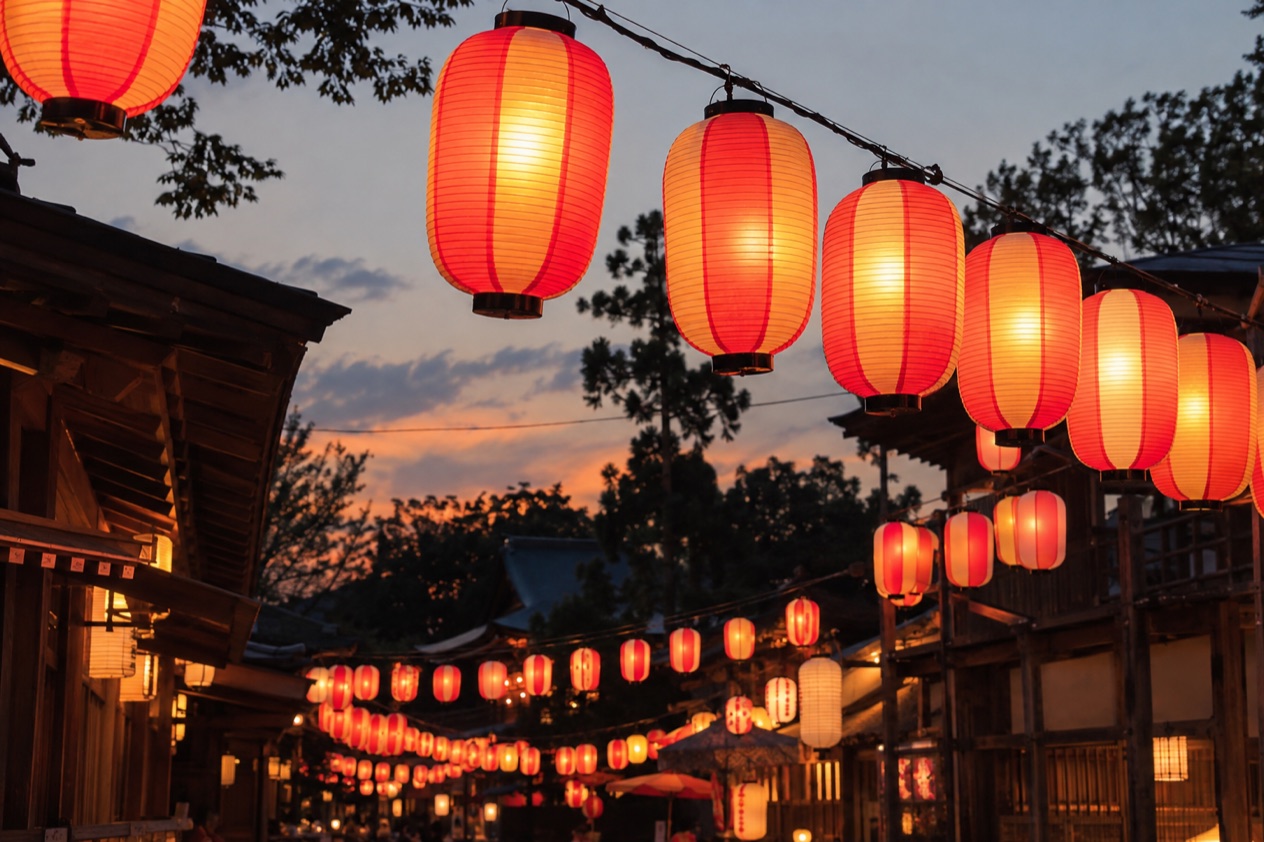
The Aomori Nebuta Festival is held from about August 2 to 7 every year. Twenty large nebuta floats are paraded through the streets near Aomori JR rail station, glowing from within, each one a lantern the size of a house with a warrior or a figure from legend painted across it.
What marks the festival is the movement around the floats. Drummers, flutists and costumed dancers move with them, and the sound reaches you before the light does. The festival has become one of the north’s great summer events, and the city is the gathering point for its summer.
Hakata Dontaku, Sanja and Sapporo
The Hakata Dontaku Festival turns Fukuoka into a parade ground, with tens of thousands of participants in costume marching and dancing. The Sanja Festival in Asakusa, Tokyo, is the festival of the mikoshi, with portable shrines swaying through the neighborhood around the old temple district.
The Sapporo Snow Festival is the winter counterpart, held in February for one week. Its draw is the sight of the city turned into a place of snow, a different kind of festival from the shrine parades, and one that suits travelers who want Japan in its coldest month.
How do you plan around them?
Start with a region and a season, then look for the matsuri that falls inside them. A trip to the north in early August fits Nebuta, a February trip suits the snow festivals of Sapporo and Lake Towada, and a spring trip can follow the blossoms south to north through Okinawa, Ehime and Aomori.
Book the bed before the ticket
For the Gion Festival, it is recommended to book accommodation several months in advance. That is the one piece of lead time the Japan National Tourism Organization names, and it is worth treating Kyoto’s festival as a reason to settle the hotel early.
For the other large festivals, the same logic holds in a looser way, because a festival is a reason many people choose the same town. The Aomori Nebuta and Hakata Dontaku draw more than two million visitors each, which means the towns around them are full of festivalgoers whatever the beds on offer.
Join in, eat, and read the program
Some festivals invite you to take part. At Gujo Odori in Gifu you can learn ten dances over the summer, and Kamakura’s week-long festival adds archery, horseback riding and an outdoor tea ceremony to the schedule. At Lake Towada the evening starts at 5 pm with a snow maze, an igloo to explore and foods from Aomori and Akita prefectures.
Festival food is part of the plan. In Nagasaki the Kunchi comes with hashimaki, okonomiyaki wrapped around chopsticks so it can be eaten while walking, and many matsuri have their own stalls and street snacks. One event needs paperwork even though it costs nothing: the Nango Summer Jazz Festival is free, but members of the public still need to receive a ticket to enter.
Match the festival to the weather and the trip
Winter festivals are cold by design, so the snow weekends in Sapporo and at Lake Towada call for warm layers. Spring blossom festivals depend on the trees, and a festival window such as the one in Mito, which runs from February to March, spreads the display over several weeks. Summer festivals are outdoor evenings, and dance nights such as Gujo Odori run across three months, which leaves room to fit one into a longer route.
A festival can also be the reason to pick one town over another. Takayama’s spring float festival, Kanazawa’s samurai parade and Nagoya’s Atsuta shrine festival each give a different city a day with a clear focus, and the day can sit next to the temples, gardens and food that the place already offers.
Good to know before you go
Festival days run on their own rhythm: the street food, the processions and the dance circles are the program, and a matsuri is as much about standing among the neighbors as about the main event. Many festivals are free to watch, though the Nango Summer Jazz Festival still asks the public to receive a ticket. The blossom festivals depend on the trees, so dates from one spring to the next can shift, and the windows given for each festival are the usual ones.
Sources
- Japan National Tourism Organization, festivals and events (https://www.japan.travel/en/see-and-do/festivals-and-events/), checked October 11, 2026
- Wikipedia, Matsuri (https://en.wikipedia.org/wiki/Matsuri), checked October 11, 2026
To plan your stay
- Japan Rainy Season (Tsuyu): Dates, Regions and How to Plan Your Trip
- Seasons in Japan: Blossoms, Fall Color, Snow Festivals and Summer Matsuri
- Typhoon Season in Japan: When It Hits, Which Regions Take the Brunt and How the Warning Alerts Work
- Autumn Leaves Dates by City: Usual Maple Dates, 2025 Results and How Much They Shift