
On a spring afternoon in Tokyo, office workers spread blue tarps under the trees, someone arrives with a bag of convenience-store snacks, and a pale pink drift of petals lands on the plastic cups. Hanami, the custom of sitting under the blossoms, turns whole parks into outdoor living rooms for a couple of weeks. In Tokyo the cherry trees open around the end of March, with the exact days shifting from one spring to the next.
When do the cherry blossoms bloom in Tokyo?
The cherry blossoms in Tokyo usually open in the last week of March, and full bloom follows about a week later. Japan tracks the trees with two named moments: kaika, when the first blossoms open on the reference trees, and mankai, when the branches are in full bloom.
| Stage | Usual date | Range in recent years |
|---|---|---|
| First bloom (kaika) | March 24 | March 14 to March 29 |
| Full bloom (mankai) | March 31 | March 22 to April 4 |
Read the second column as the middle of the road and the third as the spread you can expect from one spring to the next. A cold March pushes everything later, and a mild one brings the trees out early. Full bloom has landed anywhere from the third week of March to the first days of April in recent years, so a trip fixed on one date is a bet on the weather.
From first buds to falling petals
The season is not a single moment but a slow arc. Before kaika, the trees are bare branches with swollen buds, and Tokyo still feels like late winter. Once the first flowers open, the mood in the parks changes day by day. Cafés put up sakura menus, shops fill with pink packaging, and people begin to check the forecast the way others check a ballgame score.
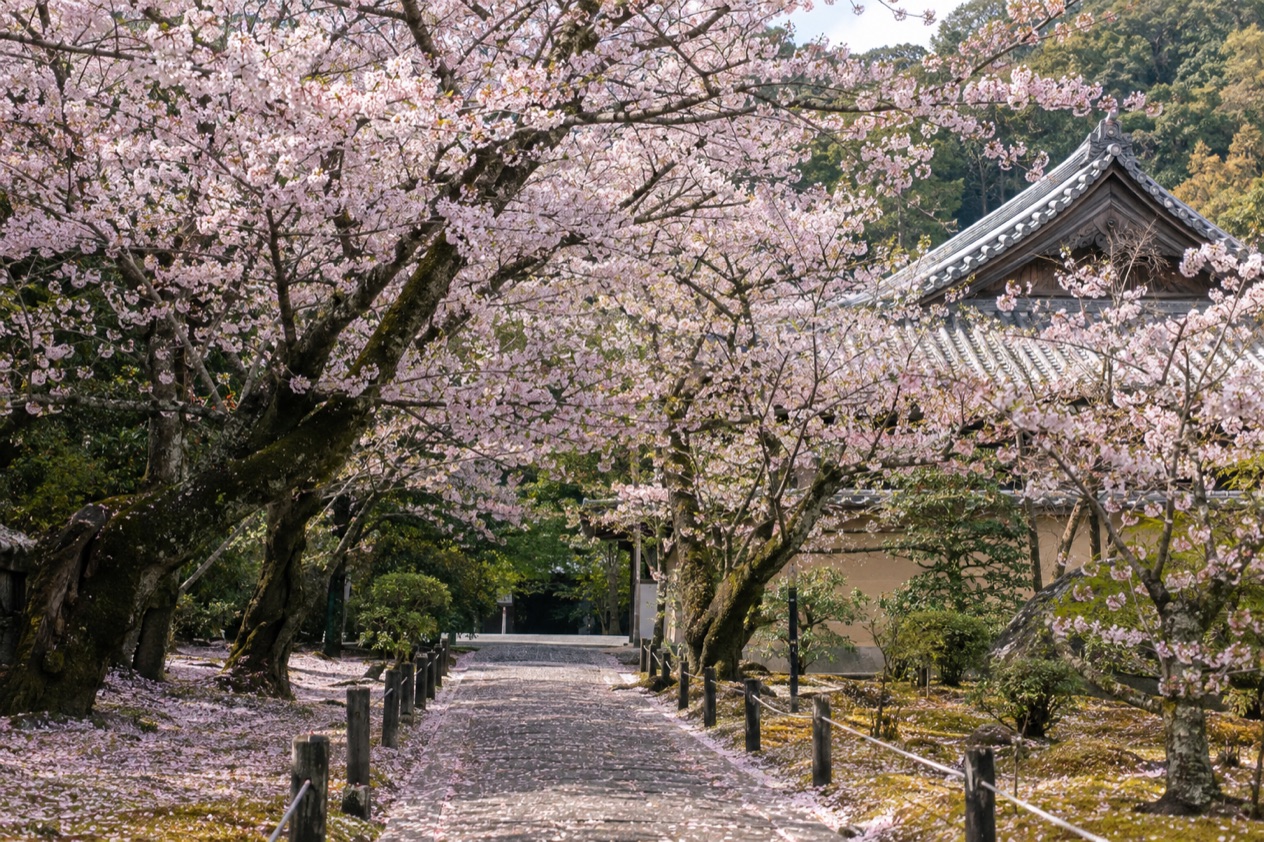
At full bloom the branches are thick with flowers and the trees look like clouds. The Japanese have a word for the snowfall of falling petals, hanafubuki, and people love this phase as much as the peak. Petals collect on paths, ride on the surface of moats and rivers, and stick to umbrellas on rainy days.
How to plan around the shifting dates
Because the window is short and moves, the most useful approach is to build a trip around the whole stretch from the last days of March into the first days of April rather than one day. That span covers the usual first bloom, the usual full bloom and the petal-fall that follows. Travelers who can keep a few mornings open can let the trees decide which days go to the parks.
Rain and wind shorten the show. A gray, drizzly day can still be lovely, since wet petals look darker and the paths turn pink, but a strong storm can strip a tree in a night. If the days around full bloom turn wet, indoor stops such as museums and department store food halls fill the gaps, and the trees are often still holding flowers a day or two later.
Where can you see them in Tokyo?
Tokyo shows its cherry blossoms in big parks, along rivers and moats, and on city streets lined with trees, so you can see them from almost any neighborhood you are staying in. The places below suit different moods, from a picnic with a crowd of locals to a quiet stroll between meals. Which one fits depends on whether you want a lawn, a waterside walk or blossoms folded into a day of shopping and dining.
Parks for a hanami picnic
Ueno Park and Shinjuku Gyoen are the classic settings for sitting under the trees. Ueno Park has a long avenue of cherries running past its museums and its pond, and in season the paths fill with food stalls and groups settling in on tarps. Shinjuku Gyoen is a large garden with wide lawns, where the trees stand apart from one another and the blossoms are framed by open sky.
Both are places to bring something to eat. Hanami food is a small genre of its own: bento boxes, rice balls, fried chicken, dango (sweet rice dumplings on a skewer) and sakura-flavored sweets. Hours and admission vary by park and are not something to guess at, so check them for the park you pick before you head out.
Moats and rivers
Water doubles the effect. Around the Imperial Palace, the moat at Chidorigafuchi is lined with cherry branches that lean over the surface, and rowboats drift beneath them in season. Along the Meguro River, the trees arch over the channel from both banks, and in the evening lanterns are strung along the route for yozakura, viewing the blossoms at night.
These are walking places rather than picnic places. You move along the water, stop at a bridge for a photo, and buy a warm snack from a stall or a nearby shop.
Blossoms with a city day: Ginza, Nihonbashi, Roppongi and Akasaka
Not every blossom outing needs a park. Ginza is an upscale downtown area of high-end restaurants and luxury shops, and Nihonbashi, next to it in the city, is known for its rich heritage and is the main financial district of Japan. Spring weeks in districts like these pair well with a lunch, a department store visit and a walk to whichever tree-lined stretch is nearby.
Roppongi and Akasaka are districts you can reach from Shibuya Station in about 10 minutes by train. Roppongi Station is served by the Tokyo Metro Hibiya Line and the Toei Oedo Line, Nogizaka Station by the Tokyo Metro Chiyoda Line, and Roppongi-Itchome Station by the Tokyo Metro Namboku Line.
Near Roppongi Hills, a lane lined with cherry trees turns pink in season, and Tokyo Midtown has gardens that put on a blossom show of their own. After dark the lit trees give the area a very different feel from the daytime.
What should you know before you go?
The main thing to know is that the blossoms follow the weather, not the calendar, so your plans need a little slack. The usual dates are a guide, and the spread seen in recent years is wide enough that two trips a week apart can feel like different seasons. Arriving with an open mind about which day is best is the best preparation.
Getting to Tokyo and getting around
Tokyo sits on Tokyo Bay, in the Kanto region, on Honshu, the largest island of Japan. The nearest airports are Haneda Airport, officially Tokyo International Airport, and Narita Airport, Japan’s largest international airport. Which one you arrive at is a matter of your flight, and either one puts you in a city that has an extensive network of trains and subways.
Tokyo is the capital of Japan and the most populous metropolitan area in the world, which is worth remembering when you picture a quiet blossom stroll. Large cities have large audiences for a short event. Plan your parks and your meals as parts of a day that has a rhythm: a walk in one place, lunch somewhere else, and another look at the trees when the light changes.
Blossom habits and small pleasures
Hanami has its own habits. Groups often send someone ahead to claim a spot with a tarp, the food is shared, and shoes come off at the edge of the sheet. People take care to carry their trash away when they leave. If you are joining the scene, a small picnic of things bought that morning is the way people do it.
Spring flavors are part of the experience. Sakura-flavored sweets, from mochi wrapped in a salted cherry leaf to pink-tinted lattes and ice cream, show up in bakeries, tea shops and convenience stores. Cherry-blossom editions of familiar snacks appear and disappear within weeks, so tasting them is a quiet way of catching the season even if the trees are not yet open.
If you miss the peak
A trip that lands slightly early or slightly late is not a lost trip. Before full bloom, partly open trees against bare branches have their own delicacy, and the markets and cafés are already in sakura mode. After it, the petal storms and the carpets of pink on the ground are what many photographers go looking for, and young green leaves start to push through the branches.
Tokyo has other seasons worth planning around too. The maple leaves change color later in the year, around the end of November, which makes spring and autumn two very different ways of seeing the same parks.
Good to know before you go
Spring evenings in Tokyo can turn cool once the sun goes down, so a layer is useful if you plan to stay out for yozakura, and a small umbrella earns its place in the bag when showers roll through. Keep some cash and a light bag for stall snacks, and bring a plastic bag to carry your own trash out of the park. The petals, in the end, are the last thing you notice: a thin pink layer on the path as you walk back to the station.
Sources
- Japan Meteorological Agency, cherry blossom first-bloom dates 2021-2026 and 1991-2020 normal (https://www.data.jma.go.jp/sakura/data/sakura003_07.html), checked October 11, 2026
- Japan Meteorological Agency, cherry blossom full-bloom dates 2021-2026 and 1991-2020 normal (https://www.data.jma.go.jp/sakura/data/sakura004_07.html), checked October 11, 2026
- Japan National Tourism Organization, Tokyo (https://www.japan.travel/en/destinations/kanto/tokyo/), checked October 11, 2026
- Japan Meteorological Agency, maple color-change dates 2025-2026 with difference from the 1991-2020 normal (https://www.data.jma.go.jp/sakura/data/phn_014.html), checked October 11, 2026
To plan your stay
- Japan Rainy Season (Tsuyu): Dates, Regions and How to Plan Your Trip
- Seasons in Japan: Blossoms, Fall Color, Snow Festivals and Summer Matsuri
- Typhoon Season in Japan: When It Hits, Which Regions Take the Brunt and How the Warning Alerts Work
- Autumn Leaves Dates by City: Usual Maple Dates, 2025 Results and How Much They Shift