
On a spring afternoon in Nagoya, office workers carry folded blue tarps toward the park, and the first pink buds appear against the dark moat walls of the castle. The question arrives at every hotel desk and in every café: is it blooming yet? The short answer is that Nagoya’s cherry blossoms usually open in the last week of March and reach full bloom around the first days of April.
When do the cherry blossoms bloom in Nagoya?
Cherry blossoms in Nagoya usually start opening in the second half of March, and the trees are at their fullest in the opening days of April. The Japan Meteorological Agency tracks both moments at Nagoya, the first bloom (kaika), when the first flowers open on the reference tree, and the full bloom (mankai), when most of the buds have opened. Those two dates are the ones that matter for planning a trip.
| Stage | Usual date | Earliest to latest in recent years |
|---|---|---|
| First bloom (kaika) | March 24 | March 17 to March 28 |
| Full bloom (mankai) | April 2 | March 27 to April 7 |
Read the usual dates as a center of gravity, not a promise. From one spring to the next, the blossoms have arrived about a week early or a week late, so the safest way to plan is to think in a window that runs from the middle of March into the first week of April.
How the bloom unfolds over the days
First bloom is a quiet event. A few flowers open on a handful of branches, and the rest of the tree still looks bare and brownish-pink. People in town do not notice until the second or third day, when whole branches turn pale and the news starts to talk about the sakura front moving along the country.
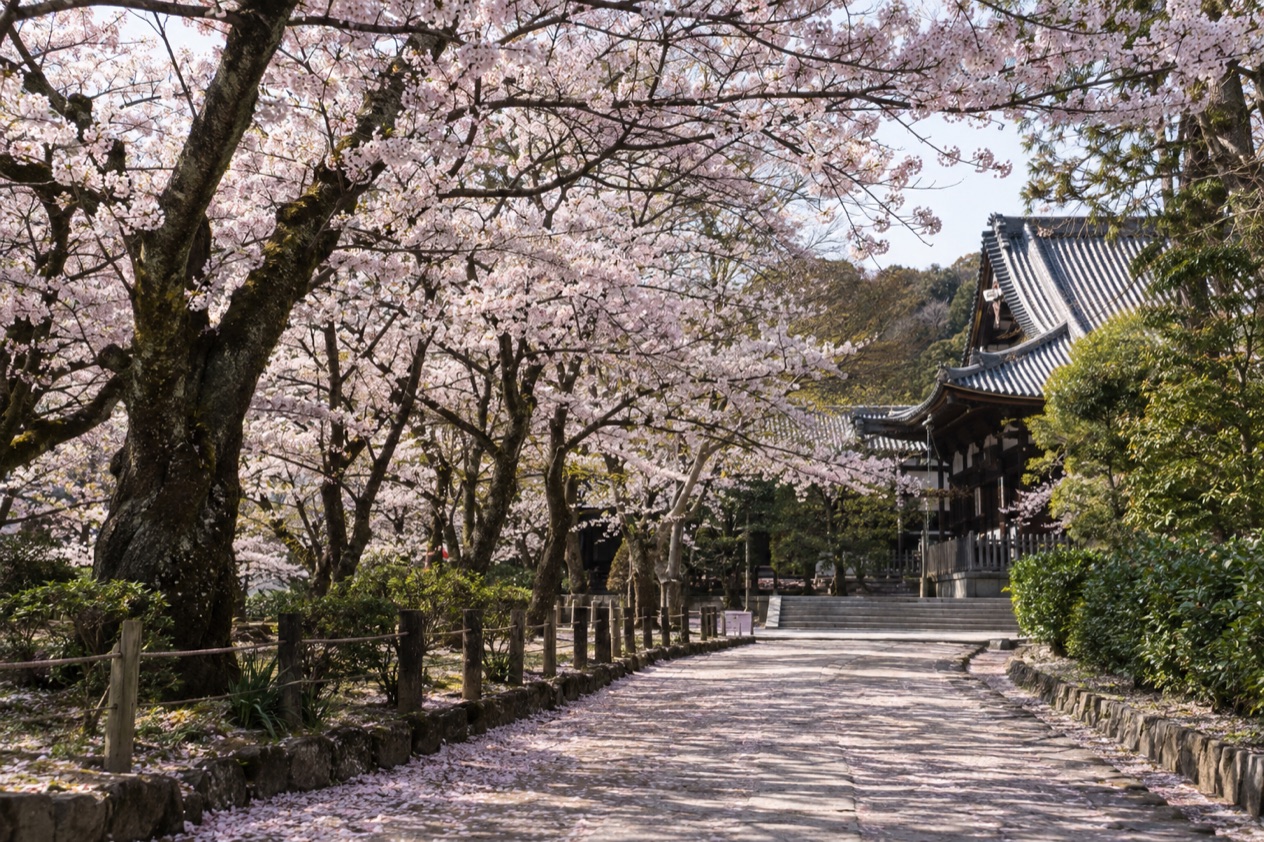
Full bloom follows within days, when the trees look like clouds and the ground beneath them begins to collect the first fallen petals. After that comes the stage Japanese speakers call sakura fubuki, the blossom blizzard, when a breeze or a spring shower sends petals swirling across paths and moats. It is a different mood from the peak, softer and a little wistful, and people like it just as much.
Choosing your dates
A trip that straddles the end of March and the start of April gives the best chance of catching trees at or near their peak, since both the usual first bloom and the usual full bloom fall inside that stretch. If you arrive early in the window, you may find buds just starting to open. If you arrive late, you may catch petals on the ground and fresh green leaves beginning to show.
Because the exact timing shifts, it helps to keep a day or two of slack in a Nagoya itinerary. A morning of rain or a cold snap can hold the buds back, while a run of warm days can push them open quickly. Planning other outings around the blossoms, rather than the other way around, spares you the frustration of a fixed date that misses the peak.
Where can you see them in Nagoya?
Nagoya is the capital of Aichi Prefecture, and its parks and landmarks are spread across a large city, so a blossom day works best when you pick one or two areas rather than trying to cover everything.
Nagoya Castle and the park around it
Nagoya Castle is one of the city’s landmarks, and in spring the trees around its grounds are often among the first places people mention for hanami, the custom of gathering under the blossoms. The pale flowers set against the castle’s dark roofs, green copper tiles and stone walls make a picture that photographers and strollers both seek out.
You can walk beneath the trees, stop for a snack from the stalls that often appear in blossom season, and then go inside to see the castle itself. The Nagoya Sightseeing Pass lists Nagoya Castle among the attractions it covers, which matters if you plan to combine the castle with other sights on the same day.
Higashiyama Zoo and Botanical Gardens
Higashiyama Zoo and Botanical Gardens is another landmark of Nagoya, and its mix of animal enclosures, planted gardens and wooded paths makes it a spring outing with more than flowers. Spring is the season when gardens of this kind put on their best color, with trees in blossom and beds filling in.
It suits travelers who want to combine blossoms with something else, such as families with children or anyone who likes a long wander. Like the castle, it is one of the sights the Nagoya Sightseeing Pass includes, so the two can sit on the same itinerary.
Shrine grounds, rivers and quieter corners
Atsuta Shrine is among the places Nagoya is known for, and shrine grounds in Japan often have a few cherry trees tucked among the older evergreens. The effect is different from a park, with blossoms framed by wooden halls and gravel paths, and visitors moving at a slower pace.
Residents also like to follow rivers and canals, where the trees lean over the water and the petals gather on the surface. Walking a stretch of embankment in the evening, with the blossoms lit from below in places, is a pleasure that costs nothing and needs no plan.
What should you know before you go?
Before you go, know three things: the timing shifts from year to year, hanami has its own habits, and Nagoya makes a comfortable base for several days. A little preparation turns a hit-or-miss blossom walk into a proper spring trip.
Hanami habits
Hanami means flower viewing, and in practice it means sitting under the trees with food and drink. Groups of friends and coworkers spread a tarp on the ground, unpack bento boxes and snacks, and stay for hours. Sweets of the season include sakura mochi, a pink rice cake wrapped in a salted cherry leaf, and hanami dango, three skewered rice dumplings in pink, white and green.
Habits around the picnics are simple. People take their trash with them, keep to the paths when walking, and avoid pulling on branches or shaking the trees for a better photograph. Shoes come off at the edge of a tarp, as they would at the entrance of a home.
What to eat while you are in town
Nagoya has a food culture of its own, and a blossom trip is a good excuse to sample it. Miso katsu is a pork cutlet under a dark, sweet red miso sauce. Hitsumabushi is grilled eel served over rice, eaten in stages with condiments and broth. Kishimen are flat, wide noodles, and tebasaki are crisp fried chicken wings with pepper.
Many cafés also offer spring versions of their drinks and desserts, from pink lattes to sweets flavored with cherry blossom. After a long day under the trees, a plate of something warm in the city center is the usual way to end the evening.
Getting to Nagoya and getting around
Nagoya is the capital and largest city of Aichi Prefecture, in the Chubu region of Honshu, and it ranks as Japan’s fourth-largest city. Chubu Centrair International Airport, on an artificial island 30 minutes south of central Nagoya, is Japan’s third major international gateway.
Once in the city, the NAGOYA Sightseeing Pass is described as a great-value way to enjoy the major attractions, among them Nagoya Castle, Chubu Electric Power MIRAI TOWER, Nagoya Port Aquarium, and Higashiyama Zoo and Botanical Gardens.
A day built around the blossoms
A good blossom day starts with the trees and leaves the rest open. Begin around Nagoya Castle, walk beneath the branches, and then move on to a garden or a shrine in the afternoon. Keep the evening free for a riverside walk and a hot meal.
If rain arrives, the plan shifts indoors without much loss. The aquarium and the tower are on the same pass as the castle and the zoo, and a rainy day often leaves petals stuck to wet paths and lanterns, which some photographers prefer.
Good to know before you go
Spring in Nagoya is a season of changing plans, so treat the bloom dates as a window and keep a day or two loose. A city of this size has plenty to fall back on when a cold morning or a wet afternoon keeps you from the parks.
Carry a light layer for the evenings under the trees, since sitting still outdoors cools you faster than walking. A trip timed for the last days of March and the first days of April fits both the usual first bloom and the usual full bloom.
Sources
- Japan Meteorological Agency, cherry blossom first-bloom dates 2021-2026 and 1991-2020 normal (https://www.data.jma.go.jp/sakura/data/sakura003_07.html), checked October 11, 2026
- Japan Meteorological Agency, cherry blossom full-bloom dates 2021-2026 and 1991-2020 normal (https://www.data.jma.go.jp/sakura/data/sakura004_07.html), checked October 11, 2026
- Visit Nagoya, the Nagoya city guide (https://www.nagoya-info.jp/en/), checked October 11, 2026
- Wikipedia, Nagoya (https://en.wikipedia.org/wiki/Nagoya), checked October 11, 2026
- Wikivoyage, Nagoya (https://en.wikivoyage.org/wiki/Nagoya), checked October 11, 2026
- Japan Meteorological Agency, maple color-change dates 2025-2026 with difference from the 1991-2020 normal (https://www.data.jma.go.jp/sakura/data/phn_014.html), checked October 11, 2026
To plan your stay
- Japan Rainy Season (Tsuyu): Dates, Regions and How to Plan Your Trip
- Seasons in Japan: Blossoms, Fall Color, Snow Festivals and Summer Matsuri
- Typhoon Season in Japan: When It Hits, Which Regions Take the Brunt and How the Warning Alerts Work
- Autumn Leaves Dates by City: Usual Maple Dates, 2025 Results and How Much They Shift