
Somewhere along the Kamo River in spring, a few pink petals drift down onto the water while people spread out picnic sheets on the bank below. That scene is the reason so travelers start asking the same question about Kyoto: when exactly do the trees flower? The usual answer is the end of March into early April, and the details below help you plan around it.
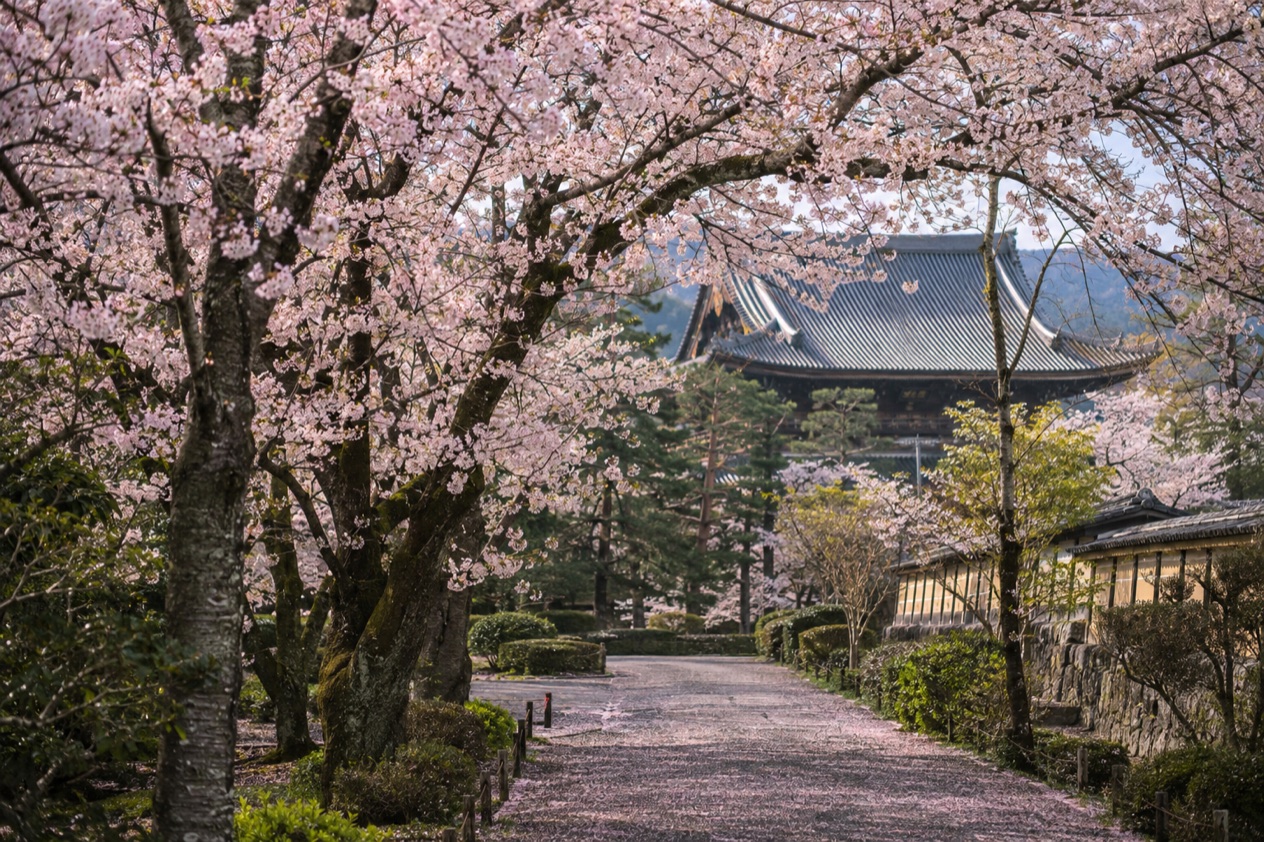
When do the cherry blossoms bloom in Kyoto?
Cherry blossoms in Kyoto usually open in the last days of March, and the full bloom usually falls in the first days of April. The first bloom (kaika) is the day the first flowers open on the reference tree.
The full bloom (mankai) comes some days later, when most of the blossoms on the tree are open.
| Stage | Usual date | Range in recent years |
|---|---|---|
| First bloom (kaika) | March 26 | March 16 to March 29 |
| Full bloom (mankai) | April 4 | March 24 to April 5 |
How much the dates move
The usual dates are a landmark, not a promise. In recent years the first flowers have opened anywhere from mid-March to the end of the month, and full bloom has arrived as early as the last week of March. From one spring to the next, a trip planned around the first days of April may find the trees already at their peak, or just reaching it.
Because of that spread, travelers stay in Kyoto for several days rather than a single afternoon. The blossoms do not all open at once on every street, so a few days gives you the chance to catch the moment when the petals are fully out, and then the first falling petals, which have a charm of their own.
What the weeks around the bloom feel like
Late March and early April is a season of picnics under the trees, a custom the Japanese call hanami, literally flower viewing. Seasonal treats appear in shops, from pink-tinted sweets to drinks and snacks flavored with cherry blossom.
Kyoto itself adds to the mood. The city served as Japan’s capital and the emperor’s residence for over 1000 years, and its temples, wooden townhouses and old lanes make a setting where a blossoming branch over a tiled roof feels natural. The season is short, which is part of what gives it meaning, and locals follow the progress of the bloom the way others follow the weather.
After the blossoms
Once the petals fall, Kyoto turns green, and the city’s other season of color comes in autumn. Maple leaves usually change around the beginning of December at the Kyoto station, which makes the two seasons far apart on the calendar. If you miss the blossoms, the temples, gardens and festivals of the city remain, including the Gion Matsuri, one of the traditions Kyoto is known for.
Where can you see them in Kyoto?
You can see cherry blossoms around Kyoto’s temples, shrines, castle grounds and along its river banks, since the city’s heritage sites are where the trees tend to be planted. Kyoto has a cultural heritage that has developed over the past 1,200 years, so a walk to almost any historic corner can double as a blossom walk.
Nijo Castle and central Kyoto
Nijo Castle in central Kyoto was built in 1603 by Tokugawa Ieyasu, the first shogun of the Edo period. It is a historic stop that fits well into a spring day in the center of the city, with its wide grounds and old walls giving a backdrop to any trees in flower.
They were an ancient security system, meant to alert guards of intruders. Walking them is a small pleasure in itself, a sound that brings the past to life as you move from room to room.
Around Kyoto Station
Kyoto Station is served by the Tokaido Shinkansen line, so it is the point where visitors arrive and the starting point to explore Kyoto’s attractions and to connect to major cities across Japan. Kyoto Tower stands a few steps from the main entrance and is over 130 meters tall, visible across the entire city, which makes it an easy landmark for finding your bearings.
The station building houses a full floor of ramen restaurants, an Isetan department store, a theater, and a Granvia luxury hotel. After a morning under the blossoms, a bowl of ramen on that floor is a warm way to end a spring day.
Temples and shrines at quieter hours
The Japan National Tourism Organization recommends visiting shrines at less crowded times, such as early morning or late evening when they are illuminated. In blossom season that advice suits the trees well, since a lit branch against a dark sky gives a different picture from the same tree at midday.
Kyoto’s traditions are part of the walk too: machiya townhouses line old streets, and hanamachi districts are where geishas live and work.
What should you know before you go?
The main thing to know is that the bloom is hard to pin to a single day, so build a little room into your plans.
Planning around an uncertain bloom
If your dates are fixed, think in terms of a window rather than a day. A visit spanning the end of March and the first days of April matches both the usual dates and most of the range seen recently. Within that window, plan your blossom outings for the days that look best and keep indoor sights, like the castle and the station’s shops, for the rest.
Since flowers last only a short time once open, it helps to keep each day flexible. Travelers often choose a base in the city and let the blossoms decide which temple or riverbank to visit first.
Getting the most from a day of viewing
Early morning and late evening are the hours the tourism organization points to for shrines, and the same habit suits blossom walks. Lit branches in the evening and a calm start to the day give you two very different looks at the same trees.
Bring a sense of curiosity for the small things too: the sweets sold in season, the picnic sheets along the river, and the people who return to the same tree each year. Hanami is as much about being outside together as about the flowers themselves.
Reaching Kyoto
Kyoto Station, on the Tokaido Shinkansen line, connects the city to major cities across Japan. From there you can start exploring, with Kyoto Tower standing a few steps from the main entrance as a landmark for getting oriented.
Good to know before you go
Spring in Kyoto is a season of temple visits on foot, and the days can shift from sunny to cloudy, so plan indoor options beside the outdoor ones. Shrines and temples are places of worship as well as sights, so keep voices low and follow the habits of the people around you. Pack comfortable shoes for the stone paths and old lanes, and leave room for a long afternoon under the trees.
Sources
- Japan Meteorological Agency, cherry blossom first-bloom dates 2021-2026 and 1991-2020 normal (https://www.data.jma.go.jp/sakura/data/sakura003_07.html), checked October 11, 2026
- Japan Meteorological Agency, cherry blossom full-bloom dates 2021-2026 and 1991-2020 normal (https://www.data.jma.go.jp/sakura/data/sakura004_07.html), checked October 11, 2026
- Japan National Tourism Organization, Kyoto (https://www.japan.travel/en/destinations/kansai/kyoto/), checked October 11, 2026
- Japan Meteorological Agency, maple color-change dates 2025-2026 with difference from the 1991-2020 normal (https://www.data.jma.go.jp/sakura/data/phn_014.html), checked October 11, 2026
To plan your stay
- Japan Rainy Season (Tsuyu): Dates, Regions and How to Plan Your Trip
- Seasons in Japan: Blossoms, Fall Color, Snow Festivals and Summer Matsuri
- Typhoon Season in Japan: When It Hits, Which Regions Take the Brunt and How the Warning Alerts Work
- Autumn Leaves Dates by City: Usual Maple Dates, 2025 Results and How Much They Shift