
On an autumn evening in Takayama, the lanterns come on along the old merchant streets, the cedar balls hanging above the sake brewery doors turn brown, and the maples on the hillsides start to burn orange against dark wooden eaves. Travelers planning a trip to the Japanese Alps usually ask the same thing: when do the leaves actually turn here? In short, the color builds through the fall and tends to reach the old town in the later part of the season, so late autumn is the time to aim for.
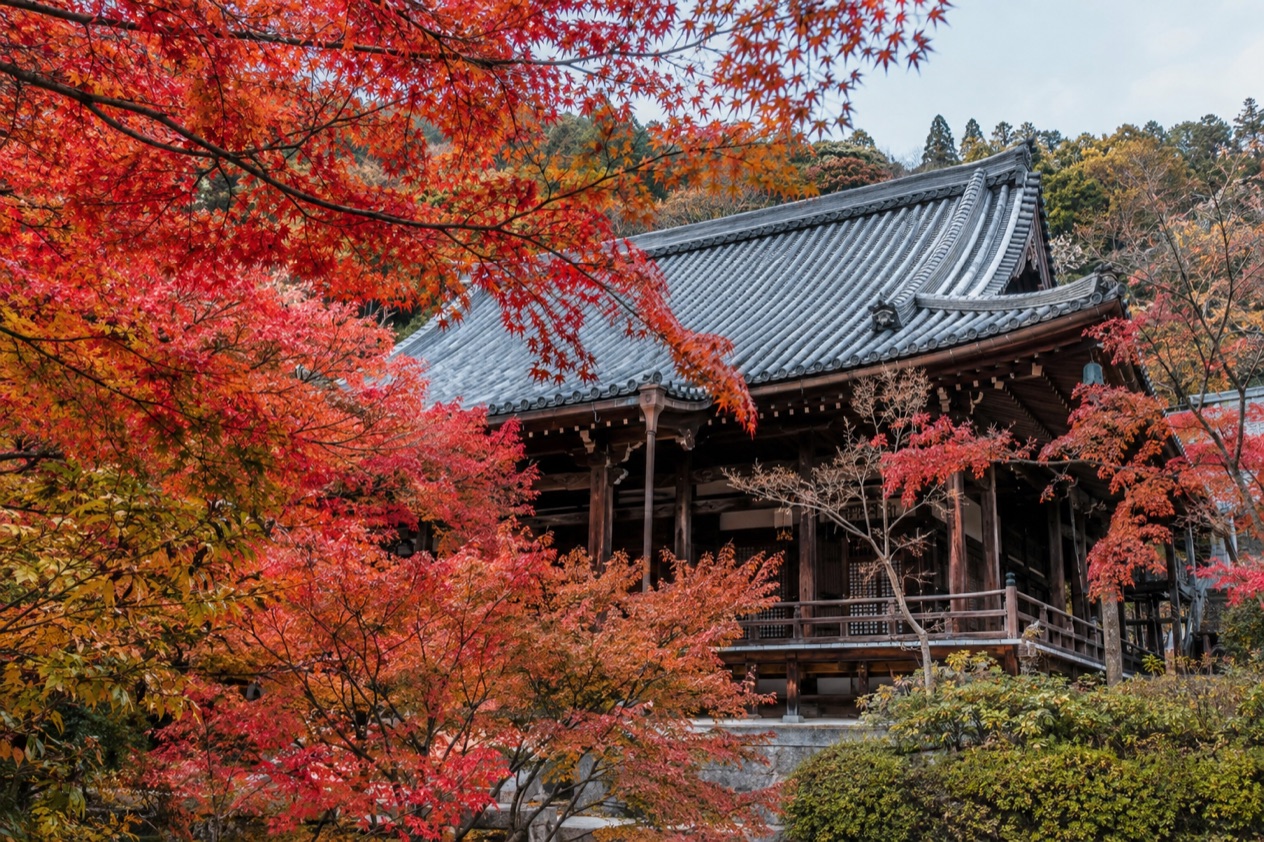
When do the leaves change color in Takayama?
That makes the date a landmark rather than a promise. A mountain city can run ahead of or behind it from one autumn to the next, depending on how the summer and the first cold nights went.
| Measure at Gifu | Date |
|---|---|
| Usual date of maple color change | November 26 |
| Observed in 2025 | November 26 |
Treat late November as the center of your planning and think of the color as a season that unfolds over weeks, not a single day.
How to read a date taken somewhere else
So the date works best as a reference point, not as the exact day your street turns red. In practice, travelers watch the color move over several weeks, and the hills and shrine groves around town do not all change at once.
A common habit in Japan is to follow the leaves rather than a single date. Color tends to start on higher ground and slide down toward the valleys, so a town set among mountains offers a longer stretch of good viewing than a city on a plain. You may find red and orange on one slope and still-green leaves on another during the same afternoon.
What the weeks around that date look like
Before the peak, you can expect patches of yellow ginkgo and early red maple, with a lot of green still mixed in. Around the peak, the temple grounds, the riverbanks and the hill paths show the full palette, and the old town’s dark timber houses make a strong backdrop for it. After the peak, the leaves fall, paths turn into carpets of color, and the bare branches begin to show.
Each stage has its own pleasure. Early autumn brings the festival season and the harvest foods, the peak brings the photographs, and the late days suit anyone who prefers fallen leaves on wet stone and steam rising from a bowl of noodles. Planning with a little slack on either side of late November gives you the best chance of catching at least one of these moods.
The autumn calendar beyond the leaves
The town also holds its autumn festival, the Hachiman matsuri, usually in early October, when decorated floats are paraded through the old streets. It comes well before the maples, so it makes a different trip from a leaf-viewing one. If you want both, the two moments fall some weeks apart and are not easily combined in a single short stay.
Where can you see them in Takayama?
The best places are the old town with its river, the temple and shrine paths on the hillside, and the wooded parks and open-air museum on the edge of the center. Takayama is sometimes called the Little Kyoto of Hida because its quarter of Edo-style streets is so well preserved, and that quarter is where many visitors begin.
The old town and the Miyagawa river
The streets of the old quarter are lined with dark lattice-fronted merchant houses, sake breweries, small museums and shops selling Hida crafts. In fall, maples and ornamental trees in courtyards and along side lanes add spots of red against the wood, and lit paper lanterns glow at dusk. It is a place to wander without a fixed route, ducking into a brewery for a sip or stopping for a skewer of grilled Hida beef.
The Miyagawa river runs along the edge of the old town, and its banks and red bridges are a natural spot for a pause. Willows, maples and the reflections of old houses make a pleasant frame. Morning market stalls by the river sell apples, persimmons, pickles and local snacks, and autumn fruit is part of the atmosphere of the season here.
Temples, shrines and the Higashiyama walk
On the eastern side of town, a chain of temples and shrines is linked by paths that pass through cedar and maple groves. The setting is one of wooden halls, stone lanterns, moss and the occasional bell, and the maples frame the buildings well when the color is at its fullest. Visitors can move from one site to the next at their own pace, pausing at gates or benches.
Sakurayama Hachimangu, the shrine behind the autumn festival, also stands out for its tall trees and spacious grounds. The festival floats are kept in a hall of their own nearby. The shrine grounds show color well and add a layer of local history to a leaf-viewing walk.
Shiroyama Park and Hida Folk Village
Shiroyama is a wooded hill park on the site of an old castle, and its trails pass through mixed forest where deciduous trees turn in the fall. It suits a walk when you want trees rather than streets, and the grounds hold the remains of the castle’s past.
Hida Folk Village, called Hida no Sato, is an open-air museum of old farmhouses, including thatched gassho-style buildings, set around a pond and a hillside. Autumn leaves around the steep roofs and the water make it one of the more photogenic places for fall color in the area. Go with time to look inside the houses, where the hearth rooms and tools show how people lived through mountain winters.
What should you know before you go?
The key points are that the color date comes from a nearby station, that the local rail station takes cash only for tickets, and that the town rewards unhurried days. Takayama Station on the JR Takayama Line does not accept IC cards, so local line tickets must be bought with cash. A prepaid card such as Suica or Pasmo that works in Tokyo will not help at that ticket counter, so carry yen for that purchase.
Reading the leaf calendar sensibly
Because the usual color date is taken at Gifu and not in Takayama itself, it is wise to keep some flexibility in the plan. Local news and tourism boards in Japan usually publish leaf reports as the season advances, and the town’s color will tell its own story once you arrive. Staying more than one night gives the hills a chance to show you more than a single snapshot.
Rain is a normal part of fall travel, and wet leaves on dark wood and stone can be as attractive as sun. When showers come, the town offers indoor options: sake breweries, craft shops, museums of festival floats and cafés in old merchant houses. You can weave those into a day and step out to the maples between them.
Eating and drinking in the leaf season
Autumn is a good moment for the dishes Takayama is known for. Hida beef appears grilled on skewers, in hot stone dishes or as sukiyaki, and Takayama ramen comes in a light soy broth with thin curly noodles. Mitarashi dango, rice dumplings brushed with sweet soy glaze, make a fine street snack while you walk.
The sake breweries in the old town mark themselves with a sugidama, a ball of cedar fronds that goes from green to brown as the brewing year moves on. Many offer tastings of local rice wine, which pairs well with cool days. Mountain vegetables, river fish and miso grilled on a magnolia leaf are other local tastes worth looking for at lunch or dinner.
Slowing down in a mountain town
Takayama rewards a slow pace. Many visitors spend an evening in a ryokan, a traditional inn, where a meal of regional dishes and a hot bath are part of the stay. Shoes come off at the entrance and guests move around in slippers or yukata, a light cotton robe, which sets the mood for a night among the hills.
Good to know before you go
Cash in yen is the practical companion to a stay in town, since the station ticket counter will not take an IC card and small shops, market stalls and brewery tastings often work in cash. The season also brings a change of clothing from day to day as mountain air cools, so a layer you can add or remove suits a day of walking between shrines and streets. Keep the dates loose, let the leaves set the pace, and end the day with a cup of local sake or a bowl of hot ramen under the lanterns.
Sources
- Japan Meteorological Agency, maple color-change dates 2025-2026 with difference from the 1991-2020 normal (https://www.data.jma.go.jp/sakura/data/phn_014.html), checked October 11, 2026
- Wikipedia, Takayama, Gifu (https://en.wikipedia.org/wiki/Takayama,_Gifu), checked October 11, 2026
- Wikivoyage, Takayama (https://en.wikivoyage.org/wiki/Takayama), checked October 11, 2026
- Japan Meteorological Agency, cherry blossom first-bloom dates 2021-2026 and 1991-2020 normal (https://www.data.jma.go.jp/sakura/data/sakura003_07.html), checked October 11, 2026
- Japan Meteorological Agency, cherry blossom full-bloom dates 2021-2026 and 1991-2020 normal (https://www.data.jma.go.jp/sakura/data/sakura004_07.html), checked October 11, 2026
- Japan Meteorological Agency, biological season observations (https://www.data.jma.go.jp/sakura/data/index.html)
To plan your stay
- Japan Rainy Season (Tsuyu): Dates, Regions and How to Plan Your Trip
- Seasons in Japan: Blossoms, Fall Color, Snow Festivals and Summer Matsuri
- Typhoon Season in Japan: When It Hits, Which Regions Take the Brunt and How the Warning Alerts Work
- Autumn Leaves Dates by City: Usual Maple Dates, 2025 Results and How Much They Shift