
Along the paths of Nara Park in November, a deer pauses under a maple whose leaves have gone the red of lacquer, and the cracker sellers by the roadside do brisk business with anyone who stops to look. The city turns slowly orange and crimson, and the leaves arrive late in the month rather than early. For a traveler planning an autumn trip around Kyoto and Osaka, Nara is the place to time for the maples, and the timing is the first thing to settle.
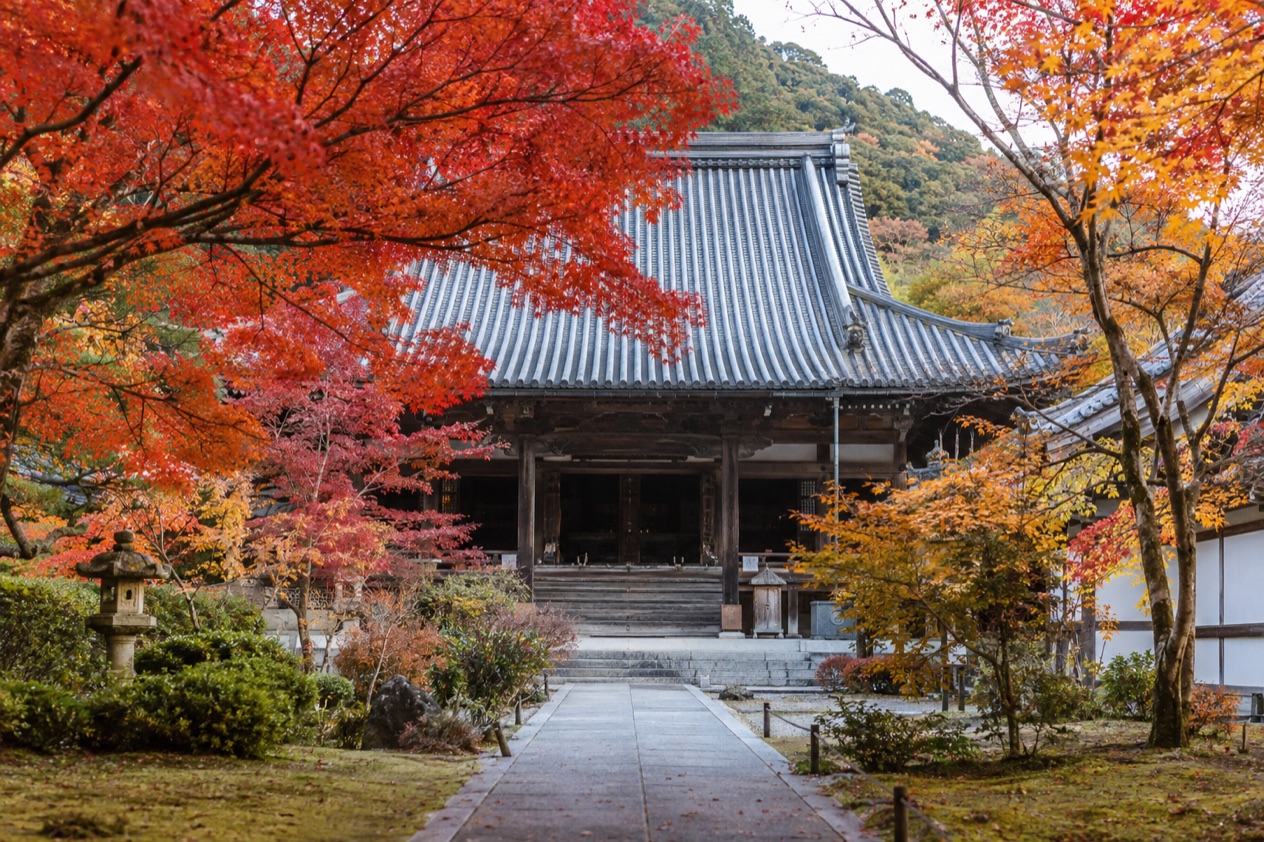
When do the leaves change color in Nara?
Nara’s maples usually change color around November 21, though the timing varies from year to year. Think of it as the center of a window, with some trees ahead of it and some behind.
Maple leaves in Japan are called momiji or kaede, and the act of leaves turning is koyo. In Nara you will hear both words, and the season has a quiet ritual of its own: families, school groups and couples walk under the trees with no purpose but to look up, and the same stretch of path that held spring blossom now holds red and gold.
The usual date and a recent autumn
The change was observed on November 14 in 2025, a week ahead of the usual date. That is a good reminder that the calendar date is a guide and not a promise. From one autumn to the next, the color can arrive earlier or later depending on how the weeks before it went.
A walk that is a little early still shows green maples edged with orange, and a walk that is a little late still finds red leaves on the branches and on the ground.
How to plan around the window
Because the turn is a gradual change, the park does not flip from green to red overnight. Trees in more exposed spots tend to move first, while those in shadier corners lag behind, so a single visit often shows several stages at once: a green crown beside a half-orange one beside a fully red one. That patchwork is part of the charm.
Travelers pair Nara with Kyoto, which sits north of it, and Osaka, which lies to the west. If you are splitting your autumn days among the three cities, giving Nara its own full day lets you shift it earlier or later once you see how the leaves are coming along elsewhere in the region.
What the weather does to the color
Maples color best when autumn nights turn cool and the days stay bright, and a long stretch of mild weather tends to hold the change back a little. A rainy day does not spoil the show. Wet leaves look deeper in tone, the paths glisten, and the moss at the base of the stone lanterns turns a richer green against the red above.
Wind and rain late in the season bring the leaves down, and a carpet of fallen maple is its own sight. Walkers shuffle through it along the park paths, and the deer, which seem unbothered by weather, graze across it as if it were a rug laid out for them.
Where can you see them in Nara?
Nara Park is where people go for autumn color, and it holds the maples, the temple grounds and the deer in a single stretch of ground at the foot of Mount Wakakusa. Naramachi, the old merchant quarter, offers a different kind of autumn day, with a few leaves among the lanes and plenty of reasons to stop for a meal or a bit of shopping.
Nara Park and its deer
The park lies at the foot of Mount Wakakusa, and its tame deer wander freely among the trees. Visitors can approach them and feed them with crackers sold along the roadside. In November the deer move through maple shade and fallen leaves, and the scene is a favorite with photographers because the animals and the color share the same frame.
Spend your time here walking instead of ticking off sights. The paths link temples, ponds and open lawns, and the maples are scattered throughout rather than gathered in one corner. Leave room to wander off the main route, because some of the best color appears where you did not plan to be. Deer will often follow anyone carrying crackers, so expect company and a bit of nudging.
The park has a gentler mood than a city street. Stone lanterns line some of the paths, the temple roofs rise above the trees, and the autumn palette of red, orange and yellow sets off the dark wood of the buildings.
Todai-ji and the temple grounds
Among the temples and shrines in and around the park, Todai-ji is the one visitors build a day around. The great wooden hall and its gate sit among trees. Walking between the temple and the surrounding paths shows how closely the buildings and the landscape belong together.
What the walk gives you is a sequence: a temple gate, a stretch of shaded path, a pond with leaves reflected in it, then another building appearing through the trees. Nothing needs to be rushed, and the layout rewards wandering.
Naramachi for a change of pace
Naramachi is a district of old merchant houses, narrow lanes and small shops, and it can be reached from Nara Station and Kintetsu Nara Station, just as Nara Park can. It is less about big stands of maples and more about the atmosphere of an old town in the cooler weeks of the year.
A good rhythm is leaves in the park, then a slower hour or two among the lanes. Look for cafés, sweet shops and craft stores that suit a chilly afternoon, and for the odd garden or courtyard where a single maple glows against a wooden wall. It breaks up a day of walking and gives your feet a rest from the park paths.
What should you know before you go?
Nara is in the Kansai region, east of Osaka and south of Kyoto, and trains link it to both cities. That makes it a natural day out from either, or a base of its own for travelers who want to see the leaves without a rush back to the station.
Trains and stations
Nara has two main stations, JR Nara Station and Kintetsu Nara Station, and both put you within reach of Nara Park and Naramachi. Which one is better depends on where your train comes from and where in town you plan to start your walk.
From Osaka, the JR Yamatoji rapid train serves JR Nara Station directly. From Osaka-Namba Station, the Kintetsu line runs to Kintetsu Nara Station, with a limited express and a regular express. The difference between them is small and is laid out here.
| Kintetsu train from Osaka-Namba | To Kintetsu Nara Station |
|---|---|
| Limited express | 35 minutes, 520 yen more than the regular express |
| Regular express | 5 minutes longer than the limited express |
Flying in
The closest airports to Nara are Osaka International Airport (Itami) and Kansai International Airport, both in Osaka Prefecture. Either airport is about one hour and fifteen minutes from Nara by bus and train.
Since both airports lie in Osaka Prefecture, visitors treat Osaka as the entry point and Nara as an outing from it. Others continue to Kyoto and reach Nara from there. Either route fits a late-November trip built around the leaves.
Walking among the deer
The deer in Nara Park are tame, and visitors can approach them and feed them with the crackers sold along the roadside. Treat that as a habit of the place and not an obligation. Some people enjoy the contact, and others simply watch them cross the path beneath the maples.
In autumn, with the leaves down and the light low, the animals make the walk feel like an outing with a few extra companions.
Good to know before you go
Leaf season is a matter of timing, and the date shifts from one autumn to the next, so keep a little slack in your itinerary. A day with rain is still a good day among maples, since the color deepens when the leaves are wet.
Pair Nara with Kyoto or Osaka and let the weather decide which day goes where. Bring an easy appetite, too, because the lanes of Naramachi and the stalls near the park give a late-November walk a natural place to stop for something warm.
Sources
- Japan Meteorological Agency, maple color-change dates 2025-2026 with difference from the 1991-2020 normal (https://www.data.jma.go.jp/sakura/data/phn_014.html), checked October 11, 2026
- Japan National Tourism Organization, Nara (https://www.japan.travel/en/destinations/kansai/nara/), checked October 11, 2026
- Japan Meteorological Agency, cherry blossom first-bloom dates 2021-2026 and 1991-2020 normal (https://www.data.jma.go.jp/sakura/data/sakura003_07.html), checked October 11, 2026
- Japan Meteorological Agency, cherry blossom full-bloom dates 2021-2026 and 1991-2020 normal (https://www.data.jma.go.jp/sakura/data/sakura004_07.html), checked October 11, 2026
To plan your stay
- Japan Rainy Season (Tsuyu): Dates, Regions and How to Plan Your Trip
- Seasons in Japan: Blossoms, Fall Color, Snow Festivals and Summer Matsuri
- Typhoon Season in Japan: When It Hits, Which Regions Take the Brunt and How the Warning Alerts Work
- Autumn Leaves Dates by City: Usual Maple Dates, 2025 Results and How Much They Shift