
In the weeks when the air turns crisp, travelers in Japan start asking the same thing over breakfast: have the maples in Kyoto turned yet? The question matters because the color arrives later here than people expect. Kyoto’s maple leaves usually reach their change around the start of December, so the season runs well past the first chilly days of autumn.
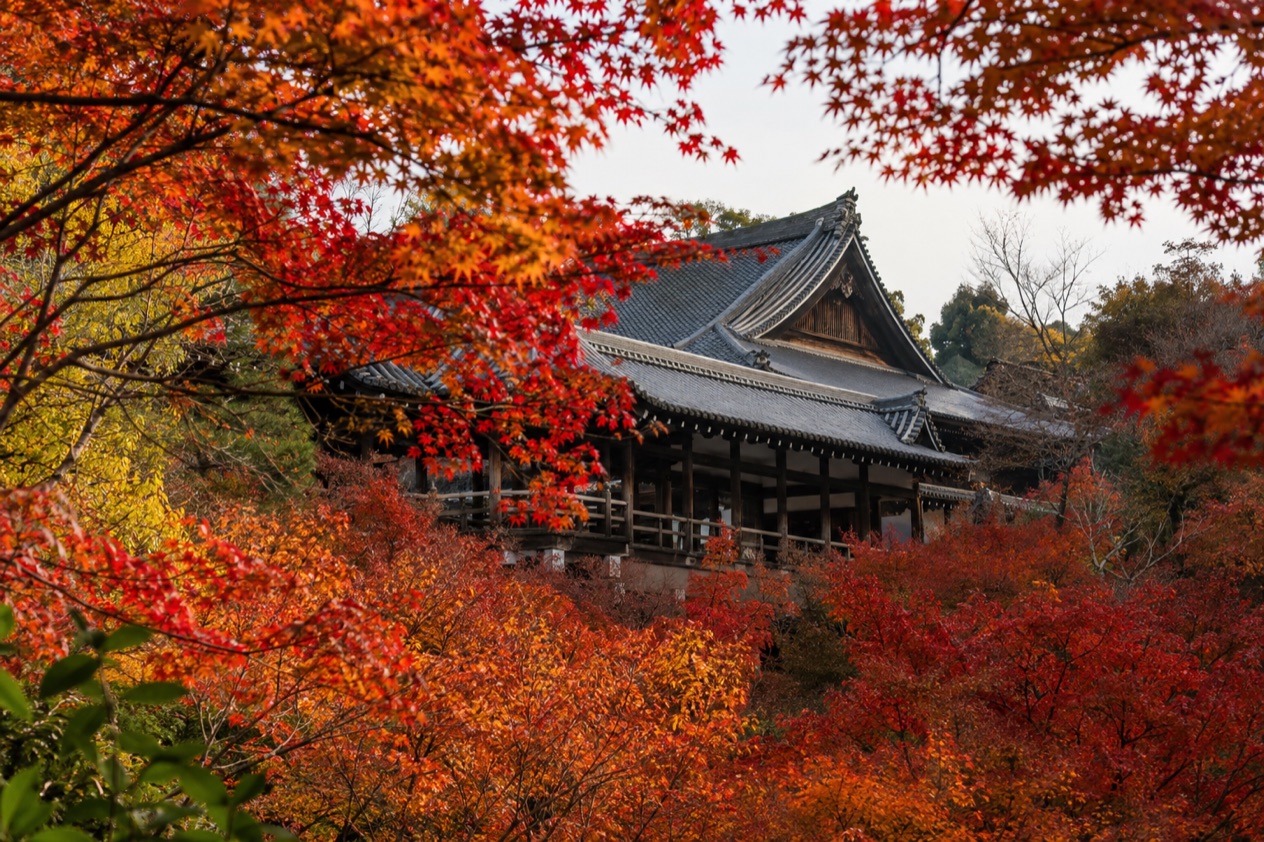
When do the leaves change color in Kyoto?
The maple leaves in Kyoto usually change color in early December, which is later than the calendar of a first autumn trip might suggest. The Japan Meteorological Agency follows this moment for Kyoto under the Japanese name kaede kōyō, the color change of maple leaves, and it treats it as a date for the city rather than a long window with a fixed beginning and end.
| Maple color change in Kyoto | Date |
|---|---|
| Usual date | December 5 |
| Observed in 2025 | December 10 |
The two dates tell you most of what you need. That gap is the reason to treat any date as a landmark and not a deadline. Autumn in Kyoto does not turn on the same day each year, and a cool or warm run of weeks can nudge the color forward or back.
What the timing means for your dates
If you are building a trip around the leaves, aim your days toward the end of autumn and the opening of December, not toward October. A visit earlier in the season is still a pleasure, with cooler mornings, gardens that have begun to shift from green and the smell of woodsmoke and roasting chestnuts from the street stalls. But the full change of the maples belongs to the later weeks, and the usual date points there.
A flexible schedule helps. Staying in Kyoto for several days lets you walk a temple garden one afternoon, see how far the color has come and decide where to go next. Because the change moves from one autumn to the next, there is no reason to lock every hour to a single date months ahead.
How the leaves look as they turn
Maples in Japan are called momiji, and the word is also the name of the season’s mood. A single tree can hold green, yellow, orange and a deep red at once, and the shift often begins at the tips of the branches. Moss gardens, stone lanterns and the dark wood of temple halls give the red something to stand against, which is a large part of why people plan whole trips around it.
Kyoto has a long habit of enjoying the season, as the city holds a cultural heritage that developed over the past 1,200 years and served as Japan’s capital and the emperor’s residence for over 1000 years. Looking at the leaves is part of that old rhythm of the year, just as hanami, picnics under cherry blossoms, belongs to spring. Autumn has its own quieter version: tea, a bowl of something warm, and a long look at a tree.
Autumn flavors to look for
The season arrives on the plate as well. Menus turn to chestnuts, persimmons, sweet potatoes and mushrooms, and wagashi, the small sweets served with tea, are often shaped like maple leaves or colored in autumn shades. A kaiseki meal, the multicourse dinner of Japanese cooking, tends to follow the same palette, with small touches of leaf shapes and seasonal vegetables.
When you step out of a cold garden, a hot bowl is easy to find at Kyoto Station, whose building houses a full floor of ramen restaurants. It makes a practical ending to a day spent outdoors, whether you are coming back from a temple or about to board the Shinkansen.
Where can you see them in Kyoto?
You can see autumn leaves across Kyoto’s temples, shrines and castle grounds, and the city is built around those places, so the color is rarely far from wherever you are staying.
Nijo Castle
Nijo Castle stands in central Kyoto and was built in 1603 by Tokugawa Ieyasu, the first shogun of the Edo period. It is a place to read as a piece of history, with a castle layout that speaks of the power of the shogunate in a city that was, for centuries, the home of the emperor.
Inside, the floors are the detail people remember. They are called nightingale floors, because they make a bird-like sound when walked on, an old security system meant to alert guards of intruders. In autumn, a visit pairs that sound underfoot with the changing trees around the buildings, which makes for an hour of walking where both history and season are in view.
| Site | What stands there |
|---|---|
| Nijo Castle | Built in 1603 by Tokugawa Ieyasu, with nightingale floors |
| Kyoto Tower | Rises a few steps from the main entrance of Kyoto Station |
| Kyoto Station | Tokaido Shinkansen service, a ramen floor, an Isetan department store, a theater and a Granvia hotel |
Shrines and temples in the evening
Kyoto’s shrines and temples are where visitors expect to find the color, and Japan’s national tourism organization suggests seeing shrines at less crowded times, such as early morning or late evening when they are illuminated. That detail shapes the day. Evening lighting changes how the leaves look, turning reds into something close to glowing and leaving the surrounding trees as dark shapes.
Give one day over to a temple or shrine in this way, arriving at either end of the day rather than at midday. You see the same trees in two moods, and you leave the middle hours for lunch, a museum or a walk through the machiya townhouses, the traditional wooden houses that line Kyoto’s old streets.
Around Kyoto Station and Gion
Kyoto Station is served by the Tokaido Shinkansen line, which makes it a starting point for exploring the city and for connecting to other major cities across Japan. The building itself holds an Isetan department store, a theater and a Granvia hotel, so you can eat, shop or rest between outings. Kyoto Tower stands a few steps from the main entrance and is visible across the entire city, which makes it handy for finding your bearings.
Among Kyoto’s traditions are the Gion Matsuri festival and the hanamachi districts, where geishas live and work. These are summer and year-round parts of the city, not autumn events, but walking through such old neighborhoods in a cool season, with a few colored leaves overhead, is part of how people experience the city in this time of year.
What should you know before you go?
The main thing to know is that the leaf season here peaks late, so a trip planned for the beginning of December fits better than one in October. Everything else follows from that, from the clothes you pack to how you spread out your days.
Plan around a late season
The usual date for the maple change sits in early December, and the last observation fell a little after it. Use those two reference points as a window and not a guarantee.
It also helps to remember that cherry blossoms and maple leaves are different seasons with different calendars. Spring brings its own dates for the first and full bloom, and nothing about that timing carries over to autumn. Treat the two as separate trips, each with its own reasons to go.
Choose your hours
The advice from Japan’s national tourism organization is to visit shrines early in the morning or in the late evening when they are illuminated. Build your day on that idea. Start at a shrine or temple before the middle of the day, spend the afternoon indoors or on the road, then return for the evening lighting if the place offers it.
Between those two visits, Kyoto has plenty to fill the hours. A castle such as Nijo gives you a roof overhead and a story to follow, and the covered spaces of Kyoto Station, with their restaurants and shops, are useful when the weather turns damp or you simply need to sit down.
Use Kyoto Station as a base
With the Tokaido Shinkansen stopping at Kyoto Station, it works as a hub for the whole trip, both for reaching the city and for heading out to other places in Japan. Everything you might want on arrival is in the same building: ramen restaurants on a full floor, a department store, a theater and a hotel. Kyoto Tower, close to the main entrance, is easy to spot and helps with orientation when you come out of the station.
Wherever you stay, keep your plan loose enough to adjust. Kyoto’s cultural weight is large, with a heritage built over 1,200 years, and the temptation is to pack in too much. A few unhurried visits at the right hours will leave you with a clearer memory of the color than a long list of places seen in a hurry.
Good to know before you go
Autumn in Kyoto is a season for layers of attention more than layers of planning: one temple in the morning light, a warm meal at midday, a lit garden after dark. Shoes come off at the entrance of many traditional buildings, so slip-on pairs make the day smoother.
Keep some yen in your pocket for the small things, such as sweets with tea or a snack from a stall, and leave room in each day for stopping where a tree catches your eye. The leaves arrive on their own schedule, and the best of the season is often the unplanned view.
Sources
- Japan Meteorological Agency, maple color-change dates 2025-2026 with difference from the 1991-2020 normal (https://www.data.jma.go.jp/sakura/data/phn_014.html), checked October 11, 2026
- Japan National Tourism Organization, Kyoto (https://www.japan.travel/en/destinations/kansai/kyoto/), checked October 11, 2026
- Japan Meteorological Agency, cherry blossom first-bloom dates 2021-2026 and 1991-2020 normal (https://www.data.jma.go.jp/sakura/data/sakura003_07.html), checked October 11, 2026
- Japan Meteorological Agency, cherry blossom full-bloom dates 2021-2026 and 1991-2020 normal (https://www.data.jma.go.jp/sakura/data/sakura004_07.html), checked October 11, 2026
To plan your stay
- Japan Rainy Season (Tsuyu): Dates, Regions and How to Plan Your Trip
- Seasons in Japan: Blossoms, Fall Color, Snow Festivals and Summer Matsuri
- Typhoon Season in Japan: When It Hits, Which Regions Take the Brunt and How the Warning Alerts Work
- Autumn Leaves Dates by City: Usual Maple Dates, 2025 Results and How Much They Shift