
On a cool autumn afternoon in the Hakone hills, silvery plumes of susuki grass sway beside the road while the slopes around the caldera shift from green toward amber. Travelers stepping off a bus here often wonder whether they have caught the color at the right moment. Hakone, a mountain district of hot springs, lake views and art museums, rewards the autumn visitor with changing trees, grass-covered meadows and a lake to cross by boat.
When do the leaves change color in Hakone?
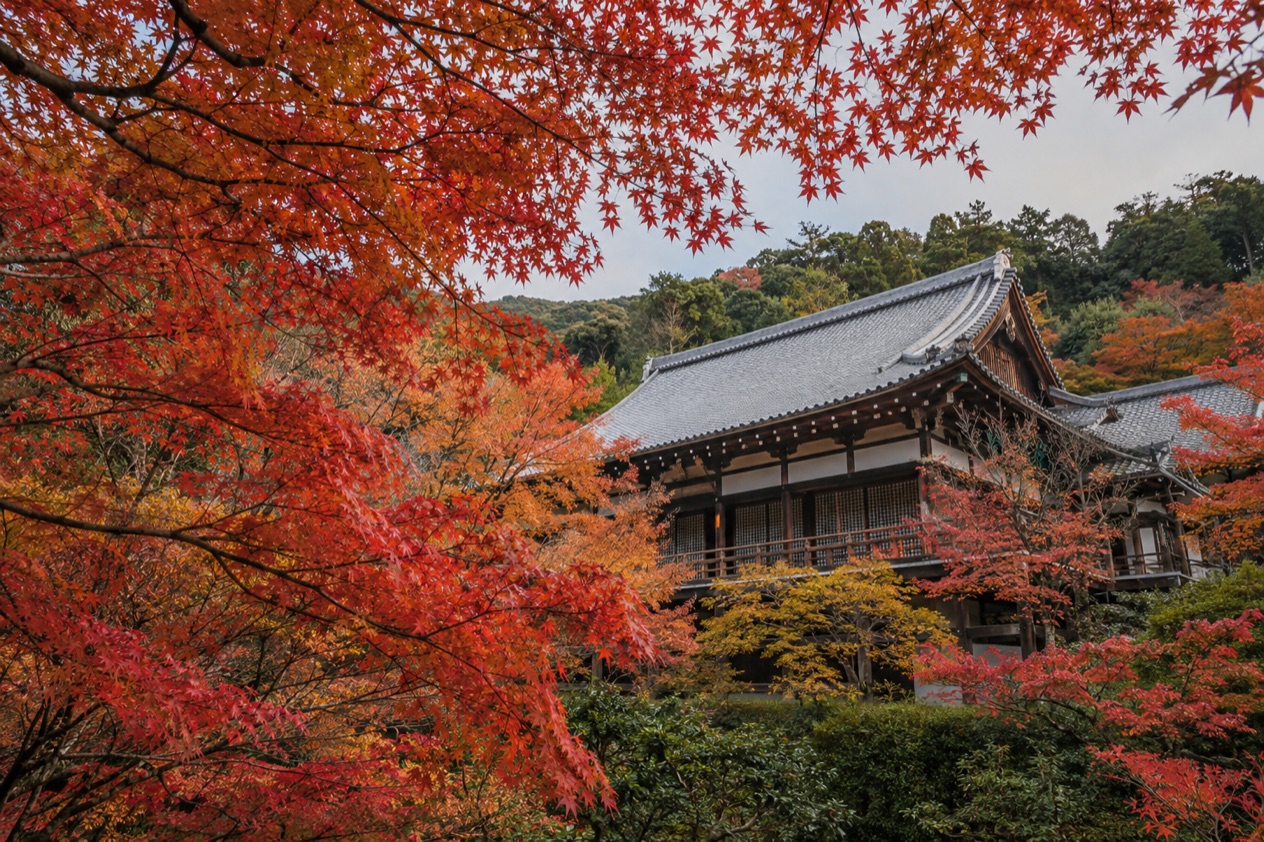
The leaves change in autumn, when the cooler air settles over the mountains and the green of the caldera slides toward gold, orange and red. The color does not arrive everywhere on the same day. It moves through the district in stages, and the timing shifts from one autumn to the next, so a single fixed date would promise more than the mountains deliver.
What does stay constant is the character of the season. Hakone can be enjoyed throughout the year, with its landscape and events changing as the months turn, and autumn is the time when the hillsides themselves become the attraction. Walking, riding a ropeway or crossing the lake all become ways of watching the color unfold.
Susuki grass on the Sengokuhara plateau
Sengokuhara sits in the northern part of the Hakone caldera, and in autumn the area around the Sengoku-Kogen bus stop is where visitors go to see susuki grass. Susuki is Japanese pampas grass, and its feathery seed heads turn pale gold and silver, rippling in the wind like a field of slow waves. It is a classic image of Japanese autumn, often paired in poetry and paintings with the harvest moon.
The grass makes a different kind of autumn color from the maples. Where the leaves flare red on a hillside, the susuki gives a soft, wide wash of light across open ground. Bring a camera and a layer, since an open plateau feels cooler than the valley floor, and plan to wander on foot rather than glimpse it from a bus window.
Following the color around the mountains
Because Hakone is a district of slopes, lakeshore and valleys rather than one park, leaves in different corners reach their color at different moments. A traveler who stays in the area for more than a day can see this unfold, moving from the highland meadows of Sengokuhara down toward the lake and the hot spring town of Hakone-Yumoto, which is known for its restaurants and gift shops.
A sensible habit is to treat the season as a window rather than a date. Look at the trees from the window of the Hakone Tozan Train or the ropeway, and let what you see on the first day shape the second. Hakone-Yumoto also works as a base for evenings, with places to eat and shop once the light fades.
Autumn in the soak and on the plate
Hakone is known for natural hot springs, and a soak is a natural companion to a day among the leaves. Mountain towns also lean into the season on the table, with warm noodles, grilled river fish and chestnut sweets as familiar autumn flavors across Japan.
Even a rainy day has its pleasures. Wet leaves glow darker and more saturated, and the museums of Sengokuhara offer shelter between walks. Mist drifting over the caldera can hide the views for a while, then lift to reveal the colored slopes.
Where can you see them in Hakone?
You can see the autumn landscape at Sengokuhara, on and around Lake Ashi, at the hot spring town of Hakone-Yumoto and along the routes that connect them. Hakone is part of the Fuji-Hakone-Izu National Park and lies in the western part of Kanagawa Prefecture, close to both Tokyo and Mount Fuji. Each corner of it offers a different way to take in the season.
Sengokuhara: grass, gardens and galleries
Sengokuhara is the district to head for if you want open space and quiet walking. The susuki grass around the Sengoku-Kogen bus stop is its autumn signature, and the district is also filled with art museums, which makes it easy to alternate between outdoor views and warm interiors.
The Hakone Botanical Garden of Wetlands is another sightseeing spot here, reached from the Shissei-Kaen bus stop. It is a garden of marsh plants, a different kind of landscape from the plateau grasses, and a place to stroll and look closely at the season’s textures. The Little Prince and Saint-Exupéry Museum has closed permanently, so leave it off the list.
Lake Ashi and the Mount Fuji view
Lake Ashi offers views of Mount Fuji, and the Hakone Sightseeing Cruise lets you take in the shoreline from the water. In autumn the forested banks provide the color, while the mountain provides the backdrop when the weather allows it. The cruise ship Royal II has been newly renovated, adding another reason to book a seat on deck.
Clouds can cover Fuji whatever the season, so treat the view as a bonus rather than a promise. Even without it, a slow crossing gives the kind of wide, unhurried look at the hills that is hard to get from a road. Dress for wind on the open deck.
Owakudani and the ropeway
Owakudani is the volcanic valley where visitors taste the black eggs that are said to prolong life. They are boiled in the hot springs, which turns the shells dark, and eating one is a ritual of the Hakone trip. The Hakone Ropeway is part of the transit network here, and it carries passengers over the hills for a view down onto the changing slopes.
During scheduled maintenance, replacement buses run on sections of the ropeway, so the route still works even when the cable cars pause. The result is the same journey seen from road level instead of from the air.
Art among the trees
Hakone is home to Japan’s first open-air museum, where sculptures stand outdoors on the grounds. In autumn the changing trees give that kind of outing a living backdrop, with bronze and stone set against copper foliage. The art museums of Sengokuhara add indoor options for the hours when you want to warm up or step out of the rain. Gotemba and Mishima are also fun to visit in the Hakone area, giving the trip some range if you want to follow the mountains beyond the caldera.
What should you know before you go?
Know how you will move between the districts, because the best of Hakone is spread across hills, a lake and a train line. Travelers can take the Shinkansen to Odawara, the gateway station, and continue from there. Odawara is also on the way for those continuing to Osaka and Kyoto via Hakone.
The Hakone Freepass and Hako Ticket Plus
The Hakone Freepass offers unlimited rides on eight different means of transportation in Hakone, including the Hakone Tozan Train, the Hakone Ropeway and the Hakone Sightseeing Cruise. It matches the way an autumn visit works, hopping between train, ropeway, bus and boat over a stretch of days.
A related product, the Hakone Freepass “Hako Ticket” Plus, pairs the Digital Hakone Freepass with a Hako Ticket that grants unlimited use of applicable art museums, hot springs and activity facilities. A version that includes an Odakyu Line ticket adds a return trip on that line between the departure station and Odawara Station.
| Option | Validity | What it includes |
|---|---|---|
| Hakone Freepass “Hako Ticket” Plus | 2 days or 3 days | Digital Hakone Freepass for 8 modes of transport, plus the Hako Ticket for applicable art museums, hot springs and activity facilities |
| Hako Ticket Plus with Odakyu Line ticket | 2 days or 3 days | The same, plus 1 return trip on the Odakyu Line between the departure station and Odawara Station |
Buses and driving from Sengokuhara
From the Sengoku bus stop, buses go to Hakone-Yumoto Station and Odawara Station via Miyanoshita. Other services run to Gotemba Premium Outlets and JR Gotemba Station, and to Shinjuku Station in Tokyo via JR Gotemba Station and Tomei-Gotemba. From the Senkyoro-mae and Sengoku Annaisho-mae stops, buses go to Haneda Airport via Yokohama Station.
By car, Sengokuhara is reached from Odawara via National Routes 1 and 138, from Gotemba via National Route 138, and from Lake Ashi via Kanagawa Prefectural Route 75. Those routes cross mountain terrain, so allow the trip to be part of the scenery.
Planning your days
The route search and the timetable finder on the Hakone Navi website work only for transfers within Hakone, or to the Odakyu Line or the Odakyu Highway Bus. That makes it a tool for the local legs of the trip rather than for the whole journey from Tokyo or beyond.
A sensible plan pairs one highland day at Sengokuhara with one day around the lake and the hot springs. Leave slack for weather, since mountain autumn days can turn gray, and keep a museum or an onsen in reserve for those hours.
Good to know before you go
Hakone’s transport changes with maintenance and renovation, so remember that replacement buses can stand in for sections of the ropeway. Carry layers for the cooler air of the highlands, and keep your itinerary flexible enough to follow the color from one district to the next. The lake, the grass and the trees all reward a slow pace.
Sources
- Hakone Tourist Association (Hakone Navi), Hakone (https://www.hakonenavi.jp/international/en/), checked October 11, 2026
- Wikipedia, Sengokuhara (https://en.wikipedia.org/wiki/Sengokuhara), checked October 11, 2026
- Japan National Tourism Organization, Hakone (https://www.japan.travel/en/destinations/kanto/kanagawa/hakone-and-around/), checked October 11, 2026
- Hakone Tourist Information (https://www.hakonenavi.jp/international/en/), checked October 11, 2026
To plan your stay
- Japan Rainy Season (Tsuyu): Dates, Regions and How to Plan Your Trip
- Seasons in Japan: Blossoms, Fall Color, Snow Festivals and Summer Matsuri
- Typhoon Season in Japan: When It Hits, Which Regions Take the Brunt and How the Warning Alerts Work
- Autumn Leaves Dates by City: Usual Maple Dates, 2025 Results and How Much They Shift