
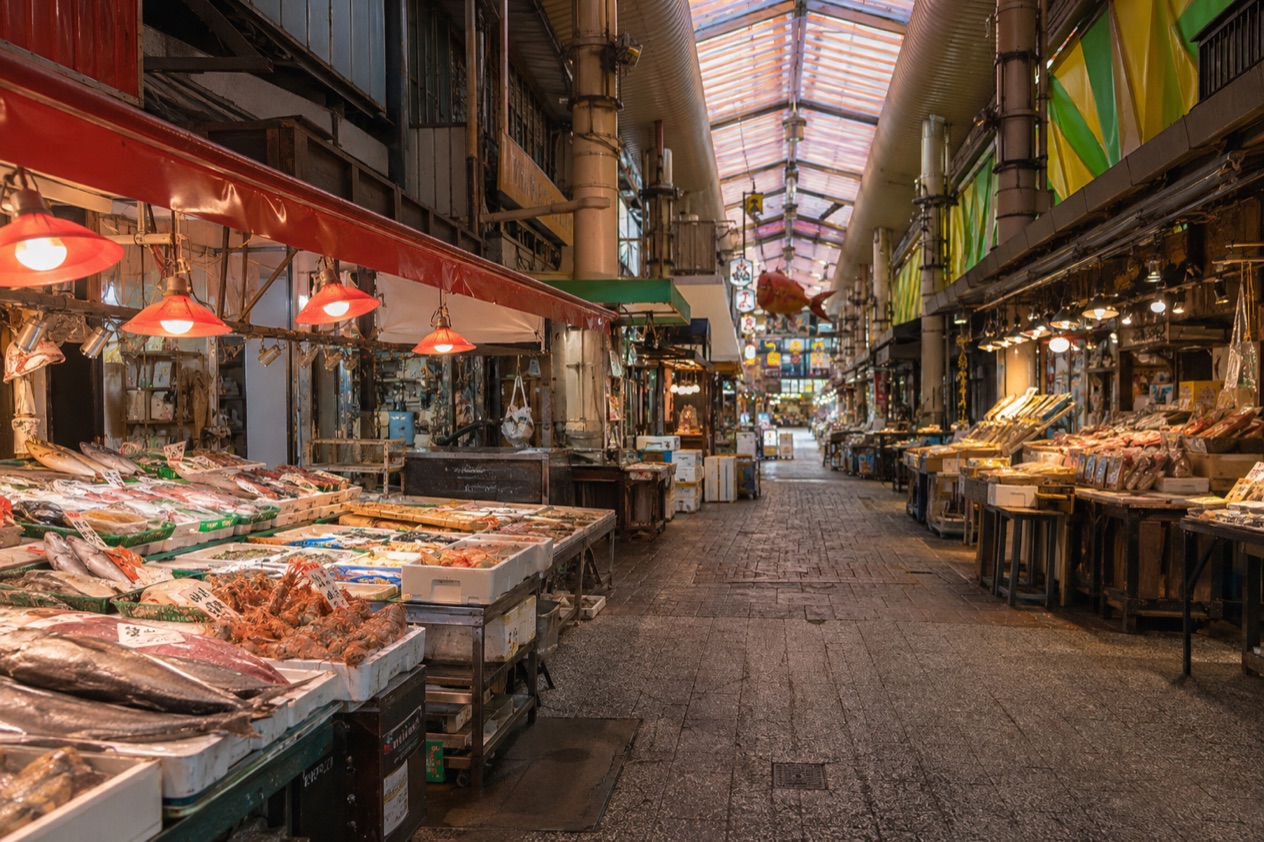
You hear Omicho Market before you take in all of it: the calls of fishmongers, the clatter of ice being shoveled into crates, the sizzle of something grilling over charcoal. Then the covered lanes open up, with crab legs stacked on beds of ice, glossy shrimp, clams in tubs and pickled vegetables in every color. This is the working food market of Kanazawa, a place to graze, to browse and to sit down to a bowl of raw fish on rice.
Is visiting Omicho Market worth it?
Yes, if you like to eat and to watch food being sold, and it suits couples, friends and families who are happy to wander and snack rather than follow a strict sightseeing list. Omicho is a market where the people of Kanazawa buy their fish and vegetables, and visitors simply step into the same lanes. Nothing is behind glass, and no one stages it for you.
Kanazawa sits on a narrow strip of land along the Sea of Japan on Honshu, and the market tastes of that coast. Stalls sell what comes out of the northern sea: sweet shrimp, squid, yellowtail, sea bream, oysters and, in the cold months, snow crab, the prize of the region. Alongside the seafood you find local vegetables, tofu, sweets, tea and dried goods, so the market feeds you from breakfast to dessert.
What sets it apart from a museum or a garden is that you take part. You point at a scallop, watch it opened and eat it on the spot, then move on to the next stall. A temple or a castle asks you to look. Omicho asks you to taste, and that makes it a good counterweight to the city’s gardens and old districts.
Kanazawa was one of the most important cultural and artistic centers in Japan during the Edo period, and it still draws people who love art and culture. Omicho gives that visit its other half, the daily food life of the city. Travelers set it beside Kenrokuen Garden, one of Japan’s most iconic landscape gardens, and the contrast between a carefully composed garden and a loud, wet, fragrant market is part of the pleasure.
If raw fish is not for you, the market still works. There are grilled skewers, fried seafood, croquettes, soft-serve ice cream, noodles and produce to admire, and the smells and the sight of the catch are an experience in themselves. If you dislike strong seafood aromas or tight lanes where people stop suddenly to photograph a crab, you may find a short pass-through enough.
What to see at Omicho Market
The seafood stalls
The fish counters are the heart of Omicho. Whole fish lie on ice with their eyes still bright, shellfish sit in shallow trays of seawater, and vendors slice and shuck to order. Look for amaebi (sweet shrimp), which are eaten raw and have a soft, almost creamy texture, as well as oysters, turban shells, squid and the blackthroat seaperch known as nodoguro, a prized catch of the Sea of Japan.
In the cold months, snow crab takes over many displays, its legs piled high and its shells a deep orange. Some stalls will steam or grill crab for you, and others sell it packed for the road. Even if you buy nothing, the colors and the shouted sales pitches make the walk worthwhile.
Kaisendon counters and market eateries
Kaisendon, a bowl of rice topped with raw seafood, is the dish visitors come for. Small restaurants in and around the market serve it with whatever the sea has offered that day: tuna, salmon roe, sea urchin, shrimp, squid and seasonal white fish, laid out like a mosaic over vinegared rice. A bowl comes with miso soup and pickles, and eating it at a counter beside the market where the fish was bought is the whole point.
Other eateries focus on grilled fish, tempura, sushi or hot pots. Rather than choose in advance, walk the lanes, look at what each counter shows in its window and pick the place where the fish looks freshest and the menu speaks to your appetite.
Street snacks and eat-as-you-walk stalls
Part of the fun is eating on your feet. Stalls grill scallops and oysters in the shell, fry croquettes, skewer squid and sell small cups of seafood to eat with a wooden pick. Others offer sweets, including soft-serve ice cream, which is something travelers find hard to resist after a heavy morning of seafood.
Etiquette here is relaxed but considerate. People usually finish what they are eating near the stall rather than carry it through the crowded lanes, and they keep their trash for the place that sold the snack. A few moments spent at the stand also lets you watch the cook work.
Vegetables, pickles and pantry goods
Away from the fish, the market sells the produce of the Kanazawa region: leafy greens, roots, mushrooms, fruit, pickled vegetables, dried fish, seaweed, tofu and tea. Kanazawa has its own tradition of local vegetables, and the stalls are a good place to see what is growing in each season, whether that is spring shoots, summer tomatoes and eggplants or autumn mushrooms and chestnuts.
This is also where you find edible souvenirs that need no refrigeration, such as dried seafood, condiments and sweets. Even if you are not shopping, these stalls show how the city eats at home, as opposed to what it serves to visitors.
When to visit Omicho Market
The market works in every season, because it is covered and the food changes with the calendar. What changes is the weather you walk through to reach it, and what is on the ice. For travelers the choice comes down to whether they want snow crab and a cold, wet city, or mild weather and a long day of walking in Kanazawa. The table gives the typical conditions in Kanazawa for four months that show the range of the year.
| Month | Average high (°F) | Average low (°F) | Precipitation (inches) | Days with 1 mm or more | Sunshine (hours) |
|---|---|---|---|---|---|
| January | 44.8 | 34.2 | 10.08 | 23.4 | 62 |
| April | 63.1 | 46.8 | 5.67 | 12.0 | 185 |
| July | 85.1 | 73.2 | 9.19 | 12.9 | 167 |
| October | 71.2 | 57.0 | 6.97 | 12.7 | 152 |
Winter: snow, crab and warm bowls
January is gray, wet and cold, with precipitation falling on most days and snow or sleet on well over twenty of them. Sunshine is scarce, and the sea wind feels sharp. It is also the season of snow crab and other cold-water seafood, so the market feels its most seasonal then, and a hot seafood soup or grilled crab fits the weather.
Dress for wet streets, because slush and rain come as often as dry snow. The covered lanes of the market give some shelter, though the entrances and the surrounding streets are exposed. Waterproof shoes with a good grip are worth having.
Spring: mild days for a long walk
April is mild, with cool mornings and evenings and a fair amount of sun. It suits a day that starts with breakfast at the market and continues on foot through the city’s gardens and old streets. Showers come on about one day in three, so a light rain jacket is enough.
Summer: warm and humid
July is warm and humid, with showers on about every other day and nights that stay mild. The market’s covered lanes help with sun and rain, though the air inside can feel close. Cold drinks and ice cream stalls come into their own, and seafood that suits the heat, such as squid, shrimp and white fish, fills the counters.
Autumn: comfortable weather and harvest foods
October is pleasant for walking, with mild afternoons and cooler evenings. Rain falls on a bit more than a third of the days, often in short spells, and the sun still shows up regularly. Vegetable stalls shift toward mushrooms, chestnuts and roots, and the first signs of the cold-water catch appear as the season turns.
Tips for your visit
Arrive hungry and keep your plans loose. Omicho is a place to browse first and eat second, so walk a full circuit before you decide what to order. You will notice which stalls draw lines of locals, which counters display the freshest-looking fish, and which snacks you cannot walk past.
What to bring and how to eat
A small bag, comfortable shoes and a taste for trying things are all you need. Bring a few small items for rubbish and wet wipes, because many snacks are eaten with your fingers.
Share dishes if you can. Sampling several small plates, such as a skewer of scallops, a few oysters and a small bowl of seafood on rice, gives a fuller picture of the market than one big meal, and it lets you try more of the sea’s range. If you are traveling with children, simple grilled items, croquettes and sweets give them something to eat while adults explore the raw counters.
Pairing the market with the rest of Kanazawa
A market morning leaves the afternoon open for the city’s other great stops. Kenrokuen Garden, which offers free admission, is among Japan’s most iconic landscape gardens, and next to it stands Kanazawa Castle Park. Walking off a seafood lunch among ponds, pines and stone lanterns is a pleasant contrast to the noise of the market.
Kanazawa was a major cultural and artistic center in the Edo period, so museums, craft workshops and historic districts reward a longer stay. Consider building the day around food in the first half and art or gardens in the second, letting the market set the pace.
Families and mobility
With children, the market is a lesson in where food comes from: live shellfish, whole fish and crab are fascinating to look at, and many kids enjoy choosing a snack.
If you use a stroller or a wheelchair, expect tight spaces, wet floors and busy aisles, and plan your pace accordingly. Fish counters and snack stalls are close together, so you can see a great deal without covering much ground.
Good to know before you go
Bring some yen for snacks and small purchases, since market stalls are the sort of place where you pay for each bite as you go. Raw seafood is a staple of the menu, so say so at the counter if you want something cooked, and take your time to choose.
Kanazawa lies on the Sea of Japan side of Honshu, where winter brings snow and rain and summer brings humidity, so dress for the month you travel. Since the Hokuriku Shinkansen began serving the city on March 14, 2015, the trip from Tokyo takes around 2 1/2 hours, and the nearest airport is Komatsu Airport in the city of Komatsu.
Sources
- Japan National Tourism Organization, Kanazawa (https://www.japan.travel/en/destinations/hokuriku-shinetsu/ishikawa/kanazawa-and-around/), checked October 11, 2026
- Kanazawa Tourist Information Guide (https://www.kanazawa-tourism.com/), checked October 11, 2026
- Wikipedia, Kanazawa, Ishikawa (https://en.wikipedia.org/wiki/Kanazawa,_Ishikawa), checked October 11, 2026
- Japan Meteorological Agency (JMA), Normal values 1991-2020, monthly (https://www.data.jma.go.jp/stats/etrn/view/nml_sfc_ym.php?prec_no=56&block_no=47605), station Kanazawa, elevation 6 m, checked October 11, 2026
To plan your stay
- Best Time to Visit Japan: Cherry Blossoms, Autumn Colors, Weather and Festivals
- Where to Stay in Japan: Ryokan, Temple Stays, Capsule Hotels and the Best Cities to Base In
- Sending Luggage from the Airport in Japan: Hands-Free Travel, Hotel Delivery and Coin Lockers
- Know Before You Go to Japan: Entry, Money, Etiquette and Getting Around