
Boots thump on a wooden entryway, skis lean in a rack, and someone hangs damp gloves above a heater while snow keeps falling past the window. In Niseko that evening can carry on in another village entirely, because the town is a cluster of resorts sharing a single mountain. Where you sleep sets the rhythm of both ends of the day, and the choice comes down to Hirafu, Hanazono, Niseko Village or Annupuri.
What is the best area to stay in Niseko?
For a first visit, Grand Hirafu is the usual starting point, since it is the resort most associated with Niseko’s welcome to foreign visitors. Families and travelers who want a resort-style base look at Hanazono and Niseko Village.
Anyone who would rather wake up away from the busiest streets leans toward Annupuri. A traveler on a tighter budget and one who wants a nightlife-heavy evening will often choose differently again, and the reasons come down to how each village is built.
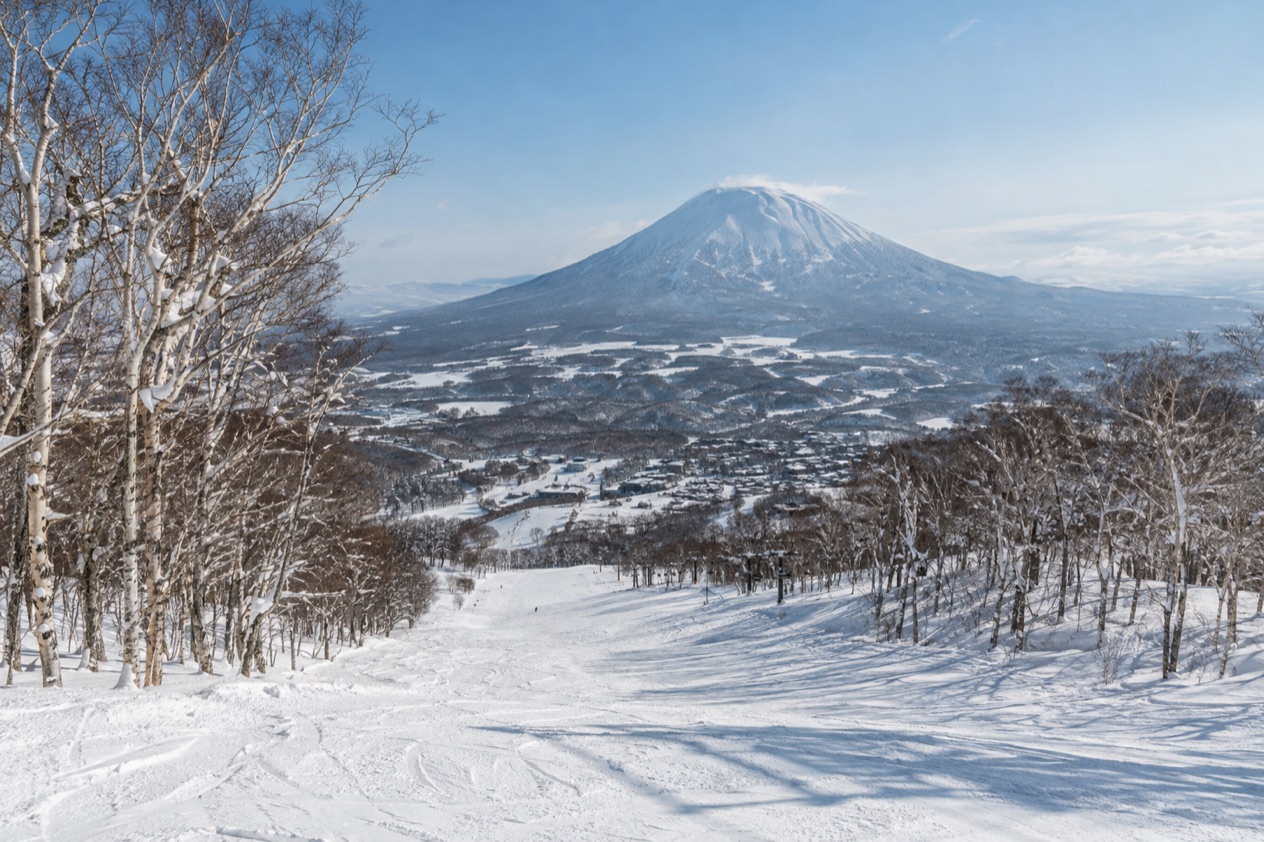
Niseko United describes itself as one mountain with four resorts: Annupuri, Niseko Village, Grand Hirafu and Hanazono. That phrase explains most of the decision. You are not choosing between four separate ski areas, you are choosing which door you walk out of in the morning. The trail map covers all of them, and an All Mountain Season Pass is valid across the whole set, so a night in one village does not lock you out of the slopes of another.
What changes from village to village is everything around the lifts: how many restaurants and bars sit within reach of your front door, whether your lodging looks like a hotel tower, a wooden lodge or an apartment building, and how much of the evening happens outside the place where you sleep. Think of the choice as an evening choice more than a ski choice.
First visit: start in Hirafu
Hirafu is the resort where visitors tend to gather when the lifts close. Its streets hold the izakaya (casual Japanese pubs), ramen counters, cafés and apres-ski bars that give Niseko its social side, and its lodging runs from guesthouses to apartments and boutique hotels. If this is your first winter here and you like having options when you walk out the door, this is the area to look at first.
The trade-off is simple. A village with that much going on gives you a lively evening, and it gives you less of the feeling of being tucked away in the snow. If you want to get up, eat, ski and fall asleep early, one of the smaller resorts may suit you better.
Families and resort-style stays: Hanazono and Niseko Village
Hanazono and Niseko Village are built more around larger properties, where the hotel itself is part of the day. In a place like that, breakfast, rental of skis and snowboards, lessons and dinner can all happen under one roof or close to it, which many families appreciate when children are tired and gloves are wet. Ski and snowboard equipment can be rented on site at specialty shops in Niseko.
If you prefer one address for everything and care less about wandering between bars, these two villages fit. They also suit travelers who like a hotel with a lobby and a restaurant over an apartment where they buy their own groceries.
Budget stays and nightlife
Guesthouses and shared-facility lodges are where a lower nightly cost usually shows up, and Hirafu is the village with the widest range of them, along with the most evening options. That pairing makes it the natural base for someone who wants to spend on lift tickets and dinners rather than on a room.
If you would rather keep evenings low-key, Annupuri is the village to look at. The smaller scale means fewer places to wander into after dinner, and it suits people whose main plan is early lifts and an early night.
The best areas to stay in Niseko
Each of the resorts has its own personality, shaped by the lifts at its door and the lodging built around them. Wherever you stay, the nearest airport is Sapporo’s New Chitose Airport, and the drive to Niseko is about three hours by car from both New Chitose and Sapporo itself.
Grand Hirafu
Grand Hirafu is the resort with the most going on after dark. Streets of restaurants, bars and small shops sit around the base of the lifts, and lodging mixes guesthouses, apartments, chalet-style lodges and boutique hotels. Powder snow and a welcoming atmosphere are what Niseko is known for, and Hirafu is where that atmosphere is easiest to find in the evening.
It suits first-time visitors, friends traveling together, and anyone who wants to choose between a dozen dinners without getting in a vehicle. Within the resort you move between lodging, restaurants and lifts. A useful tip: pick lodging by its position relative to the lifts and to the restaurant streets, since the two are not always the same walk.
Hanazono
Hanazono is the resort of larger developments and a resort-style rhythm. Lodging leans toward hotels and apartment-style residences built around the lifts, and the village works well for families and groups who want a self-contained base. It shares the same mountain as the other three resorts, so the full trail map is within reach from here.
If you want a choice of different bars and small restaurants each night, expect to lean more on your hotel and less on street wandering.
Niseko Village
Niseko Village, formerly called Higashiyama, is the resort of big-hotel stays. Think of lobbies, in-house restaurants, onsen-style baths in some properties and a resort feel from check-in onward. It suits travelers who want a full-service hotel and a base that does not require any evening planning.
It is also the choice if you want a hotel where the stay is part of the trip. Because the resort is part of the same mountain, you can still use the full set of lifts, and you can check the live lift and weather status for every resort on the Niseko United website before heading out.
Annupuri
Annupuri sits on the eastern side of the Niseko volcanic group, with a smaller cluster of lodges, pensions and small hotels than the other resorts. It suits skiers who prefer to arrive, eat and sleep without much else going on, and travelers who like a village that feels more like a mountain stay.
If you plan to spend your evenings at a table in your lodge, Annupuri keeps things simple. If you want nightly variety, you will be traveling to other resorts to find it. A good tip: confirm how you will get to dinner elsewhere before settling here, since this is the resort where evenings are most likely to stay close to where you sleep.
Niseko areas compared
| Area | Best for | Feel | Getting around |
|---|---|---|---|
| Grand Hirafu | First visit, nightlife, friends | Restaurants and bars around the lifts | Niseko United lifts and trail map |
| Hanazono | Families, groups | Resort-style, larger developments | Niseko United lifts and trail map |
| Niseko Village | Full-service hotel stays | Big-hotel resort | Niseko United lifts and trail map |
| Annupuri | Early nights, a smaller base | Smaller cluster of lodges | Niseko United lifts and trail map |
The main trade-off is between being next to the action and being away from it. Hirafu puts restaurants, bars and shops around you, and that convenience of choice is also its busiest side after dark. Annupuri gives you a smaller village and a calmer evening, at the cost of having fewer places to wander into once the lifts close.
Hanazono and Niseko Village sit between those two poles. They offer resort comfort and the ease of a hotel that handles meals and lessons, and they ask you to travel for variety rather than find it outside your door. Travelers who like to arrive somewhere and stay put tend to find this combination to their taste.
There is also a choice between newer, hotel-style lodging and smaller, more personal places. A large resort hotel gives you a front desk, a restaurant and a place to leave skis. A guesthouse or lodge gives you a smaller room count and a different kind of evening, often shared with other travelers. Neither is better, they simply fit different kinds of trips.
Because the resorts share the mountain, a stay in one village does not close off the others. The Niseko United website posts live lift and weather status for every resort, and it publishes avalanche information too, so you can plan each day’s skiing from wherever your bed happens to be.
A last trade-off: the staying put against the roaming. If you plan to ski every day and eat at your lodge, the size of the village matters little. If you plan to wander for dinner, being in the village with the most restaurants matters a great deal. Decide which traveler you are and the area follows.
How to choose your hotel in Niseko
Start with the style of stay, because Niseko has more than one. A hotel gives you a desk, a restaurant and a daily rhythm you do not have to organize. A guesthouse or lodge gives you a smaller room count and a shared living room where ski days are compared over a drink. An apartment gives you a kitchen and space for a group.
Then think about the day itself. If you want to step out of your front door and into the lifts, look at lodging by its place relative to the base of the mountain. If you want dinner within reach, look at its place relative to the restaurant streets. In Niseko these are often two different things, and the best lodging for you depends on which matters more.
A ryokan-style stay
A ryokan is a traditional Japanese inn, a style believed to have emerged in the 8th century. Typical features include tatami floors, futons, private baths that are sometimes outdoors, yukata (light cotton robes), a kaiseki dinner (a multi-course meal) and a traditional Japanese breakfast. If that kind of evening appeals, it makes a good contrast with a day on skis.
Think of a ryokan stay as the opposite of an apartment. Meals are part of the arrangement, the room is a place to sit on the floor rather than at a desk, and the evening is shaped by the bath and the dinner. It suits travelers who want one night of that on a longer trip, or those who want the whole stay to feel Japanese.
Hotels, lodges and apartments
A hotel suits couples and families who want service, a restaurant and a place to dry boots without thinking about it. A lodge suits groups of friends who like a communal space. An apartment suits a family or a group that wants a kitchen, more floor space and the freedom to eat on their own schedule.
Ski and snowboard equipment can be rented on site at specialty shops in Niseko, which means you do not have to carry gear across the Pacific. If you travel with children, look at lodging that keeps meals and equipment close together, and think about how many trips you will make between your room and the lifts each day.
Getting there and reaching your bed
The nearest airport is Sapporo’s New Chitose Airport, which receives flights from all over Japan and from some international destinations. In the evenings the rapid Niseko Liner runs directly from Sapporo station to Kutchan station. Whichever way you travel, plan the last stretch from the arrival point to your lodging before you choose where to stay.
Families and travelers with limited mobility should think about how far lodging is from the lifts and from dinner, and about how much of the day is spent moving between the two. A resort hotel that keeps most things under one roof is often the simplest answer, while a guesthouse in a smaller village asks more of you each day.
Winter and green season
Niseko is not only a winter place. Green-season activities include rafting, hiking, mountain biking, road cycling, fishing, golf and paddling, with the Shiribetsu River particularly associated with rafting and fishing. If you come outside ski season, choose lodging by what you plan to do rather than by the lifts, and look at the village that fits that plan.
In winter, Kutchan receives a mean annual total snowfall of 363 inches, which is why lodging here is built around boot rooms and drying space. Much of the Niseko range lies within a quasi-national park, and the Niseko Rules limit access to terrain beyond the controlled boundaries to designated gates, so lodging choice does not change where you may ski.
Good to know before you go
From New Chitose Airport, the bus trip to Niseko takes 3½ to 4 hours, depending on road conditions. The Niseko United website encourages visitors to buy lift passes online, and it posts live lift and weather status for every resort. Niseko sits within the Niseko Tourism Zone, which covers the municipalities of Kutchan, Niseko and Rankoshi.
Sources
- Japan National Tourism Organization, Niseko (https://www.japan.travel/en/destinations/hokkaido/hokkaido/niseko-and-nearby-ski-resorts/), checked October 11, 2026
- Niseko United, winter (https://www.niseko.ne.jp/en/winter/), checked October 11, 2026
- Wikipedia, Niseko (https://en.wikipedia.org/wiki/Niseko), checked October 11, 2026
- Wikivoyage, Niseko (https://en.wikivoyage.org/wiki/Niseko), checked October 11, 2026
- Japan National Tourism Organization, ryokan stays, what is included, etiquette (https://www.japan.travel/en/guide/japanese-ryokan/), checked October 11, 2026
- Japan National Tourism Organization, heritage stays (https://www.japan.travel/en/heritage-stays/), checked October 11, 2026
- Japan National Tourism Organization, skiing and snowboarding in Japan: regions, resorts, seasons (https://www.japan.travel/en/sports/snow/), checked October 11, 2026