
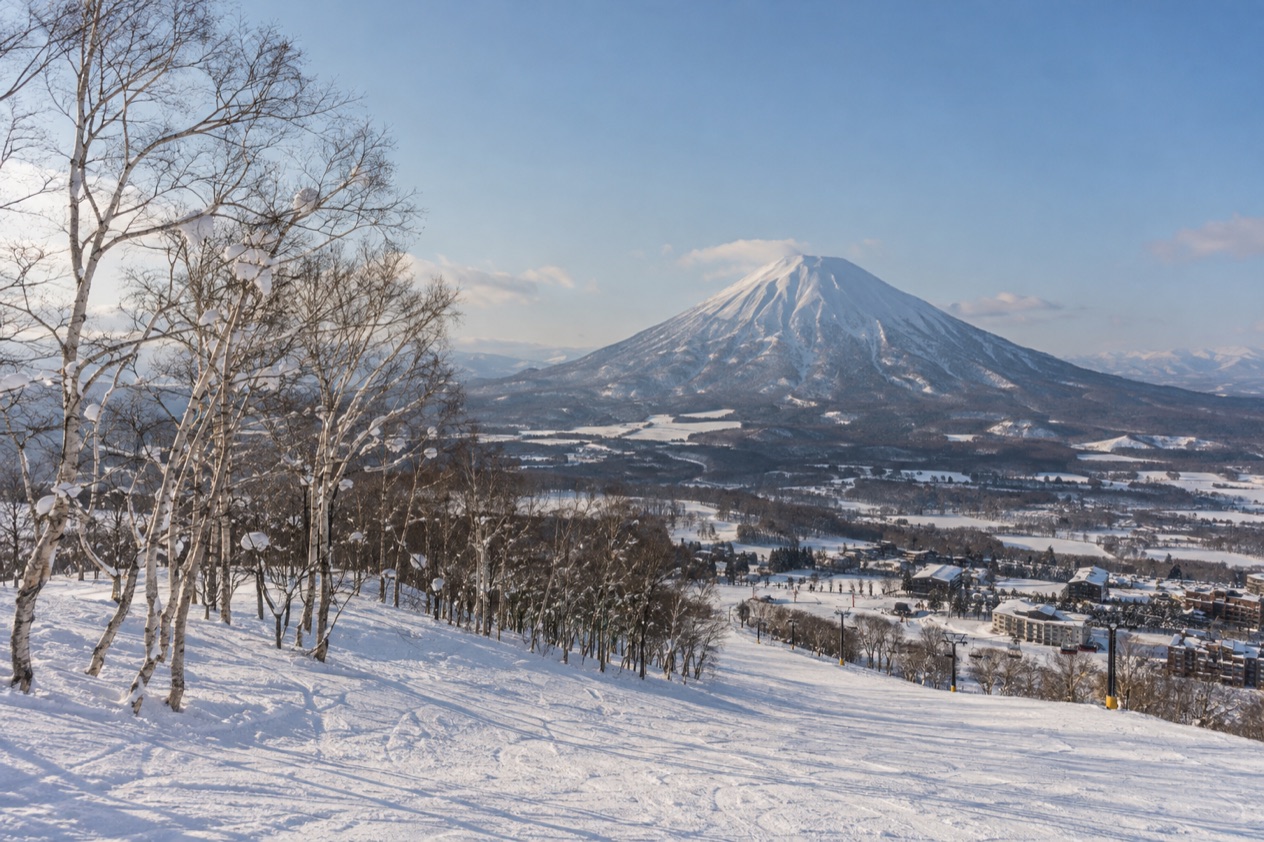
In March, snow still muffles the streets around Niseko. The lifts keep climbing into white slopes, and steam rises from outdoor onsen pools once the skiing is done.
Late winter here means boots lined up in the hallway, a bowl of soup curry at a long table and a sun that has started to linger a little longer each evening.
What is the weather like in Niseko in March?
March in Niseko is still winter, with snow falling on most days and afternoons that stay close to freezing, though the month is clearly softer than February. At Kutchan, close to Niseko, the figures run like this.
| Month | Average high (°F) | Average low (°F) | Precipitation (in) | Days with 1 mm or more of precipitation | Hours of sunshine | Snowfall (in) | Daylight on the 15th |
|---|---|---|---|---|---|---|---|
| February | 30.2 | 15.1 | 5.09 | 21.3 | 65 | 73.6 | 10 h 31 min |
| March | 37.4 | 21.7 | 3.87 | 17.0 | 121 | 48.0 | 11 h 51 min |
| April | 49.6 | 32.2 | 2.64 | 11.0 | 173 | 6.7 | 13 h 21 min |
What the table means on the ground: afternoons reach just above freezing, so the snow can turn heavy and wet, while nights drop well below it and harden everything again. Snow or sleet is the usual form of precipitation, so a waterproof shell matters more than an umbrella. Layers are the practical answer, since the thermometer swings widely between the cold hours and the sunnier spells.
Sunshine is noticeably more generous than a month earlier, nearly double, and gray stretches give way more often to bright breaks over the white slopes. Daylight now lasts well past the end of a typical afternoon, which gives the day a longer frame for a last run, a snowshoe walk or a stroll through the village before dinner.
Humidity stays fairly high, and with snow so frequent, gloves and socks that dry quickly are worth more than an extra sweater. Sunglasses or goggles with a good lens earn their place on the brighter days, when light bounces off the snow.
What to do in Niseko in March
March in Niseko is a ski month. The area sits in southwestern Hokkaido, southwest of Sapporo, and JNTO describes it as the most famous ski area in Japan, known for its powder snow and a welcoming atmosphere that draws many foreign visitors. Snow still falls on most days of the month, which keeps the slopes and the streets looking like midwinter.
Off the slopes, the rhythm is that of a mountain town in winter: boots drying in entryways, steamed-up cafe windows, grocery stores stocked with Hokkaido dairy and vegetables, and evenings spent in a hot bath. Cherry blossoms are a long way off. They reach Hokkaido in mid-May, so March belongs to snow, not petals.
Skiing and snowboarding across four resorts
Niseko United is described as one mountain with four resorts: Annupuri, Niseko Village, Grand Hirafu and Hanazono. Each has its own base area and its own feel, from the main village of Hirafu with its restaurants and bars to quieter corners where lifts rise straight from the lodging. Much of the surrounding range lies within the Niseko-Shakotan-Otaru Kaigan Quasi-National Park, so the slopes are framed by forest and volcanic ridges.
The Niseko United website posts live lift and weather status for every resort, and it also sells lift passes online. Looking at it in the morning tells you which lifts are turning before you commit to a base.
Snowboarders and skiers both fit in here, and a day can be split between resorts without changing the shape of the trip. Taking a different resort each day is a simple way to see what each of the four does best.
Onsen and the slow evening
A hot spring bath is the natural end to a snowy day in Hokkaido. Many onsen in the area have outdoor pools where snowflakes land on the water while you sit in it, and the contrast of cold air and hot water is a pleasure of its own. Ryokan and lodges often pair a bath with a long dinner of local ingredients.
If the legs are tired after skiing, an evening spent soaking, then eating, then sleeping early is a very satisfying way to close the day. Slippers, a towel over the shoulder and a warm walk back to the room are part of the habit.
What to eat in a Hokkaido winter
Hokkaido cooking suits cold weather. Soup curry, a spiced broth loaded with chicken and big pieces of vegetables, is a local favorite, and so are ramen with butter and corn, grilled lamb cooked at the table as jingisukan, and seafood from the surrounding waters. Dairy is a point of pride, so soft-serve ice cream and creamy desserts appear even on the coldest days.
Izakaya, the Japanese pubs where small plates arrive one after another with beer or sake, fill the village after dark. Hot pots, potatoes baked until sweet and warm drinks are the order of the season. A bowl of something steaming after the lifts close is part of the March routine.
When the snow is falling hard, ducking into one of them is a pleasant way to wait for the weather to ease.
A two-day itinerary for Niseko in March
Day 1 starts in Grand Hirafu, the main base. Check the live lift status on the Niseko United website over breakfast, then spend the morning on the slopes while the snow is at its coldest and firmest.
Lunch is a bowl of ramen or soup curry in a village restaurant. In the afternoon, with the days now longer, there is time for a last run or a walk through the village streets as the lights come on.
Evening belongs to a hot spring and then dinner at an izakaya, where grilled meats, vegetables and Hokkaido seafood come in small shared plates. The first day’s plan keeps everything close to one base, which suits a day that may include the long trip up from Sapporo, about three hours by car.
Day 2 moves to another part of the mountain. Take the morning at Annupuri or Hanazono, whichever the lift report says is running well, and let the pace be slower than the first day. Around midday, stop for a hot lunch at a lodge or cafe and let boots and gloves dry. The afternoon can go to Niseko Village, with its own slopes and a different mood from Hirafu.
If the weather turns heavy, make it an indoor day: a long soak in an onsen, a slow lunch, a cafe with a window onto the falling snow and some Hokkaido sweets to take home. With March’s sunnier spells, the sky often opens again, so keep a pair of goggles in your bag in case it does.
Is Niseko busy in March?
Niseko is a ski destination that JNTO calls the most famous in Japan, especially popular with foreign visitors, and March is still part of its winter, so expect an active resort rather than a sleepy one. Lifts are running across the four resorts, restaurants in Hirafu are serving, and snow keeps falling on most days.
The Niseko United website encourages buying lift passes online to beat the lines and save money, which tells you something about how the lifts can feel in the main season. For the pace of the month, think of March as the tail of the winter rather than its start: the days are longer, the sun appears more often and the cold has loosened a little compared with February.
Away from the lifts, the area covers the three municipalities of Kutchan, Niseko and Rankoshi, which together make up the recognized tourism zone. That gives you villages and quieter corners beyond the busiest base if you want a different rhythm on a rest day.
What to pack for Niseko in March
Pack for snow and for temperatures that hover around freezing by day and fall well below it at night. Layers matter most, along with gear that handles wet snow.
- A waterproof shell and snow pants, because snow or sleet falls on most days.
- Warm base layers and a fleece, for the cold hours when temperatures drop well below freezing.
- Waterproof gloves and a spare pair, since wet snow soaks through fast.
- Goggles and sunglasses, for the sunnier spells when light reflects off the snow.
- Warm socks and boots with grip, for village streets and snowy paths.
- A swimsuit if your lodging has a mixed-use bath, or a small towel for the onsen.
Good to know before you go
March sits at the end of the winter in Niseko, so the practical question is the snow, not a rainy season. Lift passes can be bought online through the same site.
Niseko lies in southwestern Hokkaido and is about a three-hour drive from Sapporo, so plan the day of arrival with that in mind, especially when snow is falling.
Niseko in March vs February and April
Moving the trip four weeks earlier means a snowier month. February brings far more snowfall, colder afternoons and the shortest days of the three months, with gray skies more common than in March. It suits skiers and snowboarders who want the deepest winter feel, and who accept the shorter daylight that comes with it.
Moving four weeks later changes the picture. April snowfall drops to a fraction of March, afternoons climb well above freezing and the sun shines far more often, with the days stretching long. It is a month for those who care less about the slopes and more about milder walks. Cherry blossoms still wait until mid-May in Hokkaido, so April is a season of melting rather than blooming.
March sits in the middle: still plenty of snow, noticeably more sun than February, and daylight that has grown past the halfway mark. Skiers who want snow plus a little more light should stay with March. Travelers who care mostly about mild weather and outdoor strolling may prefer April.
Is March a good time to visit Niseko?
Yes, for anyone who comes for snow, with the bonus of longer, sunnier days than the heart of winter. Skiers and snowboarders will find the four resorts of Niseko United running, and people who simply love a snowy mountain town with hot baths and hearty food will feel at home.
It is a poor fit for anyone hoping for spring flowers or mild walking weather, since the cherry blossoms are still weeks away from Hokkaido and afternoons stay close to freezing. Those travelers will be happier in a later month.
On arrival, the first thing to do is open the Niseko United lift and weather report, pick a resort for the first day and then settle into an onsen and a bowl of soup curry. March here is the soft end of a hard winter, with snow on the ground and a little more light in the sky every day.
Sources
- Japan Meteorological Agency (JMA), Normal values 1991-2020, monthly (https://www.data.jma.go.jp/stats/etrn/view/nml_sfc_ym.php?prec_no=16&block_no=47433), station Kutchan, elevation 176 m, checked October 11, 2026
- Computed from the date and the latitude of the place (sunrise equation, solar elevation -0.833 degrees), October 11, 2026
- Japan Meteorological Agency, cherry blossom first-bloom dates 2021-2026 and 1991-2020 normal (https://www.data.jma.go.jp/sakura/data/sakura003_07.html), checked October 11, 2026
- Japan Meteorological Agency, cherry blossom full-bloom dates 2021-2026 and 1991-2020 normal (https://www.data.jma.go.jp/sakura/data/sakura004_07.html), checked October 11, 2026
- Japan Meteorological Agency, sakura2020.pdf (https://www.data.jma.go.jp/sakura/data/sakura2020.pdf), checked October 11, 2026
- Japan National Tourism Organization, flowers by season: cherry blossom, plum, wisteria, hydrangea, where and when (https://www.japan.travel/en/see-and-do/flowers/), checked October 11, 2026
- Wikipedia, Prunus mume (https://en.wikipedia.org/wiki/Prunus_mume), checked October 11, 2026
- Japan National Tourism Organization, spring in Japan (https://www.japan.travel/en/guide/spring-guide/), checked October 11, 2026
- Japan National Tourism Organization, autumn in Japan (https://www.japan.travel/en/guide/autumn-guide/), checked October 11, 2026
- Japan National Tourism Organization, summer in Japan (https://www.japan.travel/en/guide/summer-guide/), checked October 11, 2026
- Japan National Tourism Organization, Niseko (https://www.japan.travel/en/destinations/hokkaido/hokkaido/niseko-and-nearby-ski-resorts/), checked October 11, 2026
- Niseko United, winter (https://www.niseko.ne.jp/en/winter/), checked October 11, 2026
- Wikipedia, Niseko (https://en.wikipedia.org/wiki/Niseko), checked October 11, 2026
- Wikivoyage, Niseko (https://en.wikivoyage.org/wiki/Niseko), checked October 11, 2026