
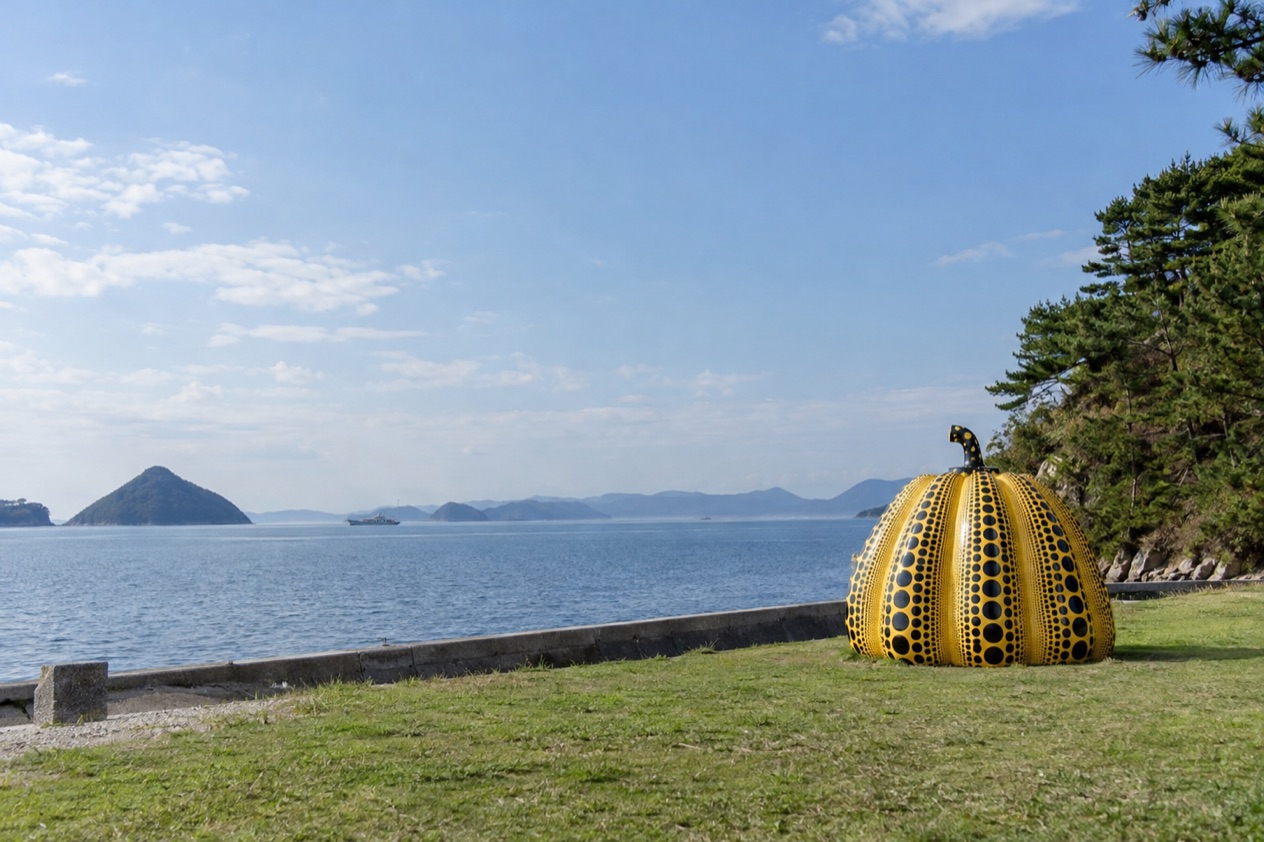
A small island appears across the water of the Seto Inland Sea, with fishing boats at the edge of the harbor and concrete, glass and steel sculptures scattered among ordinary village houses. Naoshima is known for its contemporary art museums and outdoor installations, and a day here is spent moving between galleries, gardens and quiet corners of the shoreline.
Is visiting Naoshima worth it?
Yes, if you like contemporary art and want a place where the museums are part of the landscape rather than a separate stop on a city itinerary. Naoshima is famous for its contemporary art museums and outdoor art installations, and that identity shapes everything on the island, from the buildings to the sculptures you meet beside the water.
What sets it apart from the other islands of the Seto Inland Sea is the way the art was planned. The Setouchi archipelago is a chain of thousands of islands of various sizes, and many of them are known for mild weather and clean beaches. Naoshima adds something different: Benesse Corporation has directed the creation and operation of its museums and other projects since the late 1980s, so the visit feels coherent, with architecture, collections and setting working together.
There is also an industrial layer that makes the island more interesting than a pure art retreat. Mitsubishi Materials has dominated industry here, with massive refining since 1917, so the story of Naoshima is one of work and craft as well as galleries. Naoshima sits closer to Honshu, yet it belongs administratively to Kagawa Prefecture on Shikoku, a small oddity you notice when you look at a map.
It suits couples, solo travelers and friends who enjoy wandering from one building to the next and lingering over a single work. It is a less natural fit for anyone who wants a long list of temples or a city’s nightlife. Think of it as a place for looking slowly, with the sea always close by.
What to see at Naoshima
Chichu Art Museum
The Chichu Art Museum was designed by Tadao Ando and stands on one of the highest points of the island. Its name means “in the earth,” and the building is built to work with its hillside setting, so the architecture and the landscape are part of the same experience.
Inside you find site-specific installations by James Turrell and Walter De Maria, along with paintings by Claude Monet. Site-specific means the works were made for these rooms, so they cannot be separated from the walls and light around them. Look for how the space changes the way you see each piece, and take your time in each room.
Benesse House
Benesse House is a contemporary museum and hotel, also designed by Tadao Ando. The idea of sleeping inside a museum is the hook: art is not something you leave behind when the galleries close but part of the place where you stay.
Even if you are only visiting for the day, the complex shows how closely the island’s art, architecture and hospitality are tied together. It is a good place to study Ando’s approach to concrete, light and views, and to see how a building can frame the sea without competing with it.
Naoshima Fukutake Art Museum and its sculpture garden
The Naoshima Fukutake Art Museum has an outdoor sculpture garden, which makes it a place where the art spills out of the building and into open air. Walking among the sculptures, you see how works change with weather, shadow and the shape of the land.
Pay attention to the way the garden connects with the surrounding landscape. The pieces are not simply placed on a lawn but arranged so that the island itself becomes part of the composition, with water and sky as a backdrop.
The Bond museum and the island’s literary link
A James Bond museum on Naoshima is inspired by the island’s use as a setting for the 2002 Bond novel The Man with the Red Tattoo by Raymond Benson. It is a light-hearted counterpoint to the serious art elsewhere on the island and a reminder that Naoshima has caught the imagination of storytellers as well as architects.
If you enjoy spy fiction, it adds a playful note to a day otherwise spent with Turrell, Monet and Ando. It also shows how the island’s image has traveled beyond the art world.
Hours, tickets and rules
The one firm fact about timing is the weekly closure: most of the museums on Naoshima are closed on Mondays, so a Monday visit would leave you with much less to see.
| Site | Open |
|---|---|
| Most Naoshima museums | Closed on Mondays |
No rules about climbing, swimming, drones, tripods or sunscreen are stated for Naoshima’s sites, so none are given here. What you can rely on is the Monday closure, which is the reason to plan the island for another day of the week.
When to visit Naoshima
Any day but Monday is the first rule, because most of the museums close then. Otherwise the island’s setting in the Seto Inland Sea brings a mild climate, which makes the outdoor sculptures and the walks between buildings pleasant across a good part of the year.
The Seto Inland Sea islands are described as having clean beaches and sparkling blue waters, and that backdrop shapes the mood of a visit on a clear day: the sea is always in view, and the outdoor art gains from the open sky. Rain changes the picture, but the indoor museums, including Chichu and Benesse House, remain places to spend the hours.
Today is October 11, 2026, so if you are planning an autumn trip, keep the Monday closure in mind and build the rest of your days around it. This is the season when a gentler light often suits the sculpture garden, and a day outdoors between galleries can feel unhurried.
Tips for your visit
Plan Naoshima as a day, or more, for the art itself and for moving between sites. The main hubs for reaching the Setouchi archipelago are Okayama, Hiroshima and Kobe on Honshu, and Takamatsu and Matsuyama on Shikoku, so you can start from whichever of those fits your route.
Because Naoshima is described as ideal for short getaways from Okayama, Takamatsu, Hiroshima and Kobe, it pairs well with a trip that includes one of those cities. Choose which museums matter most to you, since the island rewards a few unhurried visits more than a rush through everything.
If you want a different kind of art stop elsewhere in Japan, other museums appear in the wider listings, such as the Hakone Open-Air Museum in Hakone or the National Museum of Modern Art in Kyoto. They are separate trips, but they show how contemporary and traditional art are spread across the country.
Good to know before you go
Naoshima is a small island and a quiet place, with art, architecture and the sea as its main attractions. Plan around the Monday closure, and keep in mind that the Seto Inland Sea has a mild climate, so the main variable is the weather on the day rather than extremes of temperature.
Sources
- Japan National Tourism Organization, art museums (https://www.japan.travel/en/things-to-do/art-and-design/art-museum/), checked October 11, 2026
- Wikipedia, Naoshima (https://en.wikipedia.org/wiki/Naoshima), checked October 11, 2026
- Japan National Tourism Organization, Naoshima (https://www.japan.travel/en/destinations/shikoku/kagawa/setouchi-islands/), checked October 11, 2026
- Wikivoyage, Naoshima (https://en.wikivoyage.org/wiki/Naoshima), checked October 11, 2026