
In September, Nagoya still hums with cicadas in the castle trees, and the air outside a station feels like warm, damp cloth. Then you step into a restaurant where the grill is smoking, a lacquered tray of eel over rice arrives, and the heat of the street seems a long way off. This is the month when the summer grip slowly loosens in the city of Aichi Prefecture, a good moment for castle grounds, shrine paths, zoo gardens and a long run of local meals.
What is the weather like in Nagoya in September?
September in Nagoya is still warm and humid, a little cooler than August but wetter, with the heaviest rainfall of the three months in the table. Summer has not left, yet the edge of the heat has softened.
| Month | Average high (°F) | Average low (°F) | Precipitation (in) | Days with 1 mm or more of precipitation | Hours of sunshine | Daylight on the 15th |
|---|---|---|---|---|---|---|
| August | 91.8 | 76.5 | 5.49 | 8.5 | 201 | 13 h 31 min |
| September | 84.4 | 69.8 | 9.12 | 10.5 | 160 | 12 h 27 min |
| October | 73.9 | 58.6 | 6.48 | 9.0 | 169 | 11 h 22 min |
Afternoons are warm enough that you will want light, breathable clothes, and nights stay mild, so a sweater is not part of the routine. The air carries a lot of moisture, which makes a walk through the castle grounds feel longer than the map suggests. A small towel or handkerchief becomes a useful companion.
Rain is the main thing to plan around. September brings more than any neighboring month in the table, and on roughly one day in three you may see some of it. Sometimes it falls as a heavy shower that clears, sometimes as a gray, drizzly day, so a compact umbrella or a light rain jacket belongs in the daypack, with shoes that dry fast.
The light is changing too. Sunshine is less generous than in August, skies are often veiled, and the evenings close in noticeably earlier than at the height of summer. Plan outdoor sights with that in mind and keep indoor stops, such as an aquarium or a long lunch, ready for the grayer hours.
What to do in Nagoya in September
September in Nagoya is a month for moving between outdoor landmarks and cool, roofed stops, and for eating very well. The city is the capital of Aichi Prefecture, on the Pacific coast of central Honshu, and its landmarks include Nagoya Castle, Atsuta Shrine, Higashiyama Zoo and Botanical Gardens, and the Port of Nagoya Public Aquarium. Autumn leaf color is still months away in this part of Japan, so the month belongs to the sights themselves and to the table.
Early autumn also brings tsukimi, the custom of moon viewing, which falls in September or early October depending on the year. Shops and cafés tend to show it in sweets: round rice dumplings, and treats built around chestnuts as the season turns. It is a small seasonal pleasure that costs nothing to notice.
Nagoya Castle
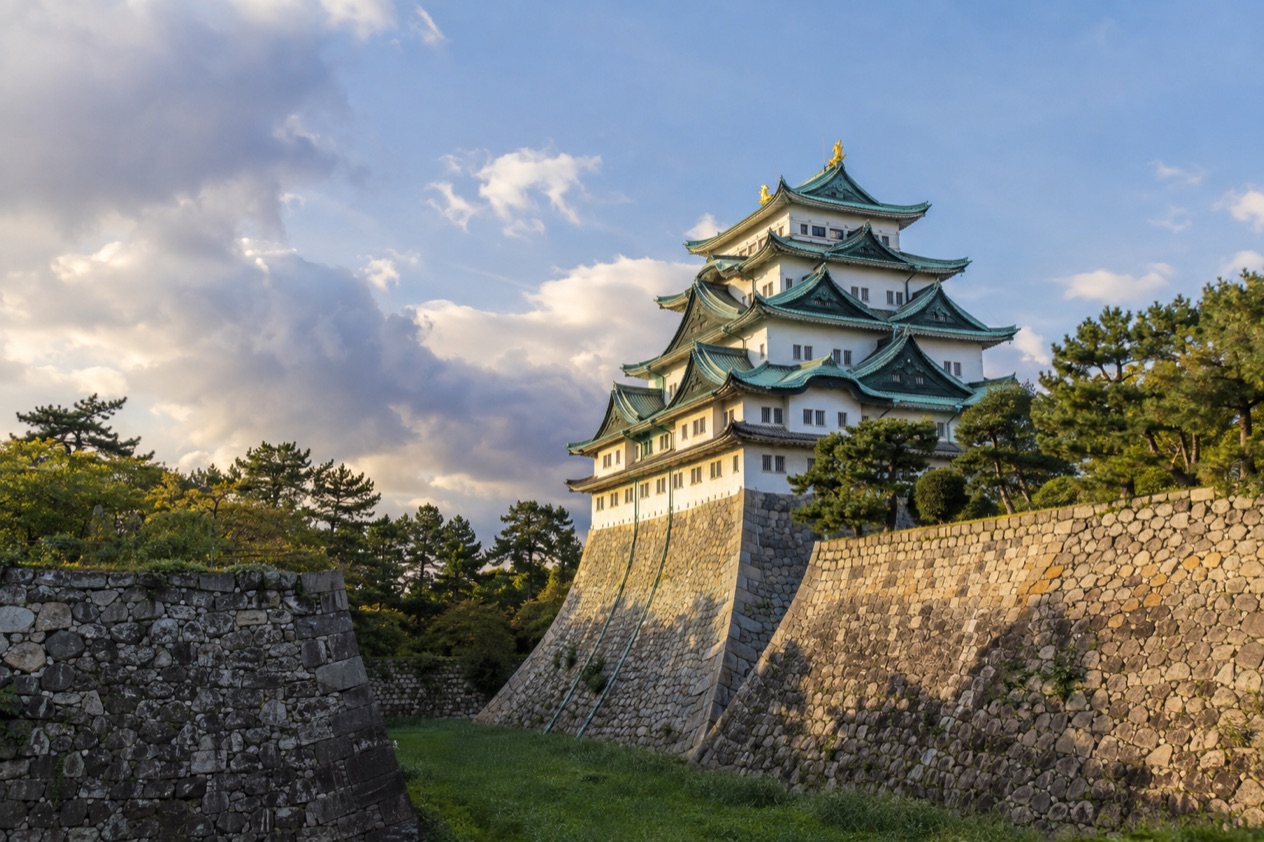
The castle is the city’s calling card, a keep crowned by a pair of golden shachihoko, the mythical fish with tiger heads that sit on its roof. In September the grounds are green and heavy with summer growth, and the white walls stand against a sky that is more often soft gray than hard blue. You can circle the stone walls and moats, then look at the Honmaru Palace, with its painted interiors.
Because the air is humid, treat the castle as a slow visit with pauses rather than a march. Take the shaded stretches of the grounds when the sun is out, and keep the palace and the keep for when clouds roll in. The NAGOYA Sightseeing Pass covers Nagoya Castle along with the MIRAI TOWER, the Port of Nagoya Public Aquarium and Higashiyama Zoo and Botanical Gardens, which suits a day that links several of these.
Atsuta Shrine
Atsuta Shrine sits at 1-1-1 Jingu in Atsuta-ku, and the walk in begins under old trees that cut the glare of a September day. The path is gravel and shade, with lanterns and wooden halls appearing between the trunks. The shrine is tied to the legend of a sacred sword, one of the imperial regalia, which gives the quiet grounds a particular weight.
Pair the visit with a meal in the neighborhood. Around the shrine you find restaurants serving hitsumabushi, Nagoya’s grilled eel over rice, eaten in three stages: first as it comes, then with condiments such as scallions and wasabi, then as a soup with broth poured over. After a humid walk, the smoke and sweet glaze of the eel are exactly the reward the day needs.
Higashiyama Zoo and Botanical Gardens
This sprawling park combines a zoo with botanical gardens, bringing together animals, lawns, ponds and greenhouse spaces. Late summer flowers and heavy foliage give the gardens a lush, green feel.
It works for travelers of all kinds, from families with children to people who simply like wandering gardens. If the day turns showery, the indoor exhibits and covered corners give you places to wait, and the park rewards a slower pace. Wear shoes you do not mind getting damp, and carry water.
The port, the aquarium and the tower
The Port of Nagoya Public Aquarium is the obvious refuge when rain sets in, a day spent among tanks rather than under an umbrella. The harbor area around it gives the city a seaside side, with open views over the water. The Chubu Electric Power MIRAI TOWER, a landmark in central Nagoya, gives a city view when the sky allows, and the NAGOYA Sightseeing Pass includes both.
On gray days the aquarium and the tower can swap places in your plan: do the aquarium when it pours and keep the tower for a clearer hour.
What to eat in Nagoya this month
Nagoya has its own cooking, and September lets you try most of it. Miso katsu is a pork cutlet under a dark, sweet red miso sauce. Tebasaki are fried chicken wings, peppery and glazed, a fine companion to a cold beer after a humid day. Kishimen are flat, wide noodles in a light broth, and ankake spaghetti is a thick, peppery sauce over pasta, a local invention that surprises first-time visitors.
Many diners also look for kuri, chestnuts, as the season turns, in sweets and desserts. Cold noodles and shaved ice still make sense while the air stays warm, while richer, heartier dishes begin to feel right as the evenings cool toward October. Eating is the best answer to a rainy afternoon, and Nagoya gives you plenty to choose from.
A two-day itinerary for Nagoya in September
Day 1 starts with Nagoya Castle, taken at a steady pace in the morning while you still have energy for the grounds and the Honmaru Palace. Give the walls and moats time, with stops for drinks, because the humidity makes the distances feel longer. Midday is for a long lunch of miso katsu or kishimen in a restaurant with air conditioning.
In the afternoon, head to Atsuta Shrine and walk its tree-lined paths while the grounds give shade. Then settle into an early dinner of hitsumabushi in the neighborhood. Evenings close in sooner than in August, so finish the shrine before the light fades and keep the meal as the evening’s main event.
Day 2 is for the zoo and botanical gardens, started early enough to wander the lawns, ponds and greenhouses at a gentle pace. Have lunch at a café or a casual noodle place, and use the afternoon for the Port of Nagoya Public Aquarium, a fine spot when a shower arrives. End the day with a view from the MIRAI TOWER and tebasaki with a cold drink at an izakaya, a casual pub.
If rain takes over, swap the order. Spend the wet hours inside the aquarium, the palace rooms at the castle or the greenhouses at the gardens, and keep the tower for a clearer window. Lunch can stretch, and so can coffee and sweets in a café.
Is Nagoya busy in September?
September in Nagoya is not a bloom or leaf-color month, so the draw is the city itself rather than a seasonal spectacle. September has no blossom or foliage rush, though holiday weekends can make some dates busier.
What you can count on is a city that keeps its normal rhythm. Nagoya is Japan’s fourth-largest city, and the Chukyo metropolitan area around it is home to about 10 million people, so it is a working, living place first and a destination second. Its sights, from the castle to the aquarium, belong to everyday life as much as to visitors.
With summer heat easing and rain more frequent, the month feels like a transition. Travelers who come now spend a good part of the day moving between outdoor landmarks and indoor stops, and the city’s dining scene stays lively through all of it. Use the shifting weather to decide when to go outside and when to settle in at the table.
What to pack for Nagoya in September
Pack for warm, humid days with a good chance of rain, and for a lot of walking between landmarks and meals.
- A compact umbrella or light rain jacket, because September brings the most rain of the summer-to-autumn stretch.
- Breathable short-sleeve clothes in cotton or quick-dry fabric for the humid days.
- Shoes that dry quickly, for castle gravel, shrine paths and wet pavement.
- A small towel or handkerchief for the sticky air.
- A sun hat and a refillable water bottle for the garden and castle grounds.
- A light layer for indoor spaces and for the cooler nights toward the end of the month.
Good to know before you go
September is a wet month in Nagoya, so build flexibility into the plan and keep an indoor option ready for each day. The Japan Meteorological Agency issues Emergency Warnings to alert people to a significant likelihood of catastrophes tied to natural phenomena of extraordinary magnitude. The Japan National Tourism Organization also keeps a Japan Safe Travel Information page with safety tips and government information for travelers.
During the Nagoya Castle Autumn Festival, admission to the Honmaru Palace runs until one hour before gate closing, a detail to keep in mind if your trip stretches toward the festival.
Nagoya in September vs August and October
Moving the trip four weeks earlier puts you in August, when the heat is stronger and the days are longer and sunnier, with less rain. It is the hotter, brighter choice, with more daylight for outdoor sights but a heavier toll on walking. Humidity stays much the same from month to month, so August simply feels harsher.
Moving four weeks later lands you in October, when highs fall into the low 70s, the nights turn cool and daylight shortens further. The air is easier for walking, rain is a little lighter than in September, and the castle grounds and gardens feel more comfortable. The leaf color still has a way to go, though, as the Tokai region reaches it only late in autumn.
Stay with September if you like the transition itself, with warm days and mild nights, plus the freedom to use rainy hours at the aquarium and at the table. Shift to October if you prefer cooler weather for long walks, and to August if long, bright days outweigh the heat.
Is September a good time to visit Nagoya?
Yes, for travelers who like a city trip built around food, landmarks and indoor stops, and who accept that rain and humidity come with the month. It suits people who enjoy eating their way through a place and who can adjust the day when a shower arrives.
It is a weaker fit for anyone who wants dry, bright days or who dislikes sticky air, and for those hoping for autumn color, which comes much later. If your priority is long outdoor walking in comfortable air, another month will serve you better.
On arrival, start with a meal. A plate of hitsumabushi or miso katsu sets the tone, and from there the castle, the shrine, the zoo gardens and the aquarium fall into place around the weather. September in Nagoya is a month of warm damp air, golden roof ornaments against gray skies, and the smell of eel on the grill.
Sources
- Japan Meteorological Agency (JMA), Normal values 1991-2020, monthly (https://www.data.jma.go.jp/stats/etrn/view/nml_sfc_ym.php?prec_no=51&block_no=47636), station Nagoya, elevation 51 m, checked October 11, 2026
- Computed from the date and the latitude of the place (sunrise equation, solar elevation -0.833 degrees), October 11, 2026
- Japan Meteorological Agency, Emergency Warnings (https://www.jma.go.jp/jma/en/Emergency_Warning/ew_index.html), checked October 11, 2026
- Japan National Tourism Organization, safety information (https://www.japan.travel/en/japan-safe-travel-information/), checked October 11, 2026
- Japan National Tourism Organization, weather and seasons in Japan (https://www.japan.travel/en/plan/weather/), checked October 11, 2026
- Japan National Tourism Organization, summer in Japan (https://www.japan.travel/en/guide/summer-guide/), checked October 11, 2026
- Wikipedia, Climate of Japan (https://en.wikipedia.org/wiki/Climate_of_Japan), checked October 11, 2026
- Japan Meteorological Agency, maple color-change dates 2025-2026 with difference from the 1991-2020 normal (https://www.data.jma.go.jp/sakura/data/phn_014.html), checked October 11, 2026
- Japan Meteorological Agency, kaede2020.pdf (https://www.data.jma.go.jp/sakura/data/kaede2020.pdf), checked October 11, 2026
- Japan National Tourism Organization, autumn in Japan (https://www.japan.travel/en/guide/autumn-guide/), checked October 11, 2026
- Japan National Tourism Organization, spring in Japan (https://www.japan.travel/en/guide/spring-guide/), checked October 11, 2026
- Wikipedia, Nagoya (https://en.wikipedia.org/wiki/Nagoya), checked October 11, 2026
- Wikivoyage, Nagoya (https://en.wikivoyage.org/wiki/Nagoya), checked October 11, 2026
- Visit Nagoya, the Nagoya city guide (https://www.nagoya-info.jp/en/), checked October 11, 2026
- Wikipedia, Atsuta Shrine (https://en.wikipedia.org/wiki/Atsuta_Shrine), checked October 11, 2026
- Japan National Tourism Organization, anime and manga (https://www.japan.travel/en/guide/japanese-anime-and-comics/), checked October 11, 2026
- Wikipedia, Ghibli Park (https://en.wikipedia.org/wiki/Ghibli_Park), checked October 11, 2026
- Wikipedia, Studio Ghibli (https://en.wikipedia.org/wiki/Studio_Ghibli), checked October 11, 2026
To plan your stay
- Things to Do in Nagoya: Castle, Atsuta Shrine, Nagoya-meshi and Day Trips
- Where to Stay in Nagoya: Nagoya Station, Sakae, Osu and the Castle Area
- Nagoya from Tokyo: Shinkansen Services, Local Trains, Centrair Airport and a Day in the City
- Know Before You Go to Nagoya: Entry, Money, Getting Around and Local Etiquette