
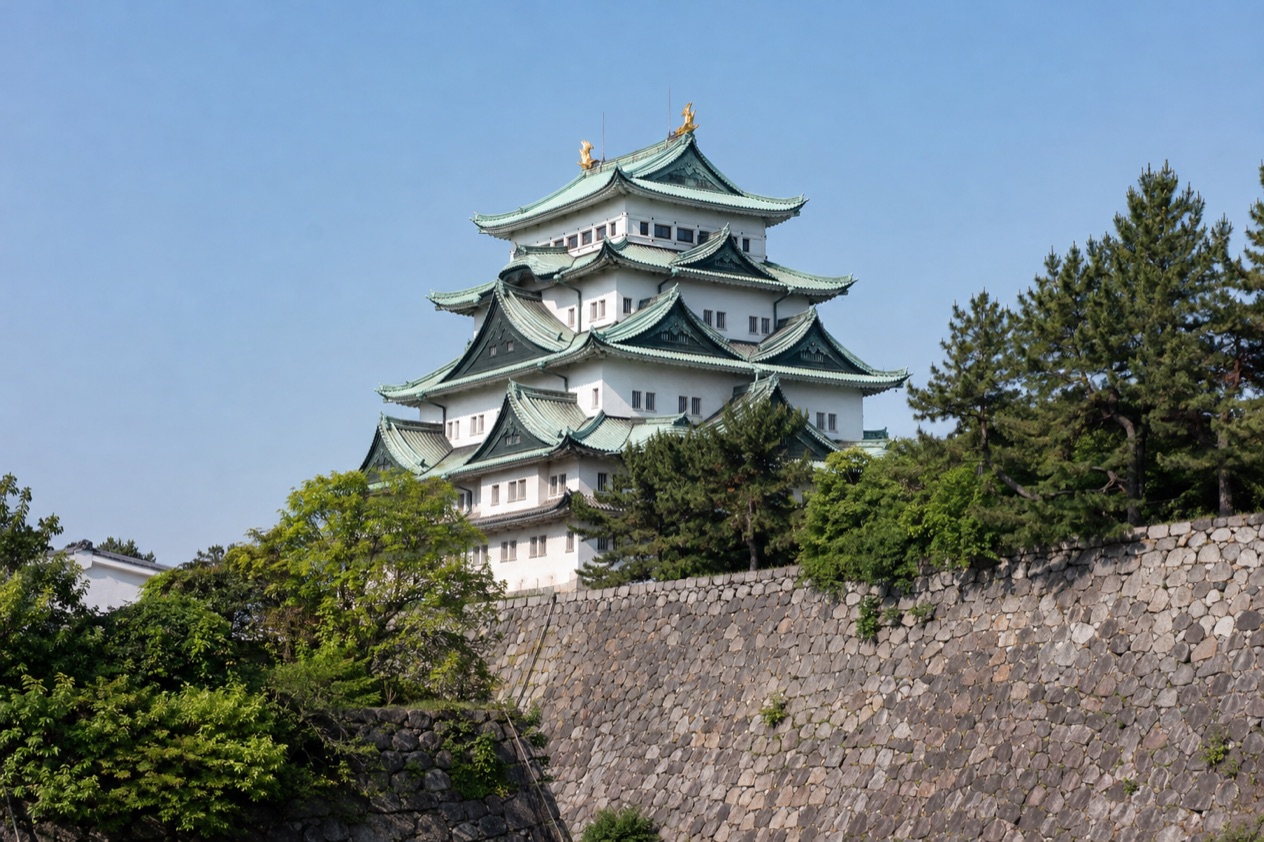
On a first morning in Nagoya, the gold-finned roof ornaments of the castle catch the light above the trees, and the streets around the station fill with commuters heading to work. The city has a reputation as a place where industry and old traditions sit side by side, and three days is enough time to see both. A castle, a shrine that guards a sacred sword, and a museum that follows Toyota from weaving looms to cars make a plan with real variety.
Is three days enough in Nagoya?
Three days is enough for a first visit to Nagoya, especially for travelers who like castles, shrines and museums and would rather see a few places properly than rush through many. The city is the fourth-largest in Japan, and its main sights are well spread out, so a plan that gives each day one clear focus works better than a long checklist.
The plan here uses the first day for Nagoya Castle and its restored palace, the second for Atsuta Shrine and the Toyota museum, and the third for a day out of town with a slower evening back in the city. What it leaves out is the rest of the list: the zoo and botanical gardens, the port aquarium, the observation tower, and the Lego-themed resort in Minato-ku.
With a fourth or fifth day you could add those, or use the NAGOYA Sightseeing Pass, which is built around several of them, including the castle, the tower, the aquarium and the zoo. Anime fans who want Ghibli Park will want a separate day as well.
Day 1 in Nagoya
Tokugawa Ieyasu had it built in 1612, and much of it burned during the Pacific War. The two main keeps were rebuilt between 1957 and 1959, and the Honmaru Palace was reconstructed over a long project from 2009 to 2018.
Walking the grounds, you see a city’s history in layers: the original stonework, the postwar keeps and the newer palace rooms. During the Nagoya Castle Autumn Festival, admission to the Honmaru Palace ends one hour before the gates close, so plan to go in earlier rather than later.
Spend the afternoon in a slower way. After the castle, a lunch of Nagoya’s regional cooking is the obvious next step: look for a small restaurant serving local specialties such as miso katsu (pork cutlet under a dark, sweet miso sauce) or hitsumabushi, grilled eel over rice that is eaten in several stages. The castle area has plenty of tea houses and casual places, and a long lunch gives your feet a rest before you walk more.
In the evening, head back toward the station district for its department stores and underground malls. This is the part of the day for an izakaya (a casual pub with small plates) or a counter serving tebasaki, the peppery fried chicken wings Nagoya is known for.
Keep the night easy, because the next day has a long walk through the shrine grounds. A tip for the whole plan: load a regional IC card at the start, so each trip on the trains and buses is a tap instead of a ticket machine.
Day 2 in Nagoya
Begin at Atsuta Shrine, in Atsuta-ku. It is one of the city’s oldest sacred places, said to date back to around 100 AD, and it houses the holy sword Kusanagi, one of the three Imperial Regalia of Japan.
The sword is never shown to the public, so what you see is the setting: the forested grounds, the wooden halls and the quiet that settles among the old trees. It is a rewarding first stop for its forested grounds and wooden halls.
After the shrine, turn to the other face of the city. The Toyota Commemorative Museum of Industry and Technology, also called the Toyota Tecno Museum, stands in Nishi-ku and is a good afternoon visit. The display starts with textile looms, the family’s earlier trade, and then moves gradually into the history of cars, with high-tech robots along the way.
It is a museum that works for people who like machines and for those who simply enjoy watching how a company grew out of a craft. Eat nearby in a casual place, perhaps a noodle shop serving miso udon or kishimen, the flat wheat noodles of the region.
For the evening, return toward the center and choose a different kind of meal from the night before. A place serving kushikatsu (skewers fried in a light crumb and dipped in a rich sauce) or a quiet tea-and-sweets stop makes a gentle end to a day of walking. This day mixes the sacred and the industrial on purpose, and the contrast is the point of it: two sides of Nagoya in one day.
Day 3 in Nagoya
The third day is the one to spend outside the city center, or to slow down. Nagoya sits in central Honshu on the Pacific coast, and the rail network makes several day trips possible, from a nearby castle town to a mountain area.
The choice depends on your interests, and the day-trip pages cover the options in detail. For this plan, a day out works best when you leave after breakfast and return by rail in the late afternoon, which leaves the evening free in Nagoya.
If you prefer to stay in town, the NAGOYA Sightseeing Pass opens a different kind of day. The NAGOYA Sightseeing Pass is promoted for major attractions including Chubu Electric Power MIRAI TOWER, Nagoya Port Aquarium, and Higashiyama Zoo and Botanical Gardens. Families with children often like the zoo and the aquarium, and the tower gives you a view back over the streets you have already walked.
Back in town for the last evening, go somewhere you have not been. A long dinner of hitsumabushi if you skipped it on the first day, or a last round of tebasaki with a cold drink, suits the mood. Walk the station area once more, stop in a department store food hall for gifts to take home, and finish with a coffee near the station.
Where to stay for three days in Nagoya
The area around Nagoya Station is one possible base for travelers who expect to use rail and subway services. It also gives you the dining streets and the department stores for evenings, which matters on a trip where each day ends back in the city.
A traveler who wants more of an evening scene might prefer a hotel in the Sakae district, where the restaurants and bars gather and the walks after dinner are livelier. Someone flying in or out of Chubu Centrair International Airport, the third major international gateway, located on an artificial island 30 minutes south of central Nagoya, may want a room near the station for an easy first and last night. Visitors who plan to spend a day at the Lego-themed resort or the port attractions in Minato-ku could look at a base closer to the waterfront, though the main plan here works best from the center.
What to skip if you only have three days in Nagoya
Skip a second city. It is tempting to squeeze in another big destination, but a day lost to long transfers takes away the evening you would spend in Nagoya. Use that time for a slower lunch, an extra walk through the castle grounds, or the zoo and gardens instead.
Skip a theme park unless it is the reason you came. The Lego-themed resort in Minato-ku opened on April 1, 2017, and Ghibli Park, which opened on November 1, 2022 and covers about 18 acres, is a trip of its own.
Anime museums elsewhere, such as the Ghibli Museum in Mitaka or the Doraemon museum in Kawasaki, belong to trips to Tokyo and its surroundings.
Skip trying to see everything the pass covers. The tower, the aquarium, the zoo and the castle together are more than three days can hold alongside the shrine and the Toyota museum. Pick the ones that match your interests, and leave the rest for a return visit.
Getting around Nagoya in three days
Most of your movement in this plan is by rail and on foot. The castle, the shrine and the museum each sit in a different ward, so you travel between them by train or subway and then walk the grounds once you arrive. An IC card makes this simple: it works on trains, buses and boats, and also in vending machines and convenience stores, and some taxis accept it as well.
A regional IC card can be used throughout Japan, even though each region has its own name and character on the card, so one you load here still works if you carry on to another city. The Japan Rail Pass, offered jointly by six JR companies, is a ticket for train travel throughout Japan, but whether it suits a short stay centered on one city is something to weigh against what you plan to ride. For the day out of town on the third day, you travel by rail and return the same day, and the trip leaves your Nagoya base unchanged.
Good to know before you go
Autumn days in Nagoya are mild, with October highs in the low 70s and cooler evenings, and rain falls on about nine days of the month, so a light jacket and a small umbrella are enough. Summer is hotter and more humid, and winter brings cold mornings, so the clothes you pack depend on the month you choose. , and keep your IC card topped up for the trains and buses.
Sources
- Visit Nagoya, the Nagoya city guide (https://www.nagoya-info.jp/en/), checked October 11, 2026
- Wikipedia, Nagoya (https://en.wikipedia.org/wiki/Nagoya), checked October 11, 2026
- Wikivoyage, Nagoya (https://en.wikivoyage.org/wiki/Nagoya), checked October 11, 2026
- Wikipedia, Atsuta Shrine (https://en.wikipedia.org/wiki/Atsuta_Shrine), checked October 11, 2026
- Japan National Tourism Organization, anime and manga (https://www.japan.travel/en/guide/japanese-anime-and-comics/), checked October 11, 2026
- Wikipedia, Ghibli Park (https://en.wikipedia.org/wiki/Ghibli_Park), checked October 11, 2026
- Wikipedia, Studio Ghibli (https://en.wikipedia.org/wiki/Studio_Ghibli), checked October 11, 2026
- Wikipedia, Legoland Japan Resort (https://en.wikipedia.org/wiki/Legoland_Japan_Resort), checked October 11, 2026
- Wikipedia, Toyota Commemorative Museum of Industry and Technology (https://en.wikipedia.org/wiki/Toyota_Commemorative_Museum_of_Industry_and_Technology), checked October 11, 2026
- Japan Meteorological Agency (JMA), Normal values 1991-2020, monthly (https://www.data.jma.go.jp/stats/etrn/view/nml_sfc_ym.php?prec_no=51&block_no=47636), station Nagoya, elevation 51 m, checked October 11, 2026
- Japan National Tourism Organization, IC cards, Suica, Pasmo, ICOCA, how to use (https://www.japan.travel/en/plan/ic-card/), checked October 11, 2026
- Japan National Tourism Organization, Japan Rail Pass and regional passes (https://www.japan.travel/en/plan/jr-rail-passes/), checked October 11, 2026
To plan your stay
- Best Time to Visit Nagoya: Cherry Blossoms, Autumn Leaves, Weather and Festivals
- Where to Stay in Nagoya: Nagoya Station, Sakae, Osu and the Castle Area
- Nagoya from Tokyo: Shinkansen Services, Local Trains, Centrair Airport and a Day in the City
- Know Before You Go to Nagoya: Entry, Money, Getting Around and Local Etiquette