
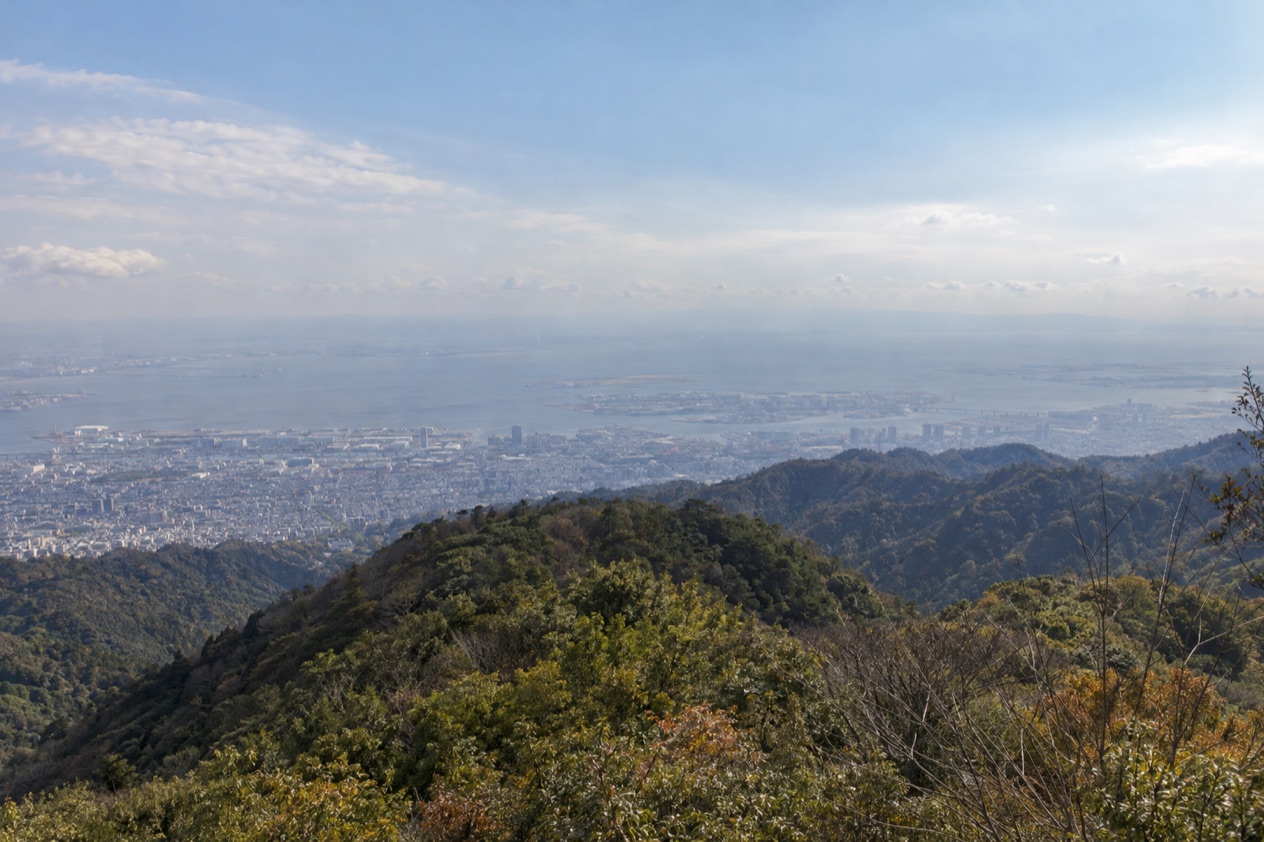
Above Kobe the city noise thins out and the slopes of Mount Rokko take over, with the bay and the Osaka side spread out behind you as you climb. Cable cars rise from the foot of the range to gardens, lakes and old pastures. This is a mountain visit for people staying in Kobe or Osaka who want a day of green, views and fresh air.
Is visiting Mount Rokko worth it?
Yes, if you like a day that mixes gardens, viewpoints and a little walking, and you are already in Kobe or Osaka. The mountain suits couples, families and hikers alike, because the visit can be a few stops by cable car or a long day on foot across the ridges.
What sets Rokko apart from other green escapes near the Kansai cities is how much it holds in one place. There is an alpine botanical garden, a herb garden with a waterfall below it, a pasture, a music box museum, two lakes and a valley. The range is also a symbol of both Kobe and Osaka, and it is a favorite weekend outing for people across the Kansai region.
It also has a surprising place in Japanese sporting history. The country’s first golf course opened here, and the first rock climbing club in Japan was founded on these slopes. You can feel that outdoor tradition in the trails that thread through the woods, still used by hikers from the cities below.
What to see at Mount Rokko
Rokko Alpine Botanical Garden
This garden gathers mountain plants from many regions, laid out on the slopes so that the planting changes as you walk.
Look for the seasonal color of each bed, which shifts from one visit to the next, and for the mix of shade and open slope. It pairs naturally with the other gardens and viewpoints of the mountain, so visitors treat it as one stop in a longer day.
Nunobiki Herb Garden and Nunobiki Falls
The Nunobiki Herb Garden is a terraced garden of scented plants, with greenhouses and beds of herbs that are used in teas, soaps and cooking. Nunobiki Falls lies on the mountain as well, and the two together make a pleasant pairing of cultivated and wild scenery.
The falls are the kind of place you come to for the sound of water and the cool air in the trees.
Lakes, pasture and the Garden Terrace
Lake Hotaka and Lake Mikuni are among the sights of the mountain, along with Kamakura Valley. Rokko Garden Terrace is a visitor complex built around the views, and Rokkosan Pasture gives the plateau a pastoral feel that surprises people who expect only forest.
The Rokko Musicbox Museum is another stop, filled with mechanical music boxes and the soft chiming sounds they make. It is a good indoor break if the weather turns, and it sits comfortably alongside the open-air sights.
Mount Maya and the observatory
Mount Maya belongs to the same range, along with Mount Kabutoyama, Mount Iwahara and Mount Iwakura. Hoshi no Eki Station on the Maya Cable gives access to Mount Maya, which makes it a separate side trip within the wider Rokko area.
The Okuike East Rokko Observatory and Route Cafe is another point of interest on the mountain, a place to stop and look out over the landscape. Golf also remains part of the scene, with Kobe Golf Club and Ashiya Country Club both on the slopes.
Hours, tickets and rules
What can be said is what each place is like. The botanical garden is a slope of mountain plants, the herb garden is terraced, the music box museum is indoors, and the pasture is open country.
The mountain is also a working outdoor area, with golf courses and hiking routes sharing the ridges. Nothing in our information sets rules for climbing, swimming, drones or tripods on the mountain, so the sights are best treated simply as places to walk, look and linger.
How to get to Mount Rokko
Visitors can reach Mount Rokko by cable car or by bus. The Rokko Cable Line serves Rokko Sanjo Station, and Hankyu Bus serves Kinenhidai Bus Stop on the mountain.
For Mount Maya, Hoshi no Eki Station on the Maya Cable is the access point. The range runs from Sumaura Koen Park in western Kobe to Takarazuka, so the mountains sit right behind the city, and Kobe is the natural base for most visits.
Kobe lies across the bay from Osaka. Shin-Kobe is the city’s bullet train station, and Kobe is directly linked to Tokyo by the JR Tokaido/Sanyo Shinkansen, a journey of between 2 hours 40 minutes and 3 hours 15 minutes to Shin-Kobe Station.
When to visit Mount Rokko
Spring and autumn bring the mildest temperatures. In Kobe, spring from March to May runs from 10°C to 20°C, and October brings highs in the low 70s with about eight rainy days. The mountain itself will feel cooler than the city, so those figures are a guide to the lowlands only.
April in Kobe has highs in the mid-60s and a fair number of showers, which suits the garden season on the slopes. October is a good moment for walking, with a fair amount of sunshine and moderate humidity in the city below.
July in Kobe is hot and humid, with highs in the upper 80s, and it is when the cooler air of the mountain is most tempting. January in Kobe is cold, with highs in the upper 40s, and snow or sleet falls on some days in the city.
| Month in Kobe | Average high (°F) | Average low (°F) | Rain days |
|---|---|---|---|
| January | 48.9 | 37.6 | 4.7 |
| April | 66.0 | 52.5 | 9.0 |
| July | 86.7 | 76.5 | 10.0 |
| October | 73.8 | 62.1 | 7.8 |
Tips for your visit
Bring layers and sturdy shoes, since the mountain and the city below do not share the same weather. A drink and a light jacket are sensible additions to a day bag, especially in the shoulder seasons.
Pick two or three stops rather than all of them. Hikers can add the ridge routes that made Rokko a favorite for climbers and walkers.
Families and anyone with limited mobility can use the cable line and the bus as the two ways up, and then choose sights accordingly. Combining the mountain with a night in Kobe or a day in Osaka fits naturally, since both cities sit at its foot.
Good to know before you go
Mount Rokko is a mountain of gardens, pasture and trails, so comfortable shoes matter more than anything else you pack. Showers can come in the wetter months, and the museum and the garden terrace give you somewhere to wait them out. Bring some yen for the individual sights, as each place sets its own admission.
Sources
- Wikipedia, Mount Rokkō (https://en.wikipedia.org/wiki/Mount_Rokk%C5%8D), checked October 11, 2026
- Japan National Tourism Organization, Kobe (https://www.japan.travel/en/destinations/kansai/hyogo/kobe-and-around/), checked October 11, 2026
- Visit Kobe, the official travel guide (https://www.feel-kobe.jp/en/), checked October 11, 2026
- Wikipedia, Kobe (https://en.wikipedia.org/wiki/Kobe), checked October 11, 2026
- Japan Meteorological Agency (JMA), Normal values 1991-2020, monthly (https://www.data.jma.go.jp/stats/etrn/view/nml_sfc_ym.php?prec_no=63&block_no=47770), station Kobe, elevation 5 m, checked October 11, 2026
To plan your stay
- Best Time to Visit Japan: Cherry Blossoms, Autumn Colors, Weather and Festivals
- Where to Stay in Japan: Ryokan, Temple Stays, Capsule Hotels and the Best Cities to Base In
- Sending Luggage from the Airport in Japan: Hands-Free Travel, Hotel Delivery and Coin Lockers
- Know Before You Go to Japan: Entry, Money, Etiquette and Getting Around