
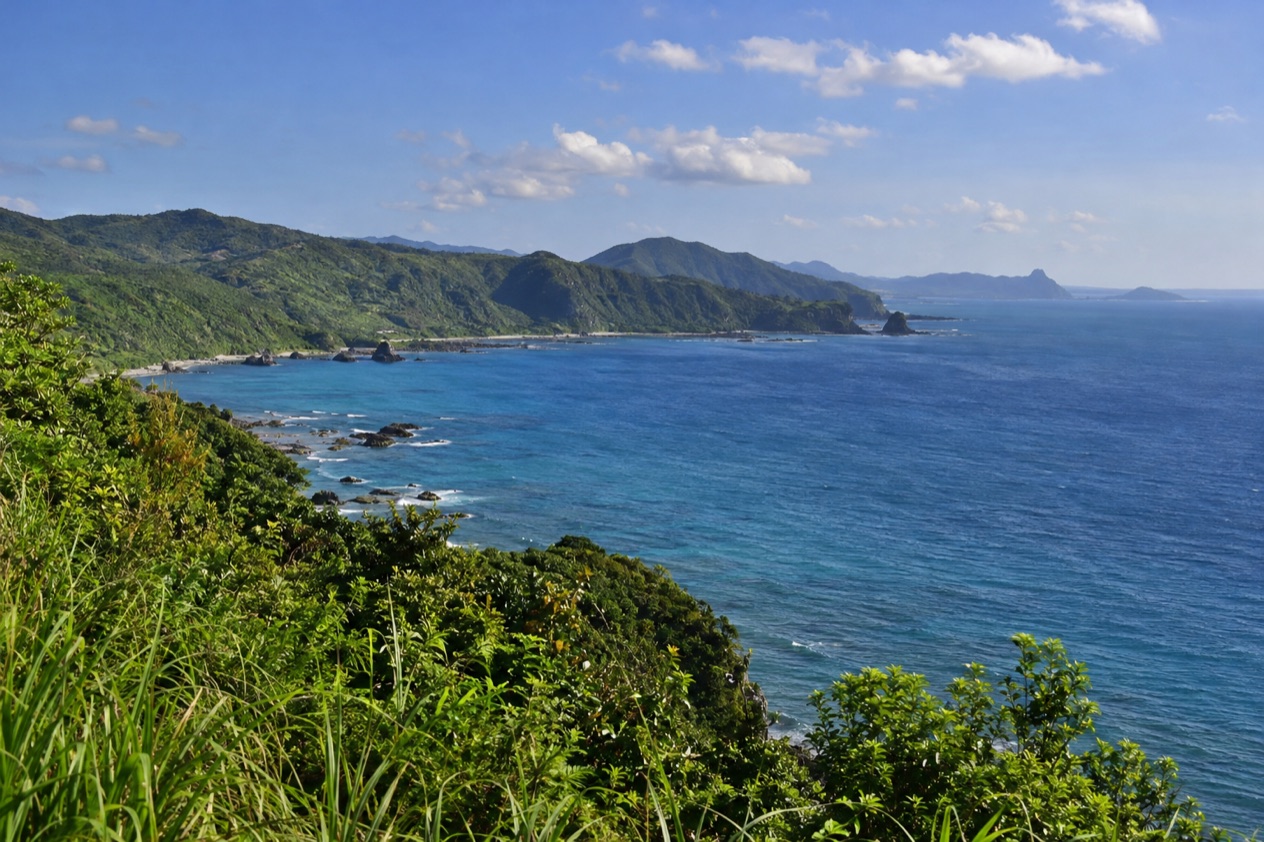
North of the cities, Okinawa Island turns green and deep. Forest closes in over the ridges, the calls of rare birds replace the noise of traffic, and the road bends past villages that seem to belong to another pace of life.
Is visiting northern Okinawa and Yanbaru worth it?
Yes, if you want the wild side of Okinawa rather than shopping streets and city nightlife. It suits nature lovers, birdwatchers, families curious about sea creatures and anyone who likes to spend a day among trees instead of buildings. It asks for a different kind of travel than Naha, where the monorail, the markets and the airport cluster together.
Yambaru, spelled Yanbaru in most local writing, is the forested northern part of Okinawa Island, spread across the villages of Higashi, Kunigami and Ogimi. It holds some of the last large surviving tracts of subtropical rainforest in Asia, and many of the plants and animals living there exist nowhere else. A national park was created here in 2016, and the area was included in a submission for inscription on the UNESCO World Heritage List.
What sets the north apart from the rest of the island is the combination. In one region you have a forest rich in endemic species, an aquarium that draws visitors from across Japan, and beaches with names like Okuma, Emerald and Zanpa. The prefecture is promoting Yanbaru for ecotourism, so the emphasis is on looking, listening and walking with respect rather than ticking off monuments.
It also has a complicated side. Part of the forest is occupied by a large US military training area at Camp Gonsalves, a reminder that this green landscape is shared with other uses. It does not take away from the forest, but it explains why the ecotourism story here is still being written.
What to see at northern Okinawa and Yanbaru
The Yanbaru forest
The forest is the reason to come north. According to the WWF, it shelters over four thousand species, among them eleven animals and twelve plants found only in this area. Many are on the IUCN Red List, and 177 feature on the Red List of the Ministry of the Environment.
Birds are the stars for those who look closely. The flightless Okinawa rail, the Okinawa woodpecker, the Ryukyu robin and the Amami woodcock all live here. Expect a slow, listening kind of visit, with ferns, thick canopy and the damp smell of leaf litter rather than a single grand viewpoint.
Yambaru Wildlife Conservation Centre
The centre, also called Ufugi Nature Museum, opened in 1999 and reopened in 2010 after renovation. It is the place to understand what you are walking through, with the forest and its rare residents explained before or after you step among the trees.
Think of it as the context for the whole region. Seeing the animals and plants presented first makes the forest less of a green blur and more a set of particular species you may start to notice, from the call of a bird to the shape of a fern.
Okinawa Churaumi Aquarium
The aquarium is the big indoor stop of the north. It is working on breeding the Japanese sawshark, and a new female has arrived for that effort, which gives the visit a living, ongoing feel rather than a fixed display. The aquarium also cautions visitors about bite injuries from white-banded triggerfish during their breeding season.
It pairs well with a rainy forecast, since the day does not depend on the sky. Slow down at the tanks, watch the sharks and rays glide past, and leave the beaches for the hours when the weather allows.
Northern beaches
Okinawa Island has several named beaches, among them Manza Beach, Emerald Beach, Okuma Beach, Zanpa Beach, Moon Beach and Sunset Beach in Chatan. They give the trip a seaside half, a counterweight to the forest days.
Come for the shoreline views and the sense of an island ringed by water. Mount Omoto, the highest mountain on Okinawa Island, is a reminder of how much relief the island holds behind its coast.
Hours, tickets and rules
The aquarium is the one site here with hours in our information. It opens in the morning and closes in the early evening, with a last admission an hour before closing. The forest and the wildlife centre do not come with hours or fees we can quote, so plan around the aquarium and treat the rest as flexible.
| Site | Open |
|---|---|
| Okinawa Churaumi Aquarium | 08:30 to 18:30, last admission 17:30 |
One caution comes from the aquarium itself: during the breeding season of the white-banded triggerfish, bite-wound injuries have increased, and visitors are warned about it. No other rules on climbing, swimming, drones or tripods are stated for this area.
When to visit northern Okinawa and Yanbaru
The weather figures we have are for Naha, in the south, so they describe the island’s climate in general rather than the forest or the northern coast. Within that, the seasons are clear. January is mild, with highs in the upper 60s and about ten days of rain. April warms into the mid-70s, while October still feels like summer, with highs in the low 80s and a good share of sunshine.
| Month (Naha) | Average high (°F) | Average low (°F) | Rain (in) | Rain days | Sunshine (hours) |
|---|---|---|---|---|---|
| January | 67.6 | 58.8 | 4.00 | 10.2 | 93 |
| April | 75.7 | 66.4 | 6.34 | 10.3 | 121 |
| July | 89.4 | 80.6 | 7.41 | 9.4 | 227 |
| October | 82.6 | 74.3 | 7.06 | 8.8 | 163 |
July is the hottest and brightest of the four, with warm nights and humid air, so forest walks feel heavy. Winter is cooler and gentler for walking, though January still has regular rain and fewer hours of sun. Spring and autumn sit between the two, with October bringing warm air and a fair amount of rain, usually in showers.
Whatever the month, the forest is damp by nature. Plan the aquarium for the grayest day, and keep clear mornings or afternoons for walking the trees or visiting a beach.
Tips for your visit
Bring clothes that handle humidity and a light rain layer, since the forest is wet by character and the air in Naha runs humid even in January. Comfortable shoes with grip suit a forest day better than sandals. If you hope to spot birds, patience and quiet matter more than equipment.
Combine the pieces in a way that mixes indoors and out. Naha Airport is the gateway to Okinawa, and Naha has the island’s only public rail line, the Yui Rail monorail, so the north is a trip that leaves the rail network behind.
The north sits well south of Kyushu and northeast of Taiwan, so it feels removed from the rest of Japan, and that remoteness is part of the appeal. Keep expectations modest about structure: this is a landscape to explore slowly, not a set of timed attractions.
Good to know before you go
Part of Yanbaru is used as a military training area, which is worth knowing as you plan where to wander. Rain falls through the year on this island, so a flexible plan serves better than a fixed one. Typhoon conditions can affect plans in season, and the forest and the sea both respond to the weather.
Sources
- Wikipedia, Yanbaru (https://en.wikipedia.org/wiki/Yanbaru), checked October 11, 2026
- Japan National Tourism Organization, Okinawa (https://www.japan.travel/en/destinations/okinawa/okinawa/naha-and-the-main-island/), checked October 11, 2026
- Okinawa Churaumi Aquarium (https://churaumi.okinawa/en/), checked October 11, 2026
- Wikipedia, Okinawa Island (https://en.wikipedia.org/wiki/Okinawa_Island), checked October 11, 2026
- Japan Meteorological Agency (JMA), Normal values 1991-2020, monthly (https://www.data.jma.go.jp/stats/etrn/view/nml_sfc_ym.php?prec_no=91&block_no=47936), station Naha, elevation 28 m, checked October 11, 2026
To plan your stay
- Best Time to Visit Japan: Cherry Blossoms, Autumn Colors, Weather and Festivals
- Where to Stay in Japan: Ryokan, Temple Stays, Capsule Hotels and the Best Cities to Base In
- Sending Luggage from the Airport in Japan: Hands-Free Travel, Hotel Delivery and Coin Lockers
- Know Before You Go to Japan: Entry, Money, Etiquette and Getting Around