
On the last morning of a Pacific crossing, the passengers crowd the rail to watch a skyline of towers rise out of Tokyo Bay, and the question on every deck is the same: what do we do with one day here? The answer starts at the Port of Tokyo, the harbor of a metropolis that spreads across the shore. From there the day can go toward the luxury boutiques of Ginza, the fashion streets of Harajuku and Shibuya, or the night views of Roppongi.
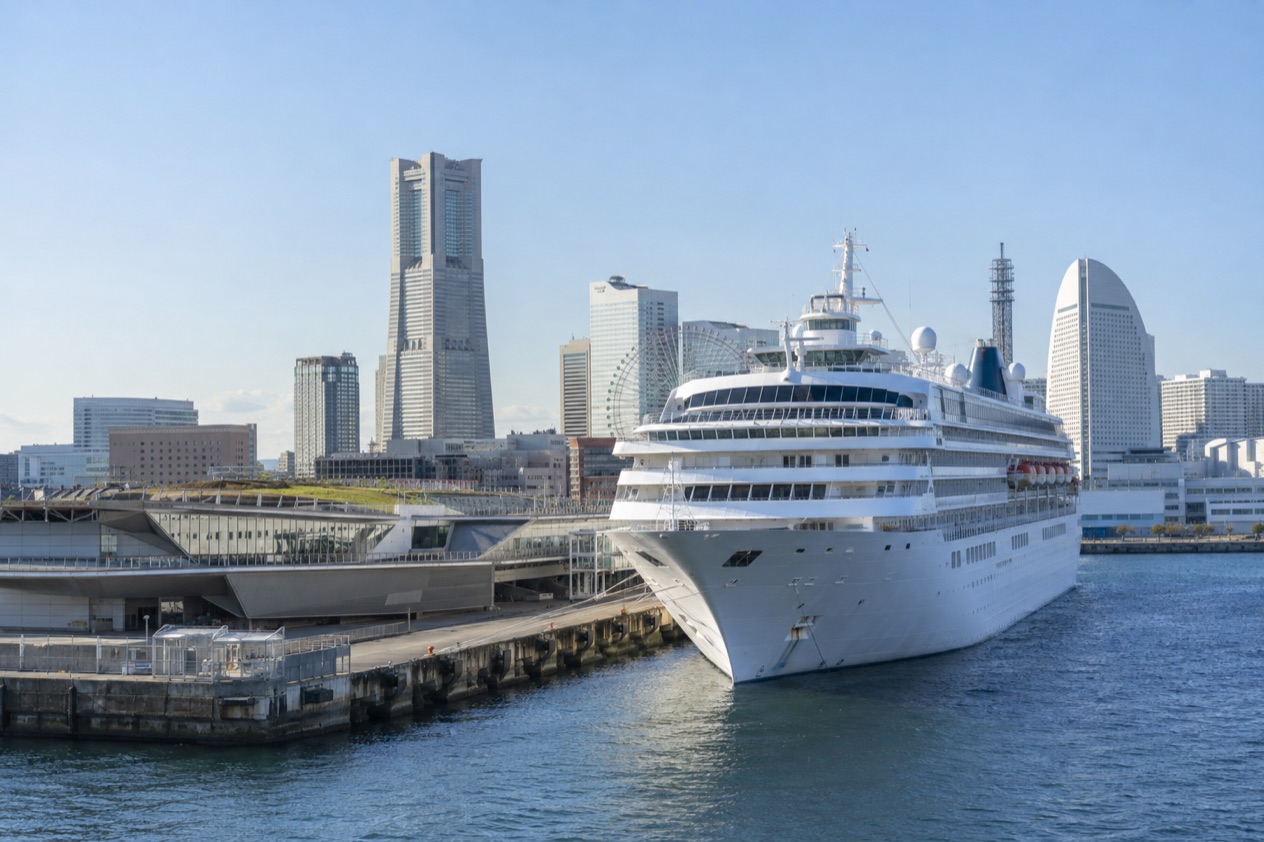
Where do cruise ships dock in Tokyo?
Cruise ships call at the Port of Tokyo, the harbor of the city on Tokyo Bay, in the Kanto region on the island of Honshu. It is a port owned by the Tokyo Port Authority, and it is described as both a natural and an artificial harbor, which tells you a good deal about how the waterfront of this city was built.
A cruise ship is first of all a floating vacation, a large passenger vessel built for leisure, and the port that receives it is much larger than any single quay. The measurements of the Port of Tokyo show a harbor on the scale of a small city.
| Port of Tokyo | Hectares | Square km |
|---|---|---|
| Harbor area | 5,292 | 52.92 |
| Land area | 1,033 | 10.33 |
| Total area | 6,325 | 63.25 |
A harbor made by nature and by landfill
Tokyo Bay gave the city its first shelter, and generations of engineers have extended the shoreline since then. The result is a port where the water area is far larger than the land beside it, and where much of the ground you see from the ship’s deck has been shaped by people.
Another Japanese port tells the same story. At Kobe, flat land is limited, so artificial islands such as Port Island and Rokko Island were built to make room. Tokyo’s natural and artificial harbor belongs to the same Japanese tradition of making space where the mountains and the sea leave little.
What the arrival looks like from the ship
Tokyo is the capital of Japan and the most populous metropolitan area in the world, and the approach by water reflects it. Towers, bridges, container cranes and apartment blocks share the horizon, and the sense of scale builds slowly as the ship moves into the bay.
Passengers who like to see a city from the water often head up on deck early. It is a good moment to put names to the districts you plan to visit, because Ginza, Roppongi, Shibuya and Harajuku all lie within the same metropolis that the port serves.
Two airports behind the port
Tokyo’s nearest airports are Haneda Airport, officially Tokyo International Airport, and Narita Airport, Japan’s largest international airport. For cruise passengers they matter at the edges of the voyage, when a trip begins or ends with a flight and a few days in the city.
A cruise that starts or finishes in Tokyo can easily be paired with extra nights in the capital. That gives time for the neighborhoods that a single port day only touches.
How do you get into the city?
Once you step off the ship, the way into Tokyo is the Tokyo Metro and the rail network, which together serve the districts that most cruise visitors want to see. The city is large, and it helps to think in neighborhoods, each one tied to a station and its lines.
Ginza and Nihonbashi by metro
Ginza Station is served by three Tokyo Metro lines, the Hibiya Line, the Marunouchi Line and the Ginza Line. With three lines meeting at one station, Ginza is a place where several routes across the city cross, which is useful when your plan for the day takes you beyond one neighborhood.
Ginza is an upscale downtown area of high-end restaurants and luxury shops. Next to it lies Nihonbashi, known for its rich heritage and as the main financial district of Japan. Together they give you old commercial Tokyo and polished shopping in the same stretch of the city.
Roppongi and Akasaka
Roppongi Station is served by the Tokyo Metro Hibiya Line and the Toei Oedo Line. Nogizaka Station is on the Tokyo Metro Chiyoda Line, and Roppongi-Itchome Station on the Tokyo Metro Namboku Line. Several lines and several stations mean that Roppongi and Akasaka can be approached from different parts of the city.
If you find yourself in Shibuya, Roppongi and Akasaka can be reached from Shibuya Station in about 10 minutes by train. That makes it natural to combine the fashion streets of one district with the galleries, restaurants and evening lights of the other.
Reading the city by station
Tokyo rewards a simple habit, which is to choose a station and a district, then let the day unfold around it. Names such as Ginza, Roppongi, Shibuya and Harajuku are places on the map and also stops on the lines, and the metro signs show the station names in Roman letters alongside Japanese.
A first-time visitor will do well to pick two districts for the day rather than five.
What can you do in a port day?
A port day in Tokyo can be spent shopping and eating in Ginza, browsing the fashion streets of Harajuku and Shibuya, walking the financial and heritage streets of Nihonbashi, or seeing Roppongi and Akasaka. The city holds more than one day can cover, so the best plan picks a mood and follows it.
Shopping in Ginza, Harajuku and Shibuya
Tokyo is known for fashion and shopping. Harajuku and Shibuya are the trendy shopping districts, full of boutiques, side streets and crowds of young shoppers. Ginza is where the luxury flagship stores stand, and the contrast between the two styles is part of the fun.
If you prefer window shopping to buying, Ginza’s high-end restaurants and shopfronts make for a pleasant stroll, and the area’s three metro lines make it easy to continue on to another district afterward. Harajuku and Shibuya suit a more playful, people-watching kind of afternoon.
Heritage and finance in Nihonbashi
Nihonbashi is known for its rich heritage and is the main financial district of Japan, so a walk there combines old commercial history with the offices of today. It is a quieter kind of sightseeing than the shopping streets, more about architecture and the character of the district.
Because Nihonbashi and Ginza both sit in Tokyo’s Kanto region downtown, pairing them in one outing makes sense. You can take in the history of one and the glamour of the other without crossing the whole city.
Roppongi, Akasaka and the lights of the city
Roppongi and Akasaka host Japan’s largest film festival, which gives the districts a cultural identity beyond their restaurants and nightlife. Even when the festival is not on, the area reflects a city that likes its cinema, its art and its evening outings.
Two projection mapping shows, OTONABLUE and TTTTOKYO, are screened on the Tokyo Metropolitan Government Building. For a traveler whose ship stays late, light shows of this kind are a way to see a landmark transformed after dark.
Lunch ashore or dinner on board
Dining on almost all cruise ships is included in the cruise price, so a meal ashore is a choice rather than a necessity. Tokyo makes that choice appealing, with noodle shops, sushi counters, tempura restaurants and department store food halls to tempt you off the ship.
A good approach is to eat one memorable Japanese meal in the city, perhaps in Ginza, and return to the ship for the rest. That keeps the day relaxed and lets you taste the place without trying to see all of it.
Good to know before you go
Yen is the currency in the shops, restaurants and stations you will visit, so it is worth thinking about what you want to buy before you step ashore. Tokyo is a large city with many neighborhoods, and the wisest plan is a modest one: choose a district or two, keep an eye on the clock for the ship’s departure, and allow time to enjoy the walk. Comfortable shoes suit the long stretches of a day spent between stations and streets.
Sources
- Wikipedia, Port of Tokyo (https://en.wikipedia.org/wiki/Port_of_Tokyo), checked October 11, 2026
- Wikipedia, Cruise ship (https://en.wikipedia.org/wiki/Cruise_ship), checked October 11, 2026
- Wikipedia, Port of Kobe (https://en.wikipedia.org/wiki/Port_of_Kobe), checked October 11, 2026
- Japan National Tourism Organization, Tokyo (https://www.japan.travel/en/destinations/kanto/tokyo/), checked October 11, 2026
- GO TOKYO, the official Tokyo travel guide (https://www.gotokyo.org/en/), checked October 11, 2026
To plan your stay
- Japan Cruise in March: Weather by Port, Cherry Blossom Timing and What You See
- Celebrity Japan Cruises: Asia Voyages, Hiroshima and Tokyo Sights, and the Port of Kobe
- How Much Does a Japan Cruise Cost?: What the Fare Covers, Drinks and Shore Excursions
- Japan Cruise in April: Cherry Blossoms, Spring Weather and What You See From Port