
On the morning a ship slides into the Seto Inland Sea, the question on the rail is always the same: how close are we to the Dome, and what do we do with the hours ashore? Hiroshima answers with a short list of things that matter. The port is in the city itself, the Peace Memorial Park is the center of any visit, and okonomiyaki, a floating shrine and a deer-filled island fill out the rest of a day.
Where do cruise ships dock near Hiroshima?
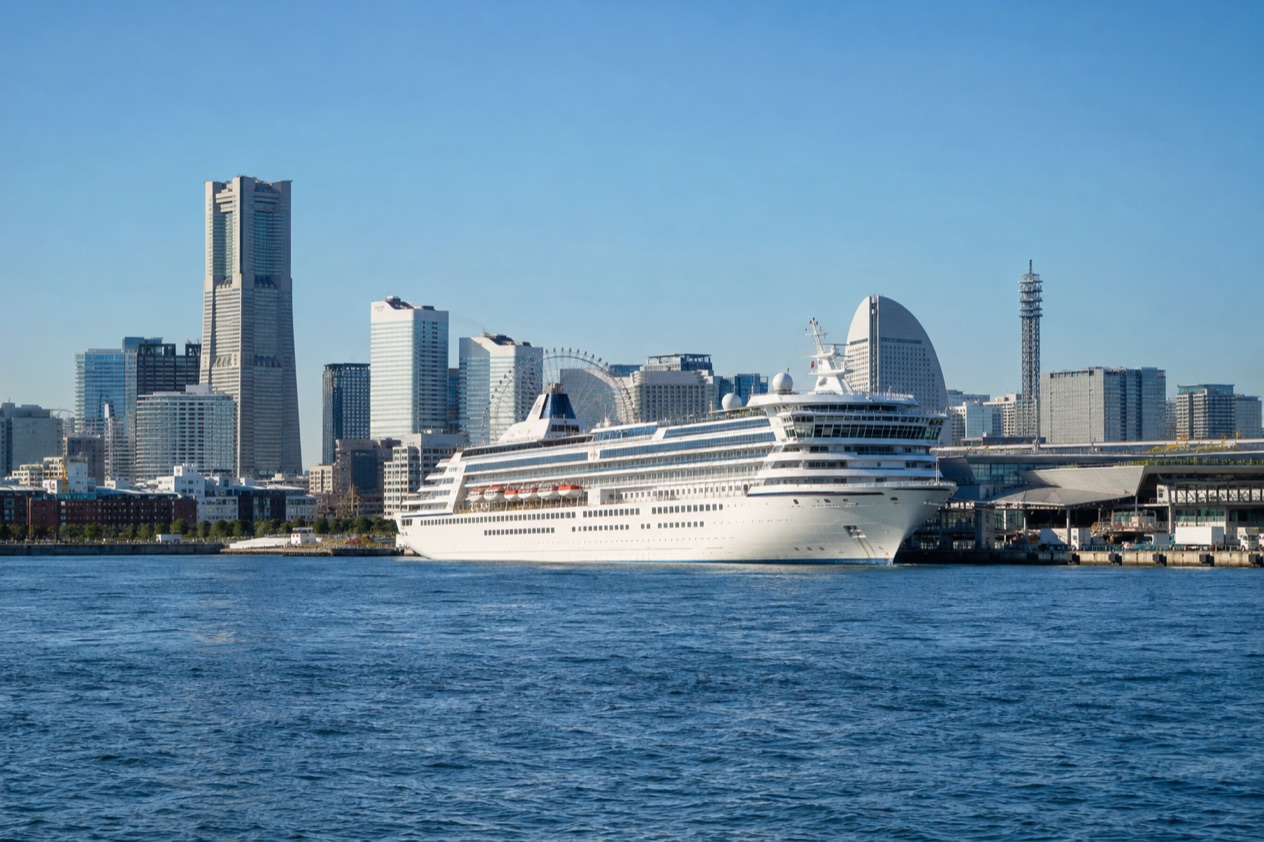
The port for Hiroshima is the Port of Hiroshima, known in Japanese as 広島港 (Hiroshima-kō), and it lies within Hiroshima city in Hiroshima Prefecture. It is run by the prefecture, not by a private terminal company, which tells you something about how the harbor is treated: as a public working port on the Seto Inland Sea, a body of water that gives the whole prefecture its character.
| Item | Detail |
|---|---|
| Port name | Port of Hiroshima (広島港, Hiroshima-kō) |
| Location | Hiroshima, Hiroshima Prefecture |
| Operator | Hiroshima Prefecture |
| Coordinates | 34°21′7.8″N 132°27′18.43″E |
What the port tells you about the day
Because the harbor sits in the city of Hiroshima and not in some distant industrial zone, the places you have come to see belong to the same municipality as your ship. That is not true of every cruise call in Japan. Some ports serve a famous destination from a different town, and the day becomes a long transfer. Here the name on the port and the name on your itinerary are the same.
The setting is worth a look from the deck before you step off. Hiroshima Prefecture is known for the Seto Inland Sea, wooded mountains and clear waters, and a ship moving through those waters gives a first sense of the landscape that frames the city. Islands rise close to the route, and the shoreline folds into hills.
A port that is not Kobe or Osaka
Cruise itineraries in western Japan often string several ports together, and they are easy to mix up. Kobe, for instance, is a port in Hyogo in the Keihanshin area, built partly on artificial islands such as Port Island and Rokko Island because flat land there is limited.
Hiroshima is a different harbor in a different prefecture, with its own operator and its own set of sights. When you read a shore excursion list, check that the name beside the sight is Hiroshima and not a neighbor.
Most cruise passengers decide before arrival whether to take a ship excursion or strike out alone. Both lead to the same handful of places, which the next sections describe: the park, the Dome, the museum, the food and the island with the red torii gate.
How do you get to the Peace Memorial Park?
The Peace Memorial Park is in Hiroshima city, the same city as the port, and it sits next to the Atomic Bomb Dome, so the two are visited together as one stop. Together they form the city’s two UNESCO World Cultural Heritage sites, and nearly every visitor builds the day around them.
What you find when you arrive
The Atomic Bomb Dome is the ruined skeleton of a building left standing, and visitors cannot go inside. It is seen from the outside only, usually from the riverbank, where the bent steel dome frame is silhouetted against the sky. Many people stand quietly for a long time. The adjacent park is a place of memorials, paths and trees, and it is a place where the mood is set by the people around you: low voices, slow steps, folded paper cranes left at monuments.
Each year on August 6 the river in front of the Dome becomes the setting for a ceremony in which thousands of people write peace messages on lanterns. They are lit at sunset and floated along the water passing the Dome. If your cruise does not fall on that date, the riverbank still carries the memory of it.
The Peace Memorial Museum
The Hiroshima Peace Memorial Museum conveys the horrors and inhumanity of nuclear weapons and spreads the message of ‘No More Hiroshimas’. It does this through belongings left by victims, artifacts from the bombing and survivor testimonies. The exhibits are personal and often hard to take in, and visitors tend to move through at a thoughtful pace.
| Visitor | Admission |
|---|---|
| Adult | ¥200 |
| Adult, group of 30 or more (per person) | ¥160 |
| High school student | ¥100 |
| High school students, group of 20 or more | Free |
| Junior high school student and younger | Free |
The museum is the place where the park’s story is told in objects and voices, so it makes sense to pair it with a slow walk through the grounds and a look at the Dome from the river.
Reaching the city by other routes
If a cruise itinerary ends in Hiroshima or you are joining from elsewhere in Japan, the city can also be reached by shinkansen, taking about four hours from Tokyo and 90 minutes from Osaka. By plane, the flight from Haneda Airport to Hiroshima Airport takes 90 minutes. These are the ways travelers arrive when they are not coming by sea.
What can you do in a port day?
A port day in Hiroshima is built from three kinds of experience: remembrance at the Peace Memorial Park, a plate of the local food, and, if the schedule stretches, an excursion to Miyajima Island. They suit different moods, and many travelers combine the first two and treat the third as a bonus.
Peace Memorial Park and the Dome
This is the heart of the visit and the reason the city is on cruise itineraries. You walk the park, stand before the Dome and, if you wish, go through the museum. The Dome is viewed from the outside, since it cannot be entered. The experience is more about looking and reflecting than about ticking off sights, and it gives the rest of the day its tone.
Afterward, many people want an hour of something lighter. The city obliges, because the next thing on the list is lunch.
Okonomiyaki and anago
Hiroshima is famous for its savory okonomiyaki crepes, and the local version is one of the notable draws of the city. The Hiroshima style is built in layers on a hot griddle, with a thin crepe, cabbage, noodles and egg, then finished with a sweet and tangy brown sauce. You eat it hot, often straight off the iron plate with a small spatula, and the sizzle is part of the meal.
The other local delicacy is anago, saltwater eel, a fish of the Inland Sea. It is typically grilled and served over rice, with a soft, rich flavor that is quite different from the freshwater eel many Americans know from sushi menus. Having both dishes in one day gives you the savory street side and the refined seafood side of the region.
Miyajima Island and Itsukushima Shrine
An excursion to nearby Miyajima Island is the classic add-on, known for its deer and its floating shrine. Itsukushima Shrine has a red torii gate standing in the sea, one of the most recognizable images in Japan, and the shrine was registered as a World Heritage Site in 1996. Deer wander the paths of the island, and visitors often stop for photographs with the gate in the background.
Whether Miyajima fits into your time ashore depends on your ship’s schedule, so it works best as a choice made once you know how many hours you have. If the schedule is tight, the park and a good lunch make a complete day on their own.
Other places in the prefecture
Hiroshima Prefecture holds more than one port-day idea for travelers who have done the city before. On Okunoshima, visitors meet wild rabbits, and the rule there is simple: do not chase or pick up the rabbits, and give them appropriate food in a safe place. Sandankyo is famous for autumn leaves from late October to late November, which puts it in season right around now for an autumn call.
The prefecture also offers shrines and museums beyond the peace sites, which makes it a region worth returning to. For a single port day, though, most itineraries stay with the city, its memorials and its food.
Good to know before you go
Bring yen for the small things, such as museum admission, a plate of okonomiyaki or a snack on the island, since the museum charges its fees in yen. Take the Peace Memorial Park at the pace it asks for: speak quietly near the memorials, and do not try to enter the Atomic Bomb Dome, which is for viewing from outside only. If you head to Okunoshima, keep to the rule about the rabbits, and if you visit Sandankyo, remember its autumn colors belong to the late part of the season.
Sources
- Wikipedia, Port of Hiroshima (https://en.wikipedia.org/wiki/Port_of_Hiroshima), checked October 11, 2026
- Wikipedia, Cruise ship (https://en.wikipedia.org/wiki/Cruise_ship), checked October 11, 2026
- Wikipedia, Port of Kobe (https://en.wikipedia.org/wiki/Port_of_Kobe), checked October 11, 2026
- Japan National Tourism Organization, Hiroshima (https://www.japan.travel/en/destinations/chugoku/hiroshima/), checked October 11, 2026
- Visit Hiroshima, the official guide (https://visithiroshima.net/), checked October 11, 2026
- Hiroshima Peace Memorial Museum (https://hpmmuseum.jp/?lang=eng), checked October 11, 2026
To plan your stay
- Japan Cruise in March: Weather by Port, Cherry Blossom Timing and What You See
- Celebrity Japan Cruises: Asia Voyages, Hiroshima and Tokyo Sights, and the Port of Kobe
- How Much Does a Japan Cruise Cost?: What the Fare Covers, Drinks and Shore Excursions
- Japan Cruise in April: Cherry Blossoms, Spring Weather and What You See From Port