
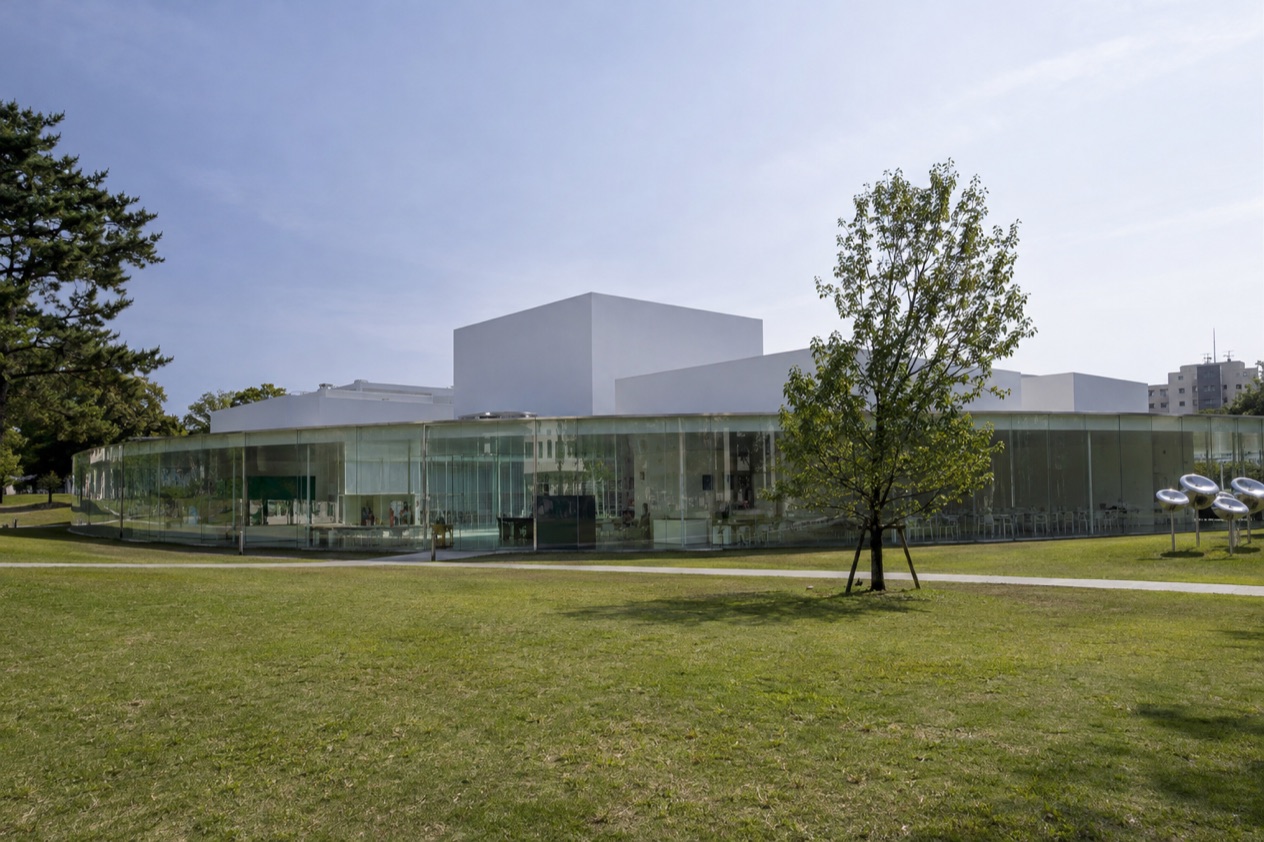
A low, round building of glass sits in the middle of Kanazawa with no front door in the usual sense, and people drift in from every side of the lawn. Through the walls you can see figures moving inside, lit by a soft, even daylight that makes the whole place feel like a public square with a roof. This is the 21st Century Museum of Contemporary Art, a gallery where the visit is as much about the building and its surroundings as about the art on show.
Is visiting the 21st Century Museum of Contemporary Art worth it?
Yes, for anyone who likes architecture, installation art or simply a change of pace from temples and samurai districts, and it suits families as well as art lovers because part of the building is built for gatherings rather than for hushed viewing. Kanazawa already carries a deep reputation for art and craft, and this museum is the place where that tradition looks forward instead of back.
What sets it apart from the old-world sights around it is the way it is organized. Most museums are a sequence of rooms behind a grand entrance. Here the architects of the SANAA studio, Kazuyo Sejima and Ryue Nishizawa, drew a circle and let the city flow through it. Community spaces sit on the outer ring, and the galleries are tucked into the middle, so a stroll through the building can be a visit to a library or a children’s workshop as much as to an exhibit.
The setting helps too. Kanazawa was one of the major cultural and artistic centers of Japan during the Edo period, and walking from that world into this one feels like a conversation across time.
It also rewards people who do not think of themselves as contemporary art fans. You do not need a vocabulary of art history to enjoy them, only some curiosity and a willingness to look twice.
What to see at the 21st Century Museum of Contemporary Art
The circular building by SANAA
The museum opened on October 9, 2004, and the building has been a main attraction ever since. It is a circle 112.5 meters across, and the walls are glass, which blurs the line between inside and outside. There is no single grand facade to photograph and no obvious back, only a ring of transparency with lawns around it.
Look at how the interior is arranged. Galleries sit in the middle as separate boxes of different sizes, and the space between them works like a set of indoor streets. The effect is closer to a small town than a conventional museum, which is why the building rewards wandering without a fixed plan.
Swimming Pool by Leandro Erlich
Among the large-scale works on permanent display is Leandro Erlich’s Swimming Pool, from 2004, the same year the museum opened. It is built as an optical trick. From above, a thin layer of water seems to fill a deep pool, and the people you see beneath the surface appear to be standing or walking underwater, fully dressed and perfectly dry.
The fun is in the doubled view. Watching visitors on the other side of the surface, you read their faces and gestures as if they were fish in an aquarium, and the roles of watcher and watched keep switching. It is a work that children grasp at once and that adults often linger over, and it is a good reason to arrive with a camera ready.
Color Activity House by Olafur Eliasson
Color Activity House, made by Olafur Eliasson in 2010, is another of the large works on permanent display. Eliasson is known for installations that change how you see the room you are standing in, using light, color and reflection rather than objects. Here, panels of colored glass turn the surrounding space into shifting washes of hue, and your own sense of the building changes as you move.
Look at how the colors mix where the panels overlap, and how the scene outside shifts depending on which pane you look through. The piece makes a good partner for the museum itself, since both play with transparency and the feeling that a wall can be something you see through.
Community spaces and the wider collection
The outer ring holds a library, a lecture hall and a children’s workshop, which gives the museum a lived-in feel even between exhibitions. Inside, the collection focuses on works produced since 1980 that propose new values, and artists are encouraged to create site-specific installations that become closely associated with the Kanazawa area. In practice that means many works belong to this building and this city rather than to any gallery in the world.
The museum has had the same director, Yuko Hasegawa, since its founding. A year after opening, in October 2005, it marked 1,570,000 visitors, a sign of how quickly the city took the building to heart.
Hours, tickets and rules
The museum is a place to plan around its different areas rather than one single ticket, because the community spaces on the outer ring and the galleries in the middle are two different kinds of visit. The library, lecture hall and children’s workshop belong to the building’s role as a gathering place, while the galleries hold the collection and the changing exhibitions.
The garden next door has its own arrangement. Free admission is offered to Kenrokuen Garden in Kanazawa, which makes it an easy companion to a museum visit.
| Site | Admission |
|---|---|
| Kenrokuen Garden | Free |
Kanazawa Castle Park and Kenrokuen Garden are illuminated at night, as promoted by the Kanazawa Tourist Information Guide, so an evening walk in the neighborhood has its own appeal after the museum. Beyond that, the information to hand does not set out further rules for visitors, so the best approach is simply to follow the signs and the guidance posted inside the building when you arrive.
When to visit the 21st Century Museum of Contemporary Art
Any month works for a museum visit, and the season mostly decides what the walk between sights feels like. October, the month of this writing, brings mild days in Kanazawa, with highs in the low 70s and cooler evenings, and rain on a good share of days. That makes it a fine time to combine the galleries with an outdoor stroll, with a museum ready if a shower arrives.
| Month | Average high (°F) | Average low (°F) | Precipitation (inches) | Days with rain or more (1 mm) | Sunshine (hours) |
|---|---|---|---|---|---|
| January | 44.8 | 34.2 | 10.08 | 23.4 | 62 |
| April | 63.1 | 46.8 | 5.67 | 12.0 | 185 |
| July | 85.1 | 73.2 | 9.19 | 12.9 | 167 |
| October | 71.2 | 57.0 | 6.97 | 12.7 | 152 |
January is the grayest month, with rain or snow falling on most days and very little sun. Snow or sleet shows up on most days of the month, and the city sits under low skies. For a museum this is a real advantage, since the glass walls and bright interior give you light when the weather outside offers little, and the visit does not depend on a clear day.
April is gentler, with more sunshine and a good number of dry days, though showers still pass through. Walking between the museum and the garden is comfortable, and the mild air suits a slow afternoon. July turns warm and humid, with humidity averaging in the mid-70s percent, so the cool interior of the museum becomes a welcome refuge after time outdoors.
Time of day matters less here than at an outdoor sight. A building made of glass and lit evenly inside is pleasant whether the sky is bright or heavy, so you can fit it around meals, rain or a late arrival by train. Kenrokuen and the castle park are illuminated at night, which suggests ending a day with the gardens after the galleries.
Tips for your visit
Plan this as a wandering visit rather than a checklist. The building is round and open, so you can circle it, drop into the library, look into the children’s workshop and then enter the galleries without a fixed route. Bring a camera for the glass walls and the Swimming Pool illusion, and wear shoes you are happy to keep on for a day that may also include the garden next door.
The museum pairs naturally with its neighbors. It stands in the center of Kanazawa, near Kenrokuen garden and the Ishikawa Prefectural Museum of Art, so you can combine a morning of contemporary work with the landscape garden and a second collection in the same area. Kenrokuen is one of Japan’s most iconic landscape gardens, according to the Japan National Tourism Organization, and the walk there makes a calm break from the galleries.
Families will find the children’s workshop on the outer ring a useful stop, and the playful works such as Swimming Pool tend to hold younger attention. The open layout and glass walls make it easy to keep track of each other. For anyone with limited mobility, the information at hand does not detail access, so the first thing to do on arrival is look at the building’s own signs and layout.
Getting to Kanazawa is straightforward on the Hokuriku Shinkansen, which has served the city since March 14, 2015, and brings the trip from Tokyo to around two and a half hours. The nearest airport is Komatsu Airport, in the city of Komatsu. Once in the city, the museum is in the center, so it fits easily into a day that also includes the garden and other sights nearby.
If the day turns wet, this is one of the better places to be. The galleries and the community spaces keep you indoors in comfort, and you can leave the garden for a break in the weather or for the evening illumination.
Good to know before you go
Kanazawa sits on a narrow strip of land along the Sea of Japan, and the weather there changes quickly, so a compact umbrella earns its place in a bag through most of the year. Winter brings snow, and summer brings warm, humid days.
Leave a little room in the day for a meal, since the center of the city is full of places to sit down, from noodle counters to cafés. Respect the habits of a quiet gallery as you would anywhere, keeping voices low near the works and following the guidance posted in each space.
Sources
- Wikipedia, 21st Century Museum of Contemporary Art, Kanazawa (https://en.wikipedia.org/wiki/21st_Century_Museum_of_Contemporary_Art,_Kanazawa), checked October 11, 2026
- Japan National Tourism Organization, Kanazawa (https://www.japan.travel/en/destinations/hokuriku-shinetsu/ishikawa/kanazawa-and-around/), checked October 11, 2026
- Kanazawa Tourist Information Guide (https://www.kanazawa-tourism.com/), checked October 11, 2026
- Wikipedia, Kanazawa, Ishikawa (https://en.wikipedia.org/wiki/Kanazawa,_Ishikawa), checked October 11, 2026
- Japan Meteorological Agency (JMA), Normal values 1991-2020, monthly (https://www.data.jma.go.jp/stats/etrn/view/nml_sfc_ym.php?prec_no=56&block_no=47605), station Kanazawa, elevation 6 m, checked October 11, 2026
To plan your stay
- Best Time to Visit Japan: Cherry Blossoms, Autumn Colors, Weather and Festivals
- Where to Stay in Japan: Ryokan, Temple Stays, Capsule Hotels and the Best Cities to Base In
- Sending Luggage from the Airport in Japan: Hands-Free Travel, Hotel Delivery and Coin Lockers
- Know Before You Go to Japan: Entry, Money, Etiquette and Getting Around