
FLORIDA · SEPTEMBER · WET SEASON
September in Florida is one month with six different thermometers. On paper the days look uniform: Tampa’s normal high is 90.2°F, St. Augustine’s 87.2°F, close enough to sound like a single state. Then look at the nights. Key West holds 79.2°F while St. Augustine drops to 70.5°F, and the map splits in two along a line nobody drew.
The month belongs to the wet half of the Florida calendar, May through October, and it contains September 10, the statistical peak of the Atlantic hurricane season. It also delivers water near 88°F on both coasts and a lull between the summer school break and the winter season. Together those make the case for the month, and the case against it.
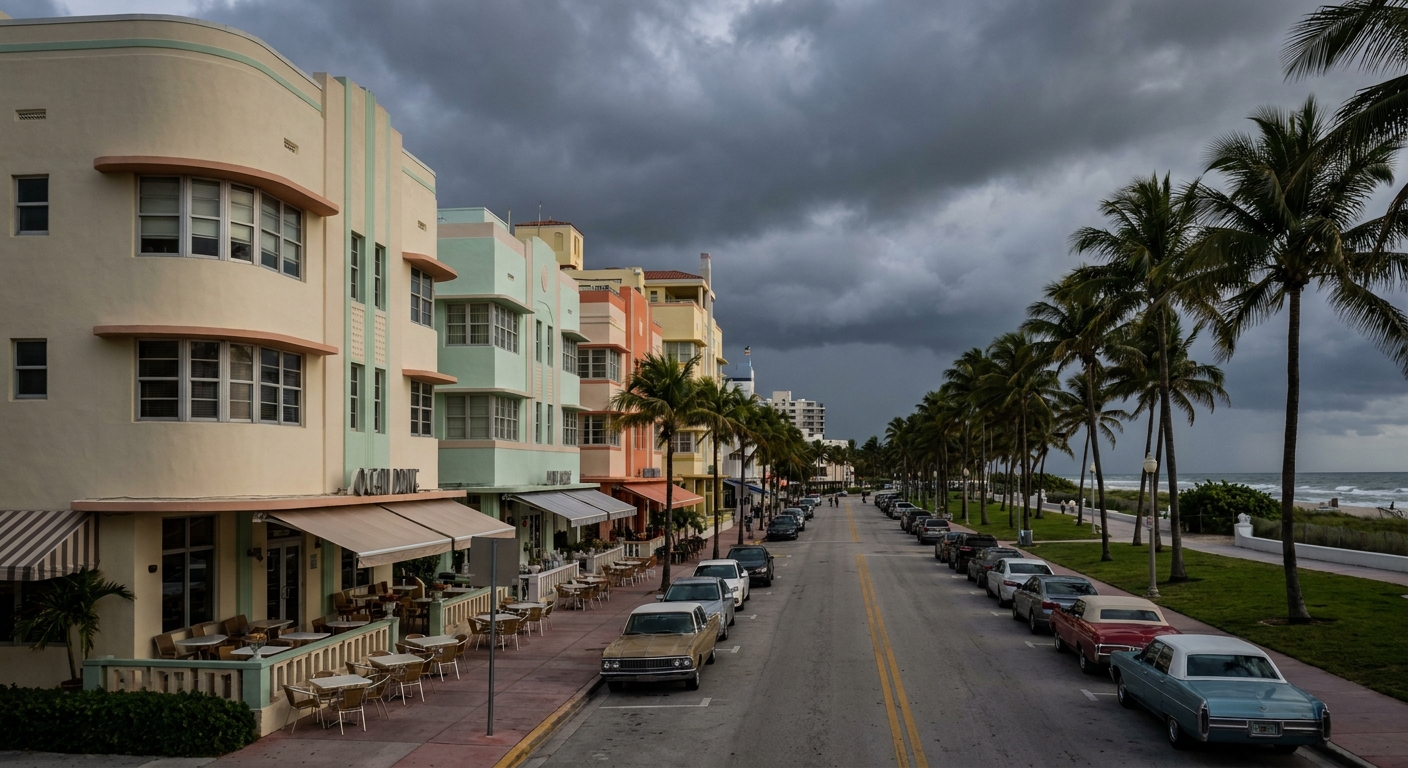
THE MONTH AT A GLANCE · FLORIDA · SEPTEMBER
September hands you Florida’s warmest water and its thinnest summer crowds, and asks for refundable bookings and morning plans in return.
WET SEASON: MAY TO OCT · HURRICANE PEAK: SEPT 10 · SEA NEAR 88°F ON BOTH COASTS
Go for: swimming at 87 to 88°F, beaches between school breaks, and city days (Vizcaya, PAMM) that cost the same in any month.
Think twice before: booking nonrefundable, or planning full days outdoors in Miami, where 13.1 days record 0.10 inch or more and 3.3 record an inch or more.
Climate: NOAA NCEI 1991-2020 normals · Storms: NOAA National Hurricane Center · Sea: Open-Meteo Marine · full sources at the end
On this page
- September temperatures city by cityThe six-city table, highs, lows and rain
- Wet season or dry season in SeptemberThe season dates and the Sept 10 peak
- Sea temperature by coastAtlantic and Gulf, in degrees
- How busy Florida is in SeptemberWhere the month sits in the demand year
- Things to do in September with prices and hoursVizcaya, PAMM, the Everglades gate
- Which region to pick this monthGulf side, southeast, the Keys
- September against August and OctoberThe three months on the calendar
- Is September a good time to visitThe verdict, and who should wait
Every figure here comes from NOAA’s monthly climate normals for 1991 to 2020, read at named airport stations: Miami International (USW00012839), Key West International, Orlando International, Tampa International, Fort Lauderdale-Hollywood, and Jacksonville International, the official gauge nearest St. Augustine. Sea temperatures come from Open-Meteo’s marine series, averaged over 2015 to 2024. Normals are thirty-year averages, not a forecast for the second week of your September.
Florida weather in September: temperatures, rainfall and hurricane risk by region
| City (NOAA station) | Avg high | Avg low | Rain | Days ≥ 0.10 in |
|---|---|---|---|---|
| St. Augustine (Jacksonville Intl) | 87.2°F | 70.5°F | 7.56 in | 8.4 |
| Orlando (Orlando Intl) | 89.6°F | 72.4°F | 6.37 in | 9.2 |
| Tampa (Tampa Intl) | 90.2°F | 75.3°F | 6.09 in | 8.2 |
| Fort Lauderdale (FLL) | 88.3°F | 77.1°F | 8.02 in | 10.8 |
| Miami (Miami Intl) | 89.0°F | 76.9°F | 10.22 in | 13.1 |
| Key West (Key West Intl) | 89.0°F | 79.2°F | 7.24 in | 10.2 |
Daytime heat barely separates the state this month: 3.0 degrees between the coolest of the six, St. Augustine at 87.2°F, and the warmest, Tampa at 90.2°F. The nights do the separating. Key West’s normal low is 79.2°F against St. Augustine’s 70.5°F, an 8.7-degree gap inside one state line. In January the split moves to the daytime instead, Jacksonville near 65°F while Miami holds 76°F, which is the argument the best-time guide opens with.
Read the six rows together and the variable is rain, not heat: Miami takes 10.22 inches in an average September, Fort Lauderdale 8.02, St. Augustine 7.56, Key West 7.24, Orlando 6.37 and Tampa 6.09. The southeast Atlantic corner absorbs about four inches more than the central Gulf coast while every city on the list runs highs in the high 80s.
Inches say little about a day. Counts of days say more. Miami records measurable rain, 0.10 inch or over, on 13.1 days of an average September, and an inch or over on 3.3 of them; Tampa’s pair is 8.2 and 1.9, Orlando’s 9.2 and 1.8. What that buys is a shape rather than a washout: dry mornings, a build through early afternoon, one heavy hour, then an evening that dries out. Plans starting at 8 a.m. survive the month. Plans starting at 3 p.m. negotiate with it.
The swing between the normal high and the normal low decides the suitcase. Key West moves 9.8 degrees across twenty-four hours, so nothing you packed will feel cool at 11 p.m. St. Augustine moves 16.7, and evenings on the seawall take a light long sleeve. Humidity does the rest of the work in both places: a quick-dry shirt beats cotton, and a folding umbrella beats a rain jacket you will not wear at 88°F.
Daylight is nearly identical across the state, about 12 hours 20 minutes on September 15, from 12h19 in Key West to 12h22 at the Jacksonville gauge. In Miami the sun rises at 7:05 a.m. and sets at 7:25 p.m. Eastern. In Tampa it runs 7:14 a.m. to 7:35 p.m. Sunset before 7:40 p.m. anywhere in Florida means dinner no longer waits on the light, and the last swim is a 6 p.m. decision.
Is September in Florida’s dry season or wet season?
Wet season, with one month left to run. Statewide the dry season covers November through April and the wet one May through October, which places September in the back half of the rainy stretch. Those dates describe when the pattern of daily convection sets up and when it releases, and they hold from the Panhandle to the Keys even though the rain totals under them do not.
In practice it reshapes an afternoon rather than deleting a day. When 3.3 September days in Miami deliver an inch or more, the storm is real when it lands, and it usually lands between lunch and dinner. Wildlife follows the same calendar in reverse: the Everglades concentrate birds and alligators as the water drops in the dry months, which is why the Everglades guide points at winter for that particular day.
The Atlantic hurricane season runs June 1 to November 30 and peaks on September 10, with most activity between mid-August and mid-October. September sits inside that window, at its center. Stated as calendar and nothing more: it is why September rooms are easier to get, and why the National Hurricane Center’s own climatology curve has its high point in the first half of the month. Tracks come with days of lead time, so the decision that matters is made at booking, not on arrival.
So book the month refundable and mean it. Take the cancellable room rate over the prepaid one, keep the airline change option in the budget rather than the excursion budget, and check the hurricane center’s outlook in the days before you fly. If the trip has one immovable date, a wedding, a cruise departure, a launch window, build a spare day around it and insure it.
Can you swim in Florida in September? Sea temperature by coast
Yes, and the water asks nothing of you. September averages 88.3°F off Key West, 87.8°F off Miami and 87.7°F off Fort Lauderdale on the Atlantic side, with 87.2°F off Tampa on the Gulf. The two coasts sit within about a degree of each other this month; the real split is north to south. Off St. Augustine the average is 83.7°F, four degrees under Miami and still warmer than most American beaches manage all year.
A caveat on the measurement, since the numbers look generous: these are means of daily maxima over 2015 to 2024, so they describe the warmest moment of an average day rather than a twenty-four-hour mean. Water at 7 a.m. sits under the figure. A shallow Gulf flat at 4 p.m. sits over it. Set against winter, when the sea off Miami averages about 72°F, September’s advantage is roughly sixteen degrees.
How busy is Florida in September?
September falls in the trough between two crowds. Summer school breaks have ended, and the winter season does not open until the dry months arrive on November 1. The state’s loudest, most expensive stretch runs February through April, with spring break turning March into its most extreme version on Miami Beach, where the city has published parking and traffic measures for that month rather than this one.
For booking, the useful move is flexibility rather than rate-hunting. Hotel market reporting puts Florida’s lowest rates in the August-to-October stretch and its highest February to April, a market trend and not an official statistic. Take the cancellable rate regardless. In the month that contains September 10, the right to change your mind is the most valuable line on the reservation.
What stays unquantified: Florida publishes no monthly occupancy or visitor series we would put a number against, and theme-park attendance by month is not public. No monthly price index for the state appears anywhere on this site, and none is coming. The season dates are firm, the demand direction comes from market reporting, and the rest is editorial judgment marked as such.
Things to do in Florida in September
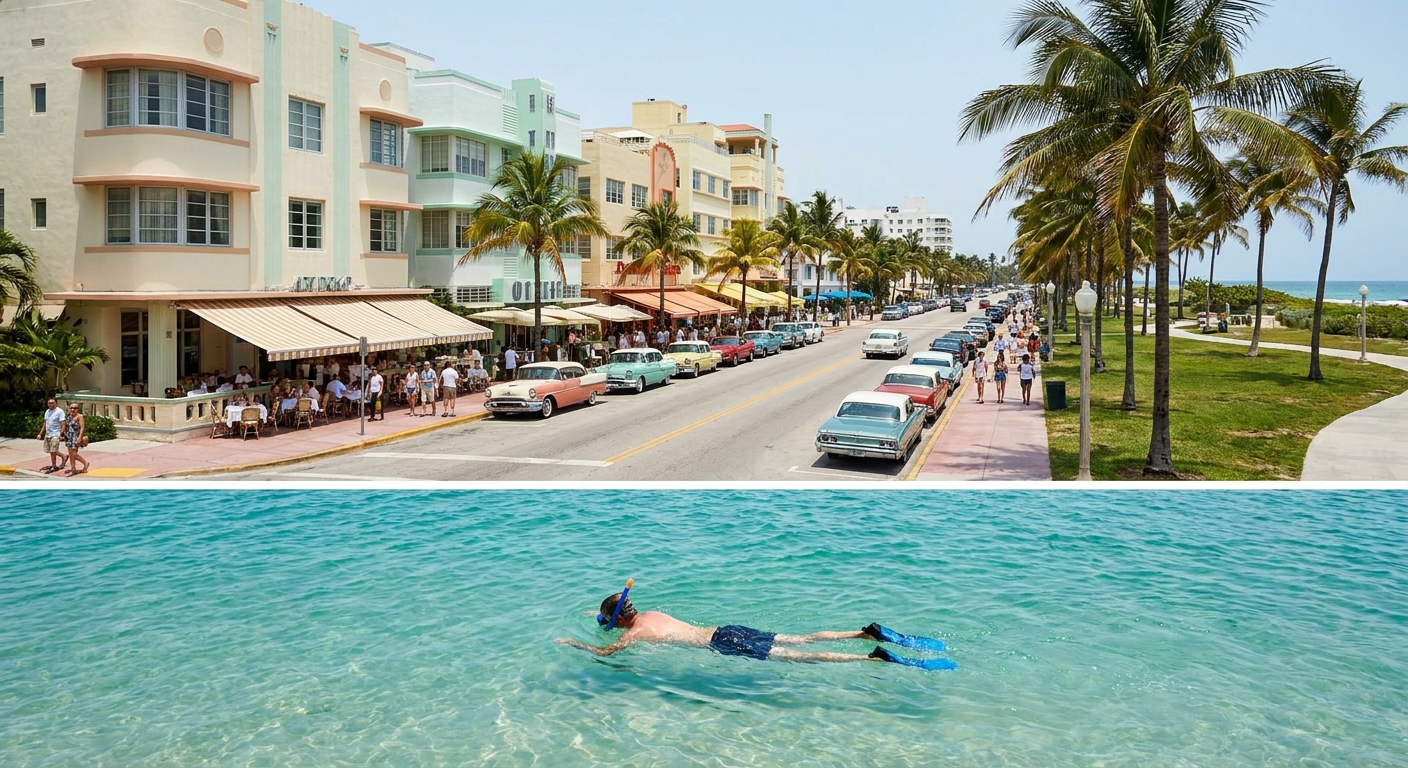
What this month gives that the postcard months cannot is warm water and room on the sand. The dry season sells a sea near 72°F off Miami, warm for January in America and cold against 87.8°F in September. Snorkel days, hour-long swims and children who have to be ordered out of the Gulf belong to this half of the calendar. The full menu with verdicts lives in Things to Do in Florida.
The indoor half of the day comes with a price list. Vizcaya Museum and Gardens opens Wednesday to Monday at 9:30 a.m., last admission 4:30 p.m., closed Tuesdays, $20 for adults during restoration work and $5 for ages 6 to 12. The Perez Art Museum Miami is free Thursdays from 5 to 9 p.m. and free all day on the second Saturday, art-making 11 a.m. to 3 p.m. Everglades National Park charges $35 per vehicle for seven days. On Miami Beach the trolley runs free, 8 a.m. to 11 p.m., and Lummus Park is free around the clock with lifeguards.
Where to go in Florida in September: best regions, beaches and cities
The central Gulf coast takes the month on the numbers. Tampa’s station records 6.09 inches and 8.2 days with measurable rain, the driest pair of the six, with the sea at 87.2°F and a shoreline whose calm, shallow water suits small children better than Atlantic swell. Base on the beaches south and west of the bay, starting with Siesta Key, and keep St. Petersburg’s museums as the 3 p.m. plan.
The southeast loses this month, and it loses for one kind of traveler. Miami’s 10.22 inches and 13.1 wet days, 3.3 of them over an inch, do nothing to a city trip built on Little Havana, Wynwood and an air-conditioned gallery afternoon; they do wreck a plan of consecutive full days outdoors. Miami in September is a food-and-art city with a warm ocean attached, not a wilderness base.
The Keys follow neither the north nor the center. Key West logs 7.24 inches and 10.2 wet days, less than Miami a hundred miles up the road, its nights hold at 79.2°F, and its water is the warmest figure on the table at 88.3°F. The catch is geography rather than climate: one road in, one road out, in the month containing September 10. Book Key West last and keep it the leg you can drop.
One line to carry away: put the beach week on the Gulf, keep the southeast for city days and evenings, and treat the Keys as the movable piece of the itinerary.
Florida in September vs August and October
| Month | Season | Storm calendar | What we put a number on |
|---|---|---|---|
| August | Wet (May to Oct) | Active stretch begins mid-August | No August normals served here |
| September | Wet (May to Oct) | Contains the Sept 10 peak | Miami 89.0°F high, 10.22 in, sea 87.8°F |
| October | Wet, last month before the Nov 1 switch | Active stretch ends mid-October, season closes Nov 30 | No October normals served here |
Only September’s normals are served here, station by station, so the three-month comparison runs on the calendar rather than on August and October figures we have not checked. What is firm: all three sit in the wet season, all three sit inside the active stretch that runs mid-August to mid-October, and only September contains the peak date. October is the last month before the dry season opens. The other eleven months, with their own numbers, are in the best-time guide.
Shift four weeks later and you leave the peak behind, land within days of the November 1 switch, and still swim in water carrying the summer’s heat while the winter crowd has not arrived. Shift four weeks earlier and you get August: school holidays across part of the month, the same afternoon convection, and the peak ahead of you instead of behind. Neither shift leaves hurricane season. Does not close until November 30.
Families tied to a school calendar take August and accept the company. Swimmers and divers free to move take late September or October, when the Keys are still near 88°F and the sand has emptied. Anyone with an unmovable date should be shopping the dry season instead, and paying for it.
Is September a good time to visit Florida?
Yes for swimmers, for travelers unbound by a school calendar, and for anyone whose Florida is a Gulf beach, a pool and a gallery at two o’clock. No for the wildlife trip, which pays out in winter when the Everglades concentrate. No for anyone who cannot book refundable, and no for anyone who will spend the week refreshing a storm tracker instead of watching the water.
If that reads as a no, the alternative is the dry season, November through April: 76°F days in Miami through its heart, no daily storm on the schedule, and the wildlife gathered at the remaining water. The trade is company and cost, since February through April is the busiest stretch the state has. The month-by-month verdict lays out all twelve.
The last word
Decide the cancellation policy before you decide the beach and September behaves itself. Book the Gulf week refundable, put the snorkeling before eleven and the museums after two, and leave one spare day for the afternoon that turns black over the causeway. And if the sky opens while you are downtown in Miami, the Metromover is free and runs every ninety seconds at rush hour, which makes it the driest sightseeing in the state.
Sources & data for this guide
- September normals for Miami, Key West, Orlando, Tampa, Fort Lauderdale and Jacksonville (stations USW00012839, USW00012836, USW00012815, USW00012842, USW00012849, USW00013889) · NOAA NCEI monthly normals 1991-2020 · checked Sep 10, 2026
- Rain-day counts (days ≥ 0.10 in and ≥ 1.00 in) · NOAA NCEI 1991-2020, same stations · checked Sep 10, 2026
- Sea surface temperatures, means of daily maxima 2015-2024 · Open-Meteo Marine API · checked Sep 10, 2026
- Hurricane season dates and the Sept 10 peak · NOAA National Hurricane Center · checked Sep 10, 2026
- Sunrise, sunset and daylight on September 15 · sunrise-sunset.org, converted to America/New_York · checked Sep 10, 2026
- Everglades entrance fee, $35 per vehicle for seven days · National Park Service · checked Sep 10, 2026
- Vizcaya hours and admission, PAMM free evenings, Miami Beach free trolley, Lummus Park · vizcaya.org, pamm.org, City of Miami Beach · checked Sep 10, 2026
- Hotel rate direction (lowest Aug-Oct, highest Feb-Apr) is market reporting relayed by local guides, not an official statistic · we serve no monthly price index for Florida, and none of the crowd statements above is a measured occupancy figure
- Hours, fees and closures change · confirm with each operator when you book.