
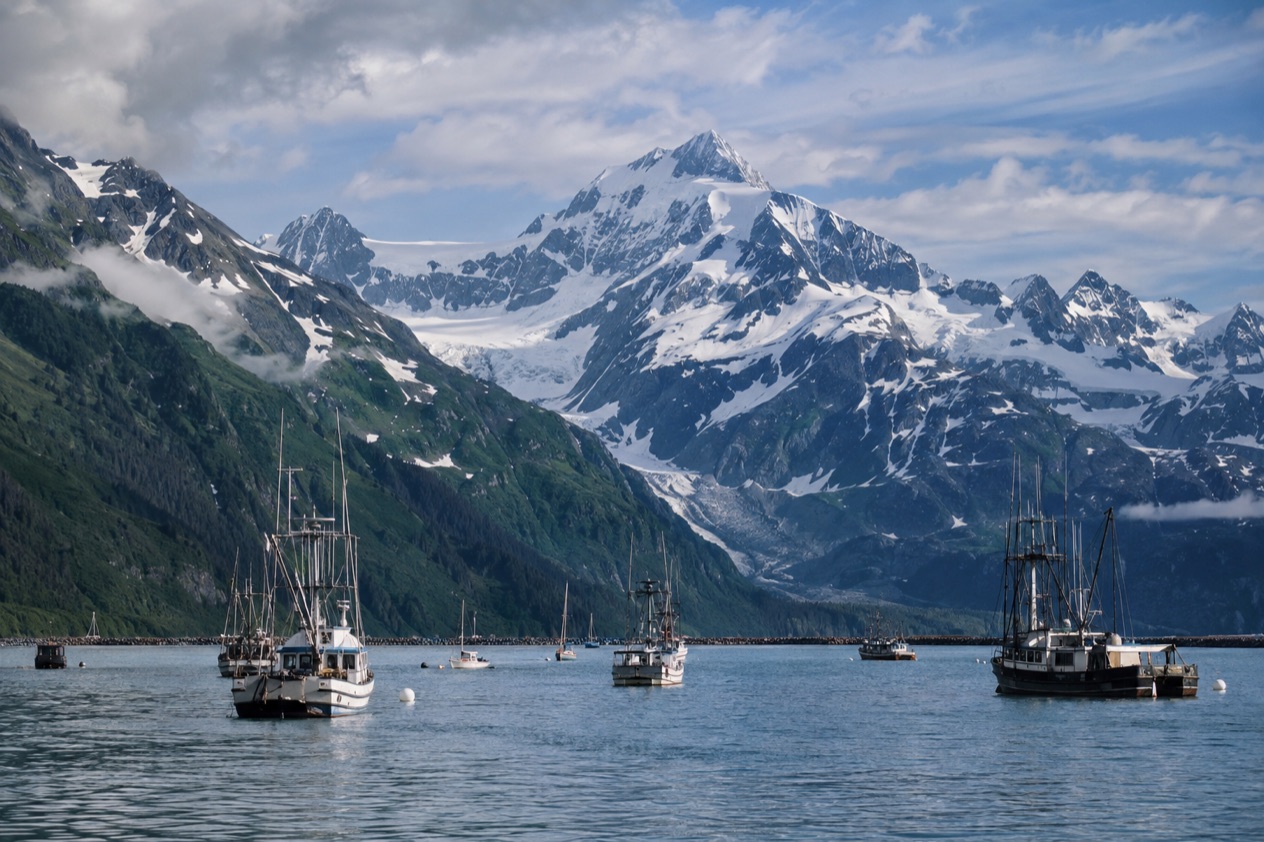
Early in the morning in Valdez, the mountains stand right behind the rooftops, clouds snag on the ridges, and the fjord lies flat against the harbor. Later the same day, the light has moved up the slopes and the streets are quiet again. The choice for a traveler is between sleeping in town beside the water or closer to the glaciers and the highway that brings you here.
What is the best area to stay in Valdez?
For a first visit, the town of Valdez itself is the natural base, because the harbor, the fjord and the mountain wall are all around you and the highway is a short step away. If glaciers and park scenery are the reason for the trip, a stay that puts you closer to the Richardson Highway or to the glacier lake shortens the mornings. Travelers watching their budget and families tend to be best served by staying in town, where the choice of rooms and places to eat sits in one spot.
The areas differ less by neighborhood than by what surrounds them. Valdez is a small town set at the head of a fjord on Prince William Sound, so the main contrast is between the waterfront and its harbor on one side and the road corridor and the glacier country on the other.
In town, you wake to fishing boats, the sound of gulls and the working feel of a port that also serves as the southern end of the Trans-Alaska Pipeline System. Out along the highway, the mood changes completely: canyon walls, waterfalls, high passes and ice.
Think about how you want your days to start. If you want to step outside and walk to a harbor café, watch a fishing derby weigh-in, or look for a boat to the sound, then town is the answer.
If you would rather be on the road early, stopping at a glacier before breakfast has cooled, then a spot along the highway puts you in the right frame of mind. The glacier lake is a different kind of base again, built around kayaking among icebergs and quiet evenings.
Valdez has a particular character that shapes every one of these choices. The name is pronounced locally as val-DEEZ, a small thing that tells the person at the front desk you have done your reading.
The town is also known for its snow, with the highest annual snowfall of any Alaska town, and the mountains above it collect staggering amounts every winter. That heavy snow feeds the glaciers around town, and those glaciers are the reason most people come.
One more point that affects every choice is the road. The Richardson Highway is the only road into Valdez, and it crosses Thompson Pass and runs through Keystone Canyon on the way.
Wherever you sleep, you will return to that road, so the question is mainly whether you want to start on it or end on it. A bed in town means you end your driving days at the waterfront. A bed along the highway means you break the journey in the middle of the mountains.
The best areas to stay in Valdez
Valdez town and the harbor
The town center is where Valdez feels like a place rather than a stop on the road. It sits at the head of the fjord, with the water on one side and a steep wall of the Chugach range on the other, and the harbor is the heart of daily life.
Boats come and go, anglers talk about salmon and halibut, and the town hosts competitive fishing derbies that give summer evenings a lively edge. This is also where Valdez shows its role as a port that stays ice-free the whole year, the northernmost one in North America with that distinction.
Staying here suits a first visit, families, and anyone who likes to wander without a plan. You can expect the kinds of lodging a small Alaska port town has, with rooms and stays gathered close to the harbor and the main streets. The mood is relaxed and practical, more fishing town than resort. Evenings are for a walk along the water, a meal of fresh fish, and a look at the mountains going dark.
A tip: make the harbor your reference point, because everything else, the glacier trips, the sound and the highway drives, starts from here. If a boat trip to the glaciers of Prince William Sound is part of your plan, sleeping close to the water keeps the morning simple.
Along the Richardson Highway: Keystone Canyon and Thompson Pass
The Richardson Highway is the road that defines Valdez. It runs for miles through Keystone Canyon, where rock walls close in and waterfalls spill down beside the road, then climbs to Thompson Pass, a stretch of high mountain country buried under deep snow in winter.
The highway was the first major road built in Alaska, and it still feels like one: long, dramatic and tied to the landscape. A stay out here puts you inside that scenery instead of visiting it.
This area suits travelers who care more about landscape than about town amenities, and who like to be on the move early. It also works well for people continuing along the highway toward Fairbanks or Tok, since sleeping on the corridor shortens the next day’s drive. The feel is quiet, spread out and mountain-bound, with fewer neighbors and bigger views.
Think about the trade-off honestly: you give up the harbor, the choice of restaurants and the ease of strolling out your door. In return you get silence and a front-row seat to the pass. Bring what you need for the evening, since you will not be popping back into town for dinner on a whim.
Near Worthington Glacier
Worthington Glacier sits on the Richardson Highway at milepost 28.7, east of Valdez, and it is one of the places where the highway meets ice directly. The glacier covers a large expanse of the mountainside and has been a National Natural Landmark since 1968. Sleeping nearby means the glacier is the first thing you see in the morning and the last as the light fades, a very different rhythm from a night in town.
This is the area for travelers whose trip is about glaciers and mountain light, including photographers and people who like to linger at a viewpoint rather than rush between stops. Expect a quiet, exposed setting where the weather shapes the day. Lodging here is the sort that fits a highway corridor in the mountains, and the atmosphere is far closer to wilderness than to a town.
A tip: use the glacier as your anchor and plan the rest of the day around it. A morning there and an afternoon in town combines the two worlds neatly, so you can sleep in either place and still get both.
Around Valdez Glacier Lake
Valdez Glacier Lake is where icebergs that have calved from the glacier drift on the water, and visitors can kayak among them. It is a striking, slightly eerie place: pale blue ice, still water and the grinding hush of a glacier nearby. Staying close to the lake builds the whole stay around that experience, with long quiet evenings and an outdoorsy mood.
This area is for travelers who want to paddle, hike or simply sit beside a glacier lake and take their time. It is less about services and more about setting, so it suits people comfortable with a simple base. The nearby glaciers, five of them reachable by sea, land and air, give plenty to explore from here without needing to go far.
A tip: pair a night near the lake with a night in town, so you get the quiet of the ice and the comfort of the harbor. Splitting the stay costs a little in packing and moving, but it gives the trip two distinct moods.
Valdez areas compared
| Area | Best for | Feel | Getting around |
|---|---|---|---|
| Valdez town and the harbor | First visit, families, boat trips | Working port, relaxed, fishing-town | Within the town of Valdez |
| Richardson Highway, Keystone Canyon and Thompson Pass | Road trippers, mountain scenery | Quiet, spread out, dramatic | Along the Richardson Highway |
| Near Worthington Glacier | Glacier viewing, photography | Exposed, wild, mountain light | Along the Richardson Highway |
| Valdez Glacier Lake | Kayaking among icebergs, quiet stays | Calm, icy, outdoorsy | Around the lake and the glacier |
The main trade-off is in town against out of town. In town, you have the harbor, the fishing boats, the evening walk and the sense of a living community, and you reach the glaciers by setting out for the day. Out of town, the glaciers and the mountains become your front yard, but you give up the convenience and the company of the harbor.
Near the dock against the quiet side is the other contrast. The waterfront has the activity of a port: boats, anglers, derbies in season and conversation about the day’s catch. The quiet side, along the highway or beside the lake, has the sound of wind, water and ice, and the evenings are for stargazing and reading rather than wandering.
If you cannot decide, remember that Valdez is a small place with one road in, so you are never truly far from any of these. Two nights in town and one near the ice is a reasonable way to taste both sides of the place without too much repacking. Travelers on a through route toward Fairbanks or Tok may prefer to sleep on the highway side, which shortens the next morning.
The snow also colors every choice. The Chugach mountains near Valdez collect between 600 and 900 inches each winter, and Valdez is counted the snowiest city in the United States, with over 300 inches in an average year. The mountains are shaped by that snow, and the glaciers are its slow, frozen result. Staying near them is a way to be close to the force that created the whole landscape.
How to choose your hotel in Valdez
Start with what your days will look like. A trip built around the harbor, boat outings and fishing suits a room in town, where you can step out and be among the boats.
A trip built around the glaciers and the highway suits a base closer to the road, and a trip built around kayaking among icebergs suits a stay near the glacier lake. Choose the place that matches your best hours of the day, since the rest of the day will fall into line.
Think about the type of stay as well. A hotel or guesthouse in town gives you the simplest rhythm: a bed, a meal nearby, and an easy conversation with people who know the area.
A lodge or cabin out along the highway gives you scenery and silence, in exchange for fewer comforts close at hand. A campground, where the setting is the point, puts you in the landscape itself and suits people who love being outdoors.
Season matters in Valdez more than in most places. The heavy winter snow shapes what you can do and how you get around, and the town takes on a different character when the mountains are buried in white.
Summer brings fishing derbies and long days on the water. Whatever the month, look at what a property tells you about when it is open, because a lodge or campground may not be available at the time you are traveling.
Distance from the road is something to weigh with care. Valdez is reached only by the Richardson Highway, which crosses Thompson Pass and runs through Keystone Canyon, so your stay is always tied to that corridor.
Sleeping in town means finishing your drive at the water. Sleeping out along the highway means you may begin and end your days on the same stretch of road, a pleasure if you love the scenery and a chore if you do not.
Families usually find town the most comfortable base, since the harbor gives children something to watch and the walks are straightforward to plan. The boats, the fish and the mountains are a natural draw for young travelers, and a room in town keeps everything within reach of one starting point. Rooms and stays with a kitchen can also take pressure off mealtimes when everyone is tired after a day outdoors.
For travelers with limited mobility, town is the safer bet, because a stay near the harbor keeps your surroundings compact and lets you reach the water and the main streets without long transfers. Viewpoints along the highway can be admired from a vehicle, and the glaciers are visible from the road at Worthington. The glacier lake and the more rugged settings ask for more effort, so consider whether they suit the way you like to travel.
Finally, think about what you want the evenings to be. In town, they are for a meal, a stroll and a last look at the fjord. Out on the highway or by the lake, they are for silence and the changing light on the mountains. Neither is better, and the right answer is the one that makes you glad to close the day where you are.
Good to know before you go
Getting to Valdez means driving, since the Richardson Highway is the only road in. The drive from Anchorage takes 6 to 7 hours, and the drive from Tok takes approximately 4.5 hours, so plan your arrival day with that in mind and settle into your lodging rather than rushing out again. Valdez sits on Prince William Sound in Southcentral Alaska, and the town makes a calm place to land after the road.
Sources
- Alaska.org, dest valdez (https://www.alaska.org/destination/valdez), checked October 11, 2026
- Wikivoyage, Valdez (https://en.wikivoyage.org/wiki/Valdez), checked October 11, 2026
- Wikipedia, Valdez, Alaska (https://en.wikipedia.org/wiki/Valdez,_Alaska), checked October 11, 2026
- Wikipedia, Worthington Glacier (https://en.wikipedia.org/wiki/Worthington_Glacier), checked October 11, 2026
- Wikipedia, Richardson Highway (https://en.wikipedia.org/wiki/Richardson_Highway), checked October 11, 2026
- Wikipedia, Prince William Sound (https://en.wikipedia.org/wiki/Prince_William_Sound), checked October 11, 2026
To plan your stay
- Best Time to Visit Valdez: Weather by Month, Seasons and Festivals
- Things to Do in Valdez: Glaciers, Thompson Pass, Prince William Sound and Local Seafood
- Valdez from Anchorage: the Richardson Highway, Thompson Pass and Worthington Glacier
- Valdez in January: Snow, Short Days and the Road to Worthington Glacier