
On a calm evening at a campground or a coastal trailhead, the first thin whine near your ear tells you the question has arrived. Alaska does have mosquitoes, and they are part of the summer picture in much of the state. A head net, a repellent and a few sensible habits keep them from taking over the trip.
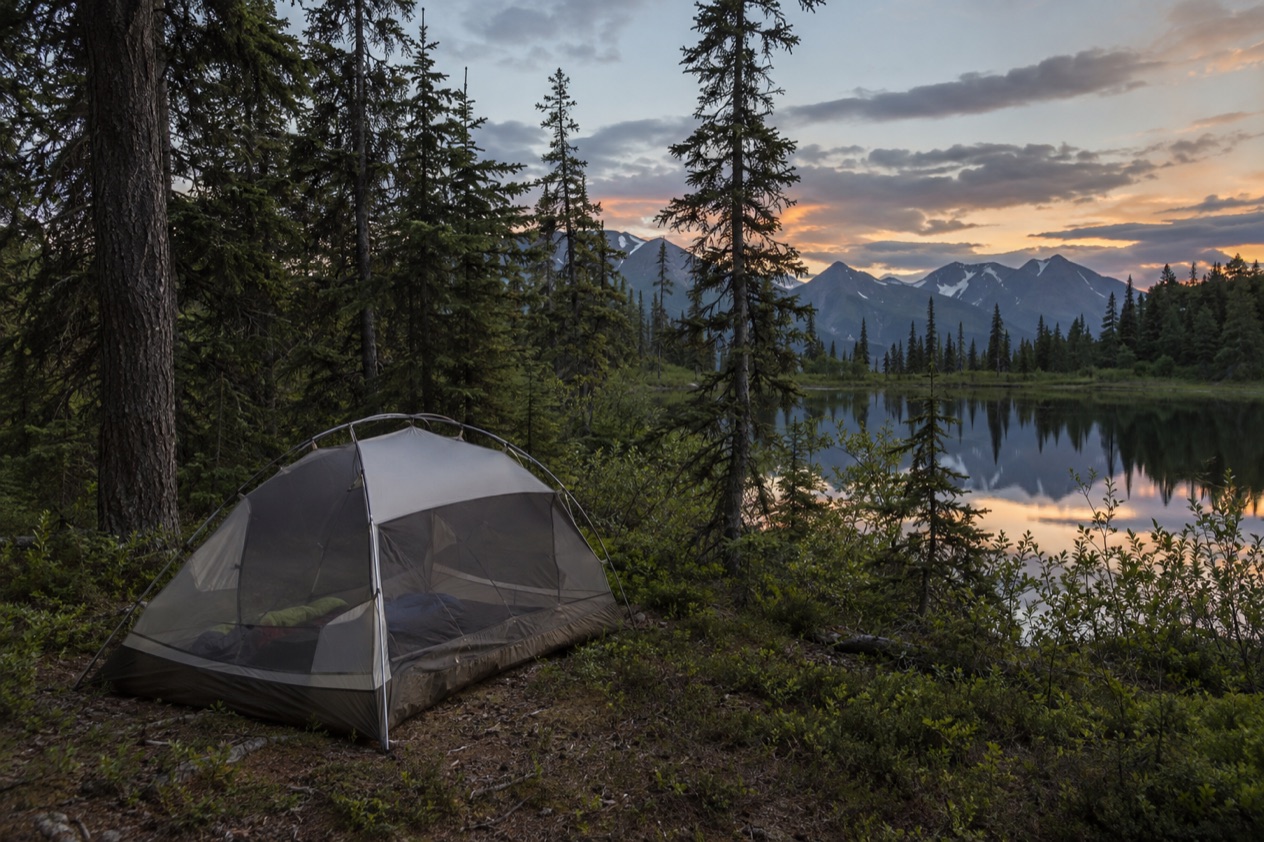
Are there mosquitoes in Alaska?
Yes, mosquitoes are a regular part of an Alaska summer, and they turn up well beyond the places people expect. They share the air with black flies and no-see-ums, and all three are the reason repellent shows up on packing lists for the state.
The bugs are not spread evenly. They gather where the air is still, around damp ground, lakes, brush and backcountry trails, and they thin out when a breeze picks up. Towns and cities are far less troubling than the wild places that surround them, though a calm evening anywhere can bring them out.
Denali: Wonder Lake and the McKinley River Bar Trail
Denali National Park and Preserve gives one of the clearest examples. The McKinley River Bar Trail leads from Wonder Lake Campground to the McKinley River, and the National Park Service says it is plagued by mosquitoes most of the summer. The advice that goes with that warning is simple: bring a head net.
Wonder Lake is a place people come to see the mountain, and the walk down toward the river passes through the kind of low, damp country that mosquitoes love. You can still enjoy it. Dress for it, with long sleeves, a net you can pull over your hat brim and repellent on any exposed skin, and the walk becomes a pleasure rather than an endurance test.
Wrangell-St. Elias and the backcountry
Wrangell-St. Elias National Park and Preserve lists bugs among the hazards of its backcountry, alongside river crossings, glacier travel, thick brush, extreme weather, rock fall, mudslides and avalanches. It is a telling company for mosquitoes to keep. In wild country like this, the insects are one more thing to plan for, not a reason to stay home.
The park says mosquitoes are typically a nuisance there from May to September. A hiker heading out for several days should think of a head net and repellent as basic kit, packed with the same care as rain gear and good boots.
Coastal beaches and calm days
Even the coast is not free of them. Repellent with Deet works well against mosquitoes, black flies and no-see-ums, and it is most useful on calm days along coastal beaches and in the backcountry. A gentle morning at the water can be the exact moment the bugs find you, so the repellent belongs in the day pack, not in the suitcase.
Think of the wind as your ally. When a breeze comes off the water, the air clears. When it drops, you may want to stop, pull out the bottle and reapply before you carry on with the walk.
When are they worst?
They are worst in the early part of the summer, when mosquitoes come out in early June and die off by early August. That is a short window, and it overlaps with the weeks when travelers are in the state, so it helps to know how the season runs.
| Place | Mosquito season |
|---|---|
| Alaska (general) | Early June to early August |
| Wrangell-St. Elias National Park & Preserve | May to September |
| McKinley River Bar Trail, Denali | Most of the summer |
The early summer stretch
The season begins in early June, just as the long days of an Alaska summer settle in. Those long hours of light mean a lot of time outdoors, and a lot of time for bugs to find you. An evening walk after dinner, when the light is still strong and the air is still, is the classic moment for them to appear.
If you are planning a hike, a camping night or a long day at a trailhead during these weeks, assume they will be there and pack for them. Treat the net and the repellent as part of the outfit and not as an afterthought.
Late summer and the fade
By early August the mosquitoes die off, and the change can be welcome for anyone who wants to sit outside without swatting. The window for them is narrow, so a trip planned for the end of the season may meet far fewer of them than one in the first weeks of summer.
Some places have a longer story. Wrangell-St. Elias reports a nuisance from May through September, so a backcountry trip there can meet bugs outside the dates that apply to the state as a whole. Keep the repellent handy even when the calendar says the worst is over.
Time of day and weather
Calm days are the ones that matter most. On a still day along a beach or in the backcountry, repellent earns its place.
Alaska weather swings, with possible rain and wind and temperatures from spring to early fall that range from 50 to 70 degrees Fahrenheit. A gray, breezy day is gentler on you than a still, mild one, and that is worth remembering when you choose which day to take a longer walk.
How do you deal with them?
You deal with them by packing a Deet repellent and a head net, and by dressing in layers that cover your skin. None of it is complicated, and it all fits in a small bag. The goal is to be ready when the air goes still and the whine begins.
Repellent and head nets
Bug repellent with Deet works well against mosquitoes, black flies and no-see-ums in Alaska. It is especially useful on calm days along coastal beaches and in the backcountry, which are exactly the places where you will want to linger.
A head net is the other piece. The National Park Service tells visitors to Denali’s McKinley River Bar Trail to bring one, and it weighs almost nothing in a pocket. Slip it over a brimmed hat and you can look at the scenery without a cloud around your face.
Clothing that helps
Dress in layers and bring a backpack, so you can add or remove pieces as the weather changes.
A fully waterproof and breathable shell with a hood is the outer layer to carry, and it also helps in wind. In rain forest areas like Prince William Sound or Southeast Alaska, sustained downpours can overwhelm breathable-waterproof fabrics, so coated raingear is recommended for extended charters. Bring a lightweight brimmed hat, sunglasses and sunscreen too, since the long summer days mean many more hours of daylight than in the Lower 48.
Gear to buy or rent in Alaska
If something is missing from your bag, you can buy or rent gear once you arrive. The Hoarding Marmot, a consignment shop in Anchorage, is one source, and Big Ray’s has stores in Anchorage, Fairbanks and Kodiak.
Shoes are a separate matter. Never bring new ones to Alaska, and instead wear well-worn shoes or lightweight hikers that you have broken in before the trip, so blisters do not add to the misery of the bugs. Alaskans dress casually, and restaurants, museums and shops welcome you in the clothes you wore outdoors.
Good to know before you go
Pack the repellent and the net in your carry-on or day pack, so they are within reach the moment you step onto a trail. Thin synthetic liner gloves are worth a place too, since it can get chilly when a ship pulls up to a glacier. Mosquito season is short and the bugs give way to cool, breezy days, so the preparation is light and the reward is a trip spent looking at the scenery.
Sources
- Wikipedia, Alaska (https://en.wikipedia.org/wiki/Alaska), checked October 11, 2026
- Wikivoyage, Alaska (https://en.wikivoyage.org/wiki/Alaska), checked October 11, 2026
- Alaska.org, what to wear (https://www.alaska.org/advice/what-to-wear-in-alaska), checked October 11, 2026
- National Park Service, Denali National Park & Preserve, plan your visit: dayhiking (https://www.nps.gov/dena/planyourvisit/dayhiking.htm), checked October 11, 2026
- National Park Service, Wrangell – St. Elias National Park & Preserve, plan your visit: backcountry (https://www.nps.gov/wrst/planyourvisit/backcountry.htm), checked October 11, 2026
- Alaska.org, best time (https://www.alaska.org/advice/best-time-to-visit-alaska), checked October 11, 2026