
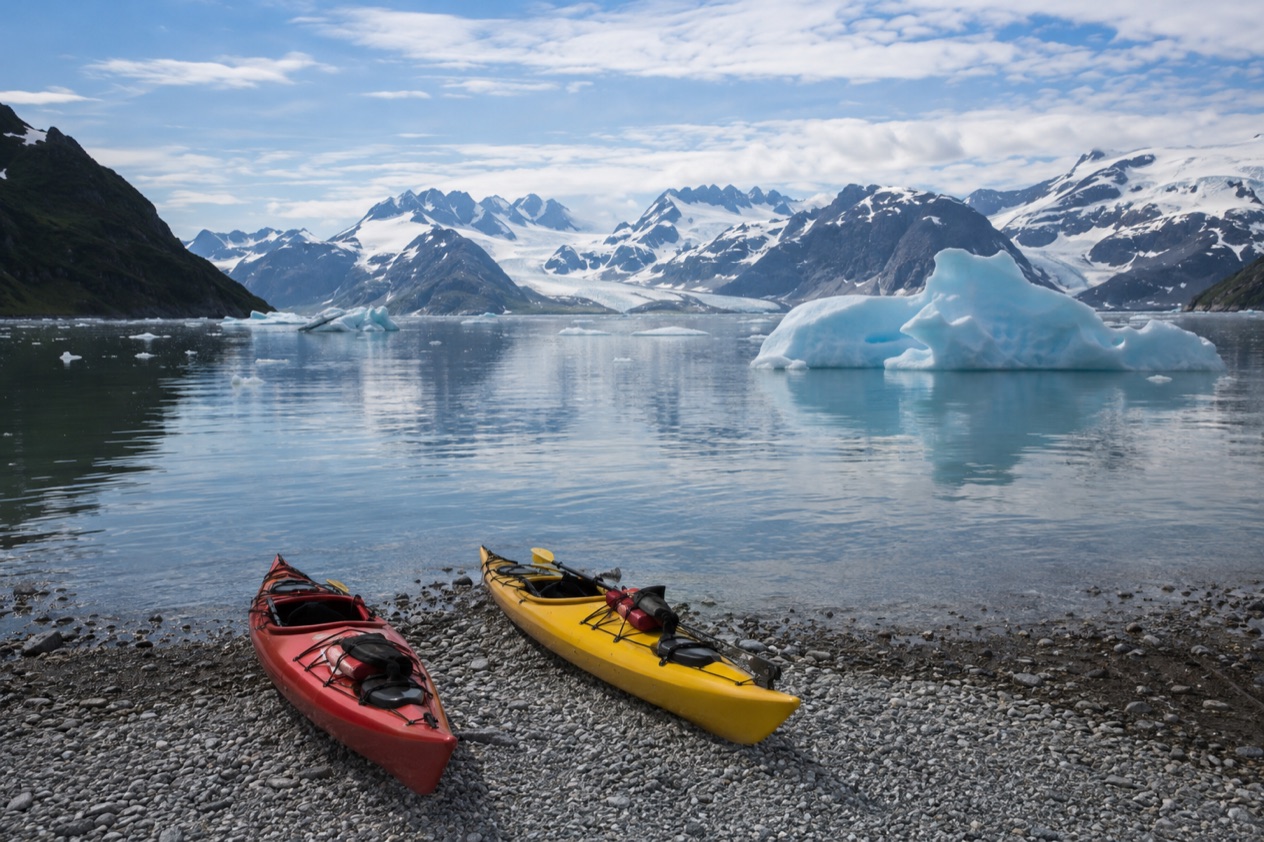
A paddle dips, a sea otter rolls onto its back a few strokes away, and the only sound is water dripping from the blade. That is the pull of Alaska by kayak: quiet access to fjords, bays and glacier-fed coves that most visitors only see from a larger boat. The places to do it are scattered across the coast, from Kachemak Bay near Homer to Glacier Bay and Sitka Sound.
Where can you kayak in Alaska?
You can kayak along much of the coast, and three areas stand out for the way they are set up for paddlers: Kachemak Bay near Homer, Glacier Bay National Park near Gustavus, and Sitka Sound. Each gives a different kind of day on the water, from guided outings with a water taxi ride to multi-night wilderness trips with a tent in the bow.
Kachemak Bay and Homer
Sea kayaking in Kachemak Bay is a popular recreation, and Homer is the base. Several outfitters there offer guides and instructors who know the tides and currents, which matters on a bay where the water moves with real force. For a more secluded paddle, you can take a water taxi from Homer across the bay and be dropped in quieter coves.
The water taxi also reaches Kachemak Bay State Park, where the backdrop is mountains, glaciers and marine wildlife. Homer sits at the end of the road, and the town leans into that: outdoor recreation is right outside the door all year, and in summer the light keeps the options open around the clock. If you want a first day on the water with someone who reads the currents for you, this is a place to look for it.
Glacier Bay National Park
Most visitors experience Glacier Bay from a boat, whether a cruise ship, a tour vessel, a charter or a private kayak. Bartlett Cove is the only developed area in the park, with a lodge, visitor center, exhibits, trails, a public dock, kayak rentals and a walk-in campground. It is the natural starting point if you want to be on the water without bringing your own boat.
For a longer trip, a daily boat tour based in Bartlett Cove travels up-bay to the tidewater glaciers and offers two scheduled drop-offs for campers and kayakers. The Day Boat camper drop-off service carries campers and their kayaks to two locations in the bay. From there, camping opportunities for those prepared to go wilderness are virtually unlimited. Overnight campers and kayakers need a free backcountry permit.
Sitka Sound
In Sitka you can kayak Sitka Sound alongside sea otters, a pairing the town itself likes to advertise. It suits a traveler who wants a paddle woven into a stay in a small coastal town rather than a big expedition. The same town is also known for fly fishing, so a day can easily mix the two.
Prince William Sound
Prince William Sound has a convoluted coastline of islands and fjords, several of them holding tidewater glaciers. Most of the land around it belongs to the Chugach National Forest, the second largest national forest in the country.
Valdez is the largest port, and Cordova and Whittier are among the other settlements, along with the Alaska Native villages of Chenega and Tatitlek. It is a landscape that rewards a paddler’s pace, with barrier islands such as Montague, Hinchinbrook and Hawkins shaping the sound.
What do you see on a paddle?
You see marine life at eye level, and the mix changes with the bay. Kachemak Bay is the clearest example: seals, sea otters, porpoises and whales play just offshore, and from a kayak you are sitting low enough that the animals seem close. These are chances rather than promises, and a quiet morning with no sightings still gives you glaciers and mountains to look at.
Otters, seals and whales
Sea otters are the animal most paddlers talk about afterward, floating on their backs and watching the boat go by. Harbor seals haul out on rocks and ledges, and porpoises and whales may surface in open water. Around Juneau, wildlife viewing is especially likely from April through November, with bears, bald eagles and humpback whales on the list, and tours there can get visitors close to sea lions, harbor seals, Dall’s porpoises, mountain goats and Sitka blacktail deer.
A paddle puts you at the water line, so the sounds carry: the huff of a surfacing whale, the clack of a mussel being cracked on an otter’s chest. Keep your movements slow and your voice low, and the animals often go about their business.
Birds along the shore
Birdwatching is part of nearly every paddle. Around Homer, eagles and sandhill cranes are at home, and scoters, grebes, ravens and loons are common, with eiders sometimes seen. In Glacier Bay, birding is popular because 274 species have been sighted in the park, so a slow paddle along the shore can turn into a checklist.
Glaciers and mountain views
Kachemak Bay State Park, reached by water taxi from Homer, frames the paddle with mountains, glaciers and marine wildlife. In Glacier Bay, the boat tour travels up-bay to the tidewater glaciers, and campers and kayakers can be dropped off at two scheduled points to begin a trip from there. In Prince William Sound, several fjords hold tidewater glaciers of their own.
What you feel on the water is scale. A glacier face that looks modest from a distance grows as you paddle toward it, and the silence between the strokes makes the bay feel larger than any photo suggests.
What should you know before you go?
Know that the water is moving and cold, that the best preparation is a guide who understands tides and currents, and that some trips need a permit. In Kachemak Bay, guides and instructors from several outfitters teach kayaking safety and the local tides and currents, and that expertise is the most practical thing you can buy before paddling.
Guides, tides and currents
If you have never paddled in tidal water, start with an outfitter in Homer. The guides there are set up to teach safety and to explain how the bay behaves, and a water taxi can take you to a secluded corner once you are ready. Skip the temptation to treat the water as a place to swim, since it is cold. Ask the outfitter how a water taxi drop-off and pickup work, and plan your paddle around that arrangement rather than the other way around.
Glacier Bay permits and camping
Overnight campers or kayakers in Glacier Bay need a free backcountry permit. Wilderness camping is available in virtually unlimited places for those prepared for it, and the Day Boat drop-off carries you and your kayak to one of two locations. Bartlett Cove has a walk-in campground and kayak rentals if you would rather start easy.
The park lists businesses that provide lodging, transportation, tours and other services nearby, and rangers give regular guided activities. For questions, the park’s phone number is 907 697-2230.
Bringing your own kayak by ferry
Kayaks and canoes may be carried aboard Alaska Marine Highway vessels. Small inflatable boats are allowed if they weigh less than 300 pounds and do not exceed 18 feet in length and 3 feet in width. That makes it possible to arrive in a coastal town with your own boat and put in directly.
Good to know before you go
A free backcountry permit is the one requirement the park names for overnight kayakers in Glacier Bay. Kachemak Bay outdoor recreation runs year-round, and daylight in summer keeps the paddling day long. Guides in Homer cover safety, tides and currents, and rangers in Glacier Bay answer questions about the water.
| Fee | Amount | Who pays |
|---|---|---|
| Backcountry permit, Glacier Bay | Free | Overnight campers and kayakers |
Sources
- Homer, outdoors and recreation (https://www.homeralaska.org/things-to-do/outdoors-and-recreation/), checked October 11, 2026
- National Park Service, Glacier Bay National Park & Preserve, plan your visit: things2do (https://www.nps.gov/glba/planyourvisit/things2do.htm), checked October 11, 2026
- Travel Juneau, things to do (https://www.traveljuneau.com/things-to-do/), checked October 11, 2026
- Visit Seward, things to do (https://www.seward.com/things-to-do), checked October 11, 2026
- Wikipedia, Prince William Sound (https://en.wikipedia.org/wiki/Prince_William_Sound), checked October 11, 2026
- Royal Caribbean, Alaska cruises (https://www.royalcaribbean.com/cruise-destinations/alaska-cruises), checked October 11, 2026
- Alaska Department of Transportation, Alaska Marine Highway System, Alaska Marine Highway System (https://dot.alaska.gov/amhs/index.shtml), checked October 11, 2026
- National Park Service, Glacier Bay National Park & Preserve, plan your visit: eatingsleeping (https://www.nps.gov/glba/planyourvisit/eatingsleeping.htm), checked October 11, 2026
- National Park Service, Glacier Bay National Park & Preserve, plan your visit: directions (https://www.nps.gov/glba/planyourvisit/directions.htm), checked October 11, 2026
- National Park Service, Glacier Bay National Park & Preserve, plan your visit: fees (https://www.nps.gov/glba/planyourvisit/fees.htm), checked October 11, 2026
- National Park Service, Glacier Bay National Park & Preserve, plan your visit: cruising (https://www.nps.gov/glba/planyourvisit/cruising.htm), checked October 11, 2026