
The valley falls away behind you and the road climbs into open tundra, where the peaks stand bare above the last stunted willows and the wind carries the smell of cold stone. Old mining timbers lean on the slopes, a small lake sits in a bowl of rock, and paragliders sometimes hang above it. Hatcher Pass is a mountain day out for anyone staying around Palmer, Wasilla or Anchorage, and it changes character completely with the seasons.
Is visiting Hatcher Pass worth it?
Yes, for anyone who wants real alpine scenery without leaving the Mat-Su Valley, and especially for hikers, cyclists, skiers and people drawn to old mining country.
What sets it apart from the other parks around Palmer and Wasilla is the terrain. Many of the nearby parks revolve around lakes, forest and water, while Hatcher Pass sits in the Talkeetna Mountains, in country that is mostly open tundra and rock.
Most of the pass lies inside the Hatcher Pass East Special Management Area, a wilderness of 75,000 acres. Add a historic gold mine, a lodge in Independence Valley and a winter life of skiers and snowmachines, and you get a place that feels like a small range of its own, only a short hop from the towns.
What to see at Hatcher Pass
Independence Mine State Historical Park
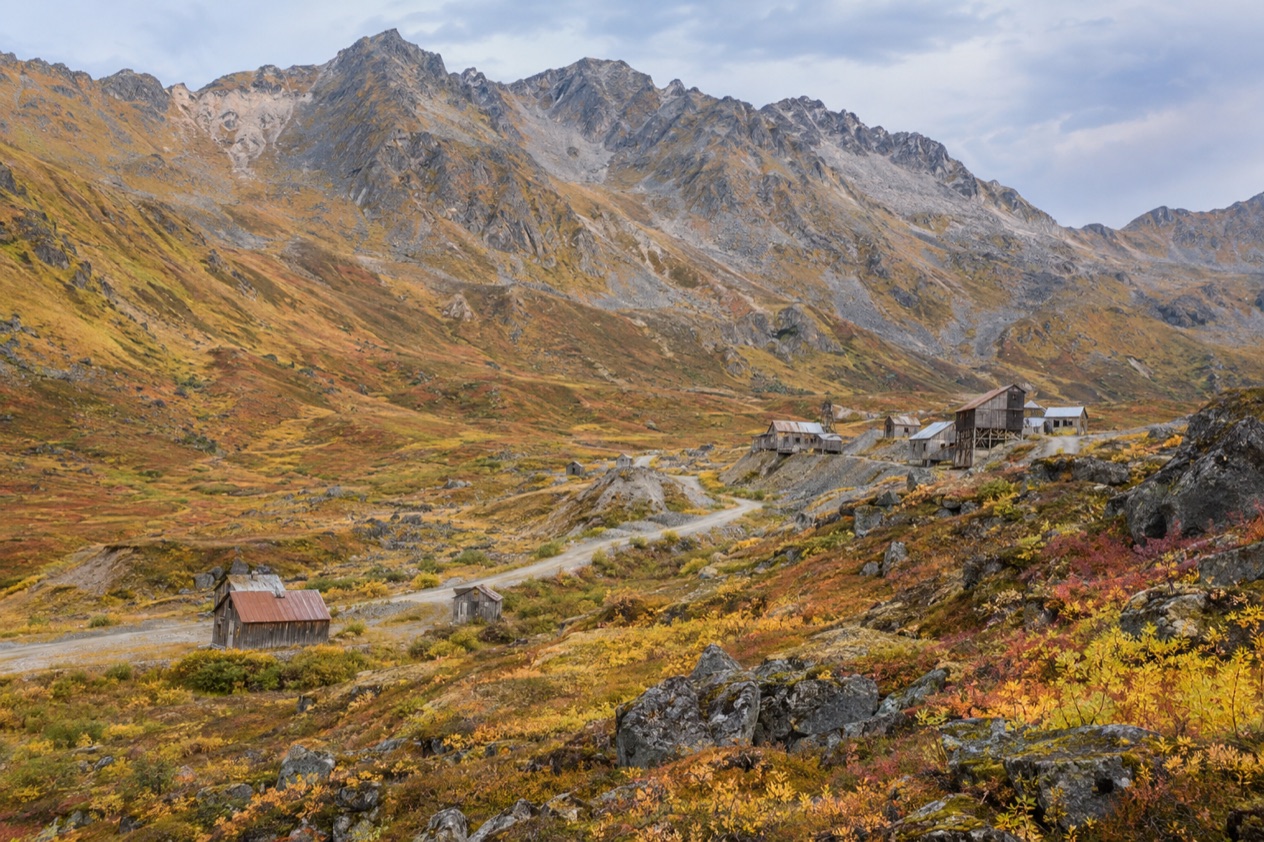
Independence Mine State Historical Park sits in Hatcher Pass near Palmer, ringed by rugged peaks. It preserves what is left of a hard-rock gold mining operation, and the weathered buildings cling to the mountainside in a way that makes the scale of the work easy to picture. Gold here was dug out of the rock itself, not panned from creeks, which is why the structures climb the slope.
Walk among the old timbers and look at how the buildings are stepped into the hill, then lift your eyes to the ridgelines that framed the miners’ daily life. The mix of rust, gray wood and green tundra is especially photogenic when clouds drag across the summits.
Summit Lake State Recreation Site
Summit Lake State Recreation Site is a small alpine park built around a shallow cirque lake, a bowl scooped out of the mountain by ice. The views are excellent, and the setting is a favorite launch site for paragliders, so watching one lift off and drift over the tundra can be part of the visit.
It suits a pause more than a long outing. Bring a layer, because alpine wind off the peaks cools quickly, and use the stop to take in the cirque, the open slopes and the light shifting on the rock.
Alpine tundra hiking
Hatcher Pass offers hiking in alpine tundra, with wildflowers and ptarmigan among the things you may spot along the way. The tundra is low and springy, scattered with tiny plants, and the lack of trees means the views open up almost as soon as you leave the road.
The Gold Mint Trailhead near Palmer is one of the access points into this country. The wider Mat-Su region also offers multi-day hiking in remote sub-alpine tundra, and the Hatcher Pass area gives a taste of the same landscape.
Hatcher Pass Lodge and Independence Valley
Food and lodging are available at The Hatcher Pass Lodge in Independence Valley. It anchors the pass for those who want to stay among the mountains instead of driving back down at day’s end, and in the cold months it sits near the groomed ski trails.
A meal here fits naturally between a morning on the tundra and an afternoon at the mine. In winter, the lodge puts you close to the ski season on the groomed trails near the museum.
Hours, tickets and rules
At Hatcher Pass, the calendar matters more than the clock. The central portion of the road is usually closed by snow from late September to July, and what you can do depends on the season, from tundra hiking to skiing.
| Site | Open |
|---|---|
| Central portion of the road over Hatcher Pass | Usually closed by snow from late September to July |
| Backcountry alpine skiing | Generally late September to late April |
| Groomed skate and diagonal ski trails near Hatcher Pass Lodge and the museum | Typically October to April |
The road over the pass is unpaved and minimally maintained for about 20 miles. Most of the pass lies inside the Hatcher Pass East Special Management Area. In winter and spring the closed section of road is heavily traveled by snowmachines and skiers.
How to get to Hatcher Pass
Hatcher Pass is a mountain pass through the southwest part of the Talkeetna Mountains, and the nearest bases are Palmer and Wasilla, about 12 miles to the south. Willow lies about 26 miles to the west. Independence Mine State Historical Park sits in the pass between Willow and Palmer.
From Anchorage, Palmer and Wasilla are 45 minutes from downtown. To reach Palmer you take the Glenn Highway north and follow the off-ramp toward Palmer, while the Parks Highway passes through Wasilla. The Alaska Railroad’s Denali Star train serves Wasilla from Anchorage, Talkeetna, Denali and Fairbanks.
Once you are on the pass, expect a road that is unpaved and minimally maintained. Cyclists can note that Hatcher Pass Road is a good paved biking trail until Mile 17, where the road changes to gravel. The pass reaches an elevation of 3,886 feet, so the weather at the top can differ from what you left in the valley.
When to visit Hatcher Pass
With the central portion of the road usually closed by snow from late September to July, the tundra hiking, wildflowers and ptarmigan belong to the snow-free part of the year, when the road is open. Check what the season allows before you plan the route.
Winter is a different pass. Skiers and snowmachiners travel the closed road in winter and spring, backcountry alpine skiing generally runs from late September to late April, and the groomed trails near the lodge and the museum typically open from October to April. Since it is mid-October as you read this, the pass is in the shoulder between hiking and skiing.
Nearby events can shape a trip too. The Alaska State Fair takes place in Palmer and Wasilla country in late August, and you-pick farms are available in August or early September. Northern lights can be seen in the Palmer and Wasilla area from late August through mid-April, a chance and never a promise.
Tips for your visit
The pass combines a historic mine, a small alpine lake, tundra trails and a lodge, and the stops reward unhurried wandering. Bring layers for the mountain wind, and sturdy shoes for the tundra.
Cyclists have two good options. Hatcher Pass Road is a good paved biking trail until Mile 17. Farther down, Government Peak Recreational Area has 5.5 miles of bermed, flow-style singletrack in three loops, a few miles south of the pass.
If you want to stay near the trails, Hatcher Pass near Palmer has the Gold Mint Trailhead and Government Peak Campground. Lodging and food are available at The Hatcher Pass Lodge in Independence Valley.
The Mat-Su region offers plenty to combine with the pass. Matanuska Glacier lies an hour beyond Palmer, and Knik Glacier can be reached on an ATV or flightseeing tour. Bodenburg Butte is a family hike with views of Knik Glacier and Pioneer Peak. Nancy Lake State Recreation Area is a spot to relax by the water, and Denali State Park offers sweeping vistas.
Good to know before you go
Snow decides the shape of the visit. The central road over the pass is usually closed from late September to July, and then the pass belongs to skiers and snowmachiners.
Some of the most popular park destinations in the Mat-Su region have four-season access, but at Hatcher Pass the season sets the plan, so choose your activity to match the time of year. Remember that the road over the pass is unpaved and minimally maintained.
Sources
- Wikipedia, Hatcher Pass (https://en.wikipedia.org/wiki/Hatcher_Pass), checked October 11, 2026
- Alaska State Parks, Mat-Su region (https://dnr.alaska.gov/parks/aspunits/matsu/matsuindex.htm), checked October 11, 2026
- Alaska.org, dest palmer wasilla (https://www.alaska.org/destination/palmer-wasilla), checked October 11, 2026