
In Anchorage, the cold of February is broken by the Running of the Reindeer and a crowd in fur hats, while in late summer the talk in Palmer turns to cabbages the size of a toddler. Alaska keeps a calendar all its own, built on its history, its seasons and its sense of humor. The state has its own legal holiday, a handful of festivals worth planning a trip around, and a few events whose dates shift from year to year.
What holidays does Alaska observe?
Beyond the national holidays every American knows, Alaska observes Alaska Day, a legal holiday on October 18. It marks the formal transfer of Alaska from Russia to the United States at Fort Sitka in 1867, so the day belongs above all to Sitka, where that ceremony took place.
Alaska Day sits close to the end of the visitor season, and it is a good moment to think about how the state came to be what it is. The story did not end with the transfer, and the other dates in Alaska’s history are worth knowing when you walk through its towns.
Alaska Day and the story of Sitka
Sitka is the town where the 1867 handover happened, and the date is remembered there more than anywhere. If you are in Southeast Alaska around mid-October, the holiday gives a reason to look at the town’s past, from the Russian years to the American era that followed.
The Sitka Historical Museum shows another chapter of the story: a sign from the campaign for Alaska statehood is displayed there. It is a modest object, but it connects the 1867 transfer with the long push, nearly a century later, to make Alaska a full state.
Statehood dates behind the calendar
President Dwight D. Eisenhower signed the Alaska Statehood Act into law on July 7, 1958, and Alaska became the 49th state on January 3, 1959. In between came a special election on August 26, 1958, in which 40,452 Alaskans voted for immediate admission and 8,010 voted against.
The road there was long. Alaskans passed a statehood referendum by a 3:2 vote in 1946, and the Constitutional Convention met at the University of Alaska in Fairbanks in 1955. Voters approved the Alaska Constitution in 1956.
Places that carry the history
Juneau was the capital of the Territory of Alaska under the Second Organic Act of 1912, and it is still the capital today. It is also a city with no road connection to the rest of the North American highway system, which gives any visit to the capital a particular character.
The Matanuska-Susitna Valley holds another piece of the story. President Franklin D. Roosevelt allowed 1,000 selected farmers hurt by the Depression to move there, and the same valley now hosts the Alaska State Fair in Palmer.
Which festivals can visitors see?
Visitors can see several big festivals, led by Fur Rendezvous in Anchorage in February and the Alaska State Fair in Palmer in late summer, with the Iditarod and the Nenana Ice Classic adding their own seasonal rhythm.
Fur Rendezvous in Anchorage
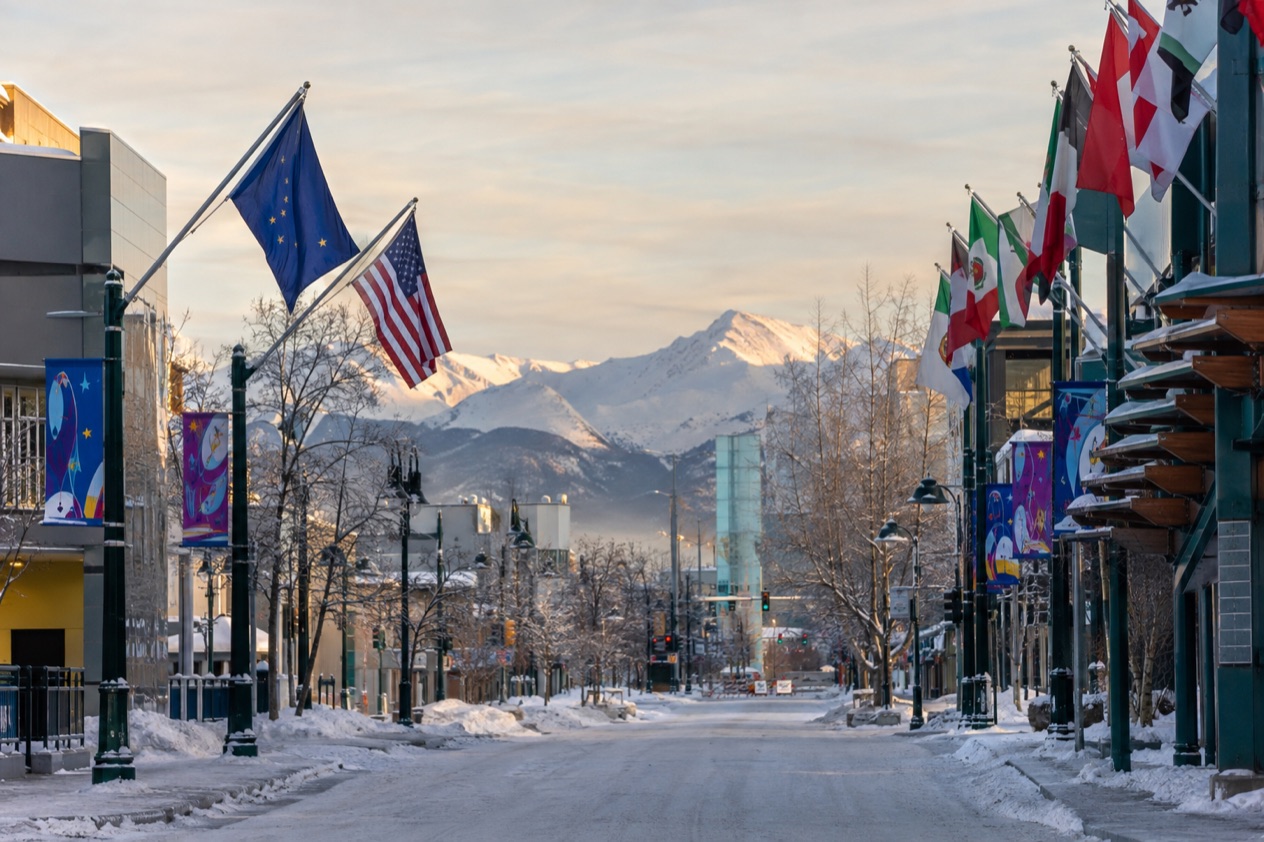
Known as Rondy, Fur Rendezvous is North America’s largest winter festival, celebrated every February in Anchorage and described as the city’s premier winter festival. It has more than 50 events, among them the Running of the Reindeer and the Official Fur Auction.
The snow sculpture championships take place at Ship Creek, and the royal coronation for Rondy royalty is held at Hotel Captain Cook. Pins are a tradition of their own: the first Rondy pins were made in 1939, and collectors still follow each year’s design. Rondy Brew IPA, made with 49th State Brewing in Anchorage, is the festival’s official beer.
Rondy Headquarters can be reached at (907) 274-1177. After the festival, it is closed Monday through Friday during the fair, and open on weekends.
| Fur Rondy Headquarters | Open |
|---|---|
| Saturday | 10 am to 4 pm |
| Sunday | Noon to 4 pm |
| Monday to Friday | Closed |
The Alaska State Fair in Palmer
The Alaska State Fair is held every year in Palmer, about one hour north of Anchorage, at the foot of the Chugach Mountains in the Matanuska-Susitna Valley. It runs for about 12 days in late August and early September, so it closes out the summer.
Rides, carnival games, food concessions and live performances fill the grounds, with a rodeo, a Diaper Derby and the Alaska Grown Games among the free entertainment. The AT&T Borealis Concert Series has hosted acts such as Boyz II Men and the Beach Boys. Between 50 and 70 food vendors typically attend, serving hot dogs, pizza, burgers, nachos, gyros and Alaskan seafood, and more than 400 retail stalls line the grounds.
The fair is famous for giant vegetables, including a 138.25-pound cabbage in 2012. The Giant Cabbage Weigh-Off has been an official event since 1995. Competitive exhibits cover baking, canning, quilting, woodworking, photography, home-brewing, livestock and much more.
The Iditarod and the Nenana Ice Classic
For the Iditarod, Iditarod.com offers free visitor access with race standings, 10-second video clip previews and free live broadcasts. A free Insider registration adds some full videos and one favorite musher alert, while the paid Insider Subscription includes all video, multi-cam trail live streams, a GPS Tracker and five favorite musher alerts.
The Nenana Ice Classic is a different kind of festival, an ice pool in which people guess the exact time the Tanana River ice will break up at Nenana. It began in 1906 with six entries, and over 10 million dollars in prizes have been given away since. It is a non-profit charitable gaming organization, and its proceeds benefit volunteer and non-profit groups.
Which dates change each year?
The dates that move are the ones tied to nature or to the festival’s own schedule: the Nenana ice break-up, the Alaska State Fair days and the Fur Rondy lead-up events.
The Nenana ice break-up
The Tanana River at Nenana usually freezes between October and November and reaches an average peak ice thickness of 41 inches on April 1. Tickets are on sale from February 1 through April 5 each year throughout Alaska.
A tripod is planted on the river ice between the highway and railroad bridges, 300 feet from shore, and it is connected to a clock. When the ice goes out and moves the tripod 100 feet, the line breaks and stops the clock. Most often the ice has gone out in the afternoon, between noon and 4:00 PM.
Fair days and Rondy announcements
The State Fair is annual, but its calendar is described only loosely: about 12 days in late August and early September. Look for the exact opening day when you plan a trip to Palmer. The fair was cancelled in 2020 because of the pandemic, a reminder that even long-running events can change.
Rondy builds toward February through the fall. The 2027 Fur Rondy Collector Pin will be revealed on October 30th at 4 pm outside the Rondy Shop at 4th and D in Anchorage. Nominations for Lord or Lady Trapper close on November 1st.
Fixed dates to build around
Some dates never move. Alaska Day is October 18, and statehood is remembered on January 3 and July 7. Rondy always lands in February, and Nenana tickets are always sold from February 1 through April 5. Anchoring a trip to one of these gives you a firm starting point, with the movable events fitted around it.
Good to know before you go
Alaska draws more than 1.4 million visitors each year, and tourism is an important source of revenue for the state. Distances are large and many towns, Juneau among them, have no road link to the wider network. Only Haines, Hyder and Skagway are connected directly to the North American road system, and other Southeast communities rely on the Alaska Marine Highway, so plan the route to a festival as carefully as the festival itself.
Sources
- Wikipedia, Alaska (https://en.wikipedia.org/wiki/Alaska), checked October 11, 2026
- Fur Rendezvous Festival, Anchorage (https://www.furrondy.net/), checked October 11, 2026
- Iditarod Trail Committee, the Iditarod (https://www.iditarod.com/), checked October 11, 2026
- Wikipedia, Nenana Ice Classic (https://en.wikipedia.org/wiki/Nenana_Ice_Classic), checked October 11, 2026