
In Juneau, a Tlingit name on a street sign sits right above its English translation, and a visitor stopping to sound it out has already started learning. Alaska’s Indigenous cultures are present in everyday places like this one, as well as in museums and festivals.
Who are the Alaska Native peoples?
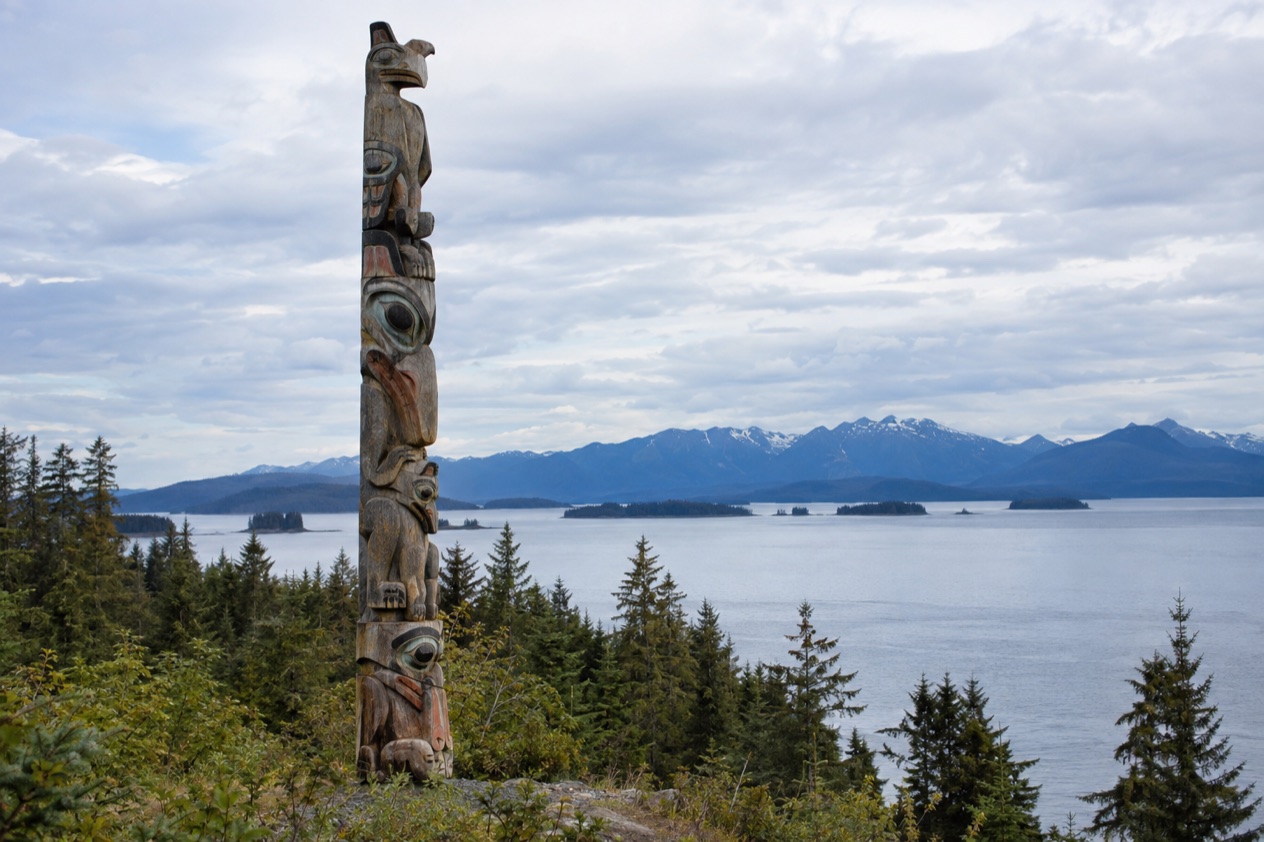
Alaska Natives are the Indigenous peoples of the state, a group of distinct cultural and linguistic communities that includes the Iñupiat, Aleut, Yupik, Eyak, Tlingit, Haida, Tsimshian and several Northern Athabaskan peoples. Treating them as one culture misses the point, since a whaling community on the Arctic coast and a clan house in the rainforest of the Southeast have little in common beyond their long ties to the land.
Most Alaska Natives are enrolled in federally recognized tribes, which belong to the 13 Alaska Native Regional Corporations that manage land and financial claims. Except for the Tsimshian, Alaska Natives no longer hold reservations, though they do control some lands. That is why a visitor will not find the reservation boundaries familiar from the Lower 48.
Tlingit, Haida and Tsimshian in the Southeast
The Tlingit, or Lingít, historically occupied a long stretch of coast along the present border between Alaska and British Columbia, reaching north toward the Copper River delta and covering almost all of the Alexander Archipelago. The Coastal Tlingit were divided into three tribes, the Chilkat along the Chilkat River, the Chilkoot, and the Taku along the Taku River, and they controlled one of the mountain passes into the Yukon interior.
Hoonah, near Glacier Bay, is a traditional Tlingit village and the home of the Xúnaa Ḵáawu. In Juneau, the Áak’w Kwáan and T’aakú Kwáan are the Tlingit people whose traditions were formed by their closeness to the natural world. Sealaska Corporation, the regional corporation for the Southeast, represents Tlingit, Haida and Tsimshian shareholders.
Iñupiat of the Arctic and northwest coast
The Iñupiat live in 34 villages across their homeland, from the North Slope Borough to the Northwest Arctic Borough and the area of the Bering Straits Regional Corporation. They continue to rely heavily on hunting and fishing, taking walrus, seal, whale, caribou and fish depending on where they live. Under the Marine Mammal Protection Act of 1972, Alaska Natives reserve the right to harvest whales and other marine mammals.
When a whale is caught, the animal benefits the whole community, with meat and blubber shared according to a traditional formula. Maktak, the skin and blubber of the bowhead and other whales, is rich in vitamins A and C. In spring, the Nalukataq festival celebrates whaling and honors the whale’s spirit. Language is a living concern too, and an Iñupiaq immersion school, Nikaitchuat Iḷisaġviat, opened in Kotzebue in 1998.
Yupik and Alutiiq in the west and southwest
Most Yupik in Alaska live in some 70 communities across western and southwestern Alaska. The Central Alaskan Yupʼik live in the Yukon–Kuskokwim Delta, along the Kuskokwim River and on the northern shore of Bristol Bay. The Alutiiq, or Sugpiaq, belong to the Alaska Peninsula and the coastal and island areas of southcentral Alaska.
Many Yupik families still harvest salmon and seal. The kuspuk (qaspeq), a garment worn by men and women alike, appears in casual and formal settings across Alaska. Traditionally, families followed food sources through spring, summer and fall and gathered in the qasgiq, the men’s communal house, mostly in winter. The Yupʼik also name children after the most recent person in the community to have died.
The land claims settlement behind it all
The Alaska Native Claims Settlement Act, signed by President Richard Nixon on December 18, 1971, is the largest land claims settlement in United States history. It transferred titles to twelve regional corporations and over 200 village corporations, let Alaska Natives keep up to 44 million acres and paid $963 million. This is the reason corporations, not reservations, shape Native life across the state today.
Where can visitors learn about their cultures?
The two clearest starting points are the Alaska Native Heritage Center in Anchorage and the Sealaska Heritage Institute in Juneau, and both are run in the spirit of sharing culture with visitors.
Alaska Native Heritage Center, Anchorage
The center, at 8800 Heritage Center Drive, is described as Alaska’s premier cultural destination representing all Alaska Native peoples. Its outdoor grounds hold six Village Sites, and in summer guided walking tours move through them from the Crossroads. Café Di’eshchin serves visitors during the summer season and is closed in winter.
Since the center speaks for all the peoples at once, it works well as a first stop before heading to a specific region. Those who are free include children aged 3 and younger, ANCSA members and Indigenous individuals with tribal enrollment or Tribal ID.
| Item | Details |
|---|---|
| Guided Village Site tours (summer season, daily) | Depart from the Crossroads at 9:15AM, 11:15AM, 1:15PM and 2:15PM, lasting 60 to 90 minutes |
| Café Di’eshchin (summer season) | Open 7 days a week, 9AM to 5PM |
| Alaska Resident admission | $15 adults (18+), $13 children (4-17), ID required |
| After 4pm | 50% discount off the ticket price |
Sealaska Heritage Institute, Juneau
Sealaska Heritage Institute is a private nonprofit, founded in 1980, that advances the cultures of the Tlingit, Haida and Tsimshian. Its headquarters is the Walter Soboleff Building in downtown Juneau, where the first floor holds an ongoing cultural exhibit and where Native culture is told by the people who know it best.
The Sealaska Heritage Store in the same city sells artworks by Southeast Alaskan Native artists, and an online shop offers more. Buying directly from this kind of source puts money in the hands of the artists themselves. Around town, Tlingit names on buildings, maps and signs often come with interpretation, so a walk becomes a small language lesson.
Celebration, the big gathering
Celebration is produced by Sealaska Heritage every other year and is Alaska’s second-largest Native gathering. In Juneau it welcomes thousands of Native people in June of even-numbered years, with regalia carrying years of clan history and dances performed in new and old ways.
One tradition stands out. Tlingit canoes approach shore with cedar paddles pointed to the sky, asking permission to enter clan territory, and they are received with songs and drumming. Celebration 2026 will be broadcast live statewide on KTOO 360TV and streamed on SHI’s YouTube channel and KTOO’s Roku and Apple TV apps.
Villages, churches and living communities
Culture also lives outside buildings made for visitors. Hoonah, a Tlingit village near Glacier Bay, is one example of a community with deep roots in its place. Across the state there are Russian Orthodox congregations made up mostly of Alaska Natives, a reminder that traditions here have layers of history and faith.
How do you visit respectfully?
Visit respectfully by treating Native communities as living places with their own rules, not as scenery, and by learning from the people who choose to teach.
Learn from Native voices
The cultural centers exist so visitors can hear Native culture told by Native people, and that is the best route to understanding. Listening to the names, the songs and the stories as presented, rather than relying on guesses, keeps a visit honest. The Tlingit names on Juneau’s signs are an invitation to try the words and ask how they are said.
Where a ceremony or gathering is public, such as Celebration, it is a chance to watch dances and regalia that carry clan history. Treat that history with the seriousness it deserves, and let the performers and elders set the tone.
Understand subsistence as daily life
Hunting and fishing are a foundation of life in many communities, not a hobby. In Utqiaġvik in 2005, more than 91 percent of Iñupiat households interviewed still took part in the local subsistence economy, compared with about 33 percent of other households. Whaling is protected under federal law, and a whale shared among everyone in a community is a source of food and a bond between people.
A visitor who sees walrus, seal, caribou or whale on a table is looking at a way of life with deep roots. Judging it by outside habits misses what it means. Many Yupik families likewise still harvest salmon and seal, and the same respect applies.
Respect land, language and change
Because there are no reservations, land ownership is complicated, and corporations hold much of it. Treat what looks like open country as someone’s home territory. Language is under pressure as well, since only about 2,000 of roughly 24,500 Iñupiat speak their Native tongue, and most of those are elderly. Learning even a greeting, or supporting the places that teach the languages, matters.
Some communities face change that is not of their making. The Shishmaref, Kivalina, Shaktoolik and Newtok tribes are among America’s first climate refugees, because of sea ice melting and increased wildfires. A visitor can meet that fact with attention and humility rather than curiosity about hardship.
Buy and ask with care
Artworks bought through the Sealaska Heritage Store or its online shop come from Southeast Alaskan Native artists, so the purchase supports them directly. The same instinct works elsewhere: choose work made by Native artists, and ask before photographing people, regalia or ceremonies.
Good to know before you go
The Alaska Native Heritage Center’s guided tours and café follow its summer season, and the café is closed in winter, so the time of year shapes what you find in Anchorage. Celebration in Juneau falls in June of even-numbered years. Plan around those rhythms, and approach every community with the patience you would bring to a stranger’s home.
Sources
- Wikipedia, Alaska Natives (https://en.wikipedia.org/wiki/Alaska_Natives), checked October 11, 2026
- Wikipedia, Tlingit (https://en.wikipedia.org/wiki/Tlingit), checked October 11, 2026
- Wikipedia, Inupiat (https://en.wikipedia.org/wiki/Inupiat), checked October 11, 2026
- Wikipedia, Yupik peoples (https://en.wikipedia.org/wiki/Yupik_peoples), checked October 11, 2026
- Alaska Native Heritage Center (https://www.alaskanative.net/visit), checked October 11, 2026
- Sealaska Heritage Institute (https://www.sealaskaheritage.org/), checked October 11, 2026
- Travel Juneau, Native heritage (https://www.traveljuneau.com/discover-juneau/juneaus-native-heritage/), checked October 11, 2026
- Wikipedia, Alaska Native Claims Settlement Act (https://en.wikipedia.org/wiki/Alaska_Native_Claims_Settlement_Act), checked October 11, 2026