
The ship is anchored off Belize City, the tender boats are lined up, and somewhere in a cabin a traveler is wondering whether the birth certificate in the folder is enough to step ashore. It is one of the most common questions before a Belize cruise. The short answer is that a passport is the document to carry, even on a round-trip sailing from a U.S. port where a birth certificate may be enough to get you home.
Do you need a passport for a Belize cruise?
Yes, a U.S. passport is the safest document to bring on a Belize cruise, and it is the only one that works in every situation: boarding, going ashore and flying home if something goes wrong. Two sets of rules meet on a cruise, those of the country you re-enter (the United States) and those of the countries the ship visits, and the passport satisfies both.
For the Belize side, U.S. citizens entering Belize need a U.S. passport valid for the length of their stay. Tourists staying less than 30 days do not need a visa.
Travelers are also asked to show proof of an onward or return ticket and to have enough funds to cover the whole stay. On a cruise, the ship itself is your onward travel, but these are the rules written for people entering Belize, and they are why a passport is the baseline.
What the U.S. side accepts
Coming back into the United States by air, U.S. citizens must present a valid U.S. passport, a Trusted Traveler Program card (NEXUS, SENTRI or FAST), a U.S. military identification card when traveling on official orders, or a U.S. Merchant Mariner document for official maritime business. Children must present their own passport when flying, and a tribal card cannot be used for air travel.
By land or sea, the list is longer: a passport, a Passport Card, an Enhanced Driver’s License, a Trusted Traveler card, a military ID on official orders, a Merchant Mariner document, a Form I-872 American Indian Card or an Enhanced Tribal Card. An Enhanced Driver’s License is meant as a low-cost proof of identity and citizenship for entering the U.S. from Canada, Mexico or the Caribbean through a land or sea port. These travel rules, under the Western Hemisphere Travel Initiative, took effect on June 1, 2009.
Children, green card holders and families
U.S. and Canadian citizen children under age 16, or under 19 when traveling with a school, religious or youth group, need only present a birth certificate or other proof of citizenship when entering the U.S. by land or sea. That is the U.S. re-entry rule, though, and it does not replace what the cruise line or the country you visit asks for.
Lawful permanent residents of the United States carry their Permanent Resident Card (Form I-551) or other valid evidence of status, both by air and by land or sea, and a passport is not required for re-entering the U.S. Children who travel without both parents should have proof of consent and identification from the parent who stays home, plus their birth certificates, because Belize immigration officials ask for these when a child arrives without both parents.
How the ports work on the Belize side
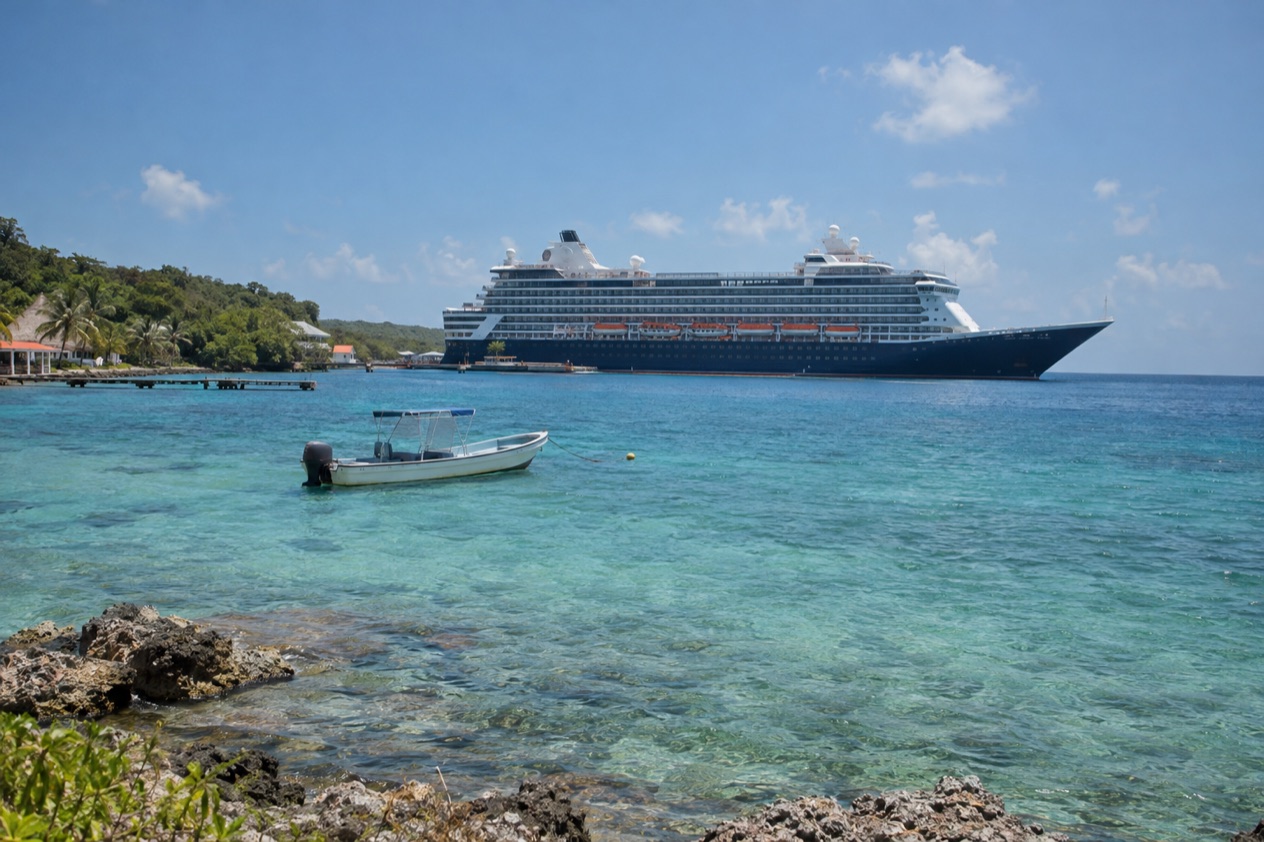
Fort Street Tourism Village Cruise Port in Belize City is a tender port, so the ship anchors and small boats carry passengers to shore, approximately 15 minutes from ship to shore. On land you find several courtyards, snack bars, restaurants, live local entertainment and local stores with duty-free shopping.
Harvest Caye Cruise Port, in the southern Stann Creek District, caters only to Norwegian Cruise Line passengers. Cruise ships have been anchoring in Belize’s waters since 1991, so the routine of going ashore with your documents is a well-worn one.
What about a round-trip cruise that starts and ends in the U.S.?
On a closed-loop cruise, one that begins and ends at the same U.S. port, U.S. citizens can legally re-enter the United States with a birth certificate and a government-issued photo ID, so a passport is not required by U.S. law for that part of the trip.
That is only half of the picture. U.S. citizens on closed-loop cruises may still be required to present a passport to enter the countries the ship visits, and they are advised to check with the cruise line for the right documents. Belize is one of those countries, and the entry rule for U.S. citizens there is a passport valid for the length of the stay.
Birth certificate and photo ID, in practice
The combination that works for coming home on a closed-loop sailing is a birth certificate plus a government-issued photo ID, such as a driver’s license. It is a re-entry option for the U.S. border officers, and it is not a promise that every stop on the itinerary will let you off the ship with it.
This is where the cruise line comes in. The line sets the documents it requires at boarding, and the rule from U.S. border authorities is plain: ask the cruise line what it needs for the countries on your route. For a stop in Belize, the passport answers the question before anyone asks it.
Why a passport is still the smarter choice
A passport is the one document accepted for every kind of U.S. entry, by air as well as by sea. If an emergency forces you to leave the cruise early, for illness or any other reason, you would be flying home, and flying back into the United States calls for a valid passport or one of the other air documents (a Trusted Traveler card, for example, for those who have one). A birth certificate does not cover that case.
There is a practical side too. A passport covers the Belize entry rule, the cruise line’s boarding check and any surprise change of itinerary with one small booklet. Children need their own passport for air travel, so a family that might have to fly home is better placed with passports for everyone, including the youngest.
| Situation | Documents the U.S. rules accept |
|---|---|
| Re-entering the U.S. by air | Valid U.S. passport, Trusted Traveler card, military ID on official orders, or Merchant Mariner document |
| Re-entering the U.S. by sea | Passport, Passport Card, Enhanced Driver’s License, Trusted Traveler card, military ID on official orders, Merchant Mariner document, Form I-872 or Enhanced Tribal Card |
| Closed-loop cruise, same U.S. port | Birth certificate and government-issued photo ID |
| Entering Belize, U.S. citizens | U.S. passport valid for the length of the stay |
What if you miss the ship?
Missing the ship in Belize means you are a traveler in the country on your own, and the document that matters most is your passport, because it is what lets you stay, travel and fly home. This is the situation where a birth certificate and a photo ID, however valid for a closed-loop sailing, stop being enough.
Your passport is your way out
U.S. citizens entering Belize need a passport valid for the length of the stay, and anyone entering is asked to show an onward or return ticket and enough funds for the whole stay. Once the ship has sailed without you, you are no longer a passenger carrying the cruise’s paperwork, and those entry rules describe your position as an ordinary visitor.
To fly home, you need the air documents: a valid U.S. passport, or a Trusted Traveler card (NEXUS, SENTRI or FAST), a military ID on official orders or a Merchant Mariner document for official maritime business. Children must present their own passport when traveling by air, and a tribal card does not work for air travel. A lawful permanent resident flies home with the Permanent Resident Card, and a passport is not required for that.
If you are traveling with children
A child who is separated from the ship is in a tougher spot without the right papers. Belize immigration officials require proof of consent and identification from the non-traveling parent, plus the children’s birth certificates, when children travel without both parents. For a family that stays together, the child still needs a passport to board a plane.
A copy of the consent and the birth certificates in the day bag, alongside the passports, is a sensible habit for any family on a port day, since the original paperwork that proves a child’s relationship to the parents can matter at the very moment the ship is the hardest to reach.
Staying longer than planned
Tourists staying less than 30 days do not need a visa. A visitor who needs more than 30 days must get the passport re-stamped at a local immigration office and pay an additional fee for each extra month, up to a maximum of six months. For someone who missed a sailing, this is a long-run backstop and not a likely need, but it shows why the passport has to stay valid for the whole stay.
Belize does not require special immunizations for visitors, so there is no health paperwork to add. Fort Street in Belize City is a tender port with a tender ride of approximately 15 minutes from ship to shore, which is a reminder that the last boat back is part of any port day: the passport in your pocket is what keeps a missed tender from becoming a bigger problem.
Good to know before you go
The U.S. State Department rates Belize Level 2, “Exercise increased caution”, because of crime, and says the south side of Belize City has historically had the highest concentration of violent crime.
The Atlantic hurricane season runs from June 1 to November 30, so a cruise in those months sails inside it, and itineraries can change with the weather. Keep the passport, the cruise documents and a copy of each in a place you can reach quickly on port days.
At Fort Street, the duty-free stores, snack bars and live local entertainment make an easy stop for a last purchase before the tender ride back. If you land at Harvest Caye, remember that the port is reserved for Norwegian Cruise Line passengers.
Sources
- U.S. Customs and Border Protection, Western Hemisphere Travel Initiative (https://www.cbp.gov/travel/us-citizens/western-hemisphere-travel-initiative), checked October 11, 2026
- Belize Tourism Board, Cruise licensing (https://www.belizetourismboard.org/licensing/cruise/), checked October 11, 2026
- U.S. Department of State, Belize Travel Information, Entry and exit requirements (https://travel.state.gov/), checked October 11, 2026
- U.S. Department of State, Belize Travel Advisory, Level 2, March 11, 2026 (https://travel.state.gov/), checked October 11, 2026
- NOAA National Hurricane Center, Climatology (https://www.nhc.noaa.gov/climo/), checked October 11, 2026
To plan your stay
- Best Time for a Belize Cruise: Dry Season, Hurricane Season and Month-by-Month Weather
- Fort Street Tourism Village: Belize City's Cruise Port, What Is Inside and How Passengers Reach It
- Altun Ha from the Belize City Cruise Port: the Jade Head, the Temple Pyramids and the Road North
- Belize City Cruise Port: Fort Street Tourism Village, Tender Landings and What to Do Ashore