
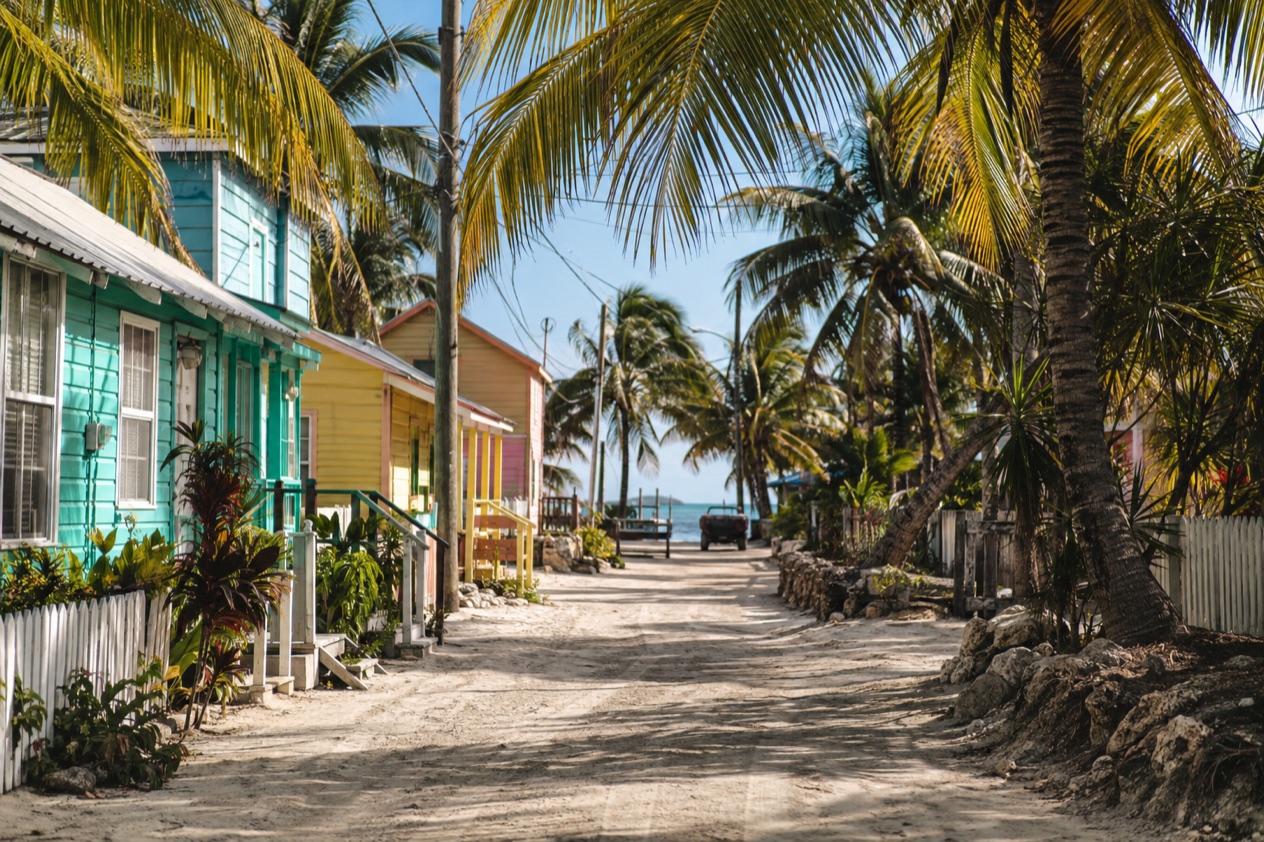
Morning on Caye Caulker starts with the soft scrape of bicycle tires on sand, the smell of fry jacks from a street kitchen, and pelicans lined up along the docks waiting for the fishing boats. Nobody hurries here, and the one traffic sign on the island asks bikers and pedestrians to go slow. This is a small, barefoot reef island for travelers who want snorkeling, seafood and sunsets without the polish of a resort.
What are the best things to do in Caye Caulker?
The best things to do on Caye Caulker are the ones that put you on or beside the water: a boat out to the reef, a slow afternoon at the Split, a plate of grilled lobster, and a sunset from the western side of the island. The rest of the day is for wandering sandy streets with nothing planned.
These are the essentials, each one developed further down the page.
- Snorkel the Caye Caulker Marine Reserve, because the reef lies so close to the island.
- Spend an afternoon at the Split, the channel where the island’s social life gathers.
- Take a manatee tour to Swallow Caye Wildlife Sanctuary for a glimpse of a gentle, elusive animal.
- Eat lobster in the village that once lived from lobster fishing.
- Ride a bicycle along the sand streets, the way the island intends you to get around.
- Watch the sun go down over the western shore, where the bay of La Ensenada opens up.
- Hop to San Pedro by ferry when you want a different pace for the day.
- Look toward the atolls and the Great Blue Hole when diving is the point of your trip.
Caye Caulker rewards a loose schedule. Pick one water activity a day, leave the remaining hours open, and let meals and sunsets set the rhythm.
Sights and landmarks in Caye Caulker
Caye Caulker has no ruins and no museum circuit, so its landmarks are places and moods: a channel, a bay, a main street of sand and the docks that tie the village to the sea. The village itself is called Caye Caulker Village, and almost everything you want to see sits within a short bike ride of everything else on an island that runs about five miles from end to end.
The Split
The Split is the island’s unofficial town square, a narrow channel that cuts the cay in two and lets the sea run through. People come here in the late morning and stay until the light turns gold, with drinks from the open-air bar, music from a speaker, and a shifting crowd of travelers, fishermen and island kids. Decks and a few sun-bleached chairs line the edge, and the color of the water changes from pale green to deep blue as clouds move over.
It is the easiest place on the island to meet other travelers and swap tips about boats and restaurants. The current in a channel like this can be strong, so watch how locals use it before you decide what to do in the water. Go in the late afternoon, when the heat eases and the sun lights up the western side.
Front Street and the village
The main drag is a sand street lined with painted wooden houses, small guesthouses, tour desks, bakeries and shacks that sell grilled fish. Hand-lettered signs advertise snorkel trips, fresh juice and coconut bread, and golf-cart-sized traffic is slow enough that you can chat with people as you pass. The island has grown up around over fifty hotels and a scattering of restaurants and shops, yet the village still reads as a fishing settlement first.
Walk it once early, when bakers are setting out johnnycakes and the first boats are leaving, and once after dark, when strings of lights and music come on. Side lanes lead off to colorful homes, gardens full of hibiscus and a few small shops selling hand-painted souvenirs, hammocks and local hot sauce.
La Ensenada and the western shore
One theory for the island’s name holds that boats were caulked in the protected bay of La Ensenada on the western side, and the shoreline still has a working-harbor feel. Mangroves fringe parts of the coast, boats sit at anchor in the shallows, and the horizon opens up wide for sunset. It is quieter here than on the reef side, and birds work the shallows at dusk.
The western shore is where you come to sit and watch. Bring a drink from the village, find a dock or a bench, and let the sky do the rest. The mainland shows as a low line far across the water on clear evenings.
Smaller things worth a stop
Between the big sights, the island’s small details are the pleasure. Colorful murals appear on walls, local carpenters build boats in open yards, and music drifts from porches in the evening. The island has been on the backpacker circuit since the 1960s, which explains the hammock-and-hostel feel that still runs through the village, along with newer hotels that cater to a wider range of travelers.
Look for the village’s community noticeboards, the little shops selling Belizean hot sauces and the stands with crafts made from shell and wood. The Village Council looks after public property here, so the clean paths and tidy public spaces reflect shared local effort.
Beaches and outdoor things to do in Caye Caulker
The outdoors on Caye Caulker means reef, seagrass and mangrove, not long beaches. The island is surrounded by shallow water, and the barrier reef lies about a mile to the east, which puts snorkeling and diving at the center of any visit. The Caye Caulker Marine Reserve, established in April 1998, covers over 9,000 acres of the Mesoamerican Barrier Reef System.
Snorkeling the marine reserve
The reserve is described as a diver and snorkeler’s paradise, and it protects five habitats: mangroves and littoral forests, lagoon marshlands, sea-grass beds and coral reef. A boat trip usually takes you out over seagrass flats and then to the reef edge, where you look down on coral heads, schools of small reef fish and sometimes rays or turtles. Sightings are never guaranteed, but the variety of habitats gives you a good chance of seeing something memorable.
Choose a tour that explains the reserve and its rules, since this is protected water. Bring a rash guard or sun shirt, reef-safe sunscreen and a waterproof camera. The trips suit anyone comfortable on a boat, and snorkelers and divers both find a reason to come back.
Diving and the wider reef
The Belize Barrier Reef is the second largest in the world and a World Heritage Site, and Caye Caulker is one of the places from which divers look out at it. The reef lies roughly a few hundred feet offshore in the north and many miles out in the south, a range that explains the variety of dive sites along the coast. Divers who want more can look to the three atolls: Turneffe Atoll, Glover’s Reef and Lighthouse Reef.
Lighthouse Reef is the most easterly diving area in Belize and is home to the Great Blue Hole, made famous by Jacques Cousteau in 1970. It is the image that draws many people to Belize in the first place. Dive shops on the island can tell you what they offer, and the quiet pace of the village is a pleasant place to rest between dives.
Sunning, kayaking and lazy time
Caye Caulker has sandy patches and clear water, but its shoreline is mostly docks, seawalls and mangrove rather than a long resort beach. The pleasure is in the piers, where you can lie in the sun, read, watch pelicans and listen to the water slap the pilings. Hammocks hang from many guesthouse porches and from palm trees along the shore.
Paddling in the shallows around the island, cycling the sand lanes and watching birds in the mangroves fill the hours between boat trips. The island is entirely free of hustle and bustle, and the best way to enjoy it is to give each day one outing and let the rest drift.
Day trips from Caye Caulker
The day trips from Caye Caulker go by boat, because the island sits among reefs, cayes and sanctuaries that are best reached across the water. Some are tours of wildlife, some are hops to neighboring towns, and some point toward the great dive sites of the barrier reef.
Swallow Caye Wildlife Sanctuary and the manatees
Manatee tours to Swallow Caye Wildlife Sanctuary are one of the island’s signature outings. You travel by boat across shallow water toward a mangrove-edged sanctuary where these slow, round marine mammals feed and surface to breathe. Watching a manatee’s whiskered snout rise above the water for a breath is quiet and a little magical, and the guides tend to speak softly out of respect.
The tours do not allow swimming with the manatees, and some days it may be more difficult to see them than others. Treat the trip as a chance, not a promise, and enjoy the boat ride, the birds and the mangroves either way. It suits anyone who likes wildlife at a gentle pace.
San Pedro on Ambergris Caye
The ferry from San Pedro to Caye Caulker takes about 30 minutes, which makes San Pedro a natural change of scene. The town on Ambergris Caye is larger and busier, with more shops, restaurants and beachfront bars, and it gives a useful contrast to Caye Caulker’s village calm.
Go for a walk along the waterfront, browse the shops and eat a meal at a different kind of restaurant, then return to Caye Caulker’s slower rhythm. It suits travelers who like the idea of seeing both islands without changing hotels.
Belize City by water taxi
Caye Caulker lies about 20 miles north-northeast of Belize City, and the San Pedro Belize Express ferry covers the crossing in approximately 45 minutes. Most people use this route as their way to and from the mainland, but it also opens the door to the rest of the country, from Maya sites to jungle lodges.
If you want to pair island time with an inland excursion, the ferry is your link. Leave the beach days for the cay and use the mainland for the things the island cannot offer.
The atolls and the Great Blue Hole
Beyond the nearby reef lie the atolls of the Belize Barrier Reef system, including Turneffe Atoll, Glover’s Reef and Lighthouse Reef. Turneffe lies directly east of Belize City and is the nearest of the three to that city. Lighthouse Reef holds the Great Blue Hole, the huge marine sinkhole that appears in so many photographs of Belize.
These are serious dive destinations, and they appeal most to certified divers and experienced ocean travelers. Dive shops on Caye Caulker can explain what outings they offer and what the sites involve.
What to eat in Caye Caulker
Eating on Caye Caulker means seafood first, and lobster most of all, since the village once lived primarily from lobster fishing and the dish is still a must for seafood lovers. Grilled over wood or charcoal and served with garlic butter, rice and beans, and a slice of coleslaw, it is the island’s signature plate.
Lobster season is celebrated with a festival, usually in early summer, when the village fills with music, cookouts and plates of the catch. Outside the season, other seafood fills the menu, from snapper to shrimp to conch.
Breakfast and street food
Mornings begin with fry jacks, puffy fried dough served with beans, eggs, cheese or jam, and with johnnycakes, a soft Belizean bread that often arrives with eggs and refried beans. Small bakeries sell coconut bread, cinnamon rolls and cheese-filled pastries, and fruit juices are pressed to order.
Through the day, street grills smoke chicken, fish and lobster on corners, and small stands sell meat pies, tamales and garnaches, the crisp tortillas topped with beans, cabbage and cheese. Eat where the grill is busy and the smoke is rising.
Seafood plates and Belizean classics
Ceviche made from conch or fish, cured in lime with onion, cilantro and pepper, is a cooling lunch on a hot day. Conch fritters and coconut shrimp make good starters, and whole fried or grilled fish arrives with plantains and rice.
Belizean staples fill out the menu. Rice and beans with stewed chicken, cooked in coconut milk, is the national comfort food, and a bottle of local hot sauce, often made from habanero, sits on every table. Ask your server how hot it is before you pour.
Drinks
Belikin is the local beer, easy to find and easy to drink in the heat. Rum punch, coconut water and fresh lime juice also appear everywhere, and many bars mix their own versions with local rum. Sip slowly and match your drinks to the sun.
Smoothies and fresh juices help in the middle of the day, and a cold drink at the Split is a ritual in itself. Many cafés also serve strong Belizean coffee in the morning.
Things to do in Caye Caulker at night
Nights on Caye Caulker are easygoing, built around sunset, dinner and a few bars where the music stays relaxed. The pace is set by the island’s own motto, and the sand streets fill with people strolling, cycling slowly and looking for their next meal.
Sunset and dinner
The evening starts at the western shore, where the sky turns orange and pink over the water. Bring a drink, find a spot on a dock and stay until the colors fade, then wander to dinner along the lit streets. Grills fire up as the light drops, and tables spill onto the sand.
Many dinners are simple: grilled fish or lobster, rice, a salad and a cold beer. Linger over it, since nobody is rushing you.
Bars, music and the Split after dark
After dinner, the Split and several beach bars keep going with reggae, soca and Caribbean pop. Dancing happens on decks and sand, and the mood is friendly and informal. Flip-flops are the standard footwear.
If you want something lower-key, small bars along the main street offer rum punches, board games and conversation with other travelers. The island is entirely free of hustle and bustle, and the nightlife follows suit.
Quiet evenings and the night sky
With little light pollution beyond the village center, the sky can be spectacular on clear nights. A walk to the end of a dock or a seat on a quiet shoreline gives you a view of stars and sometimes the glow of distant lightning over the sea.
A hammock on your guesthouse porch, a book and a cold drink are also a good plan. Early nights are part of the island’s charm, particularly before a morning boat trip.
Things to do in Caye Caulker with kids
Kids on Caye Caulker find a playground in the sand lanes, docks and boats, and the slow pace suits families. Bicycles are the main way to get around, and the sign asking bikers and pedestrians to go slow tells you the rhythm.
Boats, wildlife and the reef
A boat trip is the biggest thrill for most children. The manatee tour to Swallow Caye Wildlife Sanctuary lets them look for an unusual animal from the boat, and a snorkel outing in the marine reserve opens a window onto reef life. Swimming with the manatees is not allowed, so the focus is on watching.
Pelicans, frigatebirds and small fish around the docks hold the attention of younger children between outings. Bring masks that fit well and ask tour operators what they provide for children.
Beach days, food and keeping cool
Sand play, shell hunting and dock watching fill an easy morning, and a cold fruit smoothie or coconut ice treat is a fine afternoon reward. Johnnycakes, fry jacks, rice and beans and plain grilled fish are all friendly choices at the table.
The sun in Belize is strong. Plan hats, long-sleeved sun shirts, reef-safe sunscreen and plenty of water, and take breaks in the shade. The island is flat and small, so distances are short, but sandy streets can tire little legs, and a bike with a child seat or a slow stroll helps.
Good to know before you go
The U.S. State Department rates Belize Level 2, “Exercise increased caution”, because of crime, and says the south side of Belize City has historically had the highest concentration of violent crime.
Caye Caulker is reached by high-speed water taxi or by small plane to Caye Caulker Airport, served by Tropic Air under the code CUK, with a flight time of 15 minutes. On the island, you walk or bike. The Atlantic hurricane season runs from June 1 to November 30, so keep it in mind when you plan, along with the sargassum that can reach Caribbean shores.
Sources
- Wikipedia, Caye Caulker (https://en.wikipedia.org/wiki/Caye_Caulker), checked October 11, 2026
- Wikivoyage, Caye Caulker (https://en.wikivoyage.org/wiki/Caye_Caulker), checked October 11, 2026
- Belize Fisheries Department, Caye Caulker Marine Reserve (https://fisheries.gov.bz/ccmr/), checked October 11, 2026
- Caye Caulker Village Council, Traffic (https://www.cayecaulkervillagecouncil.org/traffic), checked October 11, 2026
- Caye Caulker Village Council, About (https://www.cayecaulkervillagecouncil.org/about), checked October 11, 2026
- San Pedro Belize Express Water Taxi, Caye Caulker (https://belizewatertaxi.com/destinations/caye-caulker/), checked October 11, 2026
- Tropic Air, Caye Caulker (https://www.tropicair.com/caye-caulker-cuk/), checked October 11, 2026
- Maya Island Air, Caye Caulker flights (https://www.mayaislandair.com/belize-flights-caye-caulker/), checked October 11, 2026
- Wikipedia, Belize Barrier Reef (https://en.wikipedia.org/wiki/Belize_Barrier_Reef), checked October 11, 2026
- Wikipedia, Tourism in Belize (https://en.wikipedia.org/wiki/Tourism_in_Belize), checked October 11, 2026
- U.S. Department of State, Belize Travel Advisory, Level 2, March 11, 2026 (https://travel.state.gov/), checked October 11, 2026
- NOAA National Hurricane Center, Climatology (https://www.nhc.noaa.gov/climo/), checked October 11, 2026
To plan your stay
- Best Time to Visit Caye Caulker: Dry Season, Sea Temperatures, Hurricane Months and Festivals
- Where to Stay in Caye Caulker: Village Center, the Split, the North Side and the Lagoon Shore
- Caye Caulker from Belize City: Water Taxi, Small Plane and What to Do on Arrival
- Know Before You Go to Caye Caulker: Entry Rules, Money, Water Taxis and Health