
On the tenth of September, Caye Caulker hears drums and brass drifting off the water, and boats from the regatta tradition stitch white sails across the horizon toward the barrier reef. Flags in blue and red start appearing on porches, bikes and golf-cart-free sandy lanes, and by the end of the month the whole island is in a celebratory mood. September here is a warm, green, slow-paced month with plenty of national pride on show.
What is the weather like in Caye Caulker in September?
September is hot, humid and wet, with a sea as warm as bathwater and days that are a little shorter than in the summer months before it.
| Month | Sea at Caye Caulker (°F) | Daylight on the 15th (hours and minutes) |
|---|---|---|
| August | 86.9 | 12 h 45 min |
| September | 87.7 | 12 h 16 min |
| October | 86.5 | 11 h 46 min |
In Belize City, highs average about 90°F in September and nights hold in the mid-70s, with rain falling on a good share of the days. That is the air picture for the region: sticky, tropical and green. On the island, a sea breeze off the water helps, and the lanes of sand and shade under almond and palm trees are where you spend the hottest part of the day.
The sea is the real story. At nearly 88°F it is warmer than the air feels at night, so a swim never comes as a shock, and snorkeling does not call for more than a swimsuit. Daylight lasts a little over twelve hours, which gives a morning start, a long lunch in the shade and a sunset that arrives before dinner.
Pack for heat and for rain: light cotton, quick-drying shirts, sandals that can get wet, and a thin rain jacket. September is within the Atlantic hurricane season, which runs from June 1 to November 30 and peaks around September 10, so it is a month for flexible plans and a watchful eye on forecasts.
Can you swim in Caye Caulker in September?
Yes, the sea sits near 88°F, warm enough for a long swim, a slow snorkel or a drift in the shallows with no need to dash back to the towel.
The Caye Caulker Marine and Forest Reserve, established in April 1998, covers over 9,000 acres of the Mesoamerican Barrier Reef System, and it is the natural frame for snorkeling and diving from the island. The Belize Barrier Reef itself runs along the coast, and the island is described as having an easily accessible reef, with sandy beaches and clear water.
Farther out, the reef system includes three atolls: Turneffe Atoll, Glover’s Reef and Lighthouse Reef. Lighthouse Reef is the most easterly diving area in Belize and is home to the Great Blue Hole, made famous by Jacques Cousteau in 1970.
What to do in Caye Caulker in September
September belongs to two national dates. Saint George’s Caye Day falls on September 10 and recalls the 1798 Battle of St. George’s Caye, with an annual regatta in San Pedro Town. Independence Day follows on September 21, marking the day in 1981 when Belize was granted independence by Great Britain.
Across the month, expect flags in the national colors, school parades, music and plates of rice and beans, stewed chicken and fried fish at roadside kitchens. The celebrations are loud, friendly and open to anyone standing on the street, and they are a good reason to stay on the island through the middle of the month.
Snorkeling the reserve
The Caye Caulker Marine and Forest Reserve is the heart of the water outings. Its rules and regulations were gazetted on December 6, 2008, as Statutory Instrument No. 127 of 2008, and it protects a large stretch of the Mesoamerican Barrier Reef System. Snorkelers head out by boat to the reef side of the island and float over coral heads and sandy patches.
With the sea at its warmest, September suits long hours in the water. A shorty is rarely needed, and a rash guard is enough for the sun. Pair a morning snorkel with a lunch of grilled fish and a slow afternoon under a palm, then let the evening breeze do the rest.
Divers and snorkelers who want more can look to the atolls, including Lighthouse Reef and the Great Blue Hole. These are bigger undertakings that belong on a day set aside for the water alone.
Island life on foot and by bike
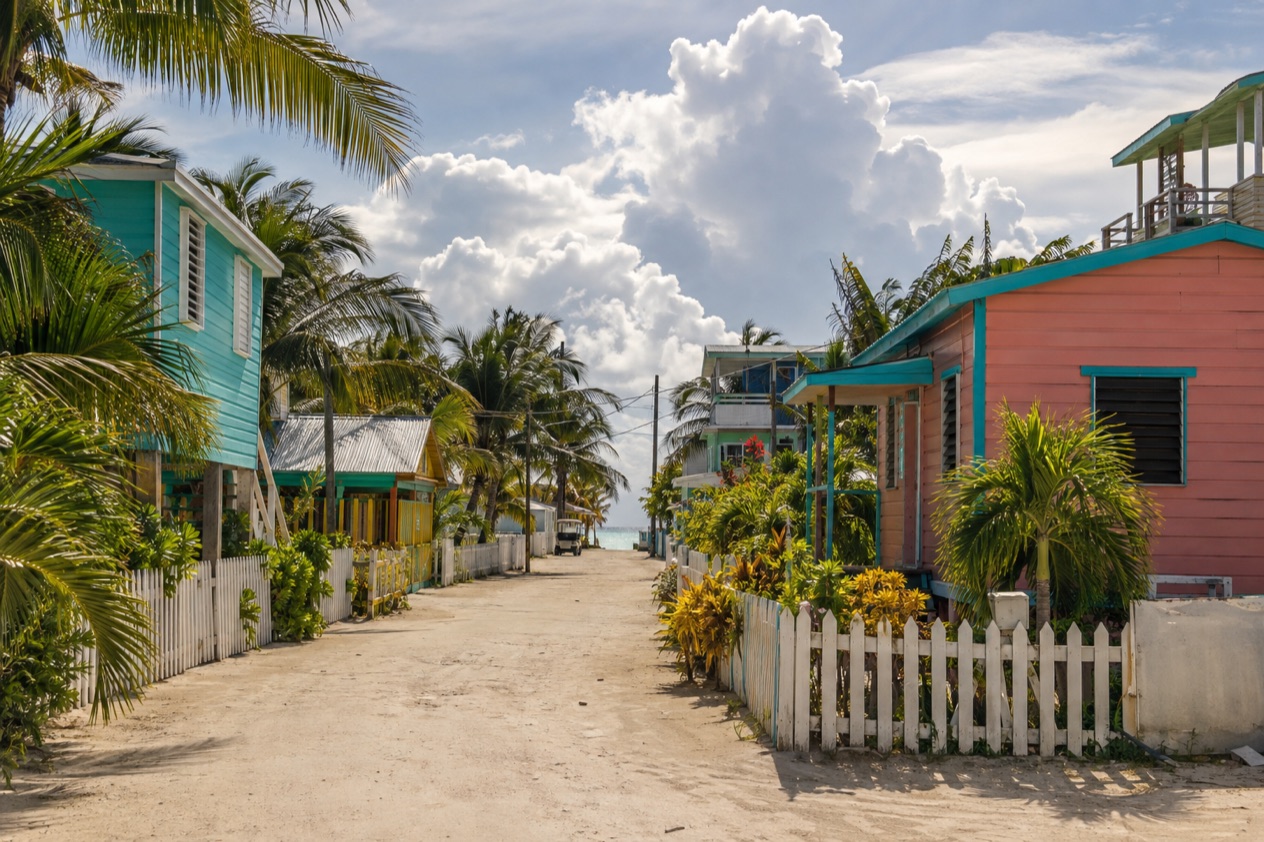
The island is entirely free of hustle and bustle, and the only local traffic sign instructs bikers and pedestrians to go slow. That spirit is the point. Walk the sandy streets, stop at a juice stand, and watch the fishing boats come in along the shore.
In September the green is thick, the air is soft, and the quiet between celebrations is deep. Evenings are for sitting by the water with a cold drink while the sky changes color. Sargassum, a brown algae that sometimes washes onto Caribbean beaches, can appear on shores, so a beach day may look different from one week to the next.
If rain closes in, retreat to a covered porch, a small gallery or a café and wait for the sky to clear. Showers pass, and the island has a way of making a wet afternoon feel like part of the plan.
A two-day itinerary for Caye Caulker in September
Day 1 is for the water. Begin early with breakfast at a small island kitchen, then join a boat out to the reserve for a snorkel over the reef. The sea is at its warmest of the season, so there is no reason to hurry back. Return for a long lunch of fresh fish in the shade.
In the afternoon, rest through the hottest hours, then walk the sandy lanes as the light softens. With about twelve hours of daylight, sunset arrives in time for a drink at a waterside bar before dinner.
Day 2 is for the island itself. Start with a slow walk or bike ride along the shore, stopping wherever something catches your eye: a mural, a fruit stand, a fishing dock. If the date falls near September 10 or September 21, follow the music and flags to wherever the celebrations are gathering.
Spend midday at a roadside kitchen and the afternoon in a hammock or on a quiet stretch of sand. If rain turns the sky gray, linger over coffee at a covered café, browse the small craft shops and wait for the sun to return. End the evening with a last meal of rice and beans, grilled fish or a fresh conch dish.
Is Caye Caulker busy in September?
September is a quieter month on the island, with the celebrations of Saint George’s Caye Day and Independence Day adding local energy rather than long lines of visitors.
Streets feel relaxed, restaurant tables are rarely a struggle, and the island keeps its easygoing rhythm. The festive days bring families, music and a bit more movement along the main lanes, particularly around the national holidays.
For a trip that lands on September 10 or September 21, it is wise to settle your room earlier, since those are public celebrations. For the rest of the month, a later booking is a reasonable habit. Boat outings to the reserve are worth lining up once you know your dates, so the best days of the weather are not wasted.
What to pack for Caye Caulker in September
Pack light, quick-drying clothes and plan for sun, sea and the occasional downpour.
- A light rain jacket, for the showers that pass through the month
- Reef-safe sunscreen and a hat, for long hours on the water
- A rash guard and swimsuit, for snorkeling in the warm sea
- Sandals that can get wet, for sandy lanes and boat docks
- A small dry bag, to keep a phone and wallet safe on boat trips
- Something in blue and red, to join the national celebrations
Good to know before you go
The U.S. State Department rates Belize Level 2, “Exercise increased caution”, because of crime, and says the south side of Belize City has historically had the highest concentration of violent crime.
September sits inside the Atlantic hurricane season, which runs from June 1 to November 30 and peaks around September 10. An average season brings 14 named storms, so travel plans in the month call for some flexibility. Hurricane Keith, which formed in September 2000, caused extensive damage in Belize, a reminder that the season is real. The island keeps a gentle pace and invites you to go slow, in keeping with the lone traffic sign that asks bikers and pedestrians to do exactly that.
Caye Caulker in September vs August and October
Moving the trip to August gives you slightly longer days, a touch less rain and a sea just a shade cooler than September’s. The celebrations of the national month are still ahead, so the island is more about the water than the parades.
October brings shorter days and a little more rain, with a sea that stays warm. The festive energy of September has settled, and the island feels quieter, though the Atlantic hurricane season is still on until the end of November.
Choose September if you want the flags, the music and the warmest sea of the three. Pick August for long daylight and a quiet start to the wet season, or October for a calmer island once the celebrations have passed.
Is September a good time to visit Caye Caulker?
Yes, for travelers who love a warm sea, a green island and a local celebration, and who are comfortable with a wet, hurricane-season month.
It suits snorkelers, slow walkers and anyone who wants to see Belizeans mark their national days on the street. It is less suited to those who want dry, predictable weather or who would rather avoid rain and storm watching altogether.
On arrival, drop your bags, walk to the water and take your first swim. Then look for the flags, the drums and the plates of food that mark the month, and let the island set the pace. September here is about a warm sea and a country celebrating itself.
Sources
- Open-Meteo Marine API, average 2015-2024, checked October 11, 2026
- sunrise-sunset.org, sunrise and sunset calculated for the 15th of the month, checked October 11, 2026
- NOAA NCEI, GHCN-Daily station BHM00078583 (Philip S. W. Goldson International Airport, Belize City), normals 1991-2020 computed from the daily record (https://www.ncei.noaa.gov/access/services/data/v1?dataset=daily-summaries&stations=BHM00078583), checked October 11, 2026
- Wikipedia, Public holidays in Belize (https://en.wikipedia.org/wiki/Public_holidays_in_Belize), checked October 11, 2026
- Wikipedia, Garifuna Settlement Day (https://en.wikipedia.org/wiki/Garifuna_Settlement_Day), checked October 11, 2026
- NOAA National Hurricane Center, Climatology (https://www.nhc.noaa.gov/climo/), checked October 11, 2026
- Wikipedia, Hurricane Hattie (https://en.wikipedia.org/wiki/Hurricane_Hattie), checked October 11, 2026
- Wikipedia, Hurricane Keith (2000) (https://en.wikipedia.org/wiki/Hurricane_Keith_(2000)), checked October 11, 2026
- Wikipedia, Hurricane Dean (https://en.wikipedia.org/wiki/Hurricane_Dean), checked October 11, 2026
- Wikipedia, Hurricane Lisa (2022) (https://en.wikipedia.org/wiki/Hurricane_Lisa_(2022)), checked October 11, 2026
- Wikipedia, Hurricane Earl (2016) (https://en.wikipedia.org/wiki/Hurricane_Earl_(2016)), checked October 11, 2026
- Wikipedia, Hurricane Iota (https://en.wikipedia.org/wiki/Hurricane_Iota), checked October 11, 2026
- Belize Tourism Board, Sargassum resource (https://www.belizetourismboard.org/tourism-resources/sargassum-resource/), checked October 11, 2026
- Maya Island Air, Caye Caulker flights (https://www.mayaislandair.com/belize-flights-caye-caulker/), checked October 11, 2026
- Wikipedia, Belize Barrier Reef (https://en.wikipedia.org/wiki/Belize_Barrier_Reef), checked October 11, 2026
- Belize Fisheries Department, Caye Caulker Marine Reserve (https://fisheries.gov.bz/ccmr/), checked October 11, 2026
- Caye Caulker Village Council, Traffic (https://www.cayecaulkervillagecouncil.org/traffic), checked October 11, 2026
- Caye Caulker Village Council, About (https://www.cayecaulkervillagecouncil.org/about), checked October 11, 2026
- Wikipedia, Climate of Belize (https://en.wikipedia.org/wiki/Climate_of_Belize), checked October 11, 2026
- U.S. Department of State, Belize Travel Information, Entry and exit requirements (https://travel.state.gov/), checked October 11, 2026
- U.S. Department of State, Belize Travel Advisory, Level 2, March 11, 2026 (https://travel.state.gov/), checked October 11, 2026
To plan your stay
- Things to Do in Caye Caulker: The Split, Reef Snorkeling, Manatees and Fresh Lobster
- Where to Stay in Caye Caulker: Village Center, the Split, the North Side and the Lagoon Shore
- Caye Caulker from Belize City: Water Taxi, Small Plane and What to Do on Arrival
- Know Before You Go to Caye Caulker: Entry Rules, Money, Water Taxis and Health