
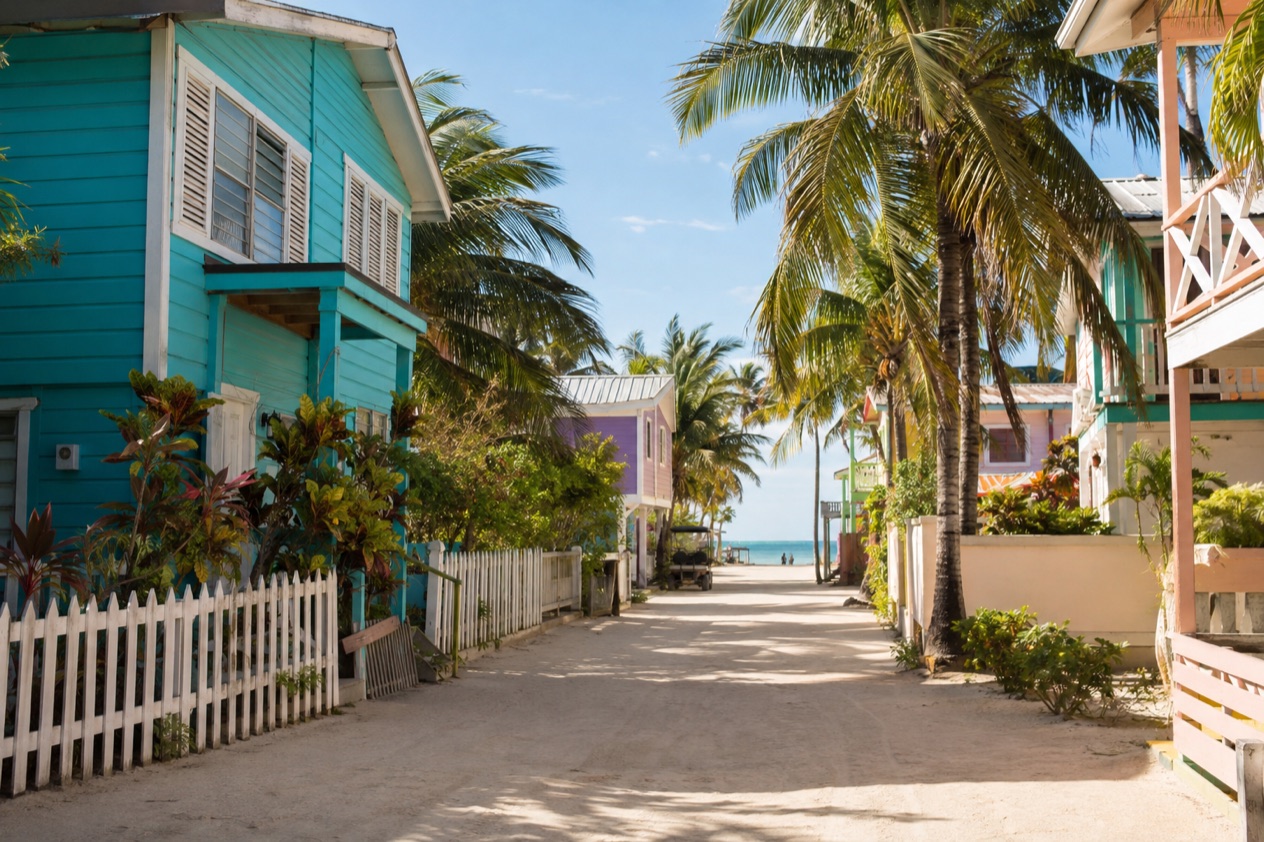
The water taxi slows as it nears the dock, and the first thing you notice is how low and green the island sits against the turquoise water. On Caye Caulker Village the soundtrack is bicycle bells, reggae from a porch and the slap of flip-flops on sand streets. A handful of practical points are worth sorting out before you arrive: the entry paperwork, the Belize dollar, how you reach the island, and what medical care is and is not on hand.
What should you know before visiting Caye Caulker?
Four things matter most: your passport and onward ticket, the way you get to the island, the exchange rate of the Belize dollar, and the fact that serious medical needs mean leaving the country.
Caye Caulker is small. The island is about five miles long, and it sits roughly a mile west of the Barrier Reef, which is why so many days here revolve around boats, snorkel gear and the water. The village is the island’s only town, home to a few thousand people, and it is where you will sleep, eat and catch your ride on and off the island.
What tends to surprise first-time visitors is how much of the trip happens on the water and how little happens on pavement.
The island also sits inside the Caye Caulker Marine and Forest Reserve, established in April 1998, which covers more than 9,000 acres of the Mesoamerican Barrier Reef System. That protection shapes how the surrounding waters are used, and it is part of why the area feels so tied to the sea.
English is the official language of Belize and the language of schools, government and most media, so you can ask directions, order dinner and chat with your boat captain without a phrasebook. In the Stann Creek district Creole is the main language, and you will hear its rhythm in the way people talk around you.
Entry, fees and paperwork
U.S. citizens need a U.S. passport valid for the length of their stay, and one source asks for at least three months of validity after arrival while another asks for six months beyond the intended stay. A passport with a comfortable margin settles both. Tourists staying less than 30 days do not need a Belizean visa, and Belize does not require special immunizations for visitors.
Every traveler must show proof of an onward or return ticket and sufficient funds to cover the stay. Visitors are usually given 30 days on arrival.
To stay longer, you get your passport re-stamped at a local immigration office and pay an extra fee for each additional month, up to a maximum of six months. The Visitor’s Permit Extension adds 30 days, provided you do not work or do business without consent, and your nearest Immigration Office can tell you whether you qualify.
Families should know that when children travel without both parents, immigration officials require proof of consent and identification from the non-traveling parent, along with the children’s birth certificates. If you arrive by land, the fee differs depending on whether the stay is under or over 24 hours.
Leaving through Philip S. W. Goldson International Airport carries two fees, and passengers are expected at the airport at least three hours before departure.
| Fee | Amount | Who pays |
|---|---|---|
| Passenger Service Fee, Philip S. W. Goldson International Airport | US$53.50 | Departing passengers |
| Protected Areas Conservation Trust (PACT) Fee, same airport | US$20.00 | Departing passengers |
| Visitor’s Permit Extension (additional 30 days) | BZ$200.00 | Visitors extending their stay |
| Overnight parking, Philip S. W. Goldson International Airport | US$9.00 | Anyone leaving a vehicle overnight |
Money and cards
The currency is the Belize dollar, and its official value is pegged at BZ$2 to US$1. That fixed rate makes mental math simple: halve any Belize dollar price and you have the U.S. figure. The Central Bank of Belize, which oversees the currency, was established on January 1, 1982.
Because prices can be quoted in either currency, it helps to notice which one a menu, a tour board or a hotel rate uses before you pay. Airport fees are listed in U.S. dollars, while the Visitor’s Permit Extension is set in Belize dollars, so you will meet both on a single trip. Keep in mind the funds requirement at entry: you must have enough money to cover your whole stay, and officials may ask you to show it along with your return or onward ticket.
Getting around
Caye Caulker is reached by high-speed water taxi or by small plane into Caye Caulker Airport. The island lies about 20 miles north-northeast of Belize City, and the San Pedro Belize Express ferry from Belize City to Caye Caulker takes approximately 45 minutes. Coming from San Pedro, the ferry takes about 30 minutes.
Once you land, the island is five miles long and the village is its center. The Caye Caulker Village Council looks after public property in the village, and the council also handles local driver’s licensing matters, with license printing on Wednesdays after 3:00 p.m. That is mostly of interest to residents, but it shows how local the island’s administration is.
If your trip also takes you onto the mainland, the road rules of Belize apply. Roads range from two-lane paved highways to dirt or gravel tracks, driving at night is strongly discouraged, and roadside assistance is frequently unavailable. Valid U.S. or international driver’s permits are accepted for only three months after initial entry.
Health and the sun
Medical care is the point to plan around. Emergency services in Belize are usually unavailable or significantly delayed, and serious injuries or illnesses normally require evacuation to another country. Advanced treatment is scarce even in Belize City and Belmopan, and in rural and remote areas even basic care can be hard to find or not available at all. Travelers who want a safety net often look into medical evacuation insurance before leaving home.
For vaccines, the CDC recommends hepatitis A for unvaccinated travelers one year old or older, and infants 6 to 11 months old should also be vaccinated. Anyone allergic to a vaccine component should receive a single dose of immune globulin, which protects for up to two months depending on dosage.
Hepatitis B is recommended for unvaccinated travelers younger than 60, and those 60 and older may get vaccinated. Typhoid vaccine is recommended if you might visit rural areas with poor sanitation, spend a month or more, or visit friends or relatives.
The sun on a small island a mile from the reef is strong, with open water on every side and little shade on the sand streets and docks. A hat, sunglasses and sunscreen belong in your daypack, and a rest in the shade between swims and boat rides keeps the days enjoyable.
Local customs and etiquette
Greetings matter here. A friendly good morning or good afternoon when you enter a shop, a restaurant or a guesthouse is the normal start to any exchange, and people answer in kind. English is spoken everywhere, with Belizean Creole mixed in, and a smile goes a long way if you do not catch every phrase at first.
The island runs at a slow rhythm. Meals can take time, service is unhurried, and an impatient tone sticks out. Swimwear is for the beach, the dock and the boat. Walking through the village, a shirt and a cover-up or shorts are the easy, respectful choice, and you will want the same when stepping into a church or a local office.
Respect for the sea is part of local life. The reserve around the island protects the reef and its marine life, so treat the water, the coral and the animals gently, and take your trash with you. If a boat captain or guide gives you instructions on the water, follow them as part of the day.
Belize has no legal restrictions on consensual same-sex relations, though the Immigration Act prohibits “homosexual” persons from entering and immigration authorities have not enforced that law. Significant hostile sentiment toward people based on real or perceived sexual orientation continues, so LGBTQ travelers may prefer discretion in public.
Good to know before you go
The U.S. State Department rates Belize Level 2, “Exercise increased caution”, because of crime, and says the south side of Belize City has historically had the highest concentration of violent crime.
The Atlantic hurricane season runs from June 1 to November 30, and an average season brings 14 named storms, so travelers in those months should follow the forecast as the trip approaches. Keep your passport, onward ticket and proof of funds together where you can reach them at the border or the airport.
Souvenirs deserve a thought too: counterfeit and pirated goods can bring fines and be taken from you if you carry them back into the United States. One last habit worth forming is to carry some small bills in both currencies, so a cold drink or a dock fee never turns into a math puzzle.
Sources
- U.S. Department of State, Belize Travel Information, Entry and exit requirements (https://travel.state.gov/), checked October 11, 2026
- U.S. Department of State, Belize Travel Information, Health (https://travel.state.gov/), checked October 11, 2026
- U.S. Department of State, Belize Travel Information, Traveling and transportation (https://travel.state.gov/), checked October 11, 2026
- U.S. Department of State, Belize Travel Information, Local laws and special circumstances (https://travel.state.gov/), checked October 11, 2026
- U.S. Centers for Disease Control and Prevention, Belize traveler view (https://wwwnc.cdc.gov/travel/destinations/traveler/none/belize), checked October 11, 2026
- Wikipedia, Belize dollar (https://en.wikipedia.org/wiki/Belize_dollar), checked October 11, 2026
- Wikipedia, Languages of Belize (https://en.wikipedia.org/wiki/Languages_of_Belize), checked October 11, 2026
- Philip S. W. Goldson International Airport (Belize), FAQ (https://www.pgiabelize.com/about-us/faq/), checked October 11, 2026
- Belize Immigration Department, Visitor's permit (https://immigration.gov.bz/permits/visitors-permit/), checked October 11, 2026
- Tropic Air, Belize immigration and visas (https://www.tropicair.com/belize-immigration-visas/), checked October 11, 2026
- Maya Island Air, Belize visa requirements (https://www.mayaislandair.com/belize-visa-requirements/), checked October 11, 2026
- NOAA National Hurricane Center, Climatology (https://www.nhc.noaa.gov/climo/), checked October 11, 2026
- Wikipedia, Caye Caulker (https://en.wikipedia.org/wiki/Caye_Caulker), checked October 11, 2026
- Wikivoyage, Caye Caulker (https://en.wikivoyage.org/wiki/Caye_Caulker), checked October 11, 2026
- Belize Fisheries Department, Caye Caulker Marine Reserve (https://fisheries.gov.bz/ccmr/), checked October 11, 2026
- Caye Caulker Village Council, Traffic (https://www.cayecaulkervillagecouncil.org/traffic), checked October 11, 2026
- Caye Caulker Village Council, About (https://www.cayecaulkervillagecouncil.org/about), checked October 11, 2026
- San Pedro Belize Express Water Taxi, Caye Caulker (https://belizewatertaxi.com/destinations/caye-caulker/), checked October 11, 2026
- U.S. Department of State, Belize Travel Advisory, Level 2, March 11, 2026 (https://travel.state.gov/), checked October 11, 2026
To plan your stay
- Best Time to Visit Caye Caulker: Dry Season, Sea Temperatures, Hurricane Months and Festivals
- Things to Do in Caye Caulker: The Split, Reef Snorkeling, Manatees and Fresh Lobster
- Where to Stay in Caye Caulker: Village Center, the Split, the North Side and the Lagoon Shore
- Caye Caulker from Belize City: Water Taxi, Small Plane and What to Do on Arrival