
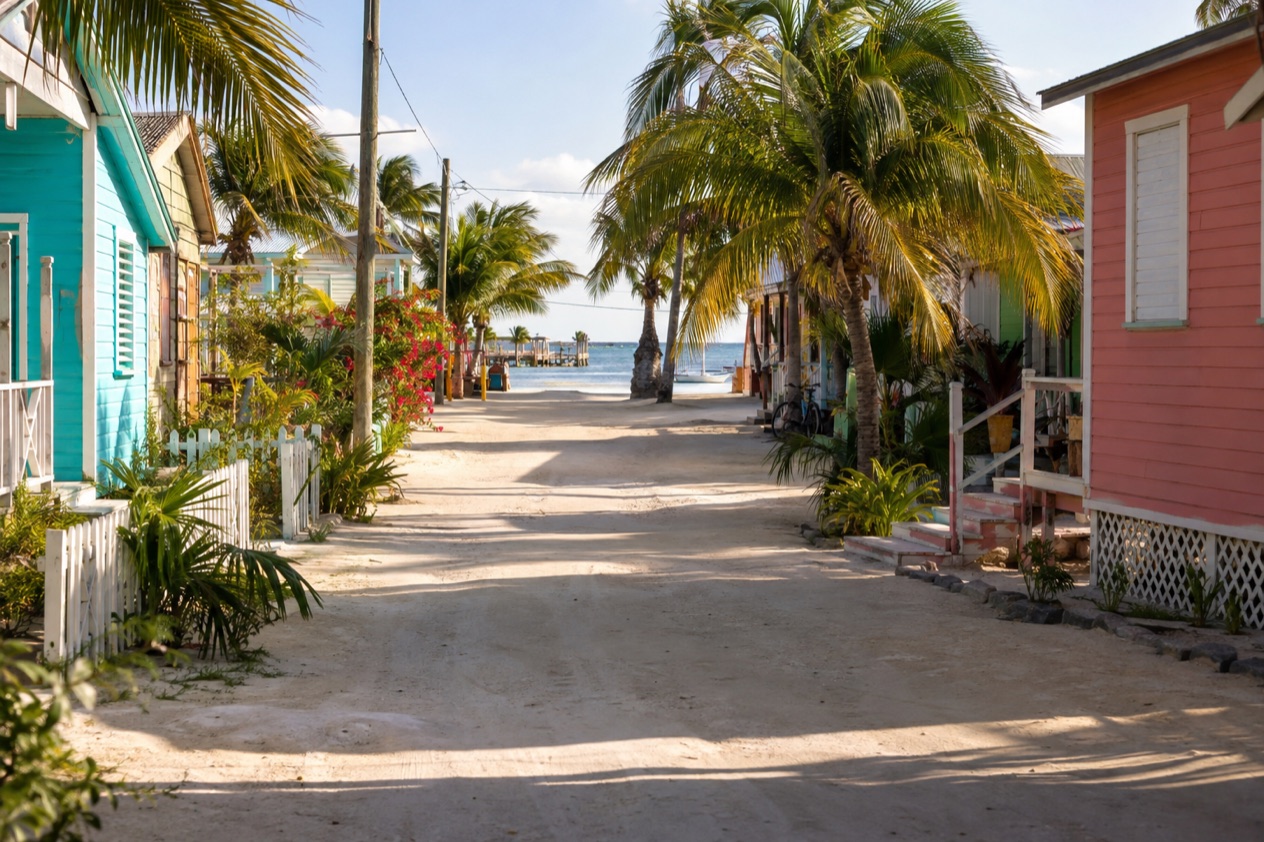
Mornings on Caye Caulker begin with the scrape of rakes on sand streets, the smell of fry jacks from a kitchen window and the sound of boats leaving the dock. Bicycles lean against painted wooden houses, and the sea is always at the end of the street. The island feels relaxed from the first step off the boat, and that ease raises a fair question about how much attention a visitor should still pay to safety here.
Is Caye Caulker safe to visit?
Caye Caulker is a small, easygoing island that welcomes visitors every day, but nobody can promise a trip without a problem, because crime is a real part of life across Belize. The honest approach is to enjoy the island as it is and to understand what lies behind the advice you will read elsewhere.
The U.S. government describes a country with a high crime rate and one of the highest per capita murder rates in the world. Much of the violence is linked to gangs, and the crimes it lists include armed robbery, home invasion, sexual assault and murder. Isolated incidents of violent crime can happen even during the day and in tourist areas, so the idea that daylight and a postcard setting guarantee calm does not hold.
Two things make that picture matter more for a traveler. Local police lack the resources and training to respond effectively to serious crimes, and most crimes remain unresolved and unprosecuted. A stolen bag or a worse experience is therefore unlikely to end in a quick resolution, which is the best reason to keep your own habits sensible: carry little, keep your phone and cards close, and stay with the people you came with.
Medical care is the other half of the answer. Emergency medical services in Belize are usually unavailable or significantly delayed, and serious injuries or illnesses normally require evacuation to another country. Appropriate treatment for injuries is typically found only in or near major cities, and first responders may not be available outside them. On a small island reached by water taxi or small plane, that is worth knowing before you book a trip, not after.
None of this describes daily life for most people stepping off the dock with a snorkel bag. It describes the conditions a visitor should understand. Travelers who go with reasonable habits, decent insurance and a clear idea of where help is far away are the ones who tend to enjoy the island most.
Safety by area in Caye Caulker
Caye Caulker Village
Nearly everything a visitor does happens in Caye Caulker Village, the one town on the island. Its sand streets run between guesthouses, small restaurants, dive shops and tour stands, and the waterfront is where boats come and go. It is a place where people walk, cycle and stop to talk, and a stranger is easily noticed.
Sexual harassment or assault of people traveling alone or in small groups has also been reported. Solo travelers and small groups can plan for that by arranging the last part of an evening with others and by letting someone know where they are going.
If something goes wrong, 911 reaches local police, and the U.S. Embassy can be contacted at +501 822-4011. The Embassy can also help replace a lost or stolen passport, so keep that number saved in your phone before you arrive.
The Marine and Forest Reserve waters
The water around the island belongs to the Caye Caulker Marine and Forest Reserve, established in April 1998. It covers more than 9,000 acres of the Mesoamerican Barrier Reef System, and its rules and regulations were gazetted in December 2008. The reef itself lies about a mile east of the island, so a day on the water means leaving the village by boat.
A reserve with its own regulations means boat captains and guides work under rules that apply to everyone, and those rules are worth listening to when you board. Treat the sea with the same care as the streets: stay with your group, follow your guide’s instructions, and remember that help for a serious injury is far from the reef, since serious injuries normally require evacuation to another country.
Belize City, the gateway on the mainland
Caye Caulker lies about 20 miles north-northeast of Belize City, and many visitors pass through the city on the way to the water taxi or the small plane. The south side of Belize City has historically had the highest concentration of violent crime in Belize, and that violence is gang related. U.S. government employees are strongly discouraged from traveling to the south side, from the Haulover Creek Canal to Fabers Road.
For a visitor, the practical lesson is to keep the stop in Belize City short and purposeful, and to avoid wandering into the south side. Caye Caulker itself is a different place, and what is said about one should not be assumed about the other, but the journey does connect them.
Common scams and how to avoid them
The scams that the U.S. government names are quieter than street crime, and they involve cards and property. Several credit card fraud rings are believed to be active in Belize, particularly in San Pedro on Ambergris Caye, the larger island that many travelers also visit. Wherever you pay by card, keep it in sight, check your statements while you are away and again when you return, and report anything odd to your bank at once.
Real estate is the other trap. Investment scams have been reported in Belize, with tactics that include false promises of amenities and misleading sales tactics. An island this pretty makes it easy to daydream about a plot of land or a beach cottage, and that daydream is exactly what a persuasive seller hopes for. A holiday conversation over rum punch is no place to sign anything or hand over a deposit.
A smaller point concerns souvenirs. If you bring counterfeit or pirated goods back to the United States, you may face fines and may have to give them up. A cheap logo bag on a market table can turn into a problem at the airport, so buy local crafts, carved wood, jewelry and hot sauce from the people who make them.
Beyond those, the same habits that work anywhere apply on a small island. Agree on what a tour includes before you pay for it, keep your money in more than one place, and walk away from anyone who pressures you to decide on the spot. Most people you meet on the village streets will simply be selling fresh fish, a snorkel trip or a bracelet, and a polite no is enough.
Getting around safely
Caye Caulker is reached by high-speed water taxi or by small plane to Caye Caulker Airport. The island is about 5 miles long, and the village sits at its heart. Distances you cover on the island are small, so most of the safety questions about moving around concern the journey to it.
If you arrive through Belize City, remember that the south side of the city is the area of highest concern, and plan the transfer so that you are not wandering through it. Once on the island, the streets are sand, and the pace is slow, which makes daytime walking the natural way to see the village.
If you also plan to travel on the mainland, the road facts matter. Road conditions in Belize range from two-lane paved roads to dirt or gravel tracks, and driving at night is strongly discouraged.
Roadside assistance is frequently unavailable, so a breakdown can leave you waiting a long time. Drivers keep to the right side of the road, and valid U.S. or international driver’s permits are accepted only for three months after initial entry.
Because ambulance services are not widely available in Belize and the training and availability of emergency responders may fall below U.S. standards, an accident on a road or a boat is more serious here than at home. Slow down, wear what a boat captain asks you to wear, and think about how far you are from care before you take a risk.
Beach, water and weather safety
The sea is the reason to come, and it deserves respect more than fear. The reef lies about a mile east of the island, and the reserve around it follows its own regulations, so a boat trip puts you in the care of a captain and guide whose instructions you should follow. If you are not a confident swimmer, say so before you get on the boat.
The sun at this latitude is strong, and hours on the water add to it. A hat, a long-sleeved shirt over the swimsuit and plenty of drinking water keep a boat day from becoming a rough evening. Mosquitoes are the other everyday annoyance. Dengue fever is prevalent in Belize, the U.S. Centers for Disease Control and Prevention identifies Belize as a Zika risk area, and malaria is on the list of prevalent diseases too, so repellent and covered arms at dusk are sensible.
The Atlantic hurricane season runs from June 1 to November 30, which means that October, the month of this writing, falls inside it. A trip planned between early summer and the end of November can be affected by a tropical system, and an island with a small airstrip and a water taxi link is the kind of place where plans change quickly. Keep your itinerary flexible and your insurance in order.
Insurance is not a formality here. The Department of State strongly recommends supplemental insurance to cover medical evacuation from Belize, and U.S. Medicare and Medicaid do not apply overseas. Most hospitals and doctors in Belize do not accept U.S. health insurance, and the Department of State and U.S. embassies do not pay medical bills for U.S. citizens.
Good to know before you go
The U.S. State Department rates Belize Level 2, “Exercise increased caution”, because of crime, and says the south side of Belize City has historically had the highest concentration of violent crime.
Bring any specialized prescription medicine in full, since it may be completely unavailable in Belize, and know that many hotels and other lodgings are not equipped with carbon monoxide detectors, even where they contain sources of the gas. Save 911 and the U.S. Embassy number, +501 822-4011, before you leave home. LGBTQ+ travelers will find that tourist-friendly areas such as San Pedro Town remain relatively open and welcoming, while outside such areas same-sex couples, especially men, are reluctant to display affection in public because incidents of verbal or physical assault have been reported.
Sources
- U.S. Department of State, Belize Travel Information, Travel Advisory (Level 2) (https://travel.state.gov/), checked October 11, 2026
- U.S. Department of State, Belize Travel Information, Safety and security (https://travel.state.gov/), checked October 11, 2026
- U.S. Department of State, Belize Travel Information, Local laws and special circumstances (https://travel.state.gov/), checked October 11, 2026
- U.S. Department of State, Belize Travel Information, Health (https://travel.state.gov/), checked October 11, 2026
- U.S. Department of State, Belize Travel Information, Traveling and transportation (https://travel.state.gov/), checked October 11, 2026
- U.S. Department of State, Belize Travel Advisory, Level 2, March 11, 2026 (https://travel.state.gov/), checked October 11, 2026
- Wikipedia, Caye Caulker (https://en.wikipedia.org/wiki/Caye_Caulker), checked October 11, 2026
- Wikivoyage, Caye Caulker (https://en.wikivoyage.org/wiki/Caye_Caulker), checked October 11, 2026
- Belize Fisheries Department, Caye Caulker Marine Reserve (https://fisheries.gov.bz/ccmr/), checked October 11, 2026
- NOAA National Hurricane Center, Climatology (https://www.nhc.noaa.gov/climo/), checked October 11, 2026
To plan your stay
- Best Time to Visit Caye Caulker: Dry Season, Sea Temperatures, Hurricane Months and Festivals
- Things to Do in Caye Caulker: The Split, Reef Snorkeling, Manatees and Fresh Lobster
- Where to Stay in Caye Caulker: Village Center, the Split, the North Side and the Lagoon Shore
- Caye Caulker from Belize City: Water Taxi, Small Plane and What to Do on Arrival