
The question usually comes up at a kitchen table, with a cruise confirmation open on the laptop and a drawer of old documents pulled out beside it: is the passport really needed for a few days of sun, conch fritters and a beach stop in the Bahamas? For many cruisers the short answer is no, because a closed-loop sailing allows other papers. A passport is still the document the State Department strongly recommends, and the reasons are worth knowing before you pack.
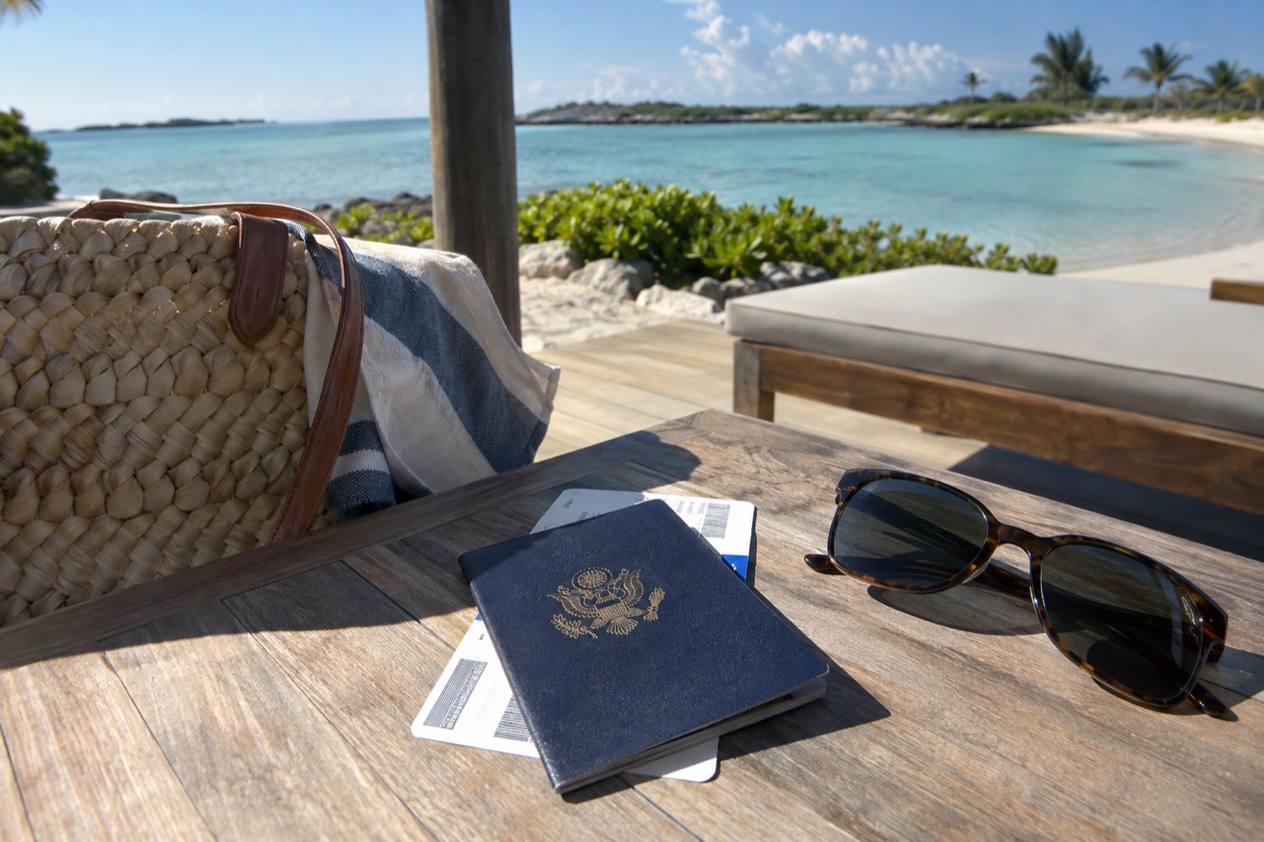
Do you need a passport for a Bahamas cruise?
Not always, but a passport is the safest document to carry. The State Department says that travelers on a cruise to the Bahamas may use another document that meets the Western Hemisphere Travel Initiative (WHTI), such as a U.S. passport card. Those rules are what let many people board without the traditional blue passport book.
The picture changes if you fly. The Bahamas expects U.S. citizens to present a valid U.S. passport when they travel there, and also proof of anticipated departure from the islands.
That is the situation of anyone who joins a ship by air in Nassau, or who is sent home by air partway through a trip. Cruising and flying are two different sets of rules, and it helps to know which one applies to your itinerary.
Which documents work, and for whom
For entering the United States by sea, which is how most cruisers return, U.S. citizens can present a valid passport, a passport card, an enhanced driver’s license, or a Trusted Traveler card (NEXUS, SENTRI or FAST). Military identification on official orders and a Merchant Mariner document for official maritime business are also accepted. Some tribal cards qualify as well, including the Form I-872 American Indian Card.
An enhanced driver’s license is worth a second look if you live in a state that issues one. It proves both identity and citizenship, and it also works as a regular license at home. The WHTI rules for these documents took effect on June 1, 2009, so they are long established.
Why the State Department still points to a passport
The department strongly recommends a passport before any cruise in case of an unforeseen emergency that requires disembarking and returning by air. Think of a medical problem, a ship that cannot continue its route, or a family matter that sends you home.
A second reason is on the foreign side of the trip. On closed-loop cruises, U.S. citizens may still be required to present a passport to enter the foreign countries the ship visits, so the cruise line is the one to ask about the exact documents for your sailing.
Children, permanent residents and other travelers
Children traveling by air need their own passport. By land or sea, U.S. and Canadian citizen children under 16 only need a birth certificate or other proof of citizenship, and the age rises to under 19 when they travel with a school, religious or other youth group.
The certificate can be an original, a photocopy or a certified copy. Because a child on a flight home would need a passport, many families simply get one for the whole trip.
Lawful permanent residents of the United States do not need a passport for air travel but must carry a valid Permanent Resident Card. Other travelers to the Bahamas, meaning those who are not U.S. citizens, will need a visa and/or work permit. The Bahamas also requires compliance with regulations to prevent child abduction, similar to U.S. policies, which matters for a parent traveling alone with a child.
What about a round-trip cruise that starts and ends in the U.S.?
A round-trip cruise that begins and ends at the same U.S. port is called a closed-loop cruise, and on one of these U.S. citizens can enter the United States with a birth certificate and a government-issued photo ID. This is the rule that explains why some cruisers sail to Nassau or a private island without ever opening a passport.
The word that matters is same port. If you board in one city and leave the ship in another, or if you join or leave the ship by air, the closed-loop exception does not describe your trip. A one-way sailing, or a cruise that is part of a longer journey, falls under the ordinary rules for arriving by sea or air.
The three ways a closed-loop passenger can be covered
| Document | Where it applies |
|---|---|
| U.S. passport | Air and sea entry into the United States |
| Passport card | Land and sea entry, which includes cruise ports |
| Enhanced driver’s license | Land and sea entry, which includes cruise ports |
| Birth certificate plus government photo ID | Closed-loop cruises only |
A passport card is a good middle path. It costs less than a passport book and fits in a wallet, and it satisfies the WHTI rules for sea travel. Its limit is that it is not valid for air travel, which is the whole reason the State Department keeps nudging cruisers toward the passport book.
What a birth certificate plan means in practice
If you go the birth certificate route, you carry proof of citizenship and a government-issued photo ID, and the two travel together. Travelers without WHTI-compliant documents are likely to be delayed at the border while CBP officers work to verify identity and citizenship. That is a slow way to end a vacation, especially after a week of cruise-ship ease.
The cruise line has the last word on what it will accept at the pier, since a ship can be required to show that passengers hold the papers each port demands. Ask the line about your exact itinerary, particularly if the route includes stops beyond the Bahamas. A passport removes most of that guesswork.
What if you miss the ship?
Missing the ship in the Bahamas turns a cruise into a flight problem, and this is where a passport pays for itself. If you are left behind or must leave the ship for an emergency, you are no longer on a closed-loop sailing, you are a traveler entering the United States by air.
U.S. citizens entering the United States by air must present a valid U.S. passport, or one of a few other documents: a Trusted Traveler card (NEXUS, SENTRI or FAST), military identification on official orders, or a Merchant Mariner document tied to official maritime business. A birth certificate and driver’s license, which would have been enough on the ship, do not appear on that list. A passport card is not on it either.
What changes at the airport
At the airport the Bahamas also expects U.S. citizens to hold a valid passport and to show proof of anticipated departure from the islands. A booked flight home answers that second point.
Lawful permanent residents are the exception on the U.S. side, since they present their Permanent Resident Card instead of a passport. Everyone else without a passport faces a long wait to sort out identity and citizenship, which is the situation the State Department warns about.
Cases where the passport matters most
- A medical problem that needs treatment on shore and a flight home afterward.
- A ship that cannot continue its route and sends passengers home by air.
- A family emergency that cuts the trip short.
- A late return from a port excursion, with the ship already gone.
None of these is likely on a given sailing, but each is the kind of event the passport recommendation is written for.
Good to know before you go
The U.S. State Department rates the Bahamas Level 2, “Exercise increased caution”, and says most crime occurs in Nassau on New Providence and in Freeport on Grand Bahama.
The Atlantic hurricane season runs from June 1 to November 30, so a late-fall sailing can still fall inside it, and itineraries sometimes change when storms form. Papers are easiest to handle early: check each traveler’s document well ahead, including children, and keep the originals and any copies in separate bags.
Sources
- U.S. Department of State, The Bahamas Travel Information, Entry and exit requirements (https://travel.state.gov/), checked October 10, 2026
- U.S. Customs and Border Protection, Western Hemisphere Travel Initiative (https://www.cbp.gov/travel/us-citizens/western-hemisphere-travel-initiative), checked October 10, 2026
- U.S. Department of State, The Bahamas Travel Advisory, Level 2 (https://travel.state.gov/), checked October 10, 2026
- NOAA National Hurricane Center, Climatology (https://www.nhc.noaa.gov/climo/), checked October 10, 2026
To plan your stay
- Best Time for a Bahamas Cruise: Weather by Month, Hurricane Season and Sea Temperatures
- Bahamas Cruise Ports: Nassau, Freeport, Private Islands and Which Stop Suits You
- Freeport Cruise Port: Celebration Key, Port Lucaya and Getting Around Grand Bahama
- Bahamas Cruise from Baltimore: Carnival, Royal Caribbean, Ports and Boarding Documents