
On the rail of a ship easing toward Grand Bahama, the first thing you see is a low green coastline, a working harbor and the cranes of a city built around trade. Passengers start comparing plans over coffee: a beach day, a dive, a stroll through a marketplace. Ships come to Freeport, the main city of the island and home to its commercial harbor, and from there the day spreads to Lucaya, Taino Beach and Carnival’s own Celebration Key on the south side.
Where do cruise ships dock in Freeport?
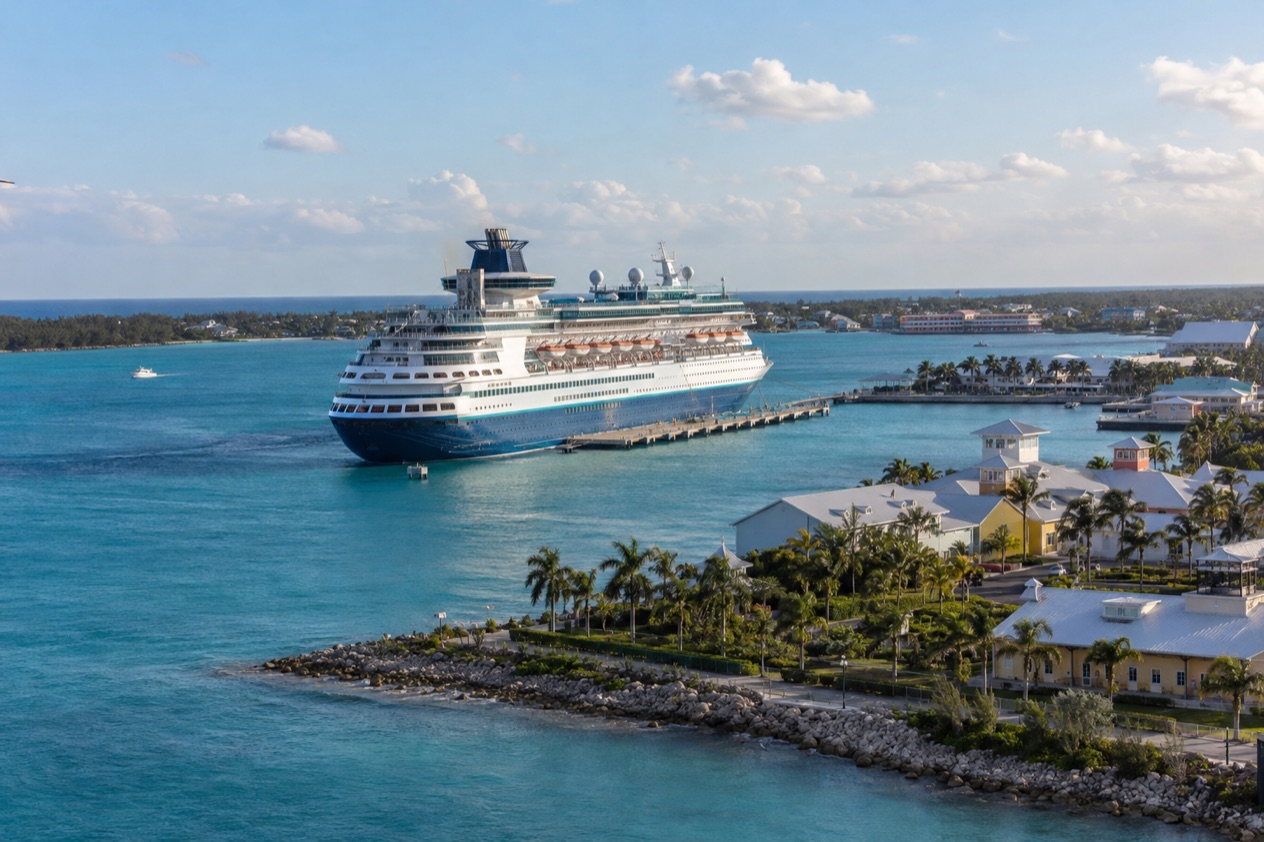
Cruise ships dock at Freeport Harbour, the commercial ship harbor of Freeport, which is the main city of Grand Bahama. Freeport also holds the island’s main airport, so the harbor and the runway sit in the same part of the island. The port belongs to a city that was set up as a free trade zone in 1955, and that trading heritage still shapes the waterfront, which feels more like a working harbor than a resort promenade.
Grand Bahama lies off the Florida coast, close enough that the island has always looked toward the mainland. Freeport sits in the Eastern Time Zone, the same clock as New York and Miami, so there is no watch to reset when you step ashore. For a day in port that matters more than it sounds: the schedule you carry from the ship is the schedule on the island.
What the harbor area is like
Freeport is a planned, spread-out city. It was laid out around commerce, with wide roads, shopping plazas and industrial land rather than a compact old quarter like the one you find in Nassau. The harbor is part of that commercial landscape, and the island’s resorts, beaches and dive operations sit away from the pier rather than right on top of it.
That shapes how a port day goes. You step off the ship into a working port, and the island you came for is a little further along the coast. Think of the harbor as a gateway and decide beforehand where the day is headed: Lucaya for the marketplace and diving, Taino Beach for a stretch of sand and a nature trail, or Celebration Key for a purpose-built beach resort.
Celebration Key, Carnival’s own beach
Celebration Key is a newer destination from Carnival on the south side of Grand Bahama, designed for Carnival guests. It is built around a mile-long white sand beach, and the arrival point is Paradise Plaza, the first portal, which welcomes guests ashore with guest information, live music and photo spots. It is a place for cruisers on that line rather than a public beach for the whole island.
The layout divides the crowd by mood. Starfish Lagoon is made for families, with the Flash Flamingo and Mach III Marlin waterslides, the Guppy Grotto splash pad and courts for basketball, beach volleyball and pickleball. Calypso Lagoon is designed for adults, with lagoon-side swim-up and swings bars and a DJ island that sets the tone for the afternoon.
For a quieter spot, Pearl Cove Beach Club is for adults only. It has an infinity pool, a swim-up bar, elevated dining and attentive service poolside or beachside. It suits couples and friends who want a long, unhurried day more than a waterslide, and it makes a good contrast with the family-oriented lagoon next door.
The season and the weather on arrival
Grand Bahama has a hot, rainy season from May through October and a warm, dry season from November through April. Summer afternoons bring heat and humidity, so the cool shade of a beach bar becomes the best seat in the house. Winter days run milder, with the lows dipping into the mid-60s on cooler nights, which makes walking around town a lot more comfortable.
The Atlantic hurricane season runs from June 1 to November 30, and on Grand Bahama the highest risk falls in August, September and October. In early September 2019, Hurricane Dorian struck the island as a Category 5 hurricane and damaged or destroyed nearly half of the homes. That history explains why the island’s calendar, and the cruise itineraries that call here, follow the weather so closely in the autumn months.
What can you do near the cruise port?
Near the port you can spend the day at a beach, on a nature trail, in a marketplace or under the water on a dive. Grand Bahama is a tourism island, and the stretch around Freeport and Lucaya packs several kinds of day into one coastline. The choice mostly comes down to whether you want sand, wildlife, shopping or a bit of adventure.
Taino Beach and its park
Taino Beach lies within the City of Freeport, and the park there is leased from the Grand Bahama Port Authority for 99 years. The Freeport/Lucaya Council treasures it and has developed it as a place for Bahamians and visitors alike, which gives it a local, lived-in feel on weekends. There are restrooms, playground equipment and sitting areas, so it works for a family that wants a base for the afternoon.
A memorial to Edward St. George, the late chairman of the Grand Bahama Port Authority, stands prominently in the park. Beyond it a trail winds through a nature preserve and bird sanctuary, showing off Grand Bahama’s native vegetation. It is a gentle change of pace from the ship: you trade the buffet for the rustle of coastal scrub and the calls of birds in the branches.
Port Lucaya and Count Basie Square
Lucaya is a suburb of Freeport, and tourism is its primary industry, which you feel in the waterfront shops, restaurants and bars of Port Lucaya. Socializing centers on Count Basie Square, named for the jazz bandleader, and live music often drifts across it in the late afternoon. Port Lucaya is a popular spring break destination, so the square can have a youthful energy when students are in town.
Local food is the thing to look for here. Conch in its many forms is the island’s signature: fritters, cracked conch and the fresh, citrusy conch salad prepared on the spot. Add a cold Bahamian beer or a rum punch, a stroll past the craft stalls, and you have a classic port-day lunch with a view of the boats.
UNEXSO: diving and dolphins
UNEXSO, the UNderwater EXplorers SOciety, is a dive charter operation in Lucaya and was the first destination dive charter business in the world. It runs a variety of SCUBA diving charters, including shark feeding dives, and it also has a dolphinarium. That combination makes it a draw for adventurous travelers and for families who would rather watch marine life than lie on a towel.
Pick this option if the water is the point of your day, and think about it as an outing in itself rather than something to squeeze in between lunch and the ship. The Lucaya waterfront gives you a good place to wait or wander before or after.
Lucayan National Park and Peterson Cay
Lucayan National Park is the only place in the Bahamas where you can see all six of the island’s ecosystems, from coastal shoreline to pine forest and mangrove. Access to the caves is seasonal because they are also used for bat conservation, so the cave visit depends on the time of year. Visitors are advised never to leave belongings unattended, as thefts have been known to occur.
Peterson Cay National Park is accessible only by boat, and visitors are instructed to anchor in specific areas away from the coral reefs. Fishing, shelling and damage to or removal of any coral is strictly prohibited, and so are garbage disposal and leaving ash, coals or embers. It is a place for looking and leaving no trace.
How do you get to Lucaya?
Lucaya is a suburb of Freeport on Grand Bahama, so you reach it by traveling within the same island, along the roads that connect the harbor, the airport and the resort areas. Freeport is the main city, and Lucaya is its tourism district, strung along the coast with the marketplace, the dive operators and the resorts. Think of it as the waterfront neighbor of the city you landed in.
On a map, Lucaya sits about 105 miles east-northeast of Fort Lauderdale, which tells you how close this island is to the Florida coast. West End, the westernmost town, lies 64 miles east of Palm Beach. Those figures explain the character of the island: a short hop from the mainland by sea or air, yet clearly its own place with its own rhythm.
Driving on the left
On Grand Bahama, roads are driven on the left, and locals drive aggressively, so caution is advised for car, motorcycle and buggy rentals. For Americans, the left-hand traffic is the biggest adjustment: roundabouts, turns and merging all run the opposite way from home. Give yourself time to settle in before you head anywhere unfamiliar.
If you do go behind the wheel, pay attention at intersections, where habit can pull you into the wrong lane. A passenger who keeps an eye on the road can help as well. Remember that the road network is wide and the distances between sights are real, so plan the loop you want rather than improvising.
Planning the loop from the harbor
A sensible day links two or three places on the same stretch of coast. You might start at Taino Beach for the nature trail, move on to Port Lucaya for lunch in Count Basie Square, then finish with the waterfront before heading back to the harbor. Reverse it if you prefer a morning in the marketplace and an afternoon on the sand.
Celebration Key lies on the south side of the island and is built for Carnival guests, so treat it as its own day, not a stop on the loop. If your ship is heading there, you already know your plan. If it is not, the Freeport and Lucaya route gives you the island’s food, music and water at your own speed.
Arriving by air instead
Grand Bahama International Airport, code FPO, serves Freeport and receives domestic flights from various islands of the Bahamas and international flights from the United States and Canada. The airport sits close to all the major cities of the Eastern Seaboard, and the government of the Bahamas bought it on April 29, 2021, for one Bahamian dollar. Its long runway can handle the largest aircraft in service.
That matters for a cruise traveler who wants to add a few days on land before or after the ship. The airport and the harbor are part of the same commercial hub, linked through the Sea Air Business Centre, so the island is built for people arriving by either route.
Good to know before you go
The U.S. State Department rates the Bahamas Level 2, “Exercise increased caution”, and says most crime occurs in Nassau on New Providence and in Freeport on Grand Bahama.
Money on the island is the Bahamian dollar, and the island runs on Eastern Time, so your ship clock and your phone agree. Keep your belongings with you in parks and on trails, since thefts have been known to occur at Lucayan National Park.
The Atlantic hurricane season runs from June 1 to November 30, and the highest risk on Grand Bahama falls in August, September and October, so autumn itineraries can shift with the weather. Remember to drive on the left if you rent anything with wheels.
Sources
- Wikipedia, Freeport, Bahamas (https://en.wikipedia.org/wiki/Freeport,_Bahamas), checked October 10, 2026
- Carnival Cruise Line, Celebration Key (https://www.carnival.com/celebration-key), checked October 10, 2026
- Wikipedia, Lucaya (https://en.wikipedia.org/wiki/Lucaya,_Bahamas), checked October 10, 2026
- Wikivoyage, Grand Bahama travel guide (https://en.wikivoyage.org/wiki/Grand_Bahama), checked October 10, 2026
- Wikipedia, Grand Bahama (https://en.wikipedia.org/wiki/Grand_Bahama), checked October 10, 2026
- Bahamas Ministry of Tourism, Investments & Aviation (bahamas.com), Taino Beach (https://www.bahamas.com/natural-wonders/taino-beach), checked October 10, 2026
- U.S. Department of State, The Bahamas Travel Advisory, Level 2 (https://travel.state.gov/), checked October 10, 2026
- NOAA National Hurricane Center, Climatology (https://www.nhc.noaa.gov/climo/), checked October 10, 2026
To plan your stay
- Best Time for a Bahamas Cruise: Weather by Month, Hurricane Season and Sea Temperatures
- Castaway Cay Bahamas: Disney's Private Island, Beaches, Activities and Entry Documents
- Celebration Key, Grand Bahama: Carnival's Private Destination, Beaches, Lagoons and Cruise Lines
- CocoCay Bahamas: Perfect Day at CocoCay, Cruise Lines, Waterpark and What to Know