
On the morning a Norwegian ship eases into the Northwest Providence Channel, passengers crowd the rail to watch a low green line of palms and a pale ribbon of sand grow larger. That is Great Stirrup Cay, a private island in the Berry Islands that belongs to Norwegian Cruise Line and is open to its cruise passengers. It is a place for hammocks, snorkel masks and a beach barbecue, reached only from the deck of a ship.
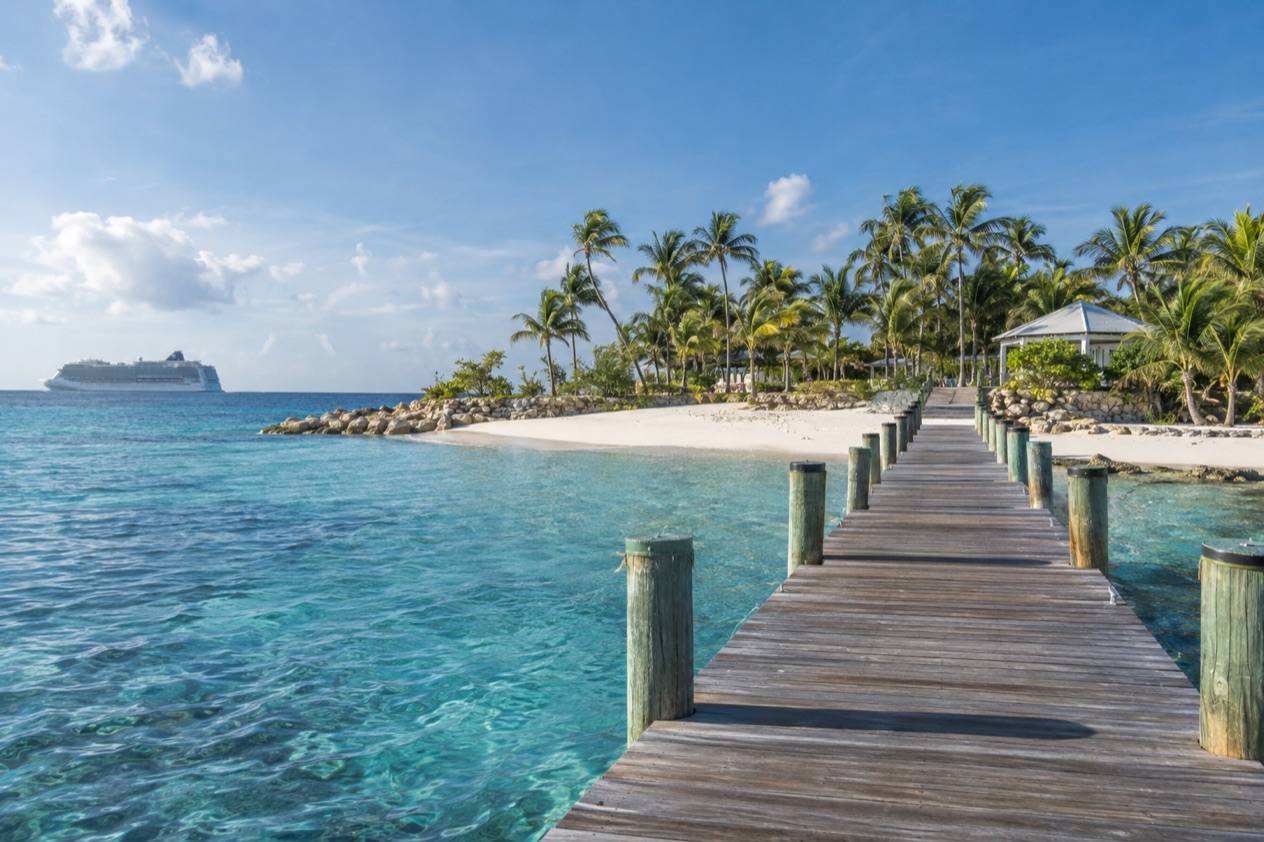
What is Great Stirrup Cay?
Great Stirrup Cay is a private island in the Berry Islands, owned and operated by Norwegian Cruise Line for its cruise ship passengers. It is the northernmost island in the Berry Islands chain, set along the Northwest Providence Channel, and it sits within the Berry Islands district of the Bahamas. Norwegian has owned it since 1977, and it was the first cruise line to offer an uninhabited tropical island experience of this kind, exclusively for its own guests.
The island is uninhabited, which fits the neighborhood. The Berry Islands are a cluster of nearly 30 cays, most of them empty, and together they add up to no more than twelve square miles of land. Off to the side runs the Tongue of the Ocean, a deep underwater trench that draws marine life to these waters.
A lighthouse older than the cruise business
Long before the first passenger arrived, the British Imperial Lighthouse Service built a lighthouse here in 1863, because more and more ships were passing through the Northwest Providence Channel. It was once manned. Today it is automated and solar powered, with a light that can be seen from more than 20 miles away.
For a visitor, the lighthouse is a landmark that ties the island to its old role as a marker for ships. A beach day here happens beside a structure that has guided vessels for well over a century and a half.
The new pier and the neighbor next door
A two-ship pier opened at Great Stirrup Cay on December 28, 2025, and the Norwegian Getaway was the first ship to dock there. The pier means ships can tie up at the island, which changes how a call here begins compared with the days before it opened.
Right beside it lies Little Stirrup Cay, Royal Caribbean’s private island, also known as Coco Cay. The two share the same corner of the Berry Islands, but each belongs to its own line and its own passengers.
Which cruise lines go to Great Stirrup Cay?
Norwegian Cruise Line is the line that goes to Great Stirrup Cay, because it owns and runs the island for its passengers. The island exists as part of the Norwegian experience, so this is not a port where several companies share a dock and split the beach between them.
The Norwegian Getaway was the first ship to tie up at the new two-ship pier at the end of December 2025.
Why you may hear about Royal Caribbean too
Search for Great Stirrup Cay and you will often land on pages about Royal Caribbean, and the reason is geography. Little Stirrup Cay, the neighboring private island, is a port of call for Royal Caribbean International, and it goes by the name Coco Cay. The two islands lie side by side, so they get mentioned together.
If your booking is with Norwegian, Great Stirrup Cay is your island. If it is with Royal Caribbean, your private island is the one next door. The two are separate places with separate owners, and a ticket for one line does not open the other’s beach.
An island without a town
Because the cay is uninhabited and used exclusively by Norwegian passengers, there is no village to wander into and no local ferry to catch. Your day is the island itself: its beaches, its coves, its palms and the water around it.
That shapes the whole visit. You come ashore from your ship, spend your hours on the sand or in the water, and go back aboard. If you want the Bahamas of towns, markets and Bahamian cooking, that belongs to other islands on other days.
What can you do at Great Stirrup Cay?
At Great Stirrup Cay you can spend the day on the beach, in a hammock, in the water or on a boat. Norwegian’s own description lists the choices: snooze in a hammock, learn to snorkel in a cove, dance the limbo, enjoy a beach-side barbecue, or circle the island in a kayak or sailboat.
The setting is the postcard kind. White sandy beaches run beneath coconut palms, the water is described as calm, and coral reefs hold colorful marine life. Lizards and seagulls share the shore, and neon-colored fish show up around the reefs.
In the water
Snorkeling is the main draw, and the cove is where the island pitches it as a place to learn. Masks down, you look at the reefs and the neon-colored fish that live there. Kayaks and sailboats offer a different view, letting you circle the island from the water instead of walking its edge.
One rule applies to everyone in the water. Great Stirrup Cay is a protected marine life sanctuary, and removing anything from the water is strictly prohibited. Shells, coral and anything else living there stay where they are.
The sea itself changes with the season. From May to November it averages 81 to 86°F, and from December to April it averages 77°F. Either way it is the kind of water people stay in for a while.
On the sand
Not everyone wants to get wet, and the island has plenty for those who do not. A hammock between palms is the classic answer, and the beach-side barbecue turns lunch into part of the day rather than a break from it. The limbo is the playful one, a dance of leaning back under a bar that works best with a crowd and a bit of music.
Between swims, the lighthouse is the thing to look for. You will not need to climb anything to appreciate it. Its place on the island is part of what makes this cay different from a plain stretch of sand.
What do you need to know before you go ashore?
Before you go ashore, the main thing to settle is your travel document, because you reached the island by ship and the rules depend on how you travel. Those traveling to the Bahamas on a cruise may use another Western Hemisphere Travel Initiative compliant document, such as a U.S. passport card.
The U.S. Department of State still strongly recommends that travelers obtain a passport before travel, in case of an unforeseen emergency that requires disembarking and returning by air. A passport is also what U.S. citizens entering the United States by air must present, along with a few other documents such as Trusted Traveler Program cards. Children need their own passport when traveling by air.
Weather on the island
From December to April, daytime temperatures hover around 75°F, and rainfall averages about an inch a month from November to April. That is the comfortable, light-layer stretch, with a breeze that can feel cool after a swim.
From May to November, the average daily temperature runs between 85 and 93°F, and rain rises to about 3.5 inches a month through October. Expect a hot, sticky beach day with a chance of a shower, and plan shade and water accordingly.
Hurricane season and the water
The Atlantic hurricane season runs from June 1 to November 30, and that overlaps with the hotter, wetter months on the island. A call can be changed when weather requires it, as it can anywhere in the islands during those months.
As for the water, remember the sanctuary rule: look, swim, snorkel and leave everything where it is. The reefs are the reason people come, and the rule is what keeps them worth seeing.
Good to know before you go
The U.S. State Department rates the Bahamas Level 2, “Exercise increased caution”, and says most crime occurs in Nassau on New Providence and in Freeport on Grand Bahama.
Great Stirrup Cay is an uninhabited private island, so there is no town, no airport and no local life to fit into a day ashore. Your ship is the way in and the way out. Expect a beach day built around the sand, the reefs and the lighthouse, and leave the shopping and sightseeing for other Bahamian ports.
Timing matters for comfort more than anything else. The cooler, drier months from December to April suit long hours outdoors, while the summer and early fall bring heat, more rain and the Atlantic hurricane season.
Sources
- Wikipedia, Great Stirrup Cay (https://en.wikipedia.org/wiki/Great_Stirrup_Cay), checked October 10, 2026
- Bahamas Ministry of Tourism, Investments & Aviation (bahamas.com), Great Stirrup Cay (https://www.bahamas.com/natural-wonders/great-stirrup-cay), checked October 10, 2026
- Bahamas Ministry of Tourism, Investments & Aviation (bahamas.com), The Berry Islands (https://www.bahamas.com/islands/berry-islands), checked October 10, 2026
- U.S. Department of State, The Bahamas Travel Information, Entry and exit requirements (https://travel.state.gov/), checked October 10, 2026
- U.S. Customs and Border Protection, Western Hemisphere Travel Initiative (https://www.cbp.gov/travel/us-citizens/western-hemisphere-travel-initiative), checked October 10, 2026
- U.S. Department of State, The Bahamas Travel Advisory, Level 2 (https://travel.state.gov/), checked October 10, 2026
- NOAA National Hurricane Center, Climatology (https://www.nhc.noaa.gov/climo/), checked October 10, 2026
To plan your stay
- Best Time for a Bahamas Cruise: Weather by Month, Hurricane Season and Sea Temperatures
- Bahamas Cruise Ports: Nassau, Freeport, Private Islands and Which Stop Suits You
- Freeport Cruise Port: Celebration Key, Port Lucaya and Getting Around Grand Bahama
- Bahamas Cruise from Baltimore: Carnival, Royal Caribbean, Ports and Boarding Documents