
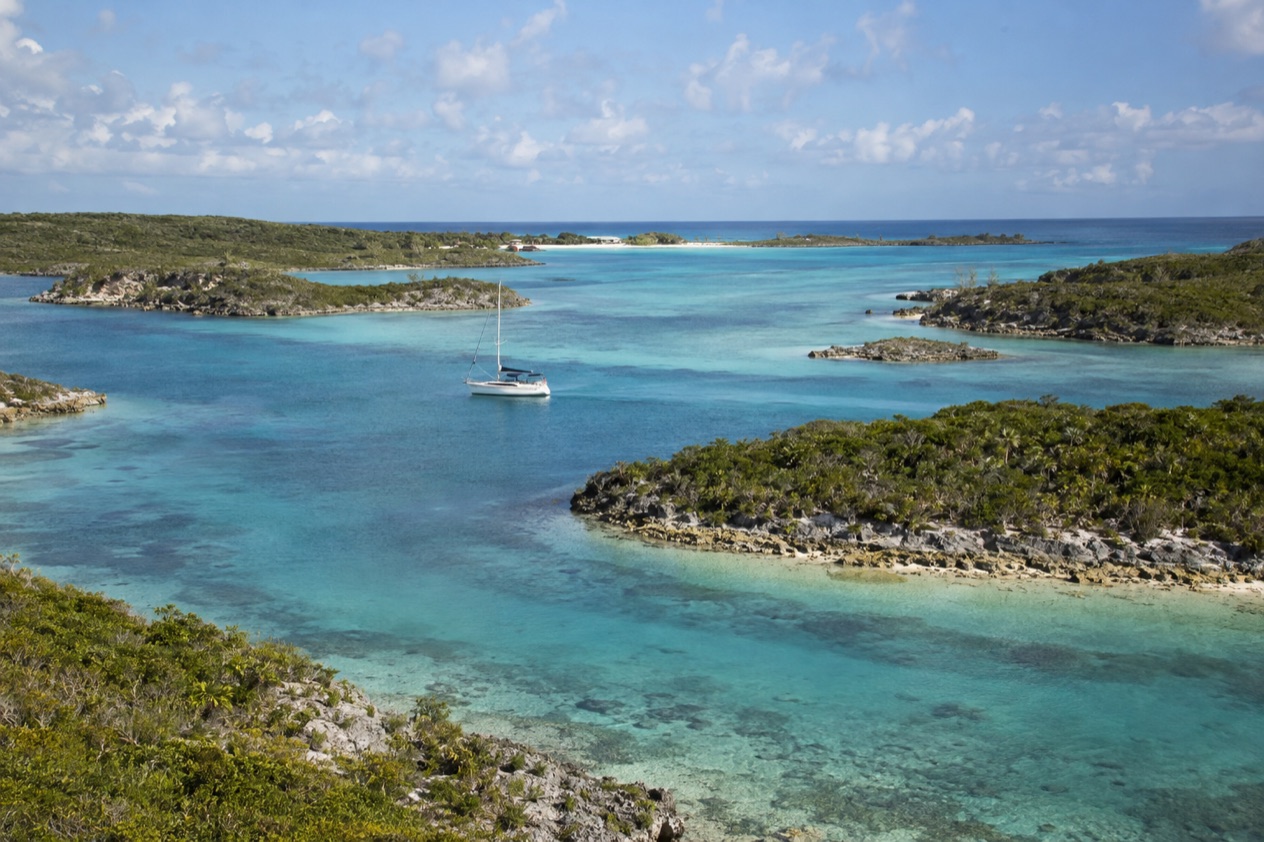
A small ferry pulls away from the dock at Marsh Harbour, and within minutes the water turns from harbor green to a clear pale blue, with pastel cottages and a red-and-white striped lighthouse rising ahead. The Abacos are a chain of cays strung along the northern Bahamas, where people get around by boat, bicycle and golf cart, and where the day is organized around the tide and lunch. It suits travelers who like islands with a village at the end of every ferry ride, beaches that need a short trip to reach, and plenty of conch.
What are the best things to do in the Abacos?
The best things to do in the Abacos are the ones that put you on the water and then on a quiet cay: climbing a lighthouse, walking a New England-style village, finding a secluded beach and eating what the fishing boats bring in.
- Climb the Hope Town Lighthouse on Elbow Cay, one of the last kerosene-fueled lighthouses still working in the world.
- Spend an afternoon at Tahiti Beach, a curve of soft white sand at the southern tip of Elbow Cay.
- Walk through New Plymouth on Green Turtle Cay, where the architecture feels more like Cape Cod than the tropics.
- Visit Man-O-War Cay, the boat-building island where no alcohol is sold.
- Look for Bahama Parrots in the pine forest of Abaco National Park.
- Eat conch salad and Bahamian rock lobster at a waterfront table.
- Rent a bicycle or a golf cart and let a cay unfold at its own speed.
- Take to the water around Walker’s Cay, where a barrier reef holds sharks, rays and turtles.
Everything in the Abacos is spread out. Great Abaco and Little Abaco form the long mainland, and the small cays sit offshore like a necklace. Marsh Harbour is the commercial hub and the usual starting point, but the character of the place lives in the cays, and each one has its own mood. Plan on spending your days hopping between them rather than staying in one spot.
Most visits settle into a rhythm: a morning ferry or boat ride, a walk through a settlement, a swim or a shell hunt, a late seafood lunch, and a slow ride back with the light going gold over the Sea of Abaco. The sections below sort the options by interest so you can build your own version of that day.
Sights and landmarks in the Abacos
The landmarks of the Abacos are settlements rather than monuments: small harbor villages founded by Loyalists, shipwreck salvagers and fishing families, each still tightly bound to the sea. Their history is easy to read in the painted clapboard houses, the churches and the boatyards.
Hope Town and its lighthouse
Hope Town is the only settlement on Elbow Cay, and its candy-striped lighthouse is the picture most people carry home from the Abacos. The tower still runs on kerosene, which makes it a rarity worldwide, and visitors can climb it. From the gallery at the top you see the narrow harbor below, the roofs of the village, the reef line and the open Atlantic on the far side of the island.
The village was co-founded in 1785 by Wyannie Malone, a widow from South Carolina who arrived with her four children after the American Revolution. Before an airport existed at Marsh Harbour, the people of Elbow Cay lived mostly from fishing and shipwreck salvage. The Wyannie Malone Museum keeps that story alive through old photographs, documents, artifacts and memorabilia, and it is the best place to understand why the village looks the way it does.
Hope Town works best on foot or by bike, with stops at the art galleries, the small shops and the beachside cafés. Cars and golf carts are allowed on the outskirts, so the village center keeps a pedestrian pace. Go up the lighthouse when the light is soft and the haze has lifted, and leave time afterward to sit at the harbor and watch the boats come and go.
Man-O-War Cay
Man-O-War Cay is a tidy, quiet island with a proud craft tradition. Loyalist settlers began farming here in 1798, and the island turned to boat building, a skill still practiced in its yards. A shipwrecked sailor named Benjamin Albury married Eleanor Archer in 1821, and the Alburys of today, their descendants, run many of the family businesses along the waterfront.
It is also the only dry island in the Bahamas, so there is no public sale or consumption of alcohol anywhere on the cay. Just a few hundred people live here, served by three churches, and the mood is calm and orderly. Walk the narrow lanes, look at the boats in the harbor and browse the island’s shops for handmade goods, such as canvas bags stitched on the cay, which are a typical souvenir.
New Plymouth, Green Turtle Cay
New Plymouth, founded in the 18th century, is the main settlement of Green Turtle Cay and one of the most photogenic villages in the Bahamas. Its New England influence shows in the white picket fences, the pitched roofs and the narrow lanes between pastel clapboard cottages, which look transplanted from the coast of Maine.
The cay is only about three miles long and half a mile wide, so the village, the beaches and the boatyard all sit close together. About 450 people live here, and the island has shops and restaurants for visitors. Rent a golf cart or a bicycle to go from the village to the beaches on the far side, then return for a late lunch near the harbor.
Marsh Harbour and the smaller stops
Marsh Harbour is the largest settlement in the Abacos and the third-largest city in the Bahamas. It is the practical hub, with full-service marinas, boat rentals and the only stop light in the Out Islands, a small fact that locals mention with a smile. Few people come to Marsh Harbour for sightseeing, but its waterfront is lively, and boats of every size crowd the docks.
Treasure Cay, joined to Great Abaco, is a resort community with a marina and a golf course. Little Abaco, just west of the northern tip of Great Abaco, completes the mainland. Between them, these places show a side of the Abacos that is about boats, fishing and weekend life, a pleasant contrast to the heritage villages on the cays.
Beaches and outdoor things to do in the Abacos
The beaches of the Abacos tend to be quiet, white-sand arcs reached by a short walk, a bike ride or a boat, and the water around them is the real outdoor attraction. Snorkeling, boating, shell collecting and bird watching fill most days, and the protected areas show how much wild land the chain still has.
Tahiti Beach
Tahiti Beach sits on the southern tip of Elbow Cay, a soft white crescent lined with coconut palms that curves out into calm, clear water. It is secluded and reachable only on foot, by bike or by boat, which keeps it feeling like a hideaway. People come to swim, picnic and play beach games, and the shallows are good for collecting shells, starfish and sand dollars.
Bring lunch and something to drink, because this is a place to stay for hours. The best moments come when the day-trip boats have gone and the sand turns warm and golden, and a sunset walk along the shore finishes the day with the sound of gentle waves.
Abaco National Park and the Bahama Parrot
Abaco National Park was established in 1994 and covers 20,500 acres of pine forest on Great Abaco. It was created to protect the northern breeding grounds of the Bahama Parrot, a bird with a green, red and blue pattern that is found here and in only a few other places. The parrots nest in underground cavities in the pines, an unusual habit for a parrot.
The forest is quiet and open, a world apart from the harbor villages. Sightings are never guaranteed, but a patient visitor may hear the birds before seeing them, especially in the early hours. It suits bird watchers and anyone who wants to see a side of the Abacos that has nothing to do with boats.
The waters of Walker’s Cay
Walker’s Cay is the northernmost island in the Bahamas and is fringed by its own barrier reef. The waters around it are known for schools of pompano and amberjack, along with large predators such as sharks and barracudas, plus turtles, eagle rays and crowds of colorful tropical fish.
Walker’s Cay National Park is small, under ten square miles, but its reef and open-water life are the draw for divers, snorkelers and anglers who want something wilder than the sheltered harbors farther south. Think of it as the Abacos’ edge-of-the-map outpost.
On the water: boats and marinas
Boating is the natural way to see the Abacos. Marsh Harbour’s full-service marinas let boaters dock their own vessel or rent live-aboard sailboats and powerboats, and Treasure Cay has a large marina that hosts seasonal fishing tournaments. Abaco Dorado, one boat rental company, lists rates from $215 per day off-season and $310 per day in season.
Even without your own boat, the ferries and water taxis give you the same views of the shallow Sea of Abaco, with its sandbars, coral heads and tiny uninhabited cays. Fishing, snorkeling and island picnics all begin from a dock, and nearly every cay has a beach within sight of the water.
Day trips in the Abacos
Most day trips in the Abacos are boat rides from Marsh Harbour or Treasure Cay to a nearby cay, and a few are longer crossings. The cays each deserve a day, and the simplest plan is one cay at a time, with the ferry or boat ride included in the pleasure of the trip.
Elbow Cay by ferry from Marsh Harbour
Elbow Cay is reached from Marsh Harbour by private boat or by regularly scheduled ferry, and it is the day trip almost everyone makes. The crossing itself is part of the charm, with the Sea of Abaco shifting through shades of turquoise and the lighthouse growing larger as you approach Hope Town.
Start with the lighthouse and the museum while the morning is cool, walk or bike through the village, and then head south to Tahiti Beach for the afternoon. Finish with dinner at a waterfront restaurant, where fresh local seafood is served under candlelight. The day suits couples, families and anyone who likes a balance of history and beach.
Green Turtle Cay by ferry from Treasure Cay
Green Turtle Cay has no airport, so it can only be reached by ferry from the mainland or by boat. The Green Turtle Cay Ferry Dock sits on Treasure Cay, so the trip begins on Great Abaco and ends in the harbor at New Plymouth. The island is named for the green turtles found in its waters.
Once ashore, rent a golf cart or a bicycle and see the village, the outstanding beaches and the boat repair yard. A good day includes a stroll past the clapboard houses, a swim on the ocean side, and a seafood lunch before the return ferry. It suits travelers who like their villages small and their beaches empty.
Treasure Cay and the northern mainland
Treasure Cay is a parcel of land connected to Great Abaco, with two resorts, Bahama Beach Club and Treasure Cay Beach Hotel, Marina & Golf, plus condos, villas and private homes, many of them for rent. It has tennis courts, a golf course and a large marina, and it is the gateway for Green Turtle Cay. Treasure Cay Airport also serves the Abacos.
It makes a good day for travelers staying elsewhere who want a round of golf, a long beach and a marina lunch. Combine it with the ferry to Green Turtle Cay or with a visit to Abaco National Park for a varied northern loop.
Crossing from Grand Bahama
Travelers on Grand Bahama can reach the Abacos by Pinder’s Ferry, which operates twice a day from McLean’s Town to the Abacos. It is a way to combine two islands in one trip, trading Freeport’s resort scene for the quieter, boat-centered life of the cays.
Flying is the other option. Marsh Harbour and Treasure Cay both have airports, and Abaco travel connects or originates in Florida or Atlanta. The Abacos lie about 193 miles east of Miami, close enough that many visitors treat them as an easy escape from the mainland, with a completely different tempo on arrival.
What to eat in the Abacos
Eating in the Abacos means seafood, above all conch and Bahamian rock lobster, served at harbor tables where the boats that caught it tie up. The cooking is simple, generous and seasoned with lime, hot pepper and thyme, and it tastes best outdoors.
Conch salad is the signature dish. Raw conch is chopped fine and tossed with onion, peppers, tomato and sour orange or lime juice, and it is made fresh to order, often within sight of the water. Cracked conch, fried until crisp, and conch fritters come with a dipping sauce and a cold drink. Try a bowl of conch chowder or a stew when the air is breezy.
Rock lobster is the other prize, grilled with butter or served in a salad. Fish arrives as fried snapper, grilled grouper or mahi-mahi, often with peas ‘n rice and coleslaw on the side. Johnnycake, a dense sweet bread, shows up on breakfast tables, and guava duff, a rolled pastry with guava and a rum sauce, is a favorite dessert.
In Hope Town, waterfront restaurants serve fresh local seafood in a candlelit setting, which makes dinner a highlight of the day. On Green Turtle Cay, village restaurants and bars add their own touch, and the island has its own famous cocktail, the Goombay Smash, a rum-and-fruit-juice drink. Kalik, the Bahamian beer, goes with almost everything.
Man-O-War Cay is the exception to all this drinking, since it is dry, so plan a cold juice or a coffee instead. Marsh Harbour’s markets and shops are a place to pick up fresh fruit, bread and snacks for a picnic at Tahiti Beach, and beachside cafés in Hope Town handle a lighter lunch.
Things to do in the Abacos at night
Nights in the Abacos are quiet and relaxed, built around dinner, a sunset and a harbor full of lights. There are no big clubs here, and that is the point. The evening belongs to the water, the stars and the people at the next table.
The sunset is the first event. In Hope Town, couples walk the beach at the edge of the water and listen to the waves, while boats rock at their moorings in the harbor. A sunset beach walk is free and easy to fit in before dinner, and it sets the mood for the evening.
Dinner follows at a waterfront restaurant, where fresh seafood is served by candlelight. After the plates are cleared, many people linger over a drink at a harbor bar or on a deck, with conversation and a bit of live music in some spots. On Green Turtle Cay, the village bars have a friendly, local feel, and the evening usually ends early.
Without city lights, the sky is dark and the stars are bright. A late walk on a quiet beach or a seat on a dock gives you the full show of the night sky, with the lighthouse at Hope Town sending its steady signal across the harbor. It is a restful way to end a day on the cays.
Marsh Harbour has the busiest evenings of the chain, with restaurants and bars around the marinas where boaters gather. Treasure Cay’s marina and resorts offer a calmer after-dark scene. Man-O-War Cay, being dry, is the quietest of all, and the evening there is a matter of porches and conversation.
Things to do in the Abacos with kids
Children in the Abacos spend their days on boats, bicycles and beaches, which is exactly what the islands are made for. The cays are small enough that a child can explore with a parent in tow, and every outing ends at the water.
Tahiti Beach is the obvious choice. The sand is soft, the water is clear and gentle, and children can hunt for shells, starfish and sand dollars in the shallows. It is a spot for a picnic and beach games, and since it is reached only on foot, by bike or by boat, the trip itself feels like an adventure.
The Hope Town Lighthouse is another favorite. Climbing the tower gives older children a thrill and a view over the harbor, the village and the reef. In the village, bikes can be rented for riding past the colorful cottages, and on Green Turtle Cay a golf cart is a ride in itself. The Wyannie Malone Museum, with its old photographs and artifacts, suits curious kids who like stories of shipwrecks and settlers.
Boat rides are the highlight for many families. Ferries between the cays, with the shallow water changing color beneath, keep children looking over the rail. Green Turtle Cay is named for the turtles in its waters, so it makes a good place to talk about the animals living around the islands. In Abaco National Park, parents can introduce older children to the Bahama Parrot and its underground nests.
With children, plan for sun and distance. The cays have little shade on open beaches, so hats, sunscreen and plenty of water matter. Getting from one cay to another takes a boat, so keep the days simple, with one island and one beach rather than three. Dinner at a harbor restaurant fits a family schedule, and the early evening light makes a calm end to the day.
Good to know before you go
The U.S. State Department rates the Bahamas Level 2, “Exercise increased caution”, and says most crime occurs in Nassau on New Providence and in Freeport on Grand Bahama.
The Abacos stretch for 120 miles, and moving between cays means ferries, private boats and, on the islands themselves, bicycles and golf carts. Marsh Harbour and Treasure Cay each have an international airport, and the chain lies in the Atlantic, in an area covered by the Atlantic hurricane season, which runs from June 1 to November 30. Plan each day around a single cay, since the water between them is part of the trip.
Sources
- Bahamas Ministry of Tourism, Investments & Aviation (bahamas.com), The Abacos (https://www.bahamas.com/islands/abacos), checked October 10, 2026
- Wikipedia, Abaco Islands (https://en.wikipedia.org/wiki/Abaco_Islands), checked October 10, 2026
- Bahamas National Trust, Abaco National Park (https://bnt.bs/explore/abaco/abaco-national-park/), checked October 10, 2026
- Wikipedia, Hope Town (https://en.wikipedia.org/wiki/Hope_Town), checked October 10, 2026
- Bahamas Ministry of Tourism, Investments & Aviation (bahamas.com), Hope Town (https://www.bahamas.com/natural-wonders/hope-town), checked October 10, 2026
- Bahamas Ministry of Tourism, Investments & Aviation (bahamas.com), travel blog, Hope Town (https://www.bahamas.com/blog/the-top-5-most-romantic-things-to-do-in-hope-town-abaco), checked October 10, 2026
- Wikipedia, Green Turtle Cay (https://en.wikipedia.org/wiki/Green_Turtle_Cay), checked October 10, 2026
- Bahamas Ministry of Tourism, Investments & Aviation (bahamas.com), Green Turtle Cay (https://www.bahamas.com/natural-wonders/green-turtle-cay), checked October 10, 2026
- Bahamas Ministry of Tourism, Investments & Aviation (bahamas.com), Marsh Harbour (https://www.bahamas.com/natural-wonders/marsh-harbour), checked October 10, 2026
- Bahamas Ministry of Tourism, Investments & Aviation (bahamas.com), Man O War Cay (https://www.bahamas.com/natural-wonders/man-o-war-cay), checked October 10, 2026
- Bahamas Ministry of Tourism, Investments & Aviation (bahamas.com), Tahiti Beach (https://www.bahamas.com/natural-wonders/tahiti-beach), checked October 10, 2026
- Bahamas Ministry of Tourism, Investments & Aviation (bahamas.com), Walkers Cay (https://www.bahamas.com/natural-wonders/walkers-cay), checked October 10, 2026
- Bahamas Ministry of Tourism, Investments & Aviation (bahamas.com), travel blog, island hopping in the Abacos (https://www.bahamas.com/blog/the-ultimate-guide-to-island-hopping-in-the-abacos-without-breaking-the-bank), checked October 10, 2026
- Bahamas Ministry of Tourism, Investments & Aviation (bahamas.com), travel blog, Abaco (https://www.bahamas.com/blog/the-ultimate-romantic-escape-to-abaco-bahamas), checked October 10, 2026
- Wikipedia, Treasure Cay (https://en.wikipedia.org/wiki/Treasure_Cay), checked October 10, 2026
- Wikipedia, Marsh Harbour Airport (https://en.wikipedia.org/wiki/Leonard_M._Thompson_International_Airport), checked October 10, 2026
- Wikipedia, Hurricane Dorian (https://en.wikipedia.org/wiki/Hurricane_Dorian), checked October 10, 2026
- Bahamas Ministry of Tourism, Investments & Aviation (bahamas.com), Things to do (https://www.bahamas.com/plan-your-trip/things-to-do), checked October 10, 2026
- U.S. Department of State, The Bahamas Travel Advisory, Level 2 (https://travel.state.gov/), checked October 10, 2026
- NOAA National Hurricane Center, Climatology (https://www.nhc.noaa.gov/climo/), checked October 10, 2026
To plan your stay
- Best Time to Visit the Abacos: Weather by Month, Sea Temperatures, Crowds and Festivals
- Where to Stay in the Abacos: Treasure Cay, Hope Town, Green Turtle Cay and Marsh Harbour
- The Abacos from Miami: Flights to Marsh Harbour, Island Connections and Hope Town
- Know Before You Go to the Abacos: Entry Papers, Money, Getting Around and Health