
The first thing you notice stepping off the plane in Marsh Harbour is the light on the water and the hum of outboard motors pulling away from the docks. Boats set the rhythm of the Abacos, and the pace of everything else follows them.
A few things are worth settling before you go: what to carry through immigration, how money and roads work, and how limited medical care becomes once you leave the big islands. After that, the rest is cays, conch fritters and long afternoons.
What should you know before visiting the Abacos?
Four things matter most here: a passport and the right entry paperwork, some cash in your pocket, the fact that medical care on the outer islands is small-scale, and the fact that you drive on the left. The Abacos are a chain of separate islands and cays, so each one has its own rhythm and its own way of being reached.
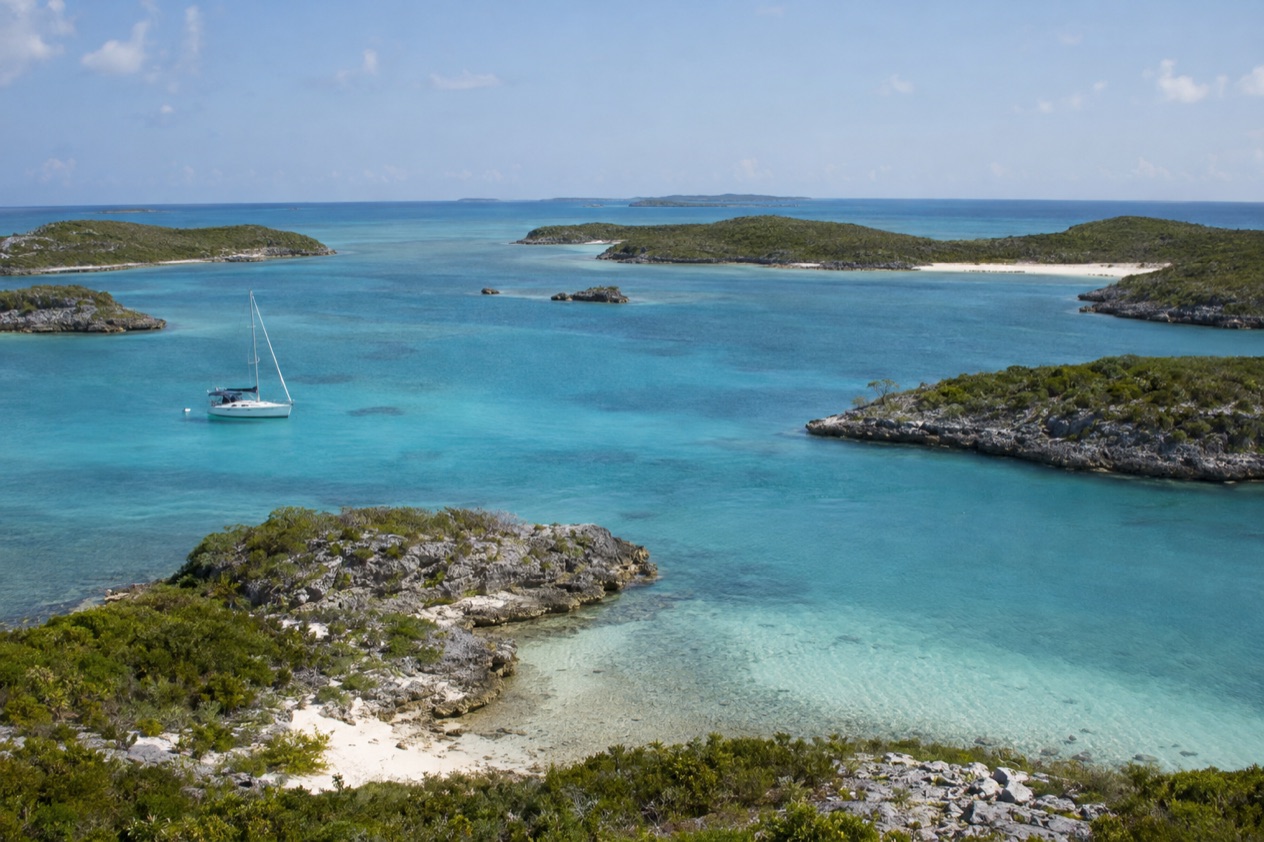
The chain spans 120 miles and is divided into North, Central and South Abaco. Great Abaco is the main island, Little Abaco sits just west of its northern tip, and the cays offshore each hold their own settlements. Marsh Harbour is the commercial hub, and Hope Town sits on Elbow Cay, a small island of its own with a single settlement.
What usually surprises first-time visitors is how much the place feels like a boating village scattered across the water rather than one destination. Hope Town was co-founded in 1785 by Wyannie Malone, a widow from South Carolina who arrived with her four children after the American Revolution. Fishing and shipwreck salvage kept Elbow Cay going until the airport at Marsh Harbour opened in 1959, and that seafaring past still shows in the pastel cottages, the harbor full of small boats and the candy-striped lighthouse.
Cars and golf carts are permitted on the outskirts of Hope Town, so the village itself is a place of narrow lanes, porches and harbor views. Inland on Great Abaco, Abaco National Park protects the northern breeding grounds of the Bahama Parrot, and it covers 20,500 acres of pine forest. Come with the expectation of quiet rather than nightlife, and plan evenings around dinner on a dock.
Entry, fees and paperwork
Arriving by air, every traveler needs a passport. The Bahamas Department of Immigration says it must be valid for at least six months and that passport cards are not accepted. You also fill in the Bahamas Immigration Disembarkation/Embarkation Card, the small form handed out on the plane or at the airport, and you hand it over at the immigration desk.
U.S. citizens do not need a Bahamian visa when they come as bona fide visitors for a stay of up to eight months. The period stamped in your passport can vary at the discretion of the immigration officer at the port of entry. Anyone who wants to stay beyond the period granted must ask permission from the Department of Immigration.
All visitors must hold a return or onward ticket, along with a valid travel document for entry into another country where that applies. The Department of Immigration notes that you may be asked to show evidence of enough funds to support yourself during your stay, and the State Department adds that U.S. citizens must present proof of anticipated departure from the Bahamas. Keep the ticket and the funds proof within reach rather than buried in a checked bag.
The Bahamas Health Visa and the pre-arrival COVID-19 testing requirement have been eliminated, and all visitors can travel freely to and throughout the islands regardless of vaccination status. There is no separate fee for that, so the paperwork stays to the passport, the card and the ticket.
Shopping brings the one tax worth knowing about. Stores that display the Global Blue Tax-Free Shopping signage let qualifying shoppers skip the value-added tax and the service fee, saving up to 7% of the purchase price. You need a passport or valid ID, and the purchase must come to more than $25. Look for the sign in the shop window in Marsh Harbour before you buy something larger.
Money and cards
The Bahamian dollar is on par with the U.S. dollar, and both are accepted interchangeably on all islands, the Abacos included. In practice you can pay a dock fee or a conch salad with the bills already in your wallet, and change may come back in either currency. The Bahamian notes are colorful and worth keeping as a souvenir if you do not spend them all.
ATMs exist on Nassau and Paradise Island, on Grand Bahama and on most major Out Islands, but carrying cash is advised for the Out Islands. The Abacos are made up of scattered settlements and small cays, so it makes sense to arrive with a cushion of small bills for the small places on your route, from a roadside stand to a snack bar on a cay.
Tax-free shopping, covered above, works for anyone with a passport or valid ID. Keep the receipts from those purchases together with your travel documents so everything is in one place when you head to the airport.
Getting around
Driving in the Bahamas is on the left-hand side of the road, which takes a few minutes of concentration for American drivers when pulling out of an airport lot or at the first junction. Many cars are built for the left too, which means you sit on the right in some of them, and the steering wheel position can add to the confusion. Road flooding occurs frequently in many areas during and after rainstorms, and the State Department notes this for Nassau and Freeport, so a heavy shower can change a route.
Two airports serve Great Abaco. Leonard M. Thompson International Airport sits in Marsh Harbour, the commercial hub of the chain, and Treasure Cay Airport, also international, lies in the settlement of Treasure Cay. Which one you use depends on which part of the island you are heading for, since Great Abaco is long and the cays hang off it on both sides.
The Bahamas is an archipelago of 16 islands, reached by flying into Nassau, the country’s gateway, or directly into an Out Island. Travelers can also fly between islands using scheduled and chartered air service from certified domestic and international carriers. The Abacos lie about 193 miles east of Miami, Florida, and the island chain’s water-bound layout means boats and small aircraft are woven into the way people live there.
On Elbow Cay, Hope Town is the only settlement, and cars and golf carts are permitted on the outskirts. Once you reach the harbor, you are in a place where lanes, docks and porches matter more than vehicles. Arrive with a light bag and a pair of comfortable shoes, and let the harbor set your speed.
Health and the sun
Outer islands have only small clinics, and medical care is limited. Medical care is available on New Providence and Grand Bahama, but serious illnesses or injuries might not be treatable locally. Ambulance service is available on the major islands, and anything beyond a minor problem in the Abacos can mean a transfer elsewhere.
Serious health problems that require hospitalization or medical evacuation to the United States can cost tens of thousands of dollars in up-front costs. That is worth knowing before a day of boating, snorkeling or biking. You are far from a major hospital on a cay, and the way to feel comfortable is to know your health coverage and what it does outside the United States.
Sunscreen is really needed because the sun in the Bahamas is intense. Water adds glare, and a day on a boat between cays is a long exposure, so expect to reapply. Women are advised to bring a hat, wide-brimmed or otherwise, to block the sun on beaches, and men should pack standard swim trunks for the water.
There is no vaccination requirement for visitors arriving from the United States, and the Health Visa and COVID-19 testing rules are gone. What remains is ordinary good sense: a hat, shade in the middle of the day and a refillable bottle on the boat.
Local customs and etiquette
Bahamians greet each other before they ask for anything. A simple good morning or good afternoon when you walk into a shop, a restaurant or a dockside bar is expected, and it changes the tone of everything that follows. In a settlement as small as Hope Town, people will nod and say hello on the lane, and returning the greeting is part of walking through.
Dress is relaxed. Dining in a restaurant wearing flip-flops and cargo shorts is commonplace, and no one will raise an eyebrow at salt-stiff hair after a day on the boat.
Churches are different, and the white-steepled and pastel chapels of the Abacos deserve covered shoulders and knees if you step inside for a service or a quiet look. Keep your swimsuit for the beach and put a shirt or cover-up on when walking through a village.
Meals follow the rhythm of the day. Lunch can run long, dinner starts early in small settlements, and the kitchen may close sooner than you expect. Conch is the national obsession, served as salad, fritters, cracked or in chowder, and sharing a plate at a harborside table is how an afternoon passes. Craft stalls and small shops are not places for hard bargaining, so a friendly question about the price is all that is needed.
Local life values slowness. If your order takes a while, the answer is to sit back and watch the boats. And a note on the law: marijuana and all products containing its derivatives, such as CBD and THC, are not legal in the Bahamas, and a medical card does not exempt you from prosecution. Drug violators are regularly arrested, even for small quantities.
Good to know before you go
The U.S. State Department rates the Bahamas Level 2, “Exercise increased caution”, and says most crime occurs in Nassau on New Providence and in Freeport on Grand Bahama.
The Atlantic hurricane season runs from June 1 to November 30, so a trip in those months falls inside it. The Bahamas Ministry of Tourism and Aviation actively monitors tropical storms and hurricanes in the Atlantic, and travelers are encouraged to check the Bahamas.com hurricane page regularly for updates on storm-related weather.
Keep the passport, the completed card, your return or onward ticket and any tax-free receipts together in one pouch. Put a little cash in small bills in a pocket before heading to the outer cays, and give your plans a loose shape, because boats and weather have the last word in the Abacos.
Sources
- Bahamas Department of Immigration, Entry requirements (https://www.immigration.gov.bs/entry-requirements/), checked October 10, 2026
- Bahamas Customs and Excise, Conditionally duty-free items (https://www.bahamascustoms.gov.bs/imports-and-exports/conditionally-duty-free-items/), checked October 10, 2026
- U.S. Department of State, The Bahamas Travel Information, Health (https://travel.state.gov/), checked October 10, 2026
- U.S. Department of State, The Bahamas Travel Information, Traveling and transportation (https://travel.state.gov/), checked October 10, 2026
- U.S. Department of State, The Bahamas Travel Information, Local laws and special circumstances (https://travel.state.gov/), checked October 10, 2026
- Bahamas Ministry of Tourism, Investments & Aviation (bahamas.com), Island FAQ (https://www.bahamas.com/plan-your-trip/island-faq), checked October 10, 2026
- Bahamas Ministry of Tourism, Investments & Aviation (bahamas.com), People-to-People program (https://www.bahamas.com/plan-your-trip/people-to-people), checked October 10, 2026
- Bahamas Ministry of Tourism, Investments & Aviation (bahamas.com), travel blog, VAT-free shopping rules (https://www.bahamas.com/blog/taking-advantage-of-value-added-tax-free-shopping-in-the-bahamas), checked October 10, 2026
- Bahamas Ministry of Tourism, Investments & Aviation (bahamas.com), travel blog, dress code and what to wear (https://www.bahamas.com/blog/how-to-dress-during-your-visit-to-the-bahamas), checked October 10, 2026
- Bahamas Ministry of Tourism, Investments & Aviation (bahamas.com), Sustainability (https://www.bahamas.com/plan-your-trip/sustainability), checked October 10, 2026
- Bahamas Department of Immigration, Before your arrival (https://www.immigration.gov.bs/entry-requirements/before-your-arrival/), checked October 10, 2026
- U.S. Department of State, The Bahamas Travel Information, Entry and exit requirements (https://travel.state.gov/), checked October 10, 2026
- Bahamas Ministry of Tourism, Investments & Aviation (bahamas.com), Hurricane and storm information (https://www.bahamas.com/hurricane-storm-information), checked October 10, 2026
- Bahamas Ministry of Tourism, Investments & Aviation (bahamas.com), The Abacos (https://www.bahamas.com/islands/abacos), checked October 10, 2026
- Wikipedia, Abaco Islands (https://en.wikipedia.org/wiki/Abaco_Islands), checked October 10, 2026
- Bahamas National Trust, Abaco National Park (https://bnt.bs/explore/abaco/abaco-national-park/), checked October 10, 2026
- Wikipedia, Hope Town (https://en.wikipedia.org/wiki/Hope_Town), checked October 10, 2026
- Bahamas Ministry of Tourism, Investments & Aviation (bahamas.com), Hope Town (https://www.bahamas.com/natural-wonders/hope-town), checked October 10, 2026
- Bahamas Ministry of Tourism, Island hopping (https://www.bahamas.com/getting-here/island-hopping), checked October 10, 2026
- Bahamasair, home (https://www.bahamasair.com/), checked October 10, 2026
- U.S. Department of State, The Bahamas Travel Advisory, Level 2 (https://travel.state.gov/), checked October 10, 2026
- NOAA National Hurricane Center, Climatology (https://www.nhc.noaa.gov/climo/), checked October 10, 2026
To plan your stay
- Best Time to Visit the Abacos: Weather by Month, Sea Temperatures, Crowds and Festivals
- Things to Do in the Abacos: Hope Town Lighthouse, Tahiti Beach, Cays and Conch
- Where to Stay in the Abacos: Treasure Cay, Hope Town, Green Turtle Cay and Marsh Harbour
- The Abacos from Miami: Flights to Marsh Harbour, Island Connections and Hope Town