
Early on a June morning in Hope Town, the harbor is glassy and the first dinghies are already putting out from the docks, while the red-and-white lighthouse catches the sun above the rooftops. The cays of the Abacos belong to boats at this time of year, and the sea has warmed into something you want to be in. June here is a month of island hopping, conch salad eaten on a dock, and long, bright days that stretch well into the evening.
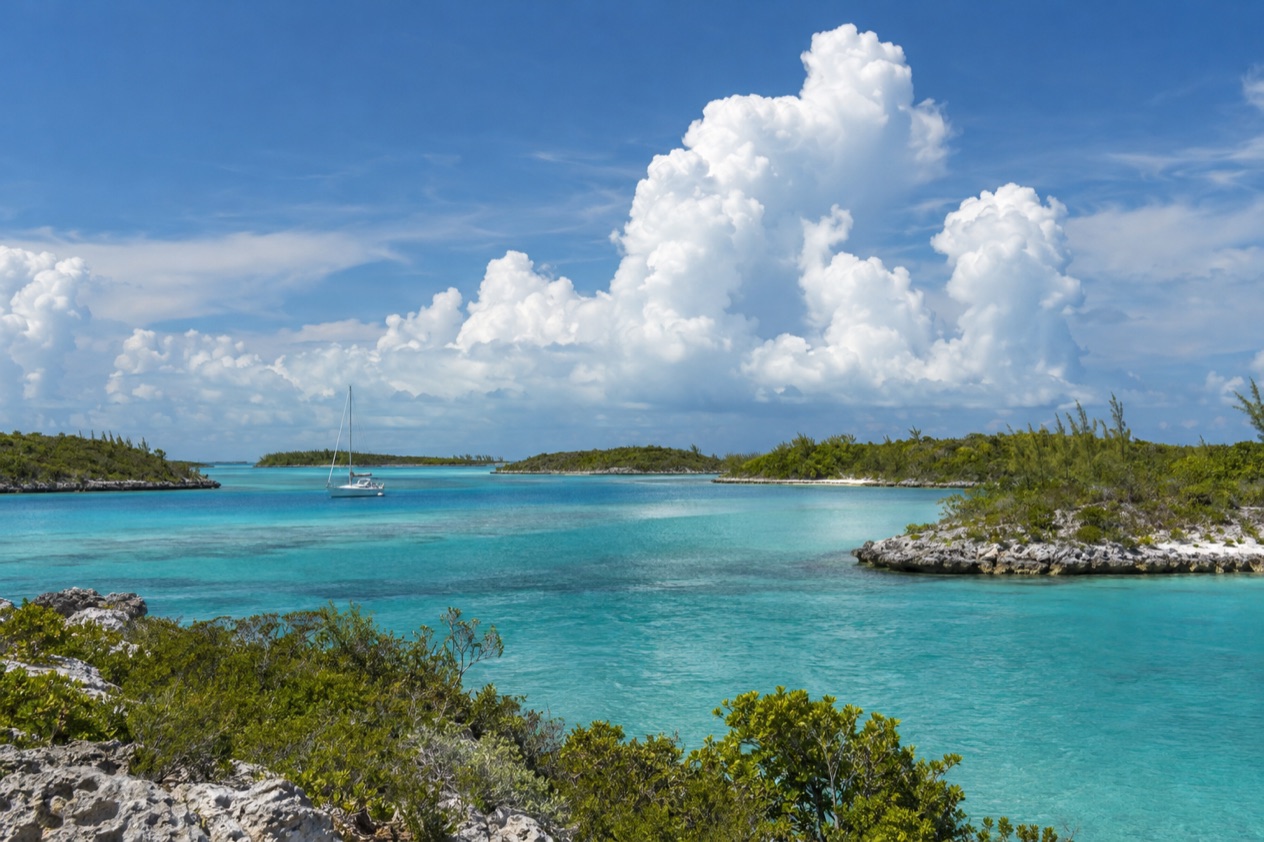
What is the weather like in the Abacos in June?
| Month | Sea at the Abacos (°F) | Daylight on the 15th (hours and minutes) |
|---|---|---|
| May | 80.4 | 13 h 30 min |
| June | 83.5 | 13 h 51 min |
| July | 86.5 | 13 h 41 min |
June is hot, bright and humid, the month when summer settles in properly. Mornings start soft and already warm, the sun climbs fast, and by midday the shade of a porch or a sea breeze on a boat deck is where you want to be. Afternoon clouds can build into a short, heavy shower that crosses a cay and moves on, leaving the air steamy and the harbor shining.
In Nassau, highs average about 89°F in June. The same record shows showers on about twelve days of the month and lows in the mid-70s, which tells you that nights stay warm and rain is a regular visitor rather than a rare one. In the Abacos, that means planning outdoor things for the morning and keeping the late afternoon loose.
The light is generous. Daylight lasts nearly fourteen hours, so there is time for a morning on the water, a long lunch and still enough sun to walk a village lane before dinner. Pack for sun first and rain second: a light layer, a hat and sandals that dry quickly will cover most days. Evenings are mild enough for dinner outdoors, and the sea keeps climbing toward its midsummer warmth.
Can you swim in the Abacos in June?
The sea is warm enough for long swims, with none of the first-dip gasp you get earlier in the year. After May, the water has crossed into the kind of warmth that lets you stay in for as long as you like.
The shape of the Abacos matters more than the date. A chain of barrier cays screens the Sea of Abaco from the open Atlantic, so the shore facing the sound tends to feel gentler, while the ocean-facing beaches can carry swell and bigger waves. Treasure Cay, Elbow Cay and Great Guana Cay all have long Atlantic-side sands, and the feel of the water can differ from one stretch to the next and from one morning to the next.
Snorkelers head for the coral heads and shallow reefs around the barrier cays, usually by boat. Families often prefer a sheltered cove for wading and sandcastles, and surfers should know the ocean side is where any waves arrive. Bring reef-safe sunscreen, a rash guard for the long hours in the sun and water shoes for rocky patches.
What to do in the Abacos in June
June has no single headline festival in the Abacos. The month belongs to the water: boating, fishing and beach days on cays that are reached by boat. It is also the first month of the Atlantic hurricane season, which runs from June 1 to November 30, so the mood is one of settled summer routines rather than the high-season buzz of winter.
Food is simple and local. Conch is the star, served as a bright, citrusy salad with onion and pepper, cracked and fried, or in a fritter. Grilled fish comes with peas and rice, guava duff arrives with a rum sauce, and a Goombay Smash, the fruity rum drink born on Green Turtle Cay, goes well with a hot afternoon. A cold Kalik is the usual answer on a dock.
Hope Town and Elbow Cay
Hope Town is the village that appears on postcards: pastel cottages behind picket fences, lanes meant for walkers, bicycles and golf carts, and a striped lighthouse watching over a tight, boat-filled harbor. It sits on Elbow Cay, reached by boat across the Sea of Abaco from Marsh Harbour. The lighthouse is a working kerosene light, one of the last of its kind, and its spiral stair rewards visitors with a sweeping view over the roofs and the water.
In June, go early. The streets are quiet, the light is soft, and the heat has not yet built. Wander the harborfront, browse the small shops and galleries, then settle into a waterside table for lunch. The long Atlantic beach on the far side of the cay is a short stroll from the village, a good place to spend the hottest part of the day.
Man-O-War Cay and Green Turtle Cay
Man-O-War Cay is a boatbuilding community with a long tradition of crafting wooden vessels. Its harbor holds working boat sheds, and its small shops sell canvas bags sewn on the island. The pace is quiet, the people are friendly, and it makes a pleasant half-day by boat.
Green Turtle Cay, farther north, has New Plymouth, a settlement of clapboard houses with Loyalist roots, tidy gardens and narrow lanes that suit a slow stroll. Over lunch, a Goombay Smash is the local thing to order. Both cays are places to see and taste rather than to rush, and either can fill a day when you let it.
Treasure Cay and the north
Treasure Cay is joined to Great Abaco in the north and is built around a large marina, a golf course and tennis courts. Its marina hosts seasonal fishing tournaments, and when one is under way the docks fill with talk of marlin and wahoo. Two resorts and many condos and villas sit here, so it works as a base for people who want a beach and a resort feel on the main island.
Marsh Harbour, the commercial hub of the Abacos, is where most trips begin. The Leonard M. Thompson International Airport is there, and so are the groceries, marine supply stores and the boats that carry you to the cays. Treasure Cay has its own international airport, which suits a trip focused on the north.
On a showery afternoon, duck into a harborside bar, wait out the downpour with a fritter, and head back out when the sun returns. The rain moves fast, and the water often looks its best right after.
A two-day itinerary for the Abacos in June
Day 1 starts early in Marsh Harbour, when the air is still cool enough for a harbor stroll. Take a boat across to Elbow Cay and reach Hope Town before the sun is high. Climb the lighthouse for the view, then wander the lanes and have a late-morning coffee at a harbor-side café. Lunch is conch salad or grilled fish at a waterfront table.
Spend the hottest hours on the Atlantic side of the cay, on the beach or in the shade, then return to the village in the late afternoon when the heat softens. With nearly fourteen hours of daylight, there is time for a last walk before dinner. A casual dockside restaurant with a rum drink suits the evening.
Day 2 heads to the north. Start at Treasure Cay for a morning at the beach, or a walk by the marina, then continue to Green Turtle Cay by boat to see New Plymouth and have lunch there. If rain builds in the afternoon, shelter in a bar or one of the village’s small museums and shops, then go out again as it clears.
Finish with a Goombay Smash and a late dinner, and enjoy the long evening light on the water. If you have time before leaving, Man-O-War Cay’s boat sheds and canvas shops fit a final hour or two.
Is the Abacos busy in June?
June is a moderate month, with a summer, boat-focused rhythm rather than the winter rush. School is out for many American families, so vacation weeks add some traffic, but the cays rarely feel packed the way a big resort town can.
The people you meet are mostly boaters, anglers, vacation-home owners and families renting a cottage for the week. Fishing tournaments at Treasure Cay add energy to the docks and restaurants when they come around. Villages like Hope Town and New Plymouth stay small and calm, and a quiet corner is never far.
For planning, think in habits rather than figures. Lodging on the small cays is limited, so it makes sense to settle where you will sleep before building the rest of the trip around it, and holiday weeks call for earlier decisions than ordinary weeks. Restaurant tables on the busiest evenings are worth thinking about a little ahead, but the pace is relaxed and a casual dockside meal is the norm.
The Atlantic hurricane season has just begun, and the Bahamas Ministry of Tourism & Aviation monitors tropical storms in the Atlantic. The peak of the season comes much later, with most activity between mid-August and mid-October, so June is the gentle opening of a long season.
What to pack for the Abacos in June
Think light, breathable and quick-drying, with a few items for the water and the sun.
- Lightweight cotton or linen clothes, because the air is hot and humid from morning on.
- A wide-brimmed hat and sunglasses for hours on boats and beaches.
- Reef-safe sunscreen and a rash guard, since the sun is strong on the water.
- A compact rain jacket for passing afternoon showers.
- Water shoes and a mask and snorkel for the coral heads.
- A dry bag for phones and cameras on boat rides.
Good to know before you go
The U.S. State Department rates the Bahamas Level 2, “Exercise increased caution”, and says most crime occurs in Nassau on New Providence and in Freeport on Grand Bahama.
June marks the opening of the Atlantic hurricane season, which runs from June 1 to November 30. Getting around the Abacos means thinking in boats, since many of the loveliest villages sit on cays rather than the main island. Hope Town and other settlements have narrow lanes where golf carts and bicycles replace cars.
When you arrive, the Bahamas Department of Immigration requires a passport that will stay valid for no less than six months, and it does not take passport cards. U.S. citizens visiting do not need a Bahamian visa. A return or onward ticket is required, and proof of funds may be requested. The Bahamas Department of Immigration allows stays of up to eight months, though the officer at the port of entry decides what is stamped in the passport.
The Abacos in June vs May and July
Moving the trip four weeks earlier brings a cooler sea and shorter days, and the shower pattern is less frequent. May feels like the end of spring on the cays, with a gentler sun, and the hurricane season has not yet opened. Choose May if you want warm but less intense weather, and swimmers may find the water a few degrees cooler.
Moving four weeks later brings the warmest sea of the three months, a slightly shorter day than mid-June and the deep heat of midsummer. Showers continue to cross the cays, and the humidity stays high. July suits those who love hot water and are happy to spend afternoons in the shade or on the boat.
June sits in the middle, with a sea already very warm, the longest days of the three and a lively boating season. Stay with June if you want the long daylight and a warm sea without the full weight of July. Shift earlier if the heat concerns you, and later if the sea is your priority.
Is June a good time to visit the Abacos?
Yes, for travelers who want a warm sea, long days and a boat-centered, slow-paced stay, and less so for anyone who prefers dry, cooler air. June suits families, anglers, sailors and couples who love island hopping and are comfortable with a hot, humid sun and the occasional shower.
Those who dislike humidity, or who would rather not travel at the start of the hurricane season, may prefer a winter month. On arrival, settle in Marsh Harbour or your cay, then take a boat to Hope Town on your first morning while the light is still soft and the lanes are quiet.
The things that stay with you from June are the sea warm as bathwater by noon, the long evening light on pastel houses and the sound of dinghies buzzing across the harbor at dusk. Over a cold Kalik on a dock, the day slows to the pace of the tide.
Sources
- Open-Meteo Marine API, average 2015-2024, checked October 10, 2026
- sunrise-sunset.org, sunrise and sunset calculated for the 15th of the month, checked October 10, 2026
- NOAA NCEI, GHCN-Daily station BF000078073 (Nassau Airport), normals 1991-2020 computed from the daily record (https://www.ncei.noaa.gov/access/services/data/v1?dataset=daily-summaries&stations=BF000078073), checked October 10, 2026
- NOAA National Hurricane Center, Climatology (https://www.nhc.noaa.gov/climo/), checked October 10, 2026
- Bahamas Ministry of Tourism, Investments & Aviation (bahamas.com), Hurricane and storm information (https://www.bahamas.com/hurricane-storm-information), checked October 10, 2026
- Wikipedia, Hurricane Dorian (https://en.wikipedia.org/wiki/Hurricane_Dorian), checked October 10, 2026
- Bahamas Ministry of Tourism, Investments & Aviation (bahamas.com), travel blog, Abacos and Grand Bahama after Hurricane Dorian (https://www.bahamas.com/blog/things-to-know-when-visiting-the-bahamas-after-dorian), checked October 10, 2026
- Wikipedia, Treasure Cay (https://en.wikipedia.org/wiki/Treasure_Cay), checked October 10, 2026
- Wikipedia, Marsh Harbour Airport (https://en.wikipedia.org/wiki/Leonard_M._Thompson_International_Airport), checked October 10, 2026
- Bahamas Ministry of Tourism, Investments & Aviation (bahamas.com), The Abacos (https://www.bahamas.com/islands/abacos), checked October 10, 2026
- Wikipedia, Abaco Islands (https://en.wikipedia.org/wiki/Abaco_Islands), checked October 10, 2026
- Wikipedia, Geography of the Bahamas (https://en.wikipedia.org/wiki/Geography_of_the_Bahamas), checked October 10, 2026
- Bahamas Ministry of Tourism, Investments & Aviation (bahamas.com), Island FAQ (https://www.bahamas.com/plan-your-trip/island-faq), checked October 10, 2026
- Bahamas Department of Immigration, Entry requirements (https://www.immigration.gov.bs/entry-requirements/), checked October 10, 2026
- Bahamas Department of Immigration, Before your arrival (https://www.immigration.gov.bs/entry-requirements/before-your-arrival/), checked October 10, 2026
- U.S. Department of State, The Bahamas Travel Advisory, Level 2 (https://travel.state.gov/), checked October 10, 2026
To plan your stay
- Things to Do in the Abacos: Hope Town Lighthouse, Tahiti Beach, Cays and Conch
- Where to Stay in the Abacos: Treasure Cay, Hope Town, Green Turtle Cay and Marsh Harbour
- The Abacos from Miami: Flights to Marsh Harbour, Island Connections and Hope Town
- Know Before You Go to the Abacos: Entry Papers, Money, Getting Around and Health